

Brands sponsor Instagram creators when they can quickly see three things: who your audience is, what a sponsored Reel or Story would look like on your account, and what it costs. Follower count gets you onto a shortlist. Typical Reel views, audience location and past branded work decide whether you get the deal.
The overall process is the same as for getting brand deals on any platform, but Instagram has its own formats, tools and pricing. The steps below cover each of them.
Types of Instagram brand deals
| Deal type | What the brand pays for |
|---|---|
| Sponsored Reel or carousel | One or more posts on your profile, for a fixed fee |
| Story set | Several Story frames, often with a link sticker, posted over one day |
| Collab post | A post that appears on your profile and the brand's profile at the same time |
| Partnership ad permission | The right to run your content as an ad from your handle, for a set period |
| UGC-only content | Photos or videos the brand posts or runs as ads from its own account |
| Affiliate or ambassador deal | A commission on sales, or a monthly fee for several posts over a few months |
Many Instagram deals combine several of these: a Reel plus a Story set, with a request to run the Reel as a partnership ad. Before you quote, ask which ones the brand actually wants, because each is priced differently. If a brand suggests posting together, keep in mind that a Collab post on Instagram doesn't add the Paid partnership label by itself, so a paid Collab still needs the label.
What brands check on your Instagram before reaching out
Before sending an offer or replying to your pitch, a brand manager usually looks at:
- Typical Reel views. They open your Reels tab and scan the view counts on your last 10 to 15 Reels. Steady results read better than one viral Reel surrounded by much smaller ones.
- Story reach. Stories don't show public numbers, so brands ask for screenshots. Have your average Story reach ready.
- A clear niche. Your bio, highlights and recent posts should point to the same audience.
- Comments from real people. Questions like "where is this from?" or "does it work on curly hair?" show buying intent. Emoji-only comments and generic praise don't.
- Past branded content. Posts with the "Paid partnership with" label show you've already delivered for a brand.
- Audience location and age. A US brand needs US followers, so expect to be asked for a screenshot.
- A way to contact you. An email or contact button on your profile saves them a search.
How many followers do you need for brand deals on Instagram?
There is no minimum for working with brands directly. Meta Creator Marketplace, Instagram's official tool for matching creators with brands, asks for at least 1,000 followers, a professional public account and an age of 18 or older.
In practice, accounts under 10,000 followers mostly receive gifted products, affiliate offers and small fees. Paid requests become more regular once your Reels get consistent views from a defined audience, and that point comes earlier in some niches than others. A creator with 15,000 followers in finance or skincare can out-earn a lifestyle account three times that size, because brands in those categories pay more for each follower who buys.
If gifted offers are already arriving, they are the easiest paid deals to win: reply with your rates and one concrete idea instead of simply accepting the product. Once a few gifted posts have brought good results, it's usually time to stop accepting gifted collaborations and quote every offer.
Step 1: Make your Instagram profile brand-ready
Look at your profile the way a brand manager would before you pitch anyone:
- Use a professional account. Insights and Creator Marketplace both require one.
- Write a bio that names your niche and audience. "Easy skincare for sensitive skin, based in Austin" tells a brand more than "Lover of all things beauty."
- Add an email or contact button. Many brand managers prefer email to DMs, and a visible address saves them a step.
- Pin three posts that sell your account. One of your best niche Reels, one where a product is clearly shown in use, and one branded post if you have one.
- Keep a highlight of brand work. Once you have a few collaborations, group the Stories in a highlight such as "Partners" so a brand can see them in one tap.
- Post in your niche consistently for a few weeks before pitching. A brand that opens your profile should see the kind of content it would be paying for.
It also helps to tag products you already use in your normal posts. Those posts show a brand how its product would look on your account, and a brand sees every post that tags it, which can start the conversation before you pitch.
Step 2: Build a media kit from your Instagram Insights
A media kit answers a brand's first questions before they ask. For Instagram, it should include:
- Your handle, niche and the formats you are known for
- Followers, top countries, age range and gender split, with the date of the snapshot
- Typical Reel views and Story reach from recent content
- Two or three links to relevant posts, with paid results labeled as paid
- Your services listed by format: Reel, carousel, Story set, partnership ad permission
- A business email and your availability
All of these numbers come from Instagram Insights. The Audience tab shows where your followers are, their age range and gender, and each post's insights break down who it reached.
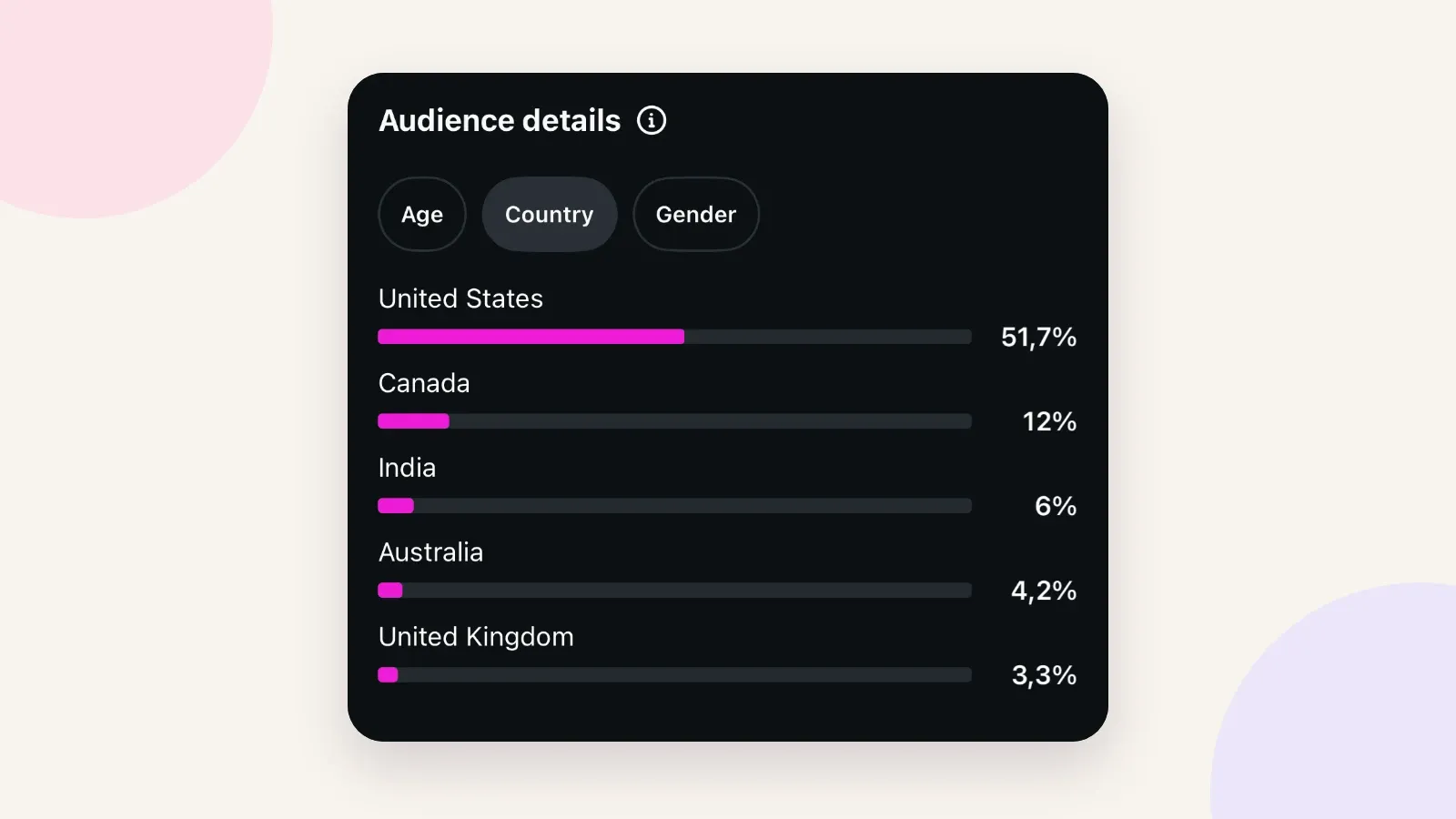
Use the median of your last 10 to 20 organic Reels rather than your best result, and leave out boosted posts and one-off viral hits. A brand that books you on an outlier will judge the campaign against it. Brands also read these numbers for fit as much as size, which is why the most valuable Instagram audiences are not always the largest.
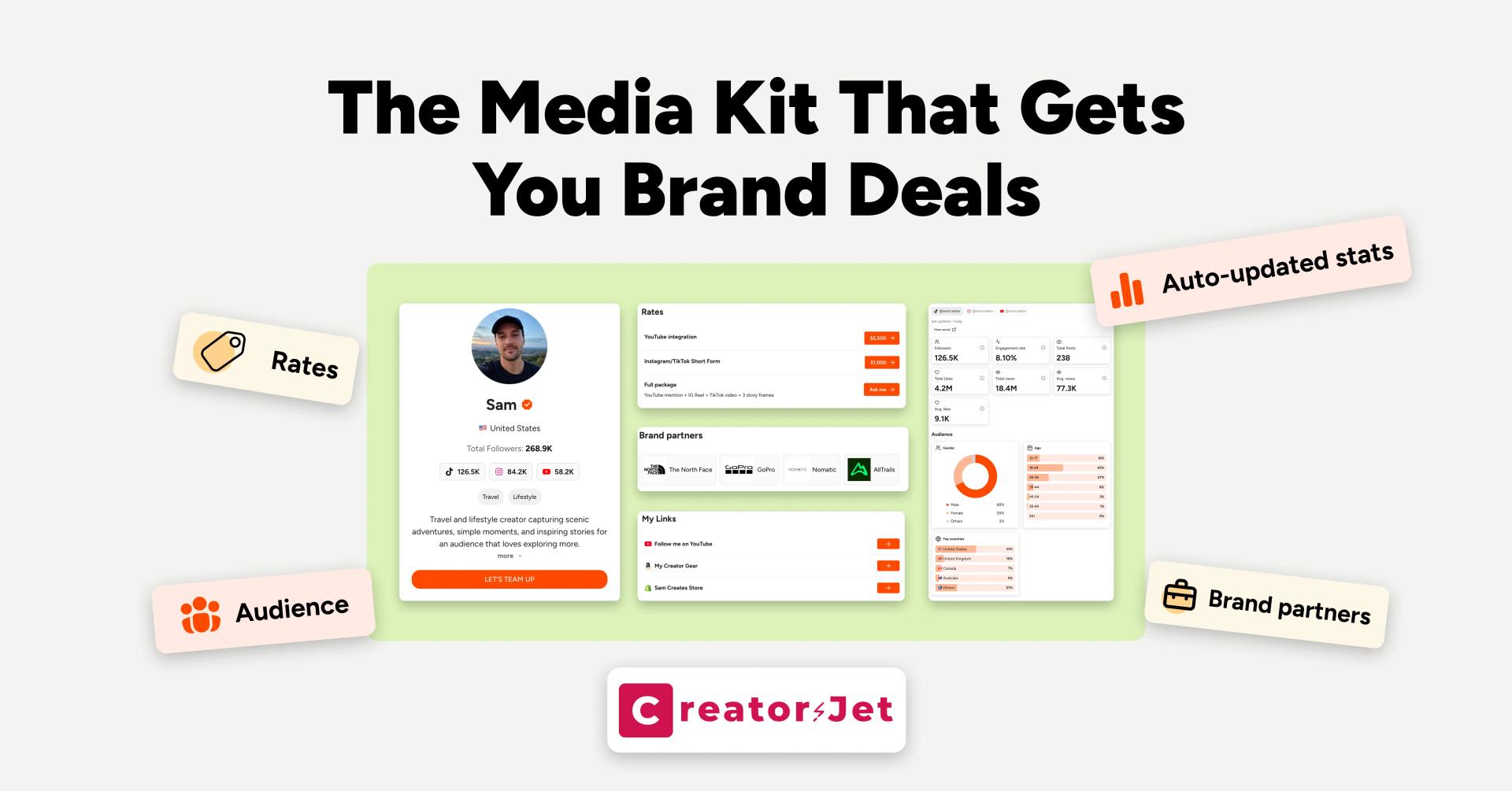
You can lay all of this out with one of these free influencer media kit templates. A web version is easier to keep current than a PDF, because the link you send stays the same when your numbers change.
Step 3: Find brands already paying Instagram creators
The easiest brands to pitch are those that already have a budget for creators. A few ways to find them:
- Look for "Paid partnership with" posts in your niche. Follow creators about your size and note which brands appear in their labels. Those brands already pay creators like you.
- Check a brand's Tagged tab. If it's full of creator content from the past few months, the brand is actively working with creators.
- Search the Meta Ad Library. It's public and needs no login. Search a brand, filter by Instagram and look for ads that show a creator's handle next to the brand's name. Those are partnership ads, which means the brand pays to promote creator content.
- Watch who sponsors the creators you compete with. A brand that worked with three creators in your niche this quarter is likely to read a pitch with a fresh angle.
- Start from a list. Many brands that work with influencers, such as Gymshark, Glossier or e.l.f. Cosmetics, already feature creator content on their own Instagram accounts.
Then find the person who decides. Most brands run creator campaigns through an influencer marketing manager, a partnerships lead or an agency, not the person who answers the brand's Instagram messages. You can look them up by brand in CreatorsJet's directory of influencer marketing contacts, which shows their role, LinkedIn profile and email when available. If you'd rather search by hand, the brand's website, the Email button on its Instagram profile and LinkedIn are the usual places to find a brand's PR email.
Step 4: Pitch the brand by DM or email
When a DM works and when to email
A DM works when the brand is small or founder-led, because the person reading the brand's messages often makes the decision. For larger brands, the inbox is usually run by a social media team or an agency that doesn't approve budgets. There, use the DM to ask who handles creator partnerships, then send the actual pitch by email.
Either way, the message should sell one specific piece of content, not your account in general.
A DM template
Keep a DM under 80 words. It should be readable without tapping "see more."
Hi [Brand]! I'm [name], I make [niche] content for [audience] (mostly US, [median views] views per Reel). I've been using [product] for [time] and have an idea for a Reel: [one-line concept]. Who's the best person to send a short proposal to? Happy to share my media kit.
If the brand replies with an email address, move the conversation there.
An email template
Subject: Reel idea for [product]: [your niche] audience
Hi [Name],
I'm [name], a [niche] creator on Instagram (@[handle]). My Reels usually reach [median views] views, and [percentage]% of my audience is in the US, mostly [age range].
I saw [specific detail: a recent launch, a campaign, a creator the brand worked with]. One idea for [product]: a Reel that opens with "[hook]" and shows [product] in [real situation], followed by a three-frame Story set with a link sticker.
A similar Reel of mine reached [views] views and [saves] saves: [link]. My media kit, with audience data and rates, is here: [link].
Would you be open to a sponsored post in [month]? I'm happy to adapt the idea to your brief.
[Name]
The opening line of the Reel does most of the selling, so write it out word for word, or adapt one of these Instagram Reel hooks to the product.
Following up
If there's no reply, wait five to seven business days, then follow up on your pitch with something new: a recent result, a timely angle or a shorter version of the idea. A week later, send one final message. If that one gets no answer either, move on.
Replying when a brand messages you first
Once your account is easy to assess, some brands will reach out on their own, often with a vague "we'd love to collaborate." Don't quote a price until you know what they want. Reply with your questions and your media kit:
Hi [Name], thanks for reaching out, I'd love to hear more about [product]. To send you an accurate quote, could you share:
- The deliverables you have in mind (Reels, Stories, carousel)
- Your timeline and posting dates
- Whether you'd like to run the content as a partnership ad or reuse it on your channels, and for how long
- Your budget for the campaign
My media kit, with audience data and past partnerships, is here: [link].
[Name]
Step 5: Use Meta Creator Marketplace for inbound offers
Meta Creator Marketplace is Instagram's official tool for brand partnerships. Brands use it, through Meta Creator Marketing Hub, to search for creators, contact them and post paid projects. According to Instagram's help center, it is available worldwide in countries where Meta advertising operates, and creators need:
- To be at least 18 years old
- A professional, public Instagram account
- At least 1,000 followers
- To agree to Meta's partner monetization policies
Eligible creators get an invitation to join in the app. If you dismissed it, or once you've joined, the marketplace sits in your professional dashboard: under Your tools, tap Branded content. From there:
- Preferred brand partners. Add up to ten brands you want to work with. You'll appear in a list of "Interested creators" when those brands search. Only brands that use the marketplace can be selected.
- Creator portfolio. Add a short description, your best posts and Reels, and the profiles of brands you've worked with. The portfolio is visible only to you by default, so tap Change visibility once it's ready.
- Projects. Tap View available projects to browse paid briefs. Each one shows the number of Reels, posts or Stories, the posting date and the offered payment, and is marked either Negotiable or Fixed. Tap I'm interested to join the list of creators the brand reviews.
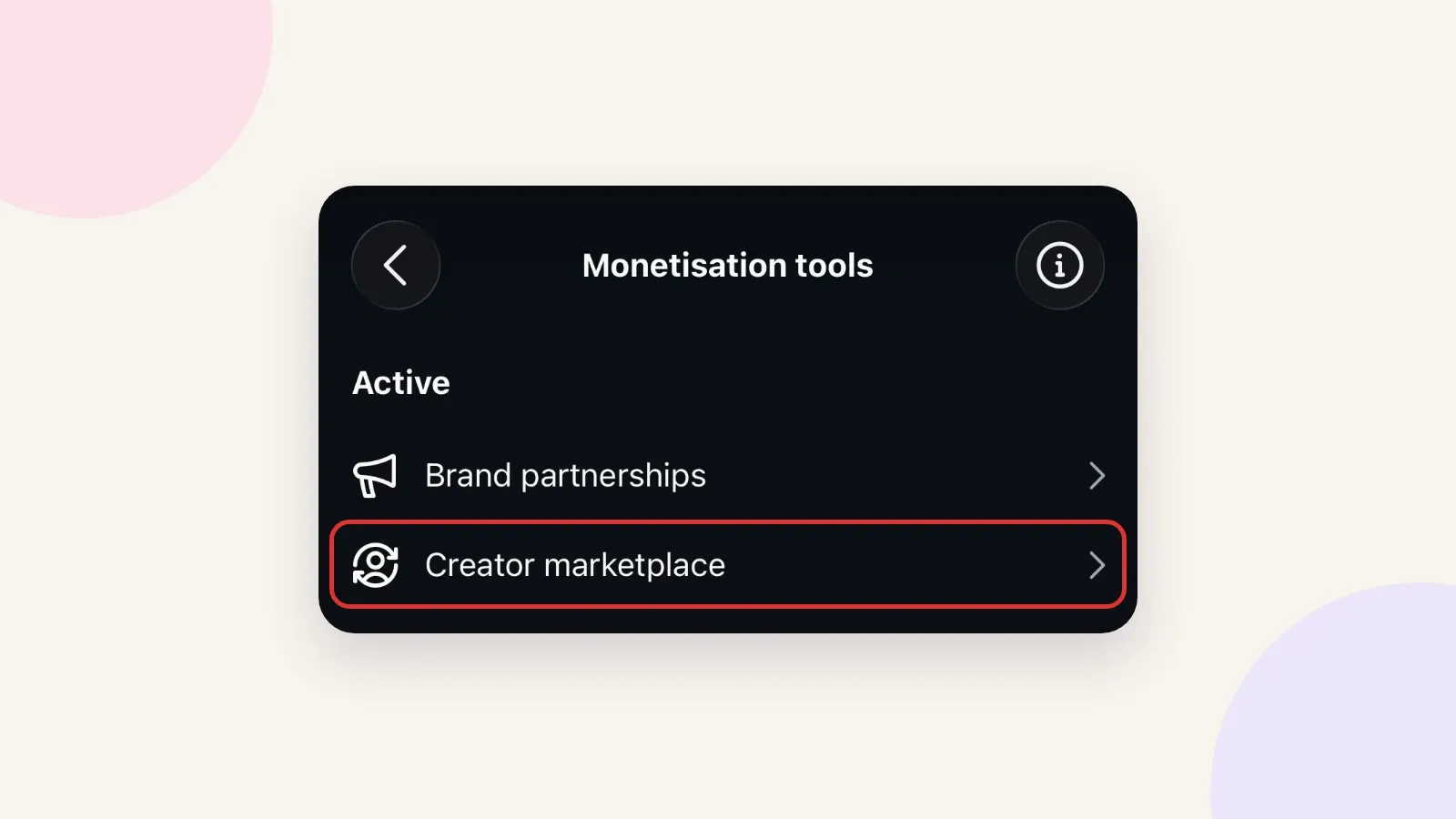
When a brand wants to work with you, it contacts you through the Partnership messages folder in your inbox. Treat each invitation like an inbound email: read the brief, the deliverables and the usage terms before accepting.
Other creator platforms
Outside Instagram, a few platforms also connect creators with brands:
- Collabstr: you list fixed-price packages, such as one Reel or a Reel plus Stories, and brands buy them or ask to negotiate.
- Shopify Collabs: an affiliate app for brands that sell on Shopify, paying a commission on the sales you drive.
- LTK: a platform you apply to join, built around shoppable posts and commissions, mostly in fashion, beauty and home.
They're useful for filling gaps between deals and for turning affiliate results into proof, but most well-paid Instagram deals still come from your own outreach.
Step 6: Price and scope the deal
How much Instagram brand deals pay
Typical 2026 rates for one sponsored feed post from a creator in an average-demand niche such as lifestyle:
| Followers | Typical fee per sponsored post |
|---|---|
| 1,000 to 10,000 | $50 to $250 |
| 10,000 to 100,000 | $250 to $1,500 |
| 100,000 to 500,000 | $1,500 to $5,000 |
| Over 500,000 | $5,000 to $12,000 |
These are the Instagram figures from the 2026 benchmarks of influencer rates by platform, which also compare Instagram with TikTok and YouTube. Format changes the price: a Reel usually costs 20% to 100% more than a feed post because it reaches beyond your followers. Stories are sold as a set of frames, and Instagram Story rates usually come to 40% to 65% of a post.
Where you land inside a range depends on your views and your niche more than your followers. A quick check is expected views × a CPM of $10 to $30 ÷ 1,000: a creator whose Reels usually get 40,000 views lands around $400 to $1,200 per Reel. For a starting number based on your own account, enter your format, followers and engagement rate in this Instagram pricing calculator.
Partnership ads and usage rights
Many Instagram brand deals now include a request to run your content as a partnership ad, the format Instagram used to call branded content ads. The ad shows your handle next to the brand's name, and the brand pays to show it to people beyond your audience. That makes it worth more than an organic post, so price it as a separate line.
Instagram offers two levels of permission:
- Content-level permission covers one post, Story or Reel. You either turn on Allow brand partner to boost when you add the Paid partnership label, or share a partnership ad code from the post's settings. A code can be used by up to two advertisers at a time.
- Account-level permission lets a brand create partnership ads from your handle without an existing post, turn any of your posts that tag it into ads, and target or exclude your followers. It suits ongoing partnerships and is worth considerably more.
You can remove either permission at any time, but turning off an ad code and stopping ads that are already running are separate settings in the app, so check both when a deal ends. Agencies often call this kind of ad access influencer whitelisting, and it's priced on top of the content fee, based on the permission level and how long the brand can run ads from your handle.
Usage rights are a separate request: the brand wants to repost your content on its own channels, website or emails. When a brand asks for usage rights, price them by channel and duration instead of including them in the post fee.
What to agree on before posting
Write these points down before you accept, even for a small deal:
- Deliverables: which formats, how many, the posting dates, and whether the Reel also goes to your Story
- Approval and revisions: when the brand reviews the content, and one round of edits included
- Partnership ads: content-level or account-level, for how long, and the added fee
- Usage rights: whether the brand can reuse the content on its website, in emails or in other ads, and for how long
- Exclusivity: which competitors you can't work with, and for how long. Charge for influencer exclusivity based on the deals you'd have to turn down.
- Payment: the amount, the due date, and whether part is paid before posting. Instagram doesn't handle payment for brand deals, so the brand pays you directly, usually against an invoice.
If the budget is lower than your rate, reduce the scope instead of the price: a carousel instead of a Reel, no ad permission, a shorter usage window. Trading scope for budget is the simplest way to negotiate influencer rates without discounting your work.
Red flags in Instagram brand DMs
Fake brand offers are common on Instagram, often from accounts that copy a real brand's name and logo. Slow down when a "brand":
- Offers an "ambassador" spot that requires you to buy products first, even at a discount
- Asks for your Instagram password, a login through an outside link, or a verification code
- Asks you to pay a fee to join a program or receive a contract
- Writes from an account with few posts, a slightly different handle or no blue check where the real brand has one
- Promises payment only after a set number of sales
When in doubt, contact the brand through the email on its official website and ask whether the campaign is real.
Step 7: Deliver, disclose and report
Sponsored Reels work best when they look like your regular posts, so film the product in a real situation rather than reading the brief to camera.
Add the Paid partnership label
Every paid or gifted brand deal on Instagram needs the Paid partnership label, and Instagram's rules count free products as compensation. Posts with an affiliate link also need the label, even if no brand is tagged. Once the brand approves the tag, the post shows "Paid partnership with" and the brand's name under your handle.
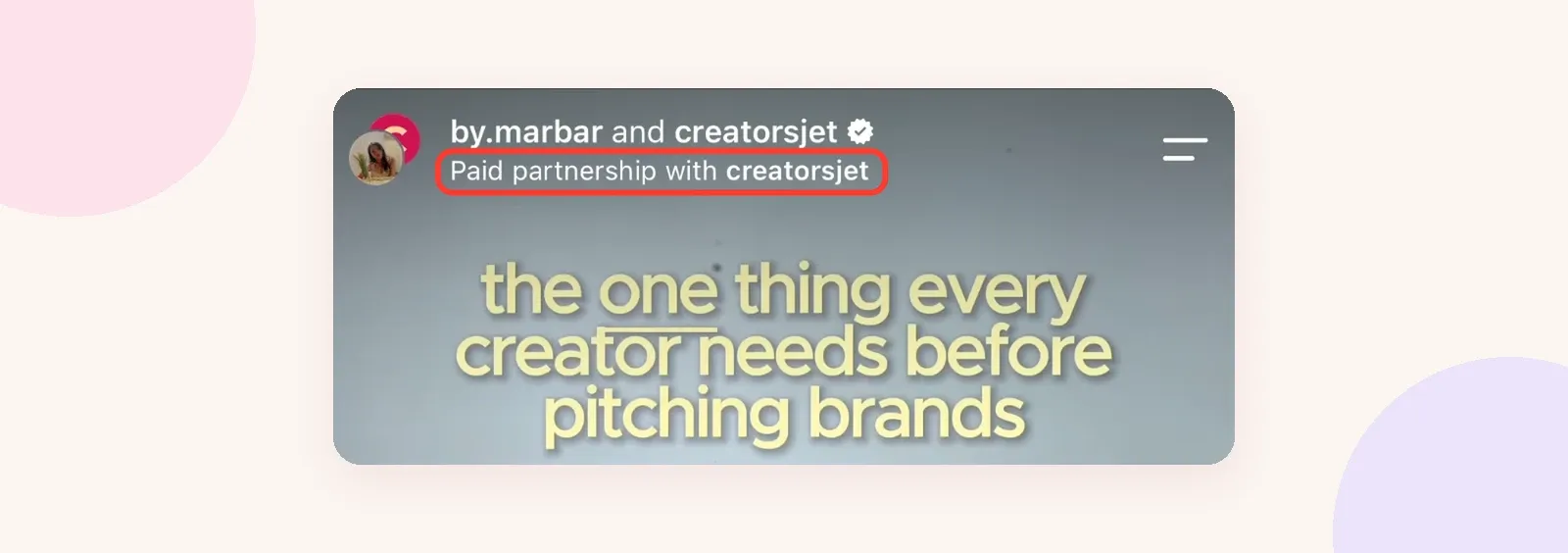
The first time, you'll need to turn on Instagram's branded content tools before you can add a paid partnership on Instagram.
The label is not the only rule. In the US, the FTC's disclosure guide for influencers says not to assume a platform's disclosure tool is enough on its own. Say it in the Reel itself, put "ad" or "sponsored" where viewers will see it without tapping "more", and superimpose the disclosure on Story frames.
Report the results
After the post goes live:
- Send the brand the live link right away.
- Send a short early update after 24 to 48 hours if the brand expects one.
- Send a full recap after about seven days, with Insights screenshots of views, reach, likes, comments, shares and saves, plus Story replies and link sticker taps.
Brands tagged in the Paid partnership label can see the post's insights themselves, so the recap is your chance to explain them: what worked, what viewers asked in the comments and what you'd try next. Those notes are the most useful part of what you send a brand after a sponsored post, and the part most likely to get you rebooked.
Final thoughts
Getting Instagram brand deals depends less on follower count than on being easy to book. A focused profile, a media kit built from your typical views and audience data, and pitches that propose a specific Reel put you ahead of most creators who simply ask to collaborate.
From there, price each format separately, put partnership ads, usage rights and exclusivity in writing, and make every sponsored post look like your own content. Disclose each deal and report the results, so every campaign makes the next pitch easier.