The first follow-up should make it easier for a brand to respond, not make the creator look impatient. After sending a pitch, wait a few business days, reply in the same thread, and add one useful piece of context instead of pasting the original message again.
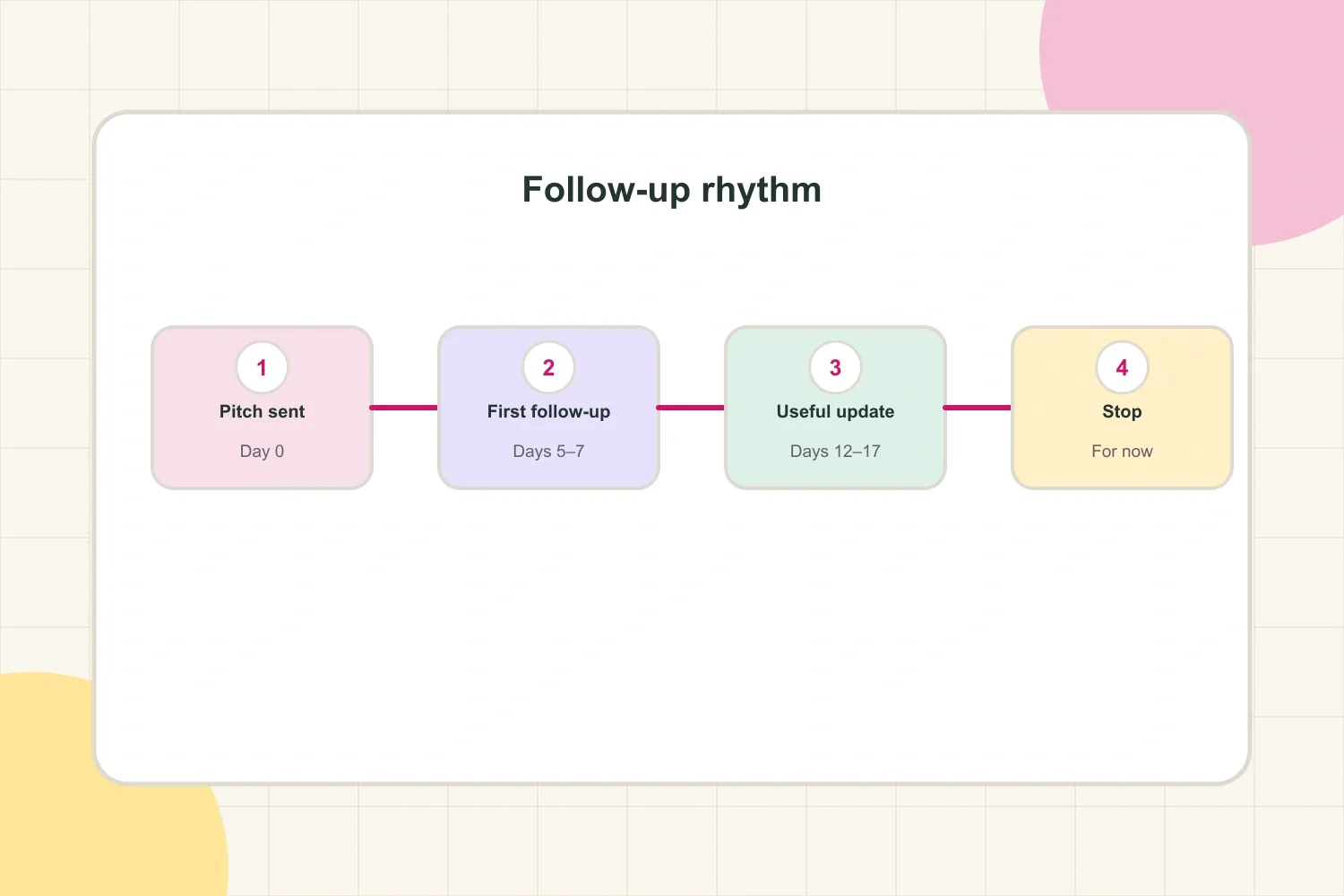
For most creator pitches, two follow-ups are enough: send the first five to seven business days later, then one final, useful update seven to ten days after that. If there is still no response, stop the sequence and leave the door open for a future campaign.
When to send the first follow-up
Wait around five to seven business days after the original pitch before following up. This gives the brand time to route the message, check its campaign calendar, and decide whether the opportunity belongs with partnerships, PR, social, or another team.
Use a shorter window when the pitch is tied to a clear launch date, event, or seasonal moment. In that case, say why the timing matters and give the brand a realistic response date. Do not create false urgency simply to get attention.
Before sending, check three basics:
- Did the original email reach the right person or inbox?
- Is the original subject line still clear when used as a reply?
- Has anything changed since the pitch that would make the follow-up more useful?
If the answer to the last question is no, the first follow-up can still be a short reminder. The important part is not to send it the next morning or treat an open as a promise to reply.
How many times should you follow up?
Use a simple two-message limit for a cold brand pitch:
- First follow-up: five to seven business days after the pitch. Keep it short and bring the original opportunity back to the top of the inbox. This creator PR email guide also recommends a short follow-up window, but the two-message limit is usually easier to maintain.
- Final follow-up: seven to ten business days later. Add a genuinely useful update, offer an easy way to defer the conversation, and make clear that you will stop following up for now.
After that, do not keep sending reminders every few days. A brand can be interested and still have no active campaign, budget, internal owner, or time to answer. Repeated nudges do not solve that constraint, and they can make a future conversation less comfortable.
What to write in the first follow-up
The first message has one job: make the original pitch easy to find and easy to assess. Reply in the same thread so the brand can see the original context without searching for it.
Keep the message to three parts:
- a direct reference to the date or subject of the original pitch;
- one-sentence reminder of the collaboration idea;
- a low-pressure question about timing or fit.
Example:
Hi [Name],
I wanted to follow up on my email from [date] about a possible [specific format] collaboration for [Brand]. The idea was to [short description of the activation] for my [audience or niche].
Is this something your team is considering for an upcoming campaign, or is there a better time to reconnect?
Best,
[Name]
Avoid explaining your entire pitch again. The follow-up should reduce the reading burden, not add another long paragraph to the inbox.
Add useful context instead of repeating the pitch
The second message should earn its place by adding something new. Useful context is specific, relevant, and easy to verify. It is not a random attachment or a new list of reasons the creator deserves a reply.
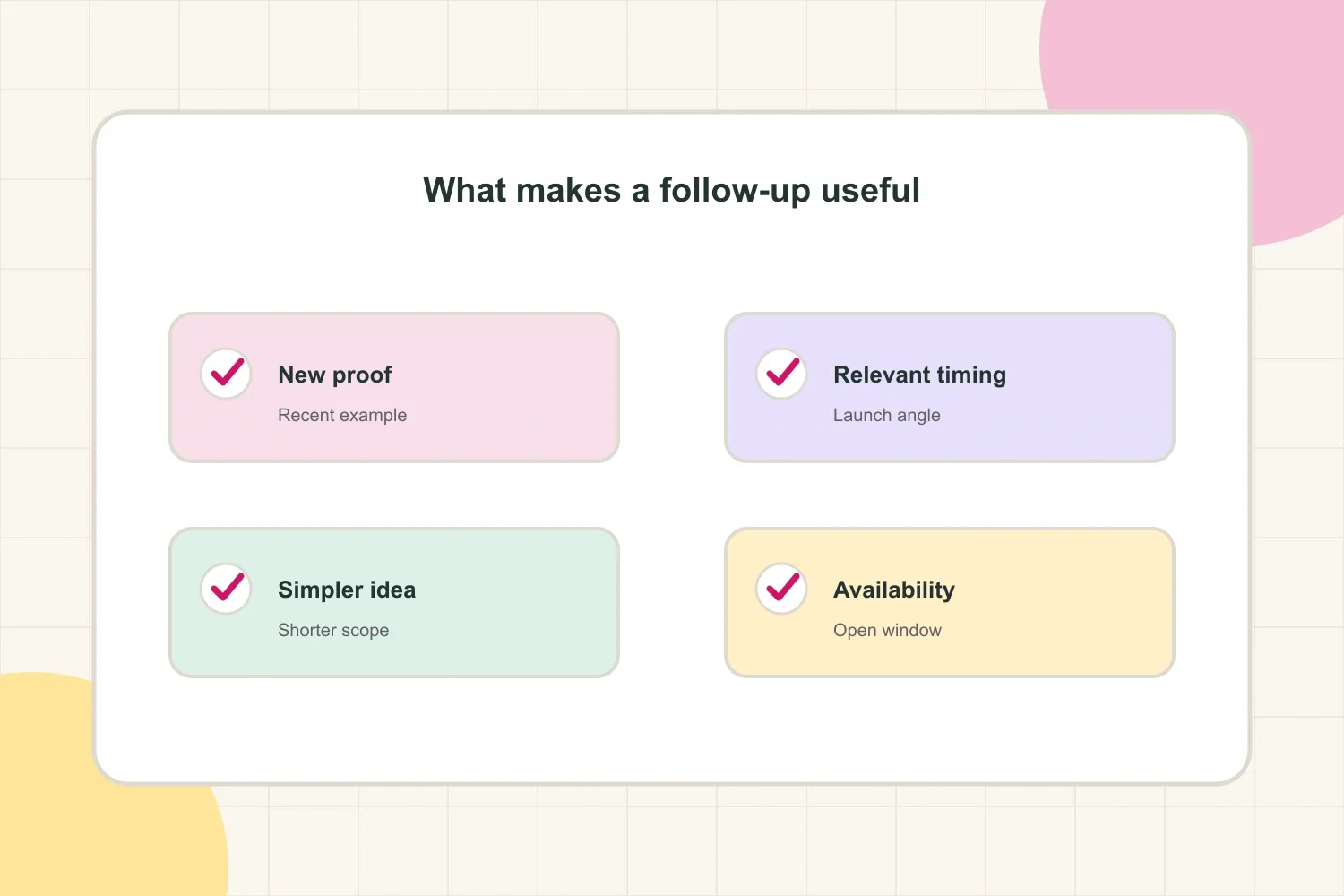
Good additions include:
- a recent piece of content that shows the proposed format in practice;
- a timely product, launch, or seasonal angle that changes the idea;
- a relevant audience or performance update connected to the campaign;
- a shorter version of the proposed activation that is easier to evaluate;
- a clear availability window if the original timing has changed.
For example, if the original pitch suggested a broad product feature, the follow-up might say: “I recently published a short tutorial in this format, and it gives a clearer sense of how the integration could feel. I’ve included it here for context.” That gives the brand something concrete to assess without rewriting the pitch.
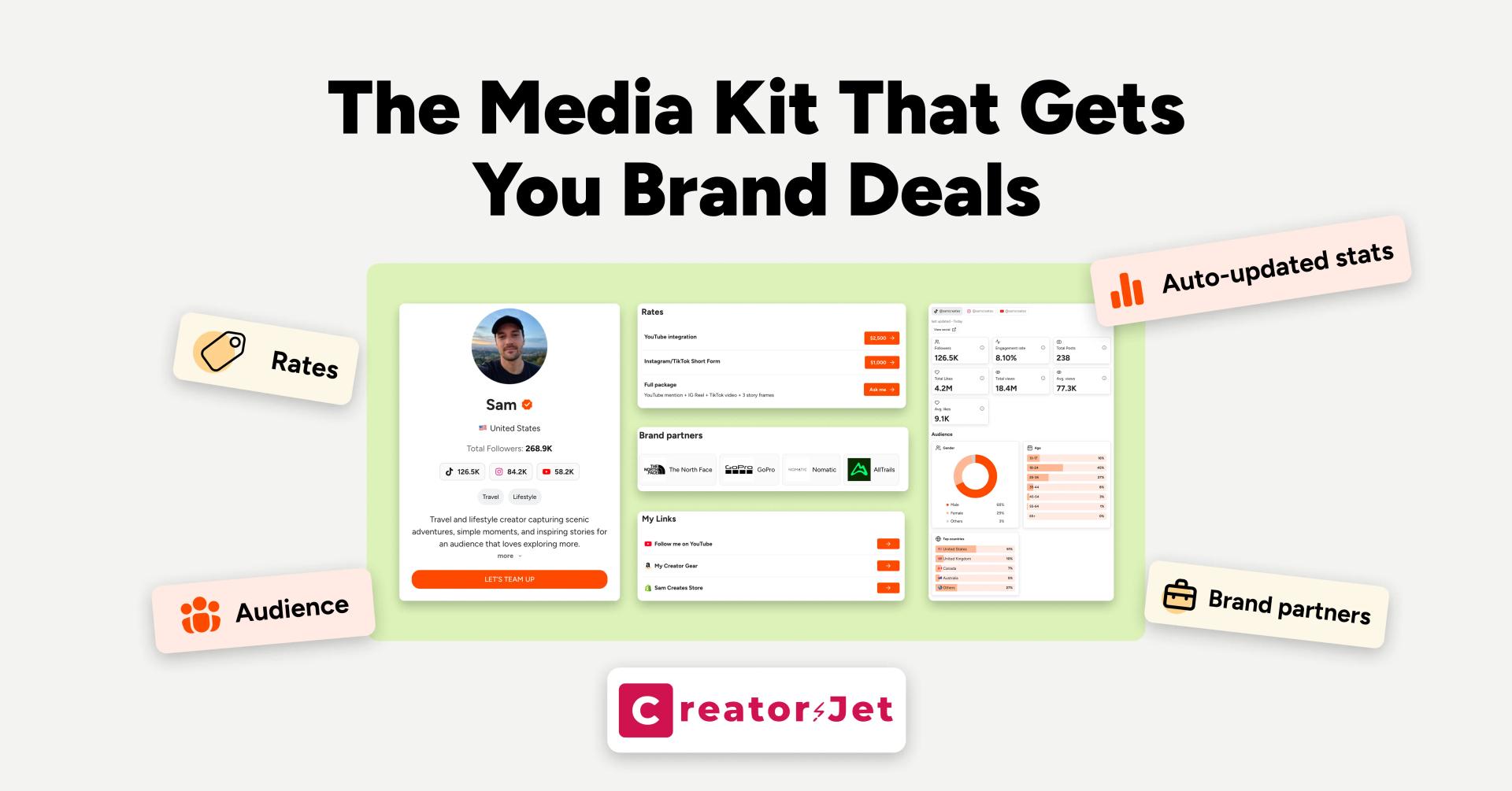
If you attach updated proof, keep it easy to scan. A current influencer media kit can help when your audience data or recent examples have materially changed, but do not attach a new document every time you send a reminder.
What to write in the final follow-up
The final message should be helpful and conclusive. Give the brand one last clear reason to reply, then remove the pressure to answer immediately.
Example:
Hi [Name],
One quick update before I close the loop: I have an opening in [month or campaign window] and could adapt the idea around [relevant product, launch, or audience need]. Here is the recent example I mentioned: [link].
If this is not on your calendar right now, no problem. I’ll leave it here and reconnect only if there is a relevant update in the future.
Best,
[Name]
This works because it gives the brand a clear choice: respond to the current opportunity, defer it, or let the conversation end without an awkward rejection.
If the brand replies at any point, pause the sequence. Answer the question it asked instead of sending the next scheduled reminder; a reply changes the conversation from follow-up to discussion.
What to do when the brand opens but does not reply
An email open is a weak signal. It may mean the message was skimmed, opened by someone forwarding it internally, or reopened while the brand was sorting its inbox. Treat it as a reason to stay measured, not as evidence that the brand is interested.
If the brand has opened the message but not replied, follow the same sequence:
- wait until the first-follow-up window has passed;
- send a short reply in the original thread;
- add context only if you have something genuinely relevant;
- do not mention that you saw the email was opened;
- stop after the final follow-up.
Do not switch immediately from email to Instagram DM, LinkedIn, or another personal channel just because tracking shows an open. Use another channel only when the brand has clearly invited creators to contact it there or when an existing conversation already happens there.
When to stop following up
Stop when you have sent the two planned follow-ups, when the campaign window has passed, or when the brand has asked you to wait. Also stop if your messages are becoming more about getting a response than offering relevant information.
A non-response is not a verdict on your value. It can mean the brand is not running the right campaign, the contact is not the decision-maker, the budget changed, or the timing does not work. Record the date and outcome, then put the prospect back into your longer-term list without repeatedly reopening the same thread.
The exception is a meaningful change: a new product launch, a relevant content example, or a future campaign window. If you return later, start a new message with a genuine reason for reconnecting rather than sending “following up again” to the old thread.
How to respond when a brand says “not right now”
“Not right now” is not always a permanent no. Reply graciously, clarify whether a future follow-up is welcome, and respect any timing the brand gives you.
Example:
Thanks for letting me know. No problem at all. Is it useful for me to check back around [month or quarter], or would you prefer that I wait for a future campaign to reach out? Either way, I appreciate the reply.
If the brand gives a specific month, add a reminder and follow up once around that time with a new reason for the conversation. If it says the fit is not right, accept that answer and do not try to persuade the contact through a longer explanation.
If the brand says it is not running creator campaigns, do not keep following up about the same pitch. You can revisit only if the brand later announces a program, launch, or format that makes the opportunity materially different.
A simple follow-up record to keep
Tracking follow-ups is useful because it prevents accidental over-contact and makes future outreach more thoughtful. Keep a lightweight record with:
- the brand and contact;
- the date of the original pitch;
- the date and purpose of each follow-up;
- any response or timing guidance;
- the next acceptable contact date, if there is one;
- the reason to reconnect later.
The goal is not to build a complicated sales system. It is to know what was sent, avoid repeating yourself, and recognize when the respectful next step is to move on.
Following up well means creating a small, clear path back into the conversation. Send the first reminder after five to seven business days, make the second message useful, stop after two follow-ups, and respond warmly when a brand gives you a timing signal. That balance protects the relationship while giving a good pitch a fair chance to be seen.