


A brand deal can look exciting and still be a bad business decision. The problem is not always the product or the fee. Sometimes the warning sign is hidden in the email, the contract, the payment process, or the way the brand talks about disclosure.
Creators do not need to treat every unclear offer like a scam. Some brands are simply disorganized. But a creator should not accept a collaboration when the brand makes the risk sit entirely on the creator.
The practical rule is simple: pause when the deal is unclear, unpaid, legally risky, or hard to verify. A good brand may negotiate, but it should not make basic terms feel mysterious.
The fastest red flag check
Before replying yes, check five areas: brand identity, payment, scope, rights, and disclosure. If one of them is missing, slow the conversation down before filming, posting, or signing.
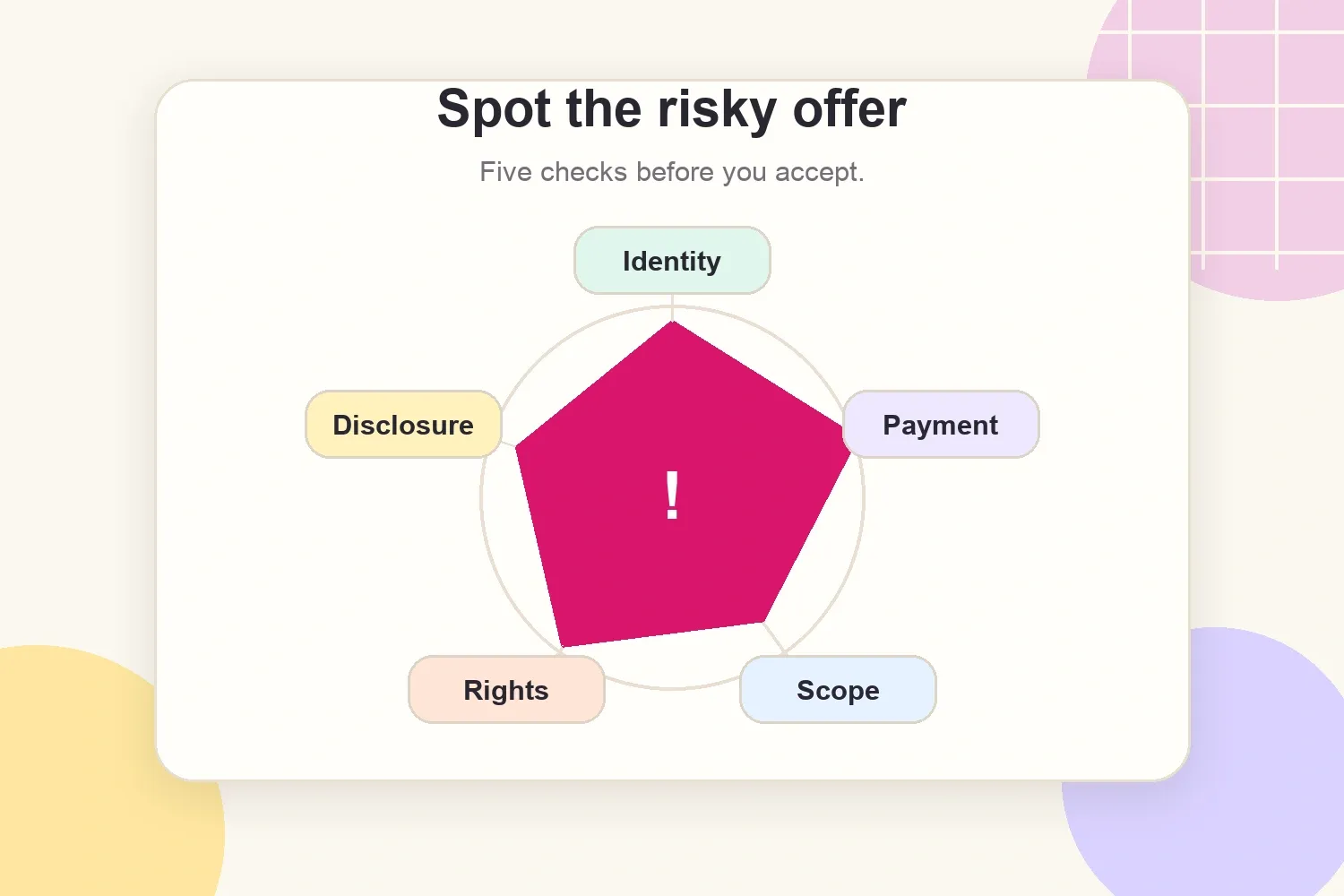
This check is especially useful when the offer arrives through a DM. DMs are normal in creator partnerships, but a real brand should still be able to confirm who is contacting you, what they want, how they pay, and what rights they expect.
A useful creator breakdown names the exact language that should make you slow down: commission-only payment, unpaid whitelisting, raw footage with no extra fee, ad code requests, and a sender using a free email domain. Those are not tiny details. They change who controls the content, who carries the risk, and whether the creator is being paid for the work.
Red flag 1: the brand identity is hard to verify
The first red flag is a brand contact that cannot be checked. A collaboration email from a free personal address, a misspelled domain, a new account with no history, or a sender who refuses to use a company email should make you pause.
This does not automatically mean the offer is fake. Small brands sometimes use messy systems. But creators should verify before sharing an address, signing a contract, paying shipping, or sending files.
Check:
- Does the sender’s email domain match the brand website?
- Does the person appear on the brand’s team page, LinkedIn, agency website, or official social channels?
- Did the DM come from the verified brand account or from a random account using the logo?
- Does the brief mention the actual product, deliverable, platform, and timeline?
- Can the brand confirm the collaboration from an official email address?
If the contact avoids verification, treat that as a business risk. A serious collaboration should be easy to trace back to a real company or agency.
Red flag 2: you have to pay before you can work
A brand asking a creator to buy the product, pay a registration fee, pay for shipping on an expensive item, or cover a “collaboration fee” is usually not a real paid partnership.
There are edge cases. A creator may choose to buy a product they already wanted and later pitch the brand. A small brand may offer a discount code instead of a paid campaign. But that is different from a brand presenting an unpaid purchase as a professional collaboration.
Be careful when the offer sounds like:
- “You only need to pay shipping.”
- “Buy the product first and we will reimburse you later.”
- “Pay this fee to join our ambassador program.”
- “Post first and then we will decide if payment is possible.”
- “You will earn commission if your audience buys.”
Affiliate-only deals are not always bad, but they should be framed honestly. If a brand wants content, usage rights, or posting commitments, the creator is doing marketing work. The article on when creators should stop accepting gifted collaborations explains when unpaid product offers stop making sense.
Red flag 3: payment terms are vague
Payment terms do not need to be complicated, but they do need to be clear. A brand that wants a Reel, Stories, edits, usage rights, and posting dates should also be able to explain the fee and payment timeline.
Watch for vague phrasing like:
- “We will discuss compensation later.”
- “Payment depends on performance.”
- “We usually pay after approval,” with no date or approval process.
- “The budget is flexible,” but no range is given.
- “This could lead to paid work,” while asking for deliverables now.
A clean offer should answer: how much, for what work, by what date, and through what payment method. For larger deals, creators should also confirm whether payment happens on signing, on content delivery, on posting, or net 15/net 30 after invoice.
Performance bonuses can be fine when they are added to a base fee. They become risky when the creator carries all the production work and the brand only pays if sales happen. Conversions depend on the brand’s landing page, pricing, product-market fit, tracking, and offer, not just the creator’s content.
Red flag 4: the scope keeps expanding
Scope creep is one of the most common ways a decent collaboration becomes a bad one. The brand starts with one post, then adds extra hooks, more edits, raw footage, whitelisting, extra platforms, exclusivity, or a faster deadline without changing the fee.
The issue is not that brands ask for changes. Normal campaigns need revision rounds. The red flag is when the brand treats extra work as if it is already included.
Clarify these before accepting:
- Number of posts, videos, Stories, photos, or UGC assets.
- Number of revision rounds.
- Raw footage or source file requirements.
- Posting dates and approval deadlines.
- Platforms where the content will appear.
- Whether the brand can use the content in ads, email, website, retail, or organic social.
- Exclusivity length and restricted competitors.
If the brand adds work, the creator can add a fee. That is not being difficult. It is pricing the actual collaboration. For rate context, use the framework in the practical guide to influencer rate negotiation.
Red flag 5: usage rights are hidden inside casual language
Usage rights are often where creators lose value without noticing. A brand may say “we just want to repost it,” but the contract may include paid ads, whitelisting, unlimited usage, global rights, perpetual rights, edits, sublicensing, or use across partner channels.
The risky words are usually broad:
| Contract wording | Why it matters | Better question to ask |
|---|---|---|
| In perpetuity | The brand can use the content forever | How many months of usage are needed? |
| Paid media | The content may become an ad | Which platforms and for how long? |
| Whitelisting or boosting | The brand may run ads through the creator identity | What spend, duration, and permissions apply? |
| Exclusivity | The creator may be blocked from similar brands | Which competitors and for what period? |
Creators do not need to reject every rights request. Brands often need usage because creator content can support ads, product pages, launches, and retargeting. The red flag is when rights are broad, unpaid, or not explained.
Red flag 6: the brand pushes risky disclosure or product claims
Any brand that asks a creator to hide a sponsorship, avoid “ad” language, pretend the product was bought, or make claims the creator cannot honestly support is creating risk.
In the United States, the FTC says creators should disclose financial, employment, personal, or family relationships with a brand, and that free or discounted products can count as something of value. The FTC’s Disclosures 101 for Social Media Influencers is a useful baseline for creators. In the UK, the ASA’s influencer guide also focuses on making ads clearly identifiable.
Be careful with requests like:
- “Do not mention this is sponsored.”
- “Put #ad at the very end so it does not hurt engagement.”
- “Say this product cured your skin problem.”
- “Say you bought it yourself.”
- “Make it look organic, not like an ad.”
Creators should also avoid claims they cannot verify. This matters in categories like skincare, supplements, finance, health, fitness, and children’s products. If the brand wants a specific claim, ask for approved language and proof. If it still feels misleading, walk away.
How to respond when the offer feels risky
The best response is not panic or instant rejection. It is a short, professional message that asks for clarity. Good brands will usually clarify. Risky brands often avoid the question.
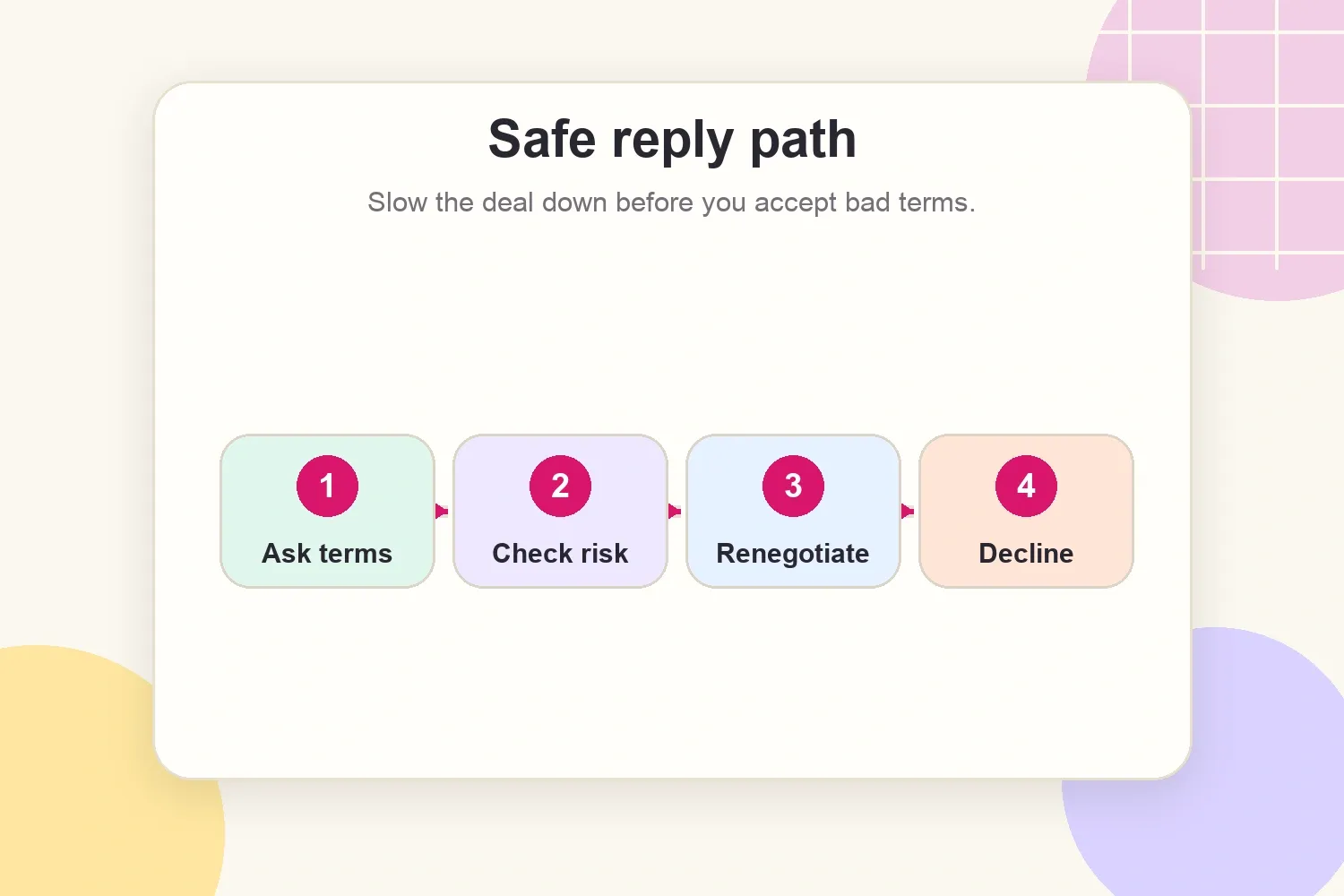
Use this structure:
- Ask for the missing terms: “Could you confirm the fee, deliverables, timeline, usage rights, and payment schedule before I review the opportunity?”
- Name the risk calmly: “I do not license paid usage or exclusivity without a defined term and separate fee.”
- Offer a clean option: “I can quote for one organic Reel, or I can quote separately for ad usage if that is needed.”
- Decline without overexplaining: “This does not fit my current collaboration terms, but thank you for reaching out.”
Creators should keep the tone calm because not every unclear offer is malicious. But they should also avoid doing unpaid strategy, filming, or contract negotiation before the core terms exist.
What to save before you say yes
Before accepting a brand deal, save a clean record of the collaboration. This helps if the scope changes, payment is late, or the brand asks for content outside the agreement.
Save:
- Brand contact name and email.
- Brief and deliverables.
- Agreed fee and payment date.
- Invoice details.
- Usage rights and duration.
- Exclusivity terms.
- Approval deadlines.
- Revision limits.
- Final posted links and screenshots.
This is not about being paranoid. It is about acting like a business. Brands often evaluate creators on organization and professionalism, as explained in what brands look for before offering a deal. A creator who keeps clean records is easier to work with and easier to protect.
When to walk away
Walk away when the brand refuses to verify identity, will not put terms in writing, avoids payment details, asks for broad rights without compensation, pushes hidden sponsorships, or pressures the creator to move faster than the risk allows.
A creator can also walk away from a deal that is simply not worth the energy. A small gifted collaboration with clear terms may be fine. A small gifted collaboration with unclear rights, rushed posting, and vague promises is not.
The best deals feel clear before they feel exciting. If a brand respects the creator’s time, audience, and content, the collaboration should be possible to define in plain language.
Final takeaway
A red flag does not always mean a brand is bad. It means the creator needs more information before accepting risk. The job is to slow the deal down, clarify the terms, price the real scope, and protect the audience.
Good brand deals are not only about getting paid. They are about knowing what is being sold, who can use it, when payment happens, and whether the content can be shared honestly.