

There is no perfect number of brand collaborations a creator should do every month. A creator posting daily has more room than a creator posting twice a week. A full-time creator with a clear production system has more room than someone squeezing content between work, school, or client projects.
The practical answer is this: most creators should start with one to three paid brand collaborations per month, then increase only if quality, trust, and organic content stay strong.
That number is not about looking busy. It is about keeping the audience interested, giving each brand enough attention, and avoiding the point where every other post feels sponsored.
The quick answer
For most creators, a sustainable monthly range looks like this:
| Creator stage | Practical range | Why this range works |
|---|---|---|
| Starting creator | 1-2 collaborations | Enough to build proof without overwhelming the feed. |
| Micro or small creator | 1-3 collaborations | Keeps space for organic posts, testing, and audience replies. |
| Mid-tier creator | 2-4 collaborations | Works when the creator has a repeatable content process. |
| Full-time creator | 3-5 collaborations | Possible when production, reporting, and scheduling are organized. |
| High-output creator or managed talent | 5+ collaborations | Only works with strong audience trust, team support, or clear content pillars. |
The range matters less than the ratio. If a creator publishes 20 useful organic posts and 3 sponsored posts in a month, the sponsored content may feel natural. If a creator publishes 4 posts and 3 are ads, the audience usually notices fast.
Start with audience trust, not a monthly target
The biggest mistake is treating brand collaborations like a quota. More deals can mean more income, but they can also make the creator less trusted if every recommendation starts to feel rented.
Audience trust is what makes brand deals work in the first place. If followers believe the creator actually uses, understands, or cares about the product, sponsored content can feel useful. If every campaign feels random, even a small number of collaborations can hurt performance.
Before accepting another monthly deal, the creator should ask:
- Does this brand fit the audience?
- Is the product something the creator can explain naturally?
- Will this collaboration interrupt the normal content rhythm?
- Is there enough time to create the post properly?
- Will the audience still get enough non-sponsored value this month?
This is also why brand fit matters so much. The article on what brands check before offering a deal breaks down how brands think about audience match, content quality, and creator reliability.
Keep sponsored content below one third of the feed
A useful starting rule is to keep sponsored content below one third of the creator's monthly output. It is not a law, and it will not fit every niche, but it is a good warning system.
For example, if a creator posts 12 times per month, 2 to 3 sponsored posts may still feel balanced. If that same creator posts 6 times per month, 3 sponsored posts can start to feel heavy.
The goal is not to hide brand deals. The goal is to make sure the feed still gives people the reason they followed in the first place: useful advice, entertainment, taste, education, personality, or access.
This also changes by format. A sponsored Story sequence disappears quickly and may feel less intrusive than a permanent Reel. A YouTube integration inside a useful video may feel natural if the product is relevant. A carousel that is mostly a brand ad can feel heavier because it takes up more feed space.
The strongest sponsored posts usually borrow the creator's normal format instead of interrupting it. A brand mention works better when it feels like the same kind of content the audience already watches, just with a relevant product inside the idea.
Count the workload, not just the number of posts
One brand collaboration can be light. Another can take half the month.
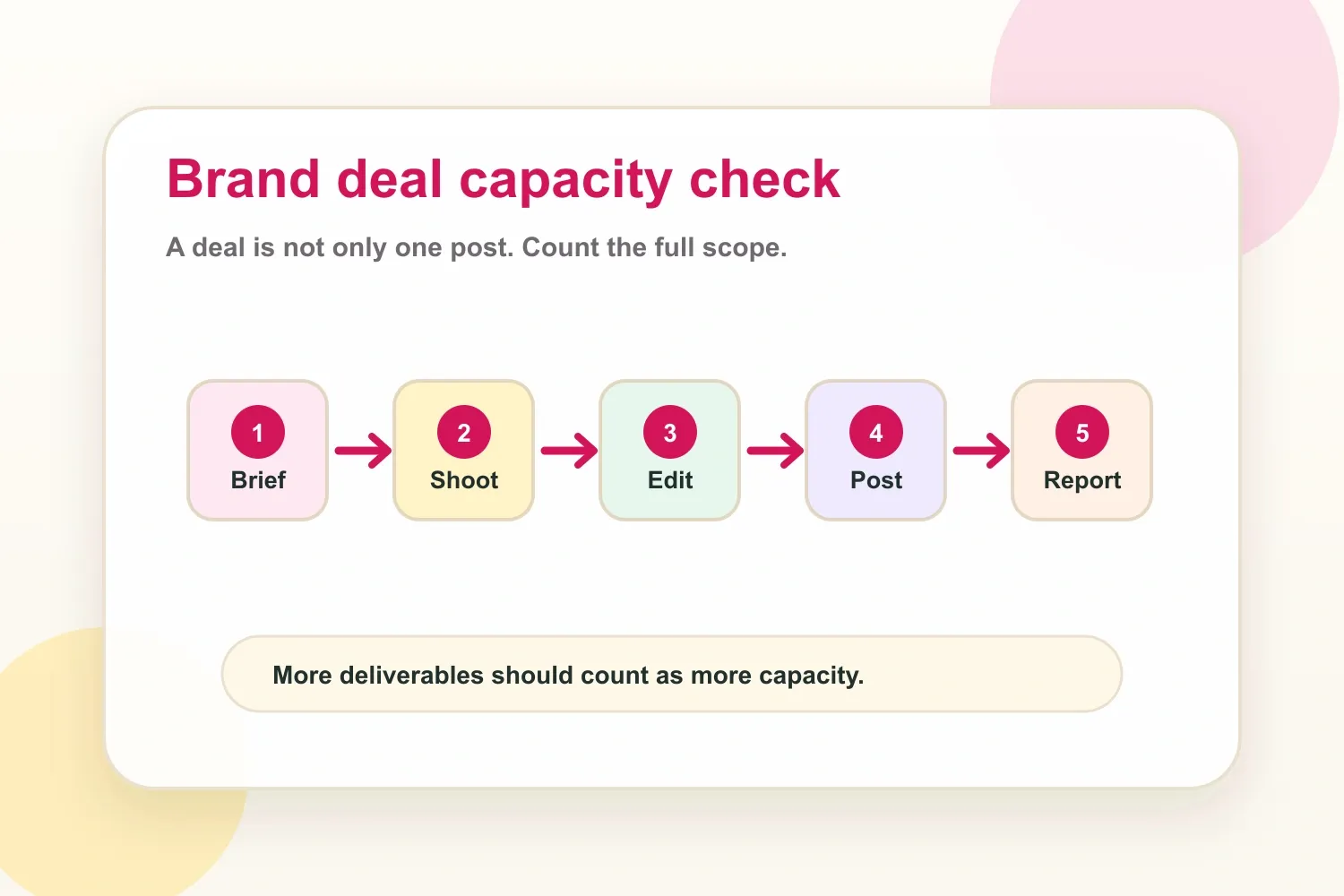
A creator should not count only the final post. The real workload includes reading the brief, testing the product, scripting, filming, editing, sending drafts, handling revisions, writing captions, posting, answering questions, reporting results, and sometimes dealing with usage rights or exclusivity.
A single campaign can include:
- 1 Reel
- 3 Story frames
- 1 static feed post
- Usage rights for paid ads
- Whitelisting or partnership ad permissions
- A performance recap
- One or two revision rounds
That should not be treated the same as one simple Story mention. The more deliverables a campaign includes, the more it should count against the creator's monthly capacity.
For creators who are still building a repeatable process, a simple brand deal system helps keep outreach, pricing, deliverables, and reporting from turning into scattered work.
When one collaboration should count as two
Some deals look small in the calendar but are heavy in practice. A campaign should count as more than one monthly collaboration when it includes extra production, extra rights, or extra pressure.
It probably counts as more than one deal if:
- The brand wants multiple content formats.
- The creator has to travel, buy props, or book a location.
- The product requires testing before an honest recommendation is possible.
- The brand asks for paid usage rights.
- The contract includes category exclusivity.
- The timeline leaves little room for normal content.
- The creator has to produce several rounds of revisions.
This is where many creators underprice. They charge for the post, but not for the total campaign scope. When the brand asks for extra usage, exclusivity, or deliverables, the creator should treat it as a bigger collaboration, not as a normal post with bonus work attached.
If a brand asks for rates while adding more scope, this guide on how to respond when a brand asks for your rates can help frame the reply without underpricing.
How many gifted collaborations are too many?
Gifted collaborations need an even stricter filter because they take time without guaranteed income.
A gifted product can make sense if the product is valuable, the creator genuinely wants it, the content is optional, and the brand relationship could become useful. But if the brand expects a Reel, Stories, usage rights, deadlines, or exclusivity in exchange for product only, that is no longer a casual gifting opportunity. It is unpaid work.
A creator should be especially careful if gifted collaborations start replacing paid work or filling the content calendar. Free products do not pay for editing time, strategy, equipment, transport, taxes, or audience trust.
A good rule: gifted collaborations should support the creator's content, not control it.
What brands care about when creators accept several deals
Brands do not only look at follower count. They also look at how the creator's recent content feels.
If a creator's feed is full of unrelated sponsored posts, a brand may worry that the audience is tired of promotions. If the creator is selective and every collaboration fits the niche, the same number of deals can look much stronger.
Brands usually care about:
- Audience fit
- Engagement quality
- Content consistency
- Past brand results
- Whether sponsored posts still feel natural
- Whether the creator has enough time to produce strong work
Disclosure matters too. Sponsored content should be clearly labeled according to platform rules and local law. The FTC disclosure guide for influencers explains that creators should disclose when they have a material connection to a brand, including free or discounted products. Instagram also explains its paid partnership label for branded content in its Help Center.
A practical monthly cadence
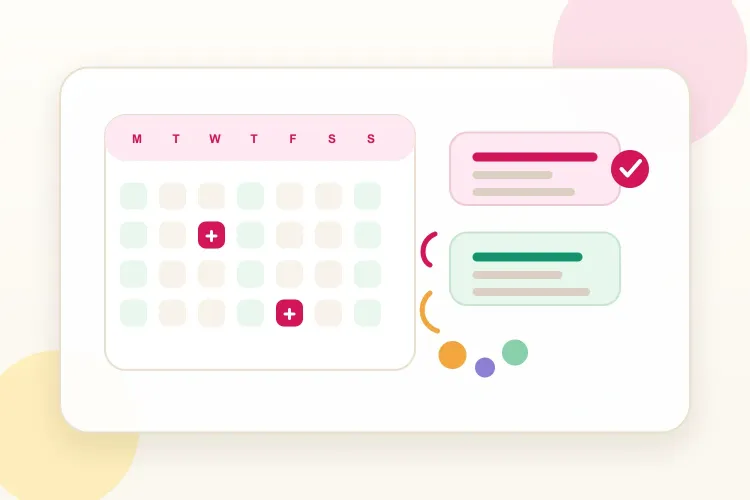
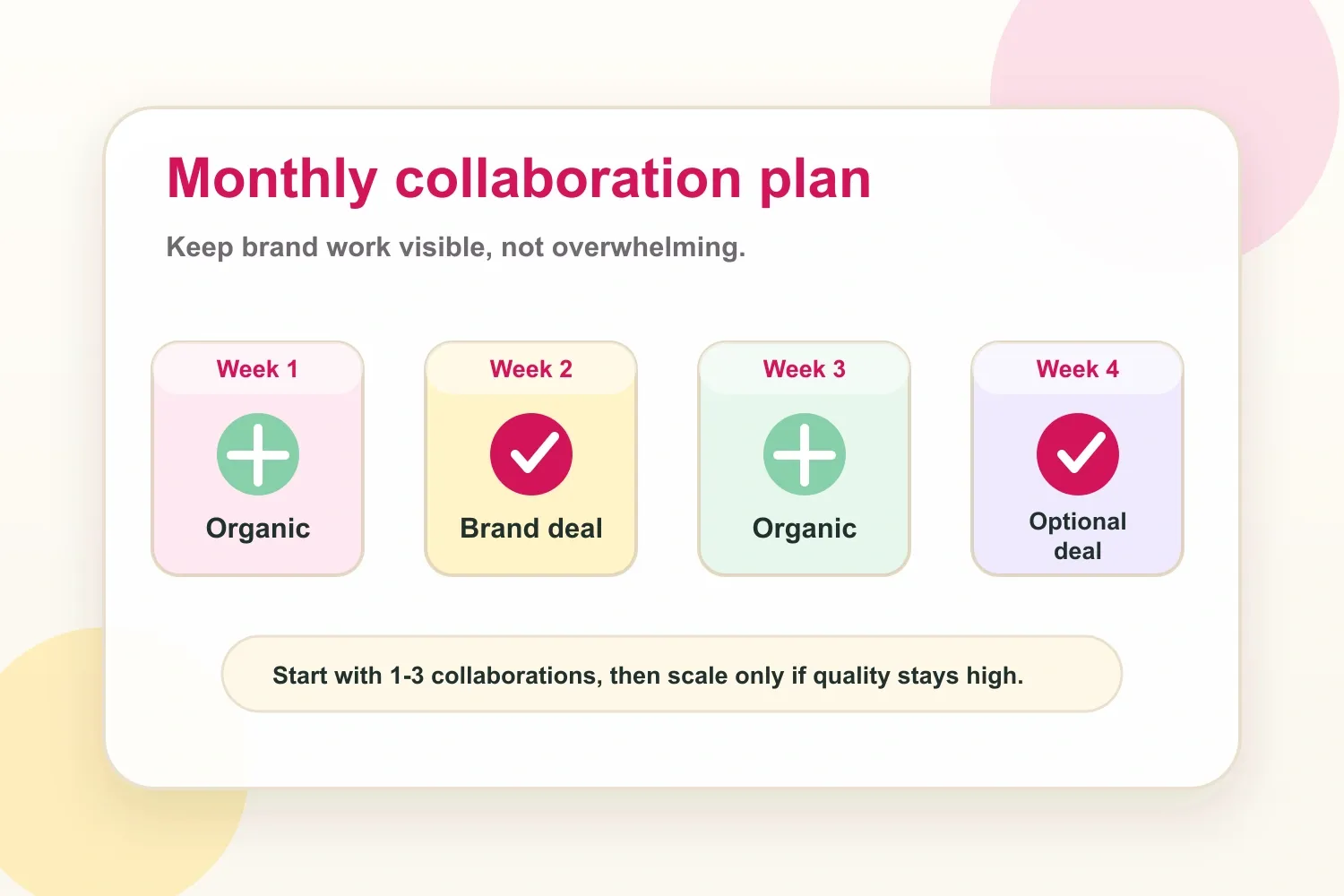
A simple month for a growing creator might look like this:
- Week one: publish normal organic content, test angles, and warm up the audience around the topic.
- Week two: publish one sponsored post that fits the content theme.
- Week three: return to organic content, answer comments, and share useful follow-up posts.
- Week four: publish a second collaboration only if it fits the audience and the creator has enough time to do it well.
This rhythm keeps the brand work visible without making the entire month feel like a campaign calendar.
For a creator with more volume, the cadence can scale. The principle stays the same: organic content should carry the feed, and brand collaborations should feel like relevant additions.
Signs a creator is doing too many brand collaborations
Too many brand deals usually show up before the creator admits it. The signs are often simple:
- Organic engagement starts dropping.
- Comments become less specific or less positive.
- Followers ask if every post is sponsored.
- The creator rushes briefs and misses details.
- Reporting becomes inconsistent.
- The creator stops posting the content that built the audience.
- Sponsored posts feel unrelated to each other.
When these signs appear, the answer is usually not to accept more deals. It is to slow down, improve selectivity, and protect the relationship with the audience.
When more collaborations can work
Doing more than three to five brand collaborations per month can work, but only in the right setup.
It is more realistic when the creator has a clear niche, a strong content calendar, a team or editor, repeatable brand formats, reliable reporting, and an audience that expects product recommendations or commercial content. Beauty, fashion, tech reviews, deals, and shopping-heavy niches may have more room for frequent partnerships than personal storytelling or education-first niches.
Even then, quality matters more than volume. A creator who does fewer partnerships but gets strong performance, repeat bookings, and positive audience response is usually in a better position than a creator who accepts everything and burns trust.
Final thoughts
The best number of brand collaborations per month is the number a creator can handle without weakening audience trust or content quality.
For most creators, that means starting with one to three collaborations per month, keeping sponsored content below one third of the feed, and treating heavy campaigns as more than one slot. More deals can come later, but only when the creator has the systems, audience trust, and creative capacity to make each partnership feel worth it.