

Influencer exclusivity is a contract term that stops a creator from promoting a brand's competitors for a set period. When a brand asks for it, the restriction has a cost: every deal you turn down during the window is income you do not earn. So the right answer is not a quick yes or no. It is a few questions about scope, followed by a separate fee.
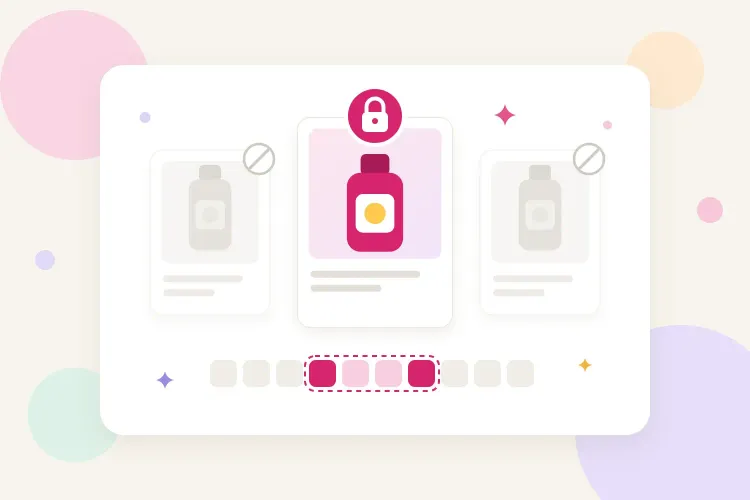
A fair exclusivity clause names the competitors or a narrow category, covers specific platforms and sponsored content only, starts and ends on clear dates, and is priced on its own line. A risky one says "no competing brands," starts at signing, runs for months after the last post, and costs the brand nothing.
What influencer exclusivity covers in a brand deal
Exclusivity can mean very different things depending on how the clause is written. Before discussing price, identify which type the brand is asking for.
| Type of exclusivity | What it blocks |
|---|---|
| Named competitors | Sponsored work with a short list of specific brands |
| Product category | Sponsored work with any brand selling a defined product type, such as sunscreen |
| Broad industry | Sponsored work with any brand in a wide sector, such as beauty or fitness |
| Platform-only restriction | Competing sponsorships on one platform, such as YouTube, while other platforms stay open |
| Full exclusivity | Sponsored work with any other brand at all, competitor or not |
The narrower the definition, the lower the cost to you. A list of three named competitors blocks a few possible deals. "Any beauty brand" can block most of your income for the duration. Full exclusivity is rare outside long ambassador contracts, and it should be priced close to everything you would otherwise earn from sponsorships in that period.
Also check what kind of content the restriction applies to. A clause limited to sponsored content usually still lets you mention a product you genuinely use, keep old posts live, and leave existing affiliate links in place. A clause that covers "any promotion or mention" may not.
Why brands ask for it, and when it's reasonable
Brands ask for exclusivity because they do not want their campaign to sit next to a competitor's sponsored post on the same feed, or because they want the audience to associate the creator with their product.
The request is reasonable when:
- The brand is launching a product and needs a clear window around the launch.
- The deal is a multi-post series or an ambassador contract, where the brand is buying an ongoing association.
- The brand is running paid ads with your content or through your handle, so your face is attached to its product for the length of the ads.
The request is harder to justify when:
- It is a single post, and the window runs for months after it.
- The deal is gifted, affiliate-only, or paid well below your rate. If the brand is not paying a fee, it is not paying for the work you would turn down either.
- The category is defined so broadly that it covers brands that do not compete with the client.
A brand can have a fair reason to want exclusivity and still need to pay for it. The two are separate questions.
Questions to ask before you say yes
A short scope email avoids most exclusivity problems. Ask:
- Who is blocked? Named competitors, a product category, or an entire industry?
- Which platforms? All platforms, or only the ones where the campaign runs?
- Which content? Sponsored posts only, or also affiliate links, gifted products, organic mentions, and older posts already live?
- When does it start and end? From signing, from the first post, or from the campaign start? How long before and after the post?
- Which markets? Worldwide, or only the countries where the brand sells?
- What about existing deals? Can you keep commitments you already signed with brands in the category?
- What if the campaign is delayed or cancelled? Does the restriction still apply, and are you still paid?
The last question matters more than it looks. If the brand moves the launch by two months, a clause that starts at signing can keep you blocked for months before the campaign even begins.
How long exclusivity usually lasts
There is no single standard length, and published guidance varies widely. Some brands ask for very little: the brand managers quoted in Modash's guide to influencer exclusivity want one or two days around a post, sometimes followed by a month of category exclusivity, and the guide treats 2 to 7 days as normal. Contract guides written for creators usually describe longer windows, often 30 to 90 days after the campaign. Most of that gap comes from the type of deal.
A practical way to match the window to the deal:
| Type of deal | Window that usually makes sense |
|---|---|
| One sponsored post or video | A few days before and after the post, up to 30 days after it |
| Campaign with several posts | The campaign period plus up to 30 days after the last post |
| Ambassador or retainer contract | The contract term plus 30 to 90 days, priced into the retainer |
| Deal with paid usage or whitelisting | At least as long as the ads run, priced for that full period |
Anything longer deserves either a much higher fee or a narrower definition. A 12-month category restriction for one Reel is rarely a fair trade. For long ambassador deals, also agree on a review date: if your audience grows during a six- or twelve-month restriction, the original fee can end up well below what the same block is worth.
How to price exclusivity
Exclusivity is not part of your content fee. Your base rate pays for creating and publishing the content. Exclusivity pays for the work you agree not to take.
Start from the deals you would turn down
The most defensible price comes from your own numbers. Look back at the last 6 to 12 months and list the paid deals you did with brands the clause would block. Then check your current pipeline for conversations with those brands.
Example: a skincare creator with 60,000 Instagram followers charges $800 for a Reel. A sunscreen brand asks for 90 days of exclusivity in "skincare."
- In the last 12 months, the creator did four paid deals with other skincare brands, worth $4,200 in total.
- That averages about $1,050 per 90 days.
- The proposed window runs from October to December, and two of those four deals, worth $2,100, happened in the same months last year.
On those numbers, 90 days of skincare exclusivity puts somewhere between $1,050 and $2,100 of expected income at risk. A token fee of $100 or $200 would mean subsidizing the brand's campaign.
There are two fair ways forward from here:
- Keep the broad category and price for it, close to the income it blocks.
- Narrow the scope and lower the price. If the block covers only three named sunscreen brands, which accounted for $600 of last year's deals, it costs much less, and the brand still gets the protection it actually needs.
Timing changes the price too. Blocking Q4, back-to-school, or your niche's launch season costs you more than blocking a quiet month.
Use percentages as a starting point, not the answer
If you have no past deals in the category yet, a percentage of the content fee gives you a reasonable opening number. As a benchmark, the typical ranges creators and agencies list on a rate card put category exclusivity at about +25% to 50% of the content fee for 30 days, and +50% to 100% for 90 days.
For the $800 Reel above, that means roughly $200 to $400 for 30 days and $400 to $800 for 90 days. Compare that with the lost-deal estimate: when the category is a big part of your income, the percentage is the floor, not the ceiling.
Creators quoted in the same Modash guide show how wide the range is in practice, and how much the category matters. Creator monetization coach Kristen Bousquet charges 10% to 15% of the base rate per 30 days when the category is easy to stay out of, such as coffee makers, and around 50% per month for beauty or fashion, where avoiding competitors is much harder. A food creator in the guide charges the full base rate for each month of exclusivity, and beauty and fashion creator Jalyn Baiden sets a $200 minimum for any exclusivity.
Adjust the number:
- Up for broad categories, categories you would struggle to stay out of such as beauty or fashion, full exclusivity, all-mentions clauses, peak seasons, and worldwide scope.
- Down for named competitors only, a single platform, or a window of a few days around the post.
Put exclusivity on its own line
Show exclusivity as a separate item in your quote, next to the content fee and any usage rights. For the sunscreen deal above, the quote could look like this:
- One Instagram Reel: $800
- Skincare category exclusivity, 90 days after posting: $1,200
- Total: $2,000
And offer a narrower option next to it:
- Exclusivity limited to three named sunscreen brands, 30 days after posting: $250
A separate line makes the trade visible. If the brand cannot afford the full block, it can pick the narrower one or drop exclusivity, instead of pushing your content fee down. Listing exclusivity as an add-on on your rate card also tells brands from the start that it is not included by default.
Exclusivity, usage rights and whitelisting
Exclusivity and usage rights are different permissions that often arrive in the same email. Usage rights decide how the brand can reuse your content. Exclusivity decides who else you can work with. Each needs its own scope and its own price.
The two still need to line up. If a brand runs your video as an ad for 90 days, your face is promoting its product for 90 days. A competing brand may not want to book you during that time, even if your contract only includes 30 days of exclusivity. With influencer whitelisting, where the ads run from your own handle, the link between you and the brand is even more direct.
Two practical rules:
- If paid usage runs longer than the exclusivity window, you are giving away part of the exclusivity for free. Either price the exclusivity for the full ad period, or keep the ad period short.
- If the brand extends its usage later, any matching extension of exclusivity is a new fee as well.
Clause wording to watch for
Some wording turns a reasonable request into a much wider restriction. Look for these phrases in the brand's draft:
| Wording in the draft | What it can mean for you |
|---|---|
| "Competing brands" with no list | The brand decides later who counts as a competitor |
| "Similar or related products" | Adjacent categories you did not expect, such as makeup in a skincare deal |
| "The Brand and its affiliates" | Restrictions covering every brand the parent company owns |
| Term starting "upon execution" | You are blocked from the day you sign, even if the campaign is delayed |
| Survives termination | You stay restricted after the brand cancels the deal |
| "Any promotion or mention" | Organic posts, old content and affiliate links are included |
| Refund of fees or damages for any breach | One mistaken post can cost you the whole fee |
| No exclusivity fee mentioned | The restriction is included in your content fee for free |
Some contracts also ask you to confirm that you have no conflicting agreements. Before signing, list your current partnerships and affiliate programs in the category, and ask for them to be written in as exceptions.
Whether a specific clause is enforceable depends on its wording and on state law. Some states limit restrictions on work. In California, for example, section 16600 of the Business and Professions Code voids any contract that restrains someone from a lawful trade, to the extent of the restraint. How that applies to a creator's brand deal depends on the facts. For a high-value, long or ambassador-level exclusivity clause, have a lawyer who handles creator or advertising contracts review the final version. This guide is educational and is not legal advice.
Exclusivity is rarely the only clause worth negotiating in a brand contract. Payment terms, content ownership and termination matter just as much, and each one gets its own section in the guide to influencer contract clauses worth checking before you sign.
How to counter: replies and sample wording
You can negotiate exclusivity without sounding difficult. Keep the tone businesslike and tie every number to scope.
When the brand mentions exclusivity before sharing details
Happy to discuss exclusivity. Could you share which brands or product category it would cover, the platforms, the start and end dates, and whether it applies to sponsored content only? Exclusivity is priced separately from the content fee, so I will send an option once the scope is clear.
When the clause is too broad
The current clause covers all beauty brands for six months after posting, which would block most of my sponsored work. I can offer 30 days of exclusivity after the post goes live, covering the competitors you name, for sponsored content on Instagram and TikTok. The fee for that is $[amount].
When the brand has no budget for exclusivity
Understood. Without an exclusivity fee, I can keep the deal to the content itself. As a middle ground, I can agree not to publish sponsored content for [named competitors] for 3 days before and after the post, at no extra cost.
When you would rather offer a right of first refusal
Instead of exclusivity, I can offer a right of first refusal: if a competitor in [category] approaches me in the next 60 days, I will let you know and give you 5 business days to match the offer before I accept it.
A right of first refusal keeps you available while giving the brand a fair chance to keep the association. It costs you less than a full block, so it can carry a smaller fee or be offered as a goodwill term to brands that want priority more than a ban.
Sample clause
"For 30 days after the first Deliverable is published, the Creator will not publish sponsored content on Instagram or TikTok for the following brands: [list]. This restriction does not cover organic content, content published before this Agreement, or the existing partnerships listed in Schedule B. If the first Deliverable is not published by [date], or if the Brand terminates this Agreement, the restriction does not apply after that date. The exclusivity fee is $[amount], payable with the content fee."
Adapt the dates, platforms and numbers to the deal. The numbers here are placeholders, not market standards.
Final take
Exclusivity is a reasonable request when it is narrow, dated and paid. It becomes a bad deal when a vague category, a long window or a missing fee turns one sponsored post into months of lost income.
When a brand asks, answer with questions about scope, price the restriction from the deals it would block, and put it on its own line next to your content fee and usage rights. If the price is too high for the brand, narrow the scope rather than giving the restriction away.