

Follower count gets attention, but it does not prove you have a valuable Instagram audience to brands. A creator with 8,000 followers in the right niche can be more useful than a creator with 80,000 followers who reaches the wrong people.
Audience quality is what helps a brand decide if your profile is worth paying for. Brands are buying access to people who might understand the product, trust the creator, live in a relevant market, ask useful questions, click, save, compare, and eventually buy. That is why creators should learn how to explain their audience beyond the headline number.
A valuable Instagram audience is not just large
A large audience can help, but size only answers one question: how many people might see the content? It does not answer whether those people are right for the brand.
Brands usually want to know:
- Is the audience relevant to the product category?
- Does the audience pay attention, or only scroll past?
- Do followers live in the market where the brand sells?
- Do people ask questions, save posts, click links, or show buying intent?
- Can the creator explain these signals clearly in a media kit or campaign recap?
Instagram's own Insights overview explains that professional accounts can review performance and audience information inside Instagram Insights. For creators, the practical point is simple: use those numbers to explain audience quality, not to pretend every follower has equal value.
Before pitching a brand or updating your media kit, run a quick audience check:
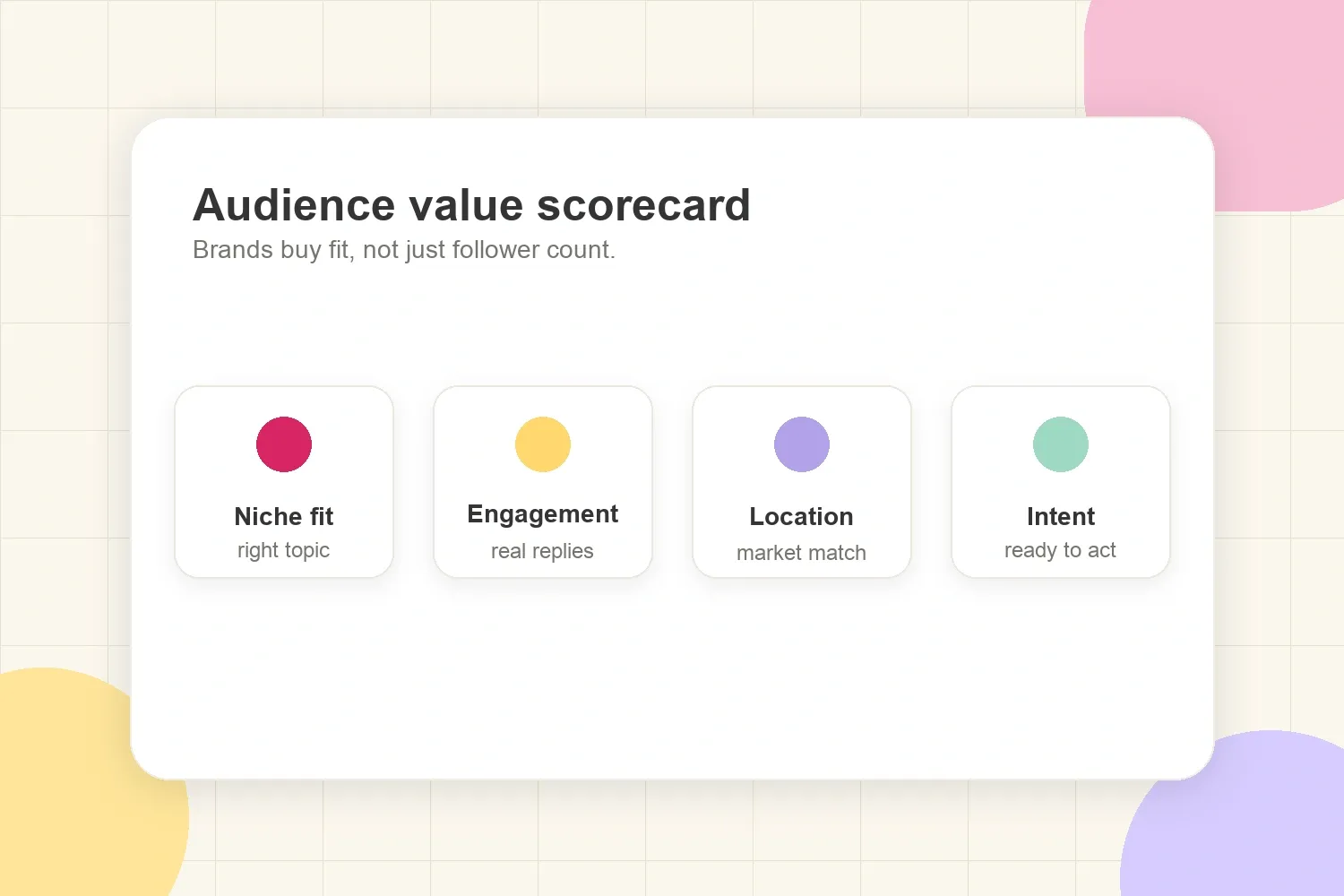
- Niche match: does your content already attract people interested in the brand's category?
- Attention: do people comment with substance, save posts, reply to Stories, or ask follow-up questions?
- Location: are your top countries or cities useful for where the brand sells?
- Intent: do followers ask about products, prices, sizes, links, alternatives, or where to buy?
- Proof: can you show one or two clean examples without exposing private follower details?
Quick audience value score
Use this quick score before you pitch. Give each area a score from 1 to 5, then look at the pattern instead of obsessing over one number.
| Area | Score yourself on this |
|---|---|
| Niche match | Your followers already care about the brand's product category. |
| Engagement quality | Comments, saves, replies, shares, or clicks show real attention. |
| Location match | Your top countries or cities match where the brand sells. |
| Buying intent | Followers ask product, price, size, link, comparison, or availability questions. |
| Proof | You can show clean screenshots, Insights, examples, or past results. |
If most scores are 4 or 5, your audience is probably easy to explain to brands. If one area is low, do not hide it. Use it to pitch better-fit campaigns. For example, weak local relevance may still work for ecommerce brands that sell internationally, while low buying-intent signals may be better for awareness or content creation work.
What brands usually check first
When a brand reviews a creator, it rarely starts with only follower count. Brand-side selection guides usually look at audience relevance, demographics, engagement quality, content fit, and campaign goals together. The Cirqle's guide to choosing the right creators for a campaign makes the same practical point: demographics such as age, gender, location, and language help brands decide whether a creator can actually reach the right customer.
That means your job is not to prove you are valuable to every brand. It is to make the brand's first review easier: show who follows you, why they care, how they behave, and where that overlaps with the campaign.
Start with niche fit
Niche fit is the first thing that makes an Instagram audience valuable to brands. A brand wants to reach people who already care about the problem, category, lifestyle, or identity around its product.
A skincare brand does not only need "women aged 18-34." It may need people who talk about sensitive skin, minimalist routines, acne-safe makeup, or sunscreen. A travel brand may not only need people who like beautiful photos. It may need followers who ask about hotels, itineraries, packing, budgets, or local experiences.
Good signs of niche fit include:
- Comments that use category-specific language.
- DMs asking for product, routine, place, or tool recommendations.
- Saves on practical posts, tutorials, comparisons, checklists, or buying guides.
- Repeated audience questions around the same problem.
- A content history that already matches the brand's category.
This is where smaller creators can compete well. A narrow audience is not a weakness when the brand needs precision. If 70 percent of the audience cares about the exact topic, that can be more valuable than a broad audience with weak category interest.
Check engagement quality, not only engagement rate
Engagement rate is useful, but it can hide important differences. A post with many likes is not always more valuable than a post with fewer likes but better comments, saves, shares, and replies.
Useful engagement usually shows attention or intent:
- Comments with substance: questions, objections, product comparisons, personal experiences, or requests for details.
- Saves: signs that the content helped someone plan, remember, compare, or come back later.
- Shares: signs that followers think the content is useful for someone else.
- Story replies: direct questions or reactions that show the audience trusts the creator enough to respond privately.
- Link clicks: action beyond the Instagram post itself.
A creator should not report engagement as one flat number. "My audience engages" is vague. "My product comparison posts usually get saves and questions about pricing, sizing, and where to buy" tells a brand much more.
Use location and demographics carefully
Audience location can make or break the match with a brand. A local restaurant, event, hotel, clinic, or retail store may care more about city and region than total followers. An ecommerce brand may care about countries where it can ship. A premium brand may care about age range, language, or income-adjacent signals, even if Instagram does not show income directly.
Useful audience details include:
- Top countries and cities.
- Age range.
- Gender split when relevant to the product.
- Primary language or content language.
- Local concentration around a market the brand serves.
A simple audience screenshot can help the brand see whether your audience is concentrated in markets it can actually serve.
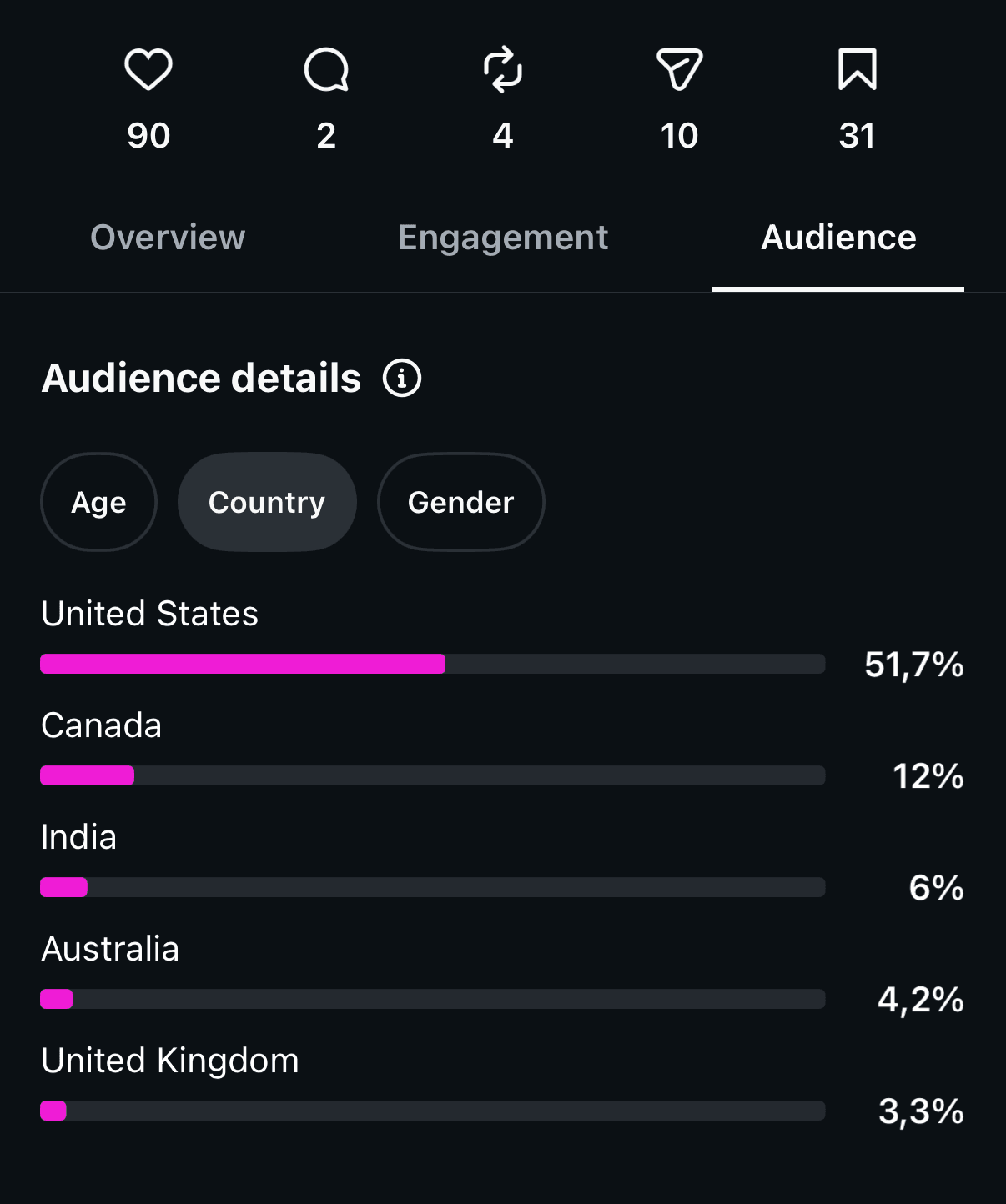
Do not oversell demographics. A city percentage is a clue, not proof that every person can buy. A better way to write it is: "My audience is concentrated in the US and UK, with New York, Los Angeles, and London among the top cities, which fits brands selling in those markets."
If a brand sells only in France and most of the creator's audience is in Brazil, the match may be weak even if the engagement looks good. If a brand sells in Brazil and the creator has a concentrated Brazilian audience, that is a useful selling point.
Look for buying intent
Buying intent does not always look like "I bought this." On Instagram, it often appears before the purchase: people ask questions, compare options, save posts, click links, reply to Stories, or ask where something is from.
Signals of buying intent can include:
- "Where did you get this?"
- "Is it worth it?"
- "Does the code work in my country?"
- "Which size did you take?"
- "Can you compare this with the one you used before?"
- "Is there a cheaper option?"
- Repeated clicks after a product demo, tutorial, or review.
These signals matter because they show the audience is not only entertained. They are considering, researching, comparing, or preparing to act.
For many creators, screenshots of DMs, Story replies, poll results, question boxes, saves, and link-clicks can help prove that intent. Remove names, profile photos, and private details when needed. The point is to show recurring signals, not expose followers.
Show proof in a brand-friendly way
Brands do not need every screenshot you have. They need proof that is easy to understand.
Good proof can include:
- A short audience snapshot from Instagram Insights.
- Top countries, cities, age range, and gender split when relevant.
- A few examples of useful comments or anonymized DMs.
- Saves, shares, replies, link clicks, or sticker taps from relevant posts and Stories.
- Past campaign results tied to the same audience type.
- A one-sentence explanation of why the audience matches the brand.
Because sponsored work is a business relationship, audience proof should be clear, honest, and easy for a brand manager to forward internally.
The same logic applies after a collaboration goes live. If a brand asks what happened, combine the audience explanation with the campaign results in a clear post-campaign report to the brand.
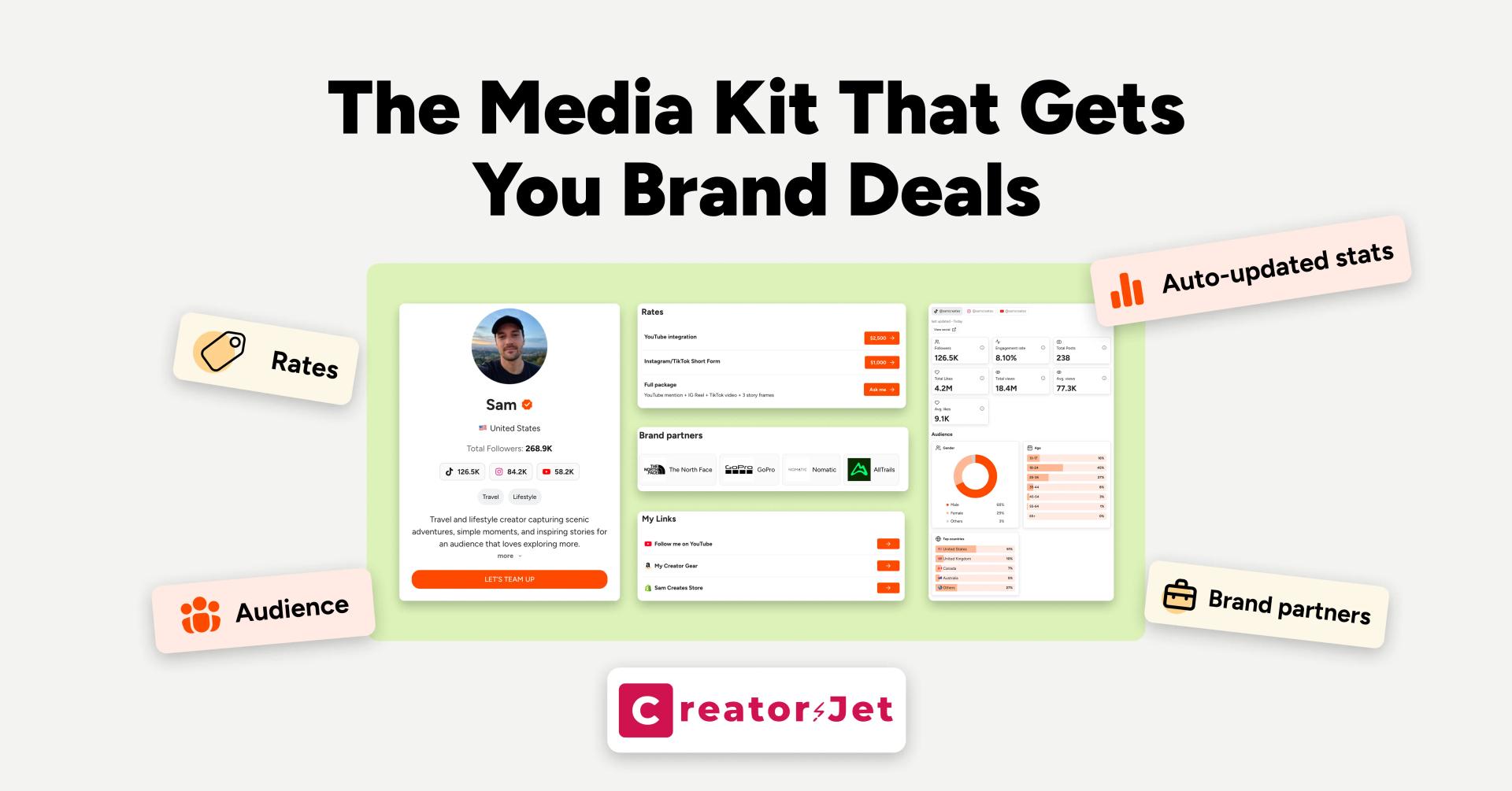
Put audience quality in your media kit
An influencer media kit should not only show follower count. It should explain why the audience is valuable. A useful media kit helps the brand understand the audience profile and the key performance signals in one scan.
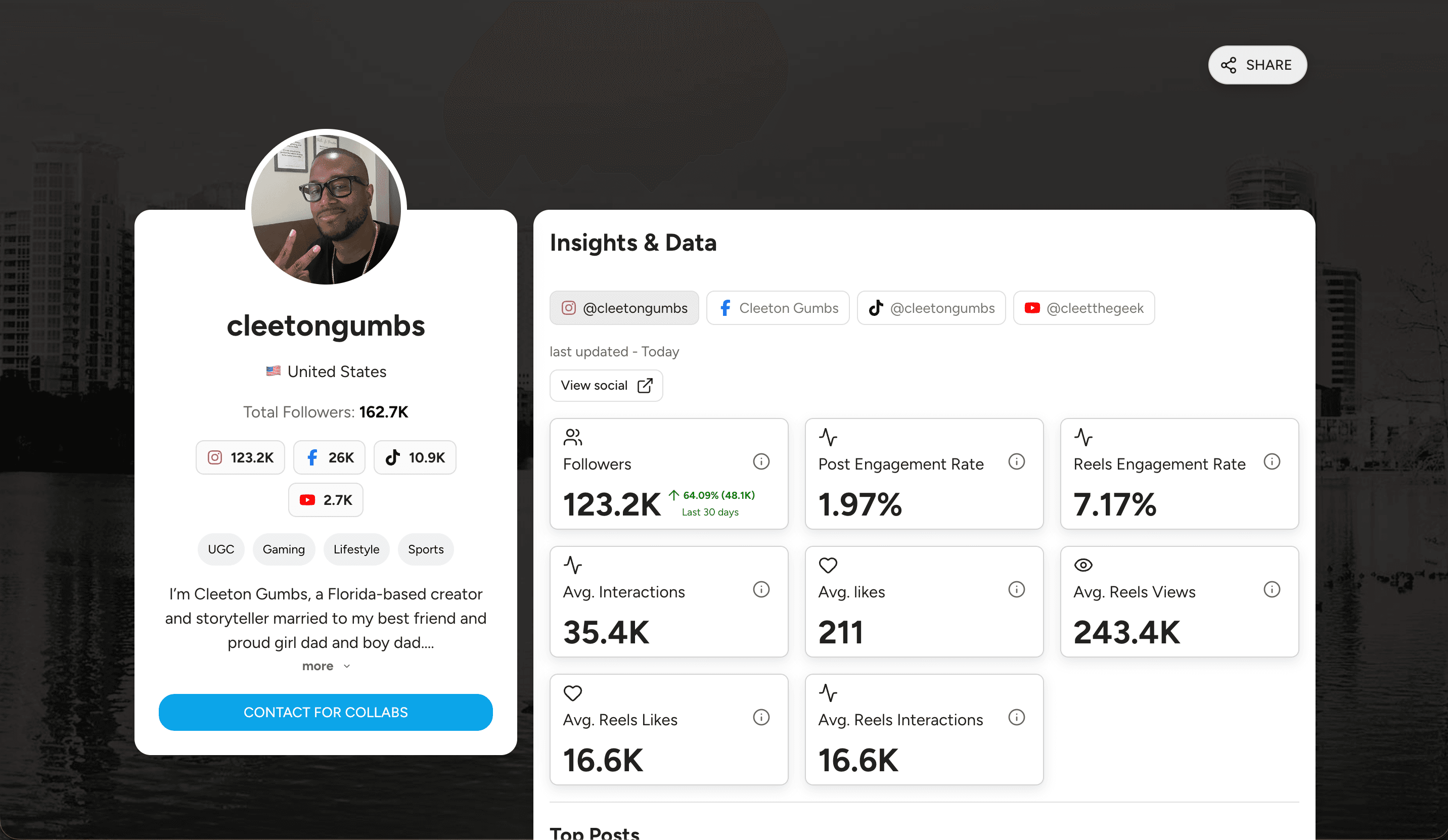
Add a short audience section with:
- Follower count and average reach.
- Top audience locations.
- Main niche or content categories.
- Engagement signals that matter for your niche.
- Examples of audience questions or buying signals.
- Past brand categories that performed well.
For example:
My audience is mostly US-based women interested in practical skincare routines, sensitive-skin product reviews, and low-maintenance beauty. Posts that compare products or show routines tend to drive saves, comments about skin type, and Story replies asking where to buy.
That is stronger than:
I have 22,000 followers and a 3.4 percent engagement rate.
The second version gives numbers. The first version explains why those numbers might matter to a skincare brand.
Match audience value to the brand's goal
An audience can be valuable for one campaign and less useful for another. The same creator may be a great fit for a tutorial campaign but a weak fit for an event launch in a city where they have almost no audience.
Think about the campaign goal:
- Awareness: the brand may care about reach, niche relevance, and whether the audience fits the target category.
- Engagement: the brand may care about comments, replies, saves, shares, and sticker interactions.
- Traffic: the brand may care about link clicks, profile visits, code interest, and Story behavior.
- Sales intent: the brand may care about questions, comparisons, repeat clicks, saved posts, and past conversion signals.
- Local presence: the brand may care about city concentration, language, and offline relevance.
This helps creators avoid overclaiming. You do not need to say your audience is valuable for every brand. You need to show where your audience is valuable and why.
Compare follower count with audience depth
Follower count is still useful context. Brands use it to understand scale. But scale becomes more convincing when it is paired with depth.
Here is the difference:
- "I have 50,000 followers" shows size.
- "I reach 18,000 people on average, mostly in Canada and the US, with high saves on recipe posts and frequent questions about grocery swaps" shows audience quality.
- "My followers ask about budgeting tools every week" shows intent.
- "My Story link clicks are highest after tutorial frames" shows behavior.
Depth is what helps a brand imagine the campaign. It makes the audience feel like a group of real people with needs, not just a number on a profile.
Watch for weak audience signals
Some audience signals make brands hesitate, even when follower count looks good.
Weak signs include:
- Audience location does not match where the brand sells.
- Comments are mostly generic, repetitive, or unrelated.
- Engagement comes from giveaways rather than normal content.
- Followers like lifestyle posts but ignore product or recommendation content.
- Reach is high but saves, replies, and clicks are very low.
- The creator cannot explain who the audience is or why they care.
These are not always deal-breakers. They are prompts to be more precise. If location is weak, pitch ecommerce brands that sell broadly instead of local activations. If comments are generic, lead with saves, Story replies, or niche-specific questions. If product content underperforms, pitch awareness or content creation first instead of promising sales.
A creator can still pitch well by focusing on the campaigns where the audience match is real.
How to explain audience value in a pitch
When pitching a brand, keep the audience explanation short. The goal is not to send a full analytics report in the first message. It is to show that the creator understands the match.
A simple structure:
My audience is [who they are] and they come to my content for [specific topic/problem]. This could work for [brand/product] because [reason]. Recent posts around [topic] have driven [useful signal], and my top audience locations are [markets].
Example:
My audience is made up of early-career creators and freelancers who follow me for practical content systems. Your planning tool could work well here because my posts about deadlines, client approvals, and content calendars regularly drive saves and replies from people asking for templates. My top audience locations are the US, UK, Canada, and Australia.
That is concise, useful, and far more persuasive than opening with follower count alone.
What not to say
Avoid claims that make the audience sound more certain than the data supports.
Do not say:
- "My followers will buy this."
- "My audience is perfect for every brand."
- "I can guarantee sales."
- "My followers are high-income" unless you have a legitimate way to support that claim.
- "My engagement is amazing" without showing what kind of engagement it is.
Better wording is more grounded:
- "My audience has shown interest in this category."
- "Posts about this topic tend to drive saves and questions."
- "My top locations match your main markets."
- "Story replies often include buying questions."
That kind of language feels more credible to brands because it is specific without pretending to know everything.
Final take
A valuable Instagram audience is not defined by follower count alone. It is defined by niche fit, attention, location match, engagement quality, and buying intent.
Creators who can explain those signals clearly are easier for brands to trust. Show who your audience is, why they care, how they behave, and where the brand fits. That turns audience size into a real partnership argument.