

Influencer marketing campaigns come in every size: Salesforce built a $1M puzzle around MrBeast for the Super Bowl, while Crumbl worked with a handful of TikTok creators over the holidays.
Below are 12 recent influencer marketing campaign examples: what each brand actually did, the results that were reported (and who reported them), and what you can borrow on a smaller budget. After the examples, you'll find the main campaign types and a six-step plan to run your own.
Quick comparison of the 12 campaigns
| Campaign | What they did | Reported result |
|---|---|---|
| Salesforce x MrBeast | $1M puzzle in a Super Bowl ad | 268,000 registered players |
| Dove r/eal Reviews | Raw Reddit reviews as ads | Two Gold Lions at Cannes |
| Duolingo Phonetic Collection | Fashion capsule and pop-up | Press coverage, no figures |
| DoorDash x Rob Rausch | Super Bowl weekend TikTok | Almost 11M views |
| KFC x TurnUpTwinsTV | A song for a relaunch | 228K+ likes on TikTok |
| Midi Health x JustBeingMelani | Niche reel boosted as an ad | 3.2% vs. 2.1% engagement |
| Crumbl holiday gifting | Gifting plus a paid boost | 39.7M impressions |
| Daniel Wellington | Free watches, many creators | $70M revenue in 2014 |
| Upwork x The Iced Coffee Hour | Host-read YouTube ad | Tracked via link and QR code |
| Heretic Parfum | TikTok Shop affiliates | Affiliate sales up 1,047% |
| West Elm x Emma Chamberlain | Co-designed home collection | 310K+ likes on launch post |
| Gymshark athletes | Long-term athlete program | No metrics published |
What is an influencer marketing campaign?
An influencer marketing campaign is a time-boxed collaboration where a brand pays, gifts or gives a commission to creators to reach one goal: launch a product, reach a new audience, drive sales or build a community.
The brand brings the product, the brief and the budget, whether that's a fee, free product, a commission or a mix. The creator brings an audience that already trusts them and a sense of what that audience will actually watch.
A campaign is not the same as an influencer program. A program is ongoing: Gymshark has worked with athletes for more than a decade and launches campaigns on top of that relationship. Most brands start with one-off campaigns, see which creators deliver, and turn the best relationships into something longer.
Whatever the size, every campaign comes down to the same decisions: a goal, the creators, a format, a brief, the terms, and how you'll measure it. The one-page plan near the end of this article puts them all on a single sheet.
Types of influencer marketing campaigns
Most campaigns use one of these formats, or combine two or three of them.
| Campaign type | How it works | Best for |
|---|---|---|
| Sponsored posts and videos | Brand pays for set content | Awareness, product education |
| Gifting and seeding | Free product, no post required | Launches, new partners |
| Affiliate links and codes | Commission on each sale | Trackable sales |
| Live shopping | Creator sells live | Impulse buys, demos |
| Ambassador programs | Long-term brand partners | Trust and community |
| Co-created products | Creator designs a product | Built-in launch demand |
| Events and pop-ups | Creators attend or host | Community, earned media |
| Contests and challenges | Audience joins in | Engagement and growth |
| Creator content as ads | Best posts boosted as ads | Scaling what works |
Two shifts matter. On TikTok Shop, affiliate creators now account for most of top sellers' revenue, according to MediaLabs' TikTok Shop data. And boosting creator posts as ads has become routine. This guide to influencer whitelisting explains how that works and how it's priced.
12 influencer marketing campaign examples
The examples run from awareness to sales to long-term programs. Results are credited to whoever published them: brand and agency figures are self-reported, and analytics vendors' numbers are estimates.
1. Salesforce x MrBeast: a $1M puzzle launched from the Super Bowl
Goal: awareness · Creator: MrBeast · Where: Super Bowl LX ad, X, Slack · When: February 2026
Salesforce didn't just pay MrBeast for a 30-second endorsement. It built a game around him. The Super Bowl ad showed MrBeast in a lab full of clues, with a QR code leading to a $1,000,000 puzzle. Players could ask Slackbot for hints, but the bot was designed never to give away answers, and the solution had to be sent to MrBeast in Slack. Nobody solved it on the first night, which kept people talking. A software developer, Colin Sanders, cracked it about a month later with a team of roughly 33 people, who split the prize.
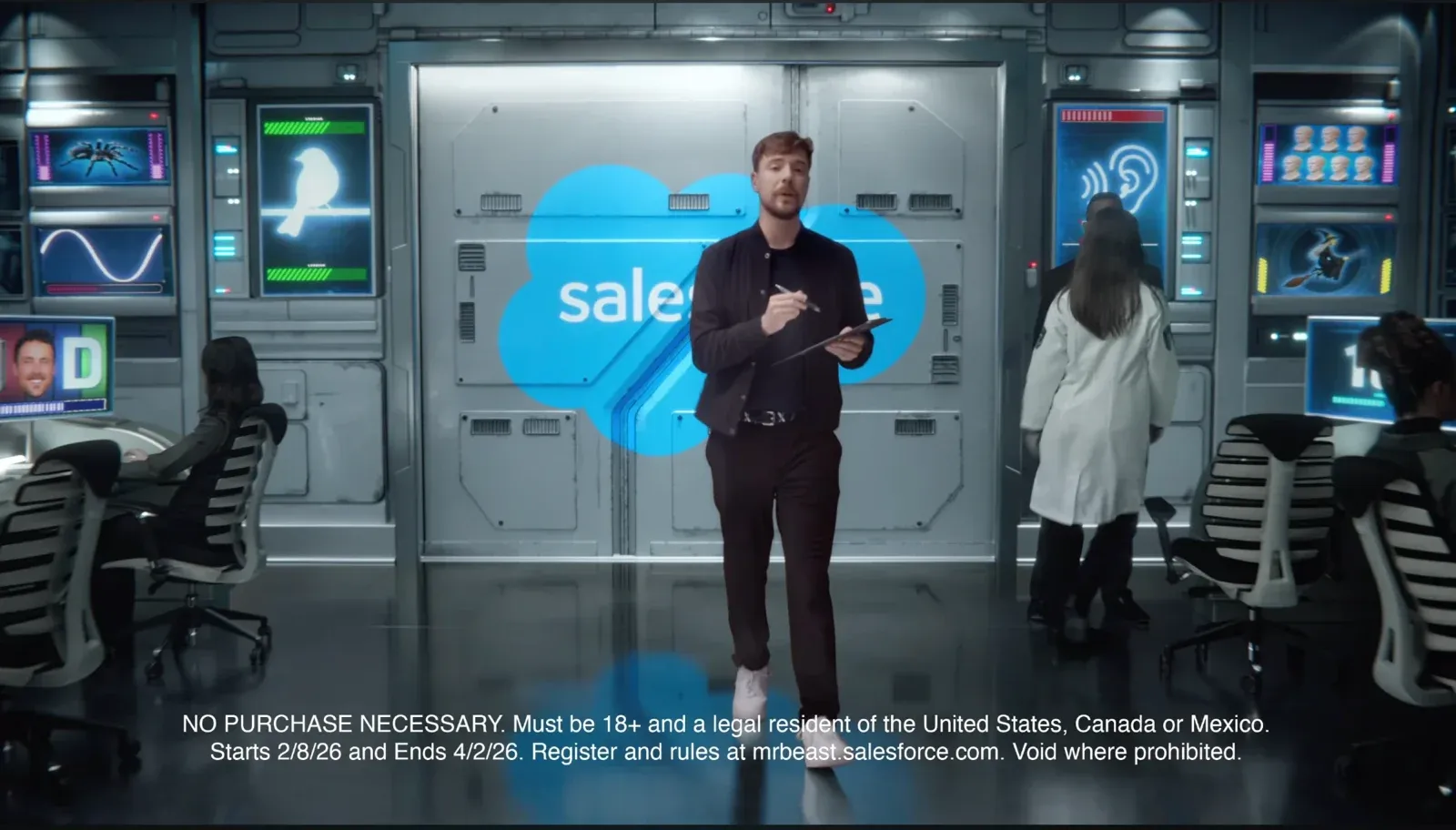
MrBeast in Salesforce's Super Bowl LX ad. The contest ran from February 8 to April 2, 2026.
Results: Salesforce counted 268,000 registered players, according to its story on how the puzzle was solved.
What to copy: the creator was the entry point, and the product did the work. A B2B brand got people to use its software for weeks because the game required it. On a small budget, the same idea is a creator-hosted challenge where your product is the tool people need to take part.
2. Dove r/eal Reviews: everyday Redditors write the ad
Goal: awareness and trust · Creators: anonymous Reddit users, plus briefed creators · Where: Reddit, outdoor, social, a New York pop-up · When: February 2026
Dove asked Reddit for honest reviews of its Intensive Repair 10-in-1 Serum Mask and promised to publish the first 50 unedited, good or bad. It kept that promise. In the testimonial films, reviewers read their own words, unflattering ones included, with their Reddit avatars covering their faces. One said the mask smelled like expired hotel shampoo. The reviews then ran on billboards and digital screens in New York, alongside a two-day sampling pop-up in Flatiron Plaza. Creators were briefed to post honest sponsored content too, criticism allowed.
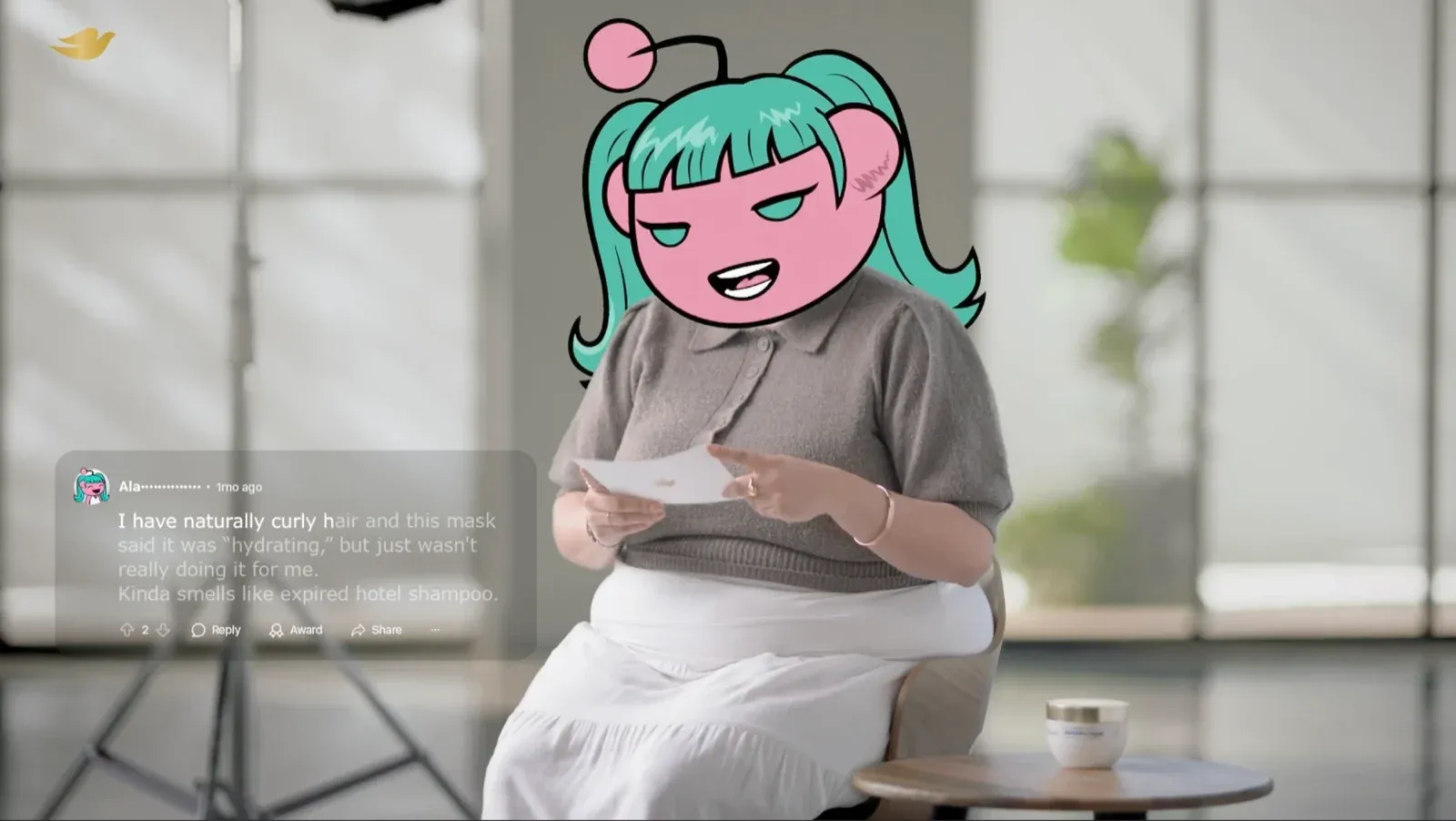
A Redditor reading a less-than-glowing review in Dove's r/eal Reviews film.
Results: AKQA, one of the agencies behind it, reports one billion earned impressions and two Gold Lions at Cannes 2026.
What to copy: publishing the negative reviews is what made the positive ones believable. Most brands can't afford billboards, but any brand can let creators mention a real downside in a sponsored review. Audiences notice when a review has none.
3. Duolingo's Phonetic Collection: a fashion line that teaches pronunciation
Goal: awareness · Creators: designer Megan O'Cain in New York, creator Lyas in Paris · Where: New York and Paris Fashion Weeks, Instagram, outdoor · When: September and October 2026
Duolingo started from a real insight: in research it commissioned from YouGov, 62% of Americans felt confident they could pronounce "Hermès", but only 15% actually could. So it made a seven-piece capsule with designer Megan O'Cain, where each item spells a fashion house phonetically, like an "air-mess" bag. During New York Fashion Week, people could bid their Duolingo streaks for the pieces at a two-day pop-up. The idea then moved to Paris, fronted by French creator Lyas, with an LED truck circling near the shows.
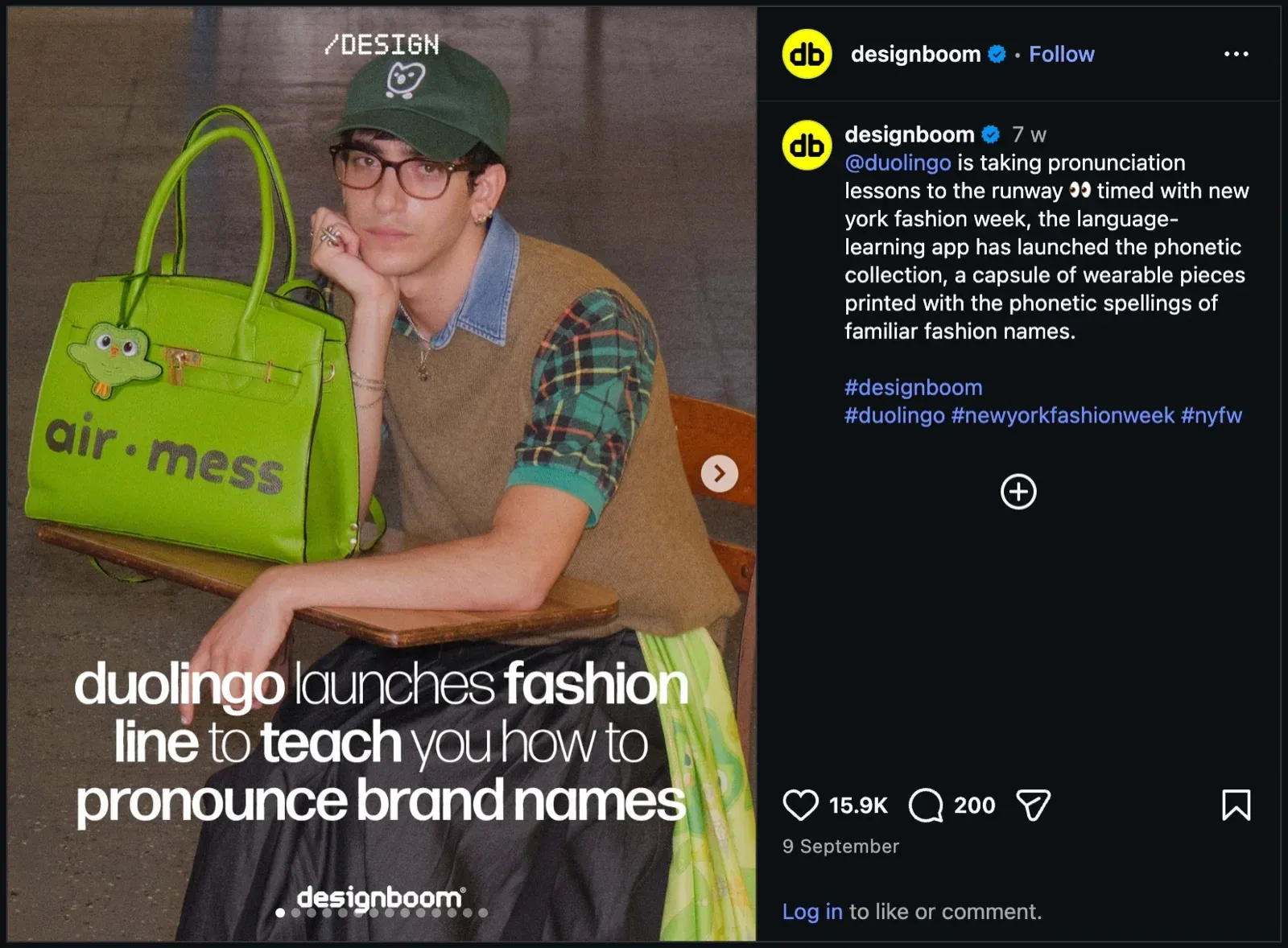
designboom's Instagram post about the collection, September 2026.
Results: Duolingo hasn't published numbers. The visible result is press coverage, from ad industry write-ups of the New York launch to French advertising media covering the Paris chapter.
What to copy: pick a creator who is credible in the world you're entering, not in your own category. Lyas is a fashion voice, not a language-learning one, which is why the idea landed at Fashion Week. A small brand can do the same by partnering with one respected creator from a neighboring niche.
4. DoorDash x Rob Rausch: riding a creator's moment
Goal: engagement · Creator: Rob Rausch · Where: TikTok · When: February 2026
DoorDash skipped a TV spot for Super Bowl LX and put its energy into social instead, with a team led by Zaria Parvez, Duolingo's former social lead. One of its picks was Rob Rausch, who the internet couldn't stop talking about at the time. In his sponsored video, posted the Friday before the game, he jokes about staying away from "petty beef" that weekend, with a DoorDash bag at his door. DoorDash's own account replied in the comments: "QUITE LITERALLY FEEDING THE PEOPLE".
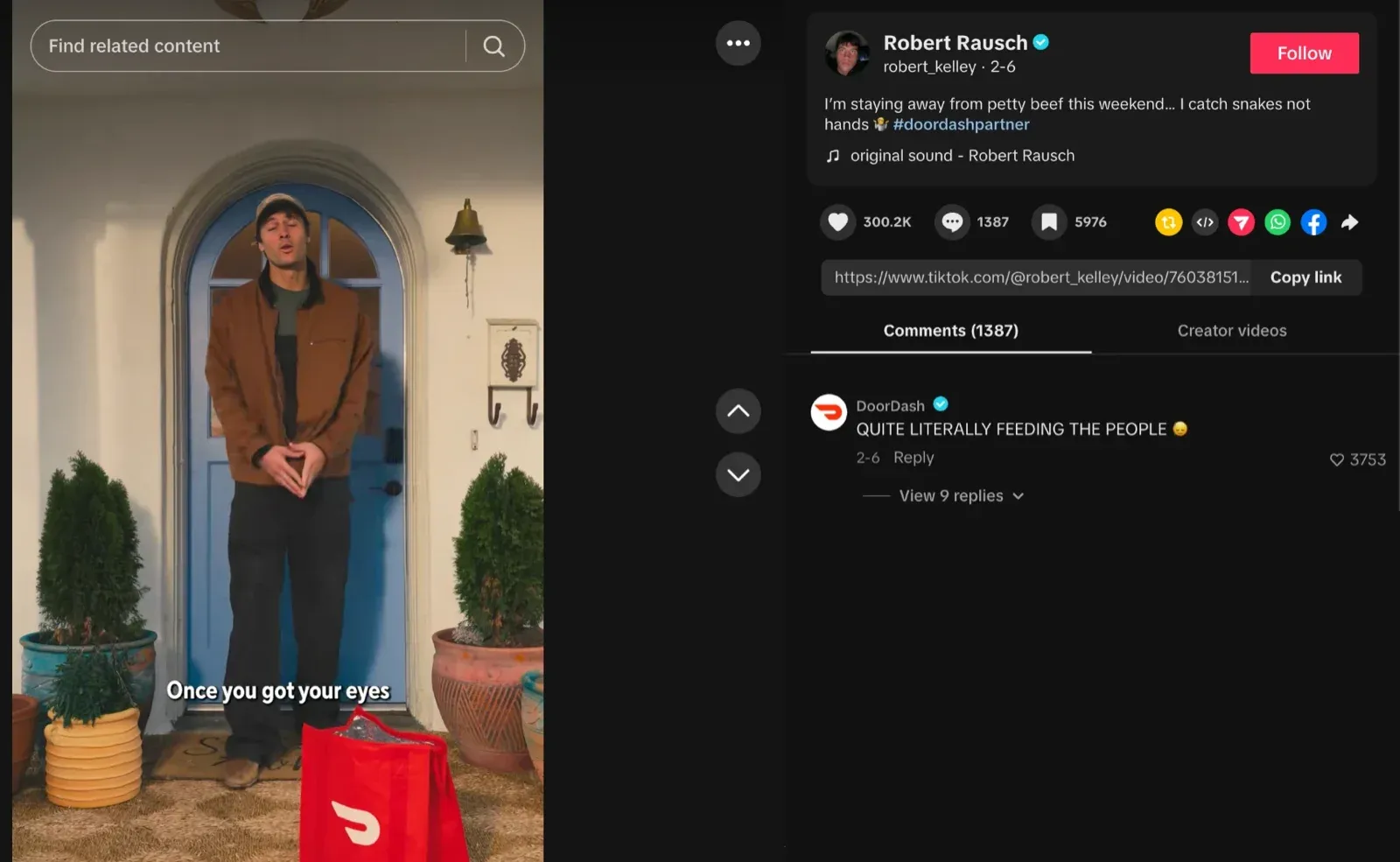
Rob Rausch's #doordashpartner TikTok, posted on February 6, 2026.
Results: Tubefilter reports almost 11 million views for the video, and the post shows more than 300,000 likes. Sprout Social measured an 18% engagement rate on the partnership's top TikTok.
What to copy: timing mattered more than budget. DoorDash moved while people were already curious about Rausch, and let him make the joke in his own voice. According to The Wall Street Journal, each talent deal also included six or seven extra pieces of content, so one booking kept feeding the brand's channels.
5. KFC x TurnUpTwinsTV: letting creators carry a relaunch
Goal: engagement · Creators: TurnUpTwinsTV · Where: TikTok, Instagram · When: March 2026
When KFC brought back the Twister wrap in early 2026, it handed part of the reintroduction to the TurnUpTwins, two sisters whose unprompted 2024 jingle for Crumbl had already gone viral. Instead of a scripted ad, they did what they're known for: a song about the product, filmed in a KFC.
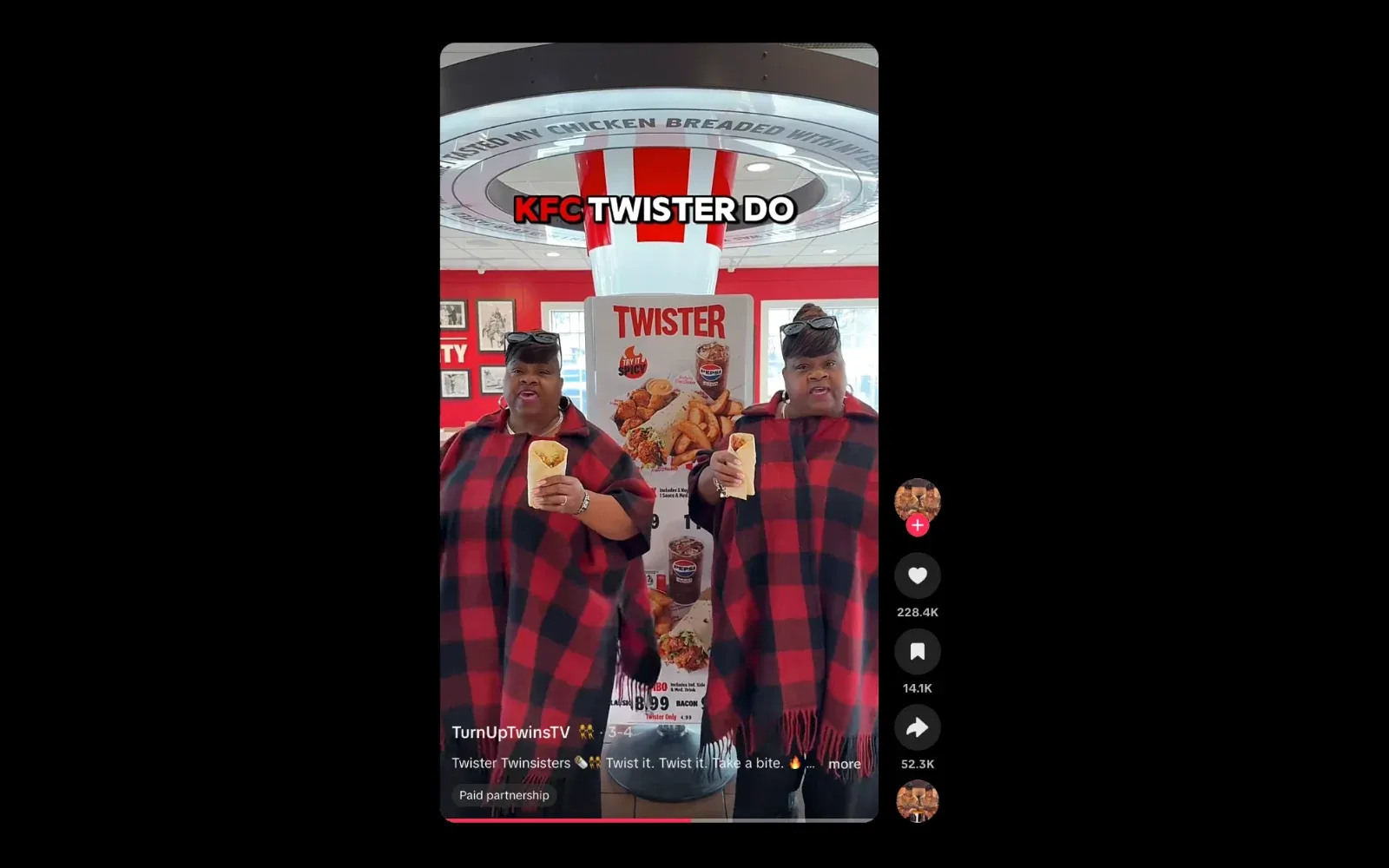
The twins' Twister video, clearly labeled as a paid partnership.
Results: the twins' TikTok shows more than 228,000 likes. On KFC's own channels, Sprout Social reported 15,000+ engagements and a 4% engagement rate, against 0.25% for similar brands.
What to copy: book creators for the format they're already loved for. The twins didn't need direction on tone, only the product and the deadline. Notice the "Paid partnership" label too: being upfront about the sponsorship didn't hold the video back.
6. Midi Health x JustBeingMelani: the right voice for a sensitive topic
Goal: trust · Creator: Melani Sanders (@justbeingmelani) · Where: Instagram, then TV and outdoor · When: October 2025 to 2026
Midi Health offers insurance-covered menopause care, a topic where the messenger matters. Melani Sanders built the "We Do Not Care Club", a movement of midlife women who've stopped caring what others think, so her sponsored reel spoke to exactly the women Midi wants to reach. Midi then boosted the post as a paid ad, and later cast Sanders alongside Amy Schumer in "Midlife: Back in Session", its first national campaign.
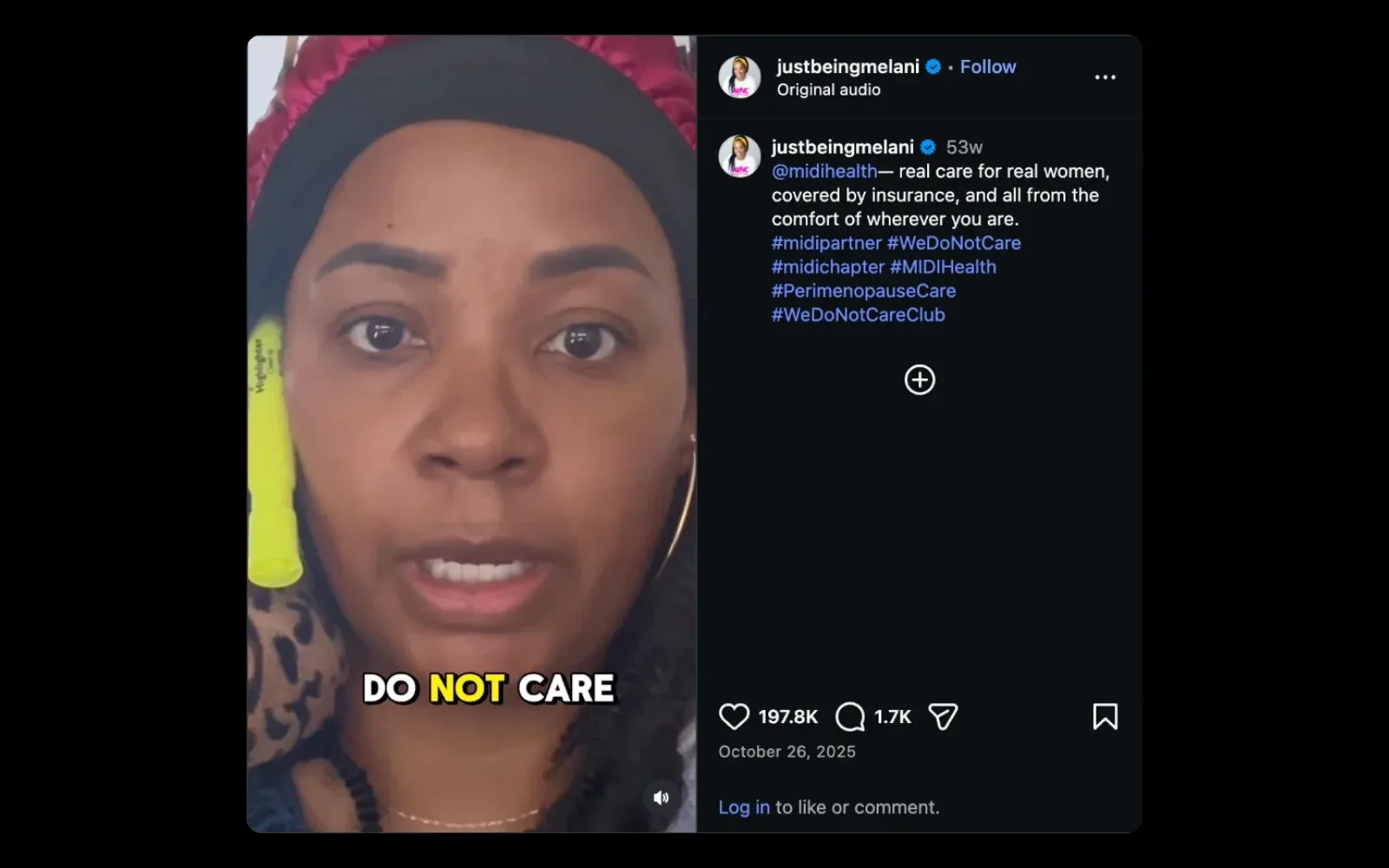
Melani's #midipartner reel from October 2025, now close to 200,000 likes.
Results: Sprout Social calls it Midi's most successful partnership, with 150,000+ engagements, a 3.2% engagement rate against her usual 2.1%, and an estimated earned media value of about $362,000, all from Sprout's own tool.
What to copy: two moves. Pick the creator whose community is your customer, not the one with the most followers. Then, when a post outperforms, put paid spend behind it from the creator's handle instead of producing a new ad.
7. Crumbl's holiday gifting: the product is the gift
Goal: awareness and sales · Creators: a handful of lifestyle and food creators · Where: TikTok · When: holiday season
Crumbl wanted to be the gift people brought to holiday gatherings, and worked with Later to put that idea into creators' videos. Instead of one big name, it picked a few creators from different niches, which put the same message in front of very different audiences. It then paid to push the best videos further.
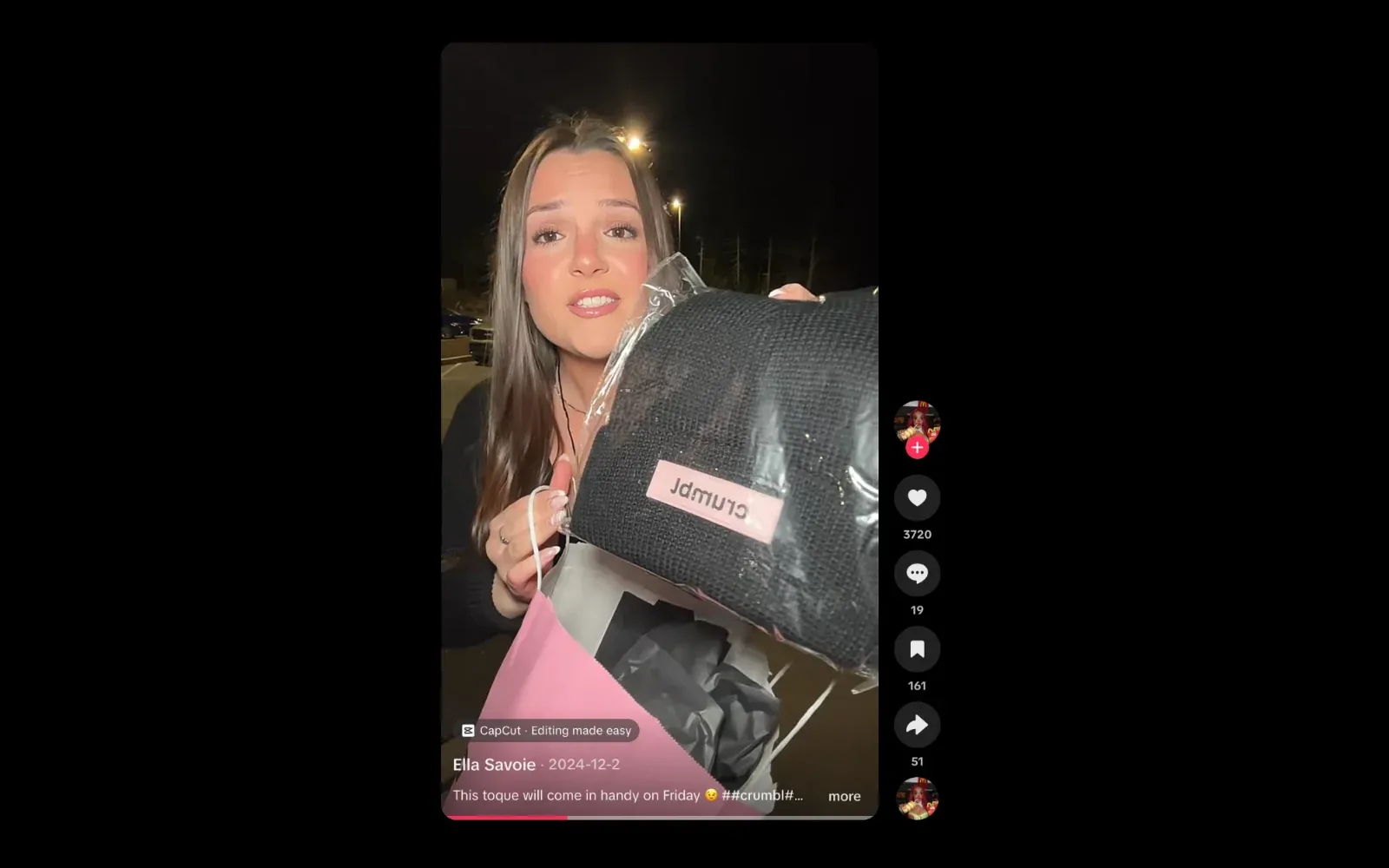
A creator showing off a Crumbl holiday gift on TikTok, December 2024.
Results: Later's Crumbl case study reports 5 creators, 17 pieces of content, 39.7 million impressions and about $1.2 million in earned media value, and says paid amplification nearly doubled engagement. Later ran the campaign.
What to copy: you don't need dozens of creators. Five or so, spread across niches, plus a small paid budget on the best posts, is a plan most brands can afford. Earned media value is an estimate rather than revenue, so report it next to impressions and engagement, not on its own.
8. Daniel Wellington: the original micro-influencer playbook
Goal: sales · Creators: thousands of Instagram creators · Where: Instagram · When: 2011 to today
Founder Filip Tysander started the brand with about $15,000 and, according to Bloomberg's 2015 profile of the company, skipped traditional advertising. He gave watches to bloggers and Instagram creators, from small accounts to celebrities, and sometimes paid a few hundred dollars for a campaign lasting several weeks. A minimal watch fits into any outfit photo, so the content was easy to make.
The brand still runs an open ambassador program, and partner creators post with #DWPartner and #ad.
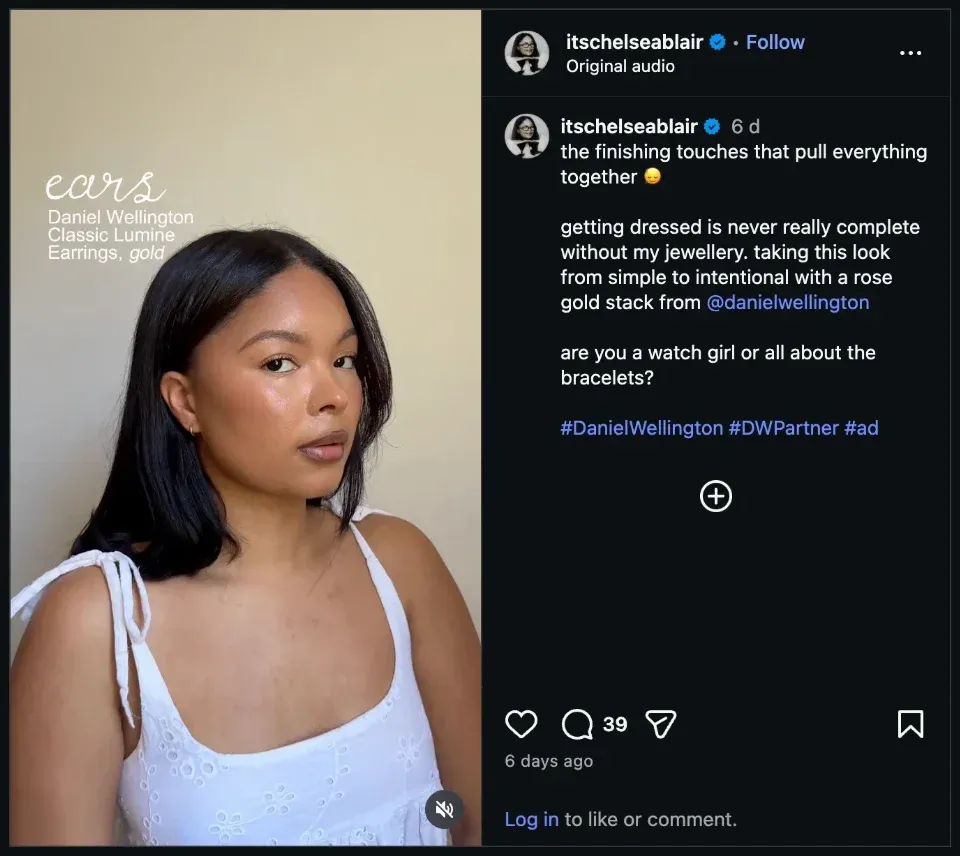
A current #DWPartner reel: the product is styled into the creator's everyday look.
Results: Bloomberg reported more than a million watches sold and $70 million in revenue in 2014, with $220 million projected for 2015.
What to copy: lots of small creators works when the product is easy to show and appeals to a broad audience. One detail is easy to miss: Daniel Wellington's terms for social collaborations bar creators from promoting competing watch and accessory brands for a set period around each collaboration. Even a gifting program needs clear terms.
9. Upwork on The Iced Coffee Hour: a YouTube integration built to be tracked
Goal: sign-ups · Creators: Graham Stephan and Jack Selby · Where: YouTube and podcast platforms · When: October 2026
This is the classic YouTube sponsorship, with every part visible. In the October 18 episode of The Iced Coffee Hour, a business and personal finance show, the host reads the Upwork ad himself, with a green banner, a QR code and one clear offer: post a job for free. In the podcast description, Upwork gets its own link, upwork.com/COFFEE, alongside the episode's other sponsors.
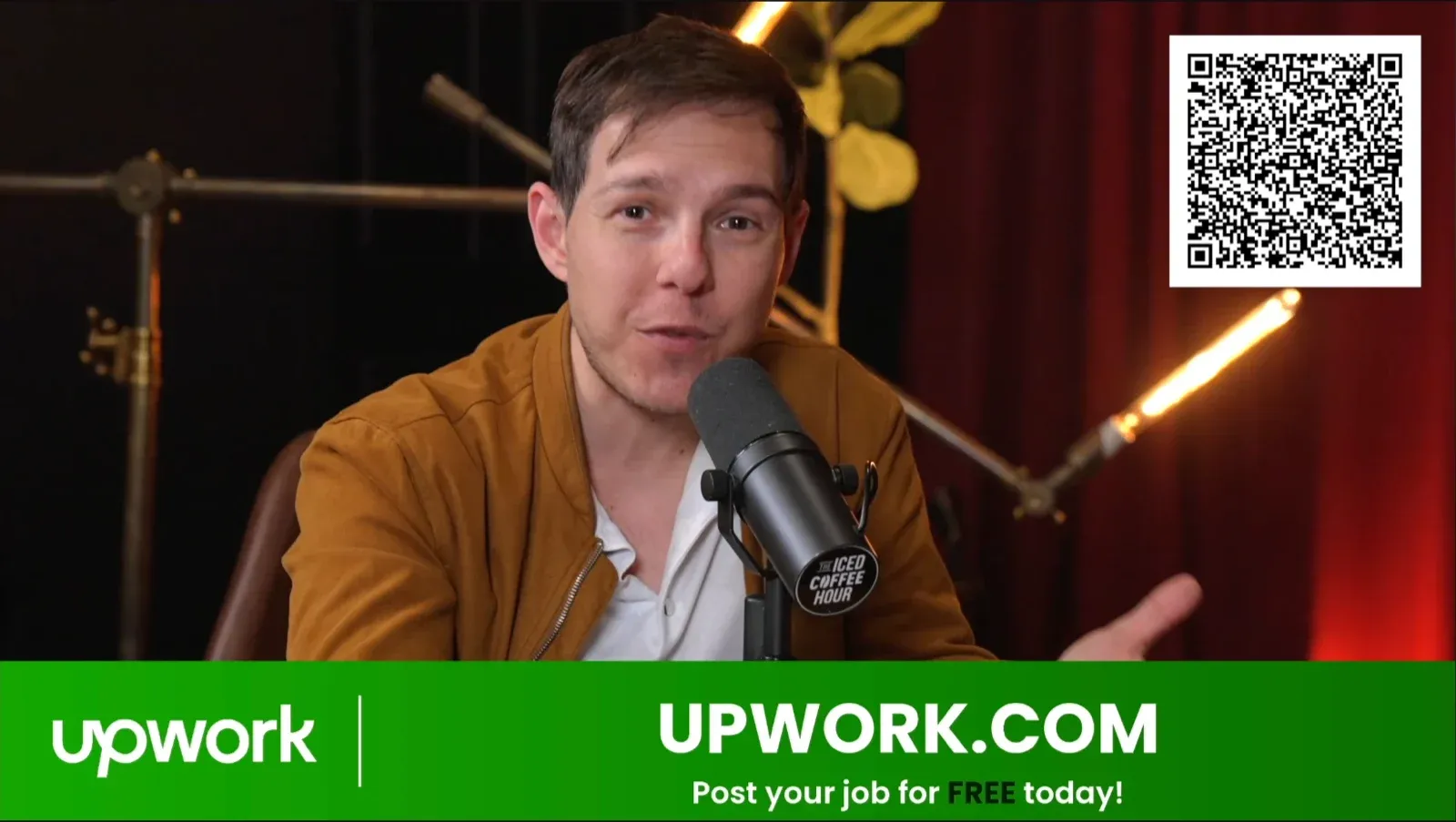
Upwork's host-read segment on The Iced Coffee Hour, October 2026.
Results: Upwork hasn't published any, which is normal for integrations. That's what the QR code and the dedicated link are for: every sign-up that comes through them can be traced back to this show.
What to copy: match the audience, keep to one offer, and give each show its own tracking link or code. Integrations are usually priced per thousand expected views, commonly $15 to $40 per 1,000 views in most niches, and finance shows tend to cost more. The cost table in step 3 gives typical ranges by channel size.
10. Heretic Parfum: from a film tie-in to an affiliate engine
Goal: sales · Creators: fragrance creators and TikTok Shop affiliates · Where: TikTok Shop · When: 2024 to 2026
Heretic is a small perfume brand with a taste for horror. Its Nosferatu fragrance, made with Focus Features for the 2024 film, brought the biggest sales day in its history and an 80,000-person waitlist, according to Glossy's profile of Heretic. Fragrance creators kept talking about it on TikTok. In 2026, Heretic hired the agency Joybyte to turn that chatter into a TikTok Shop affiliate program: recruiting creators who sell the product through their videos for a commission, and backing the best videos with ads.
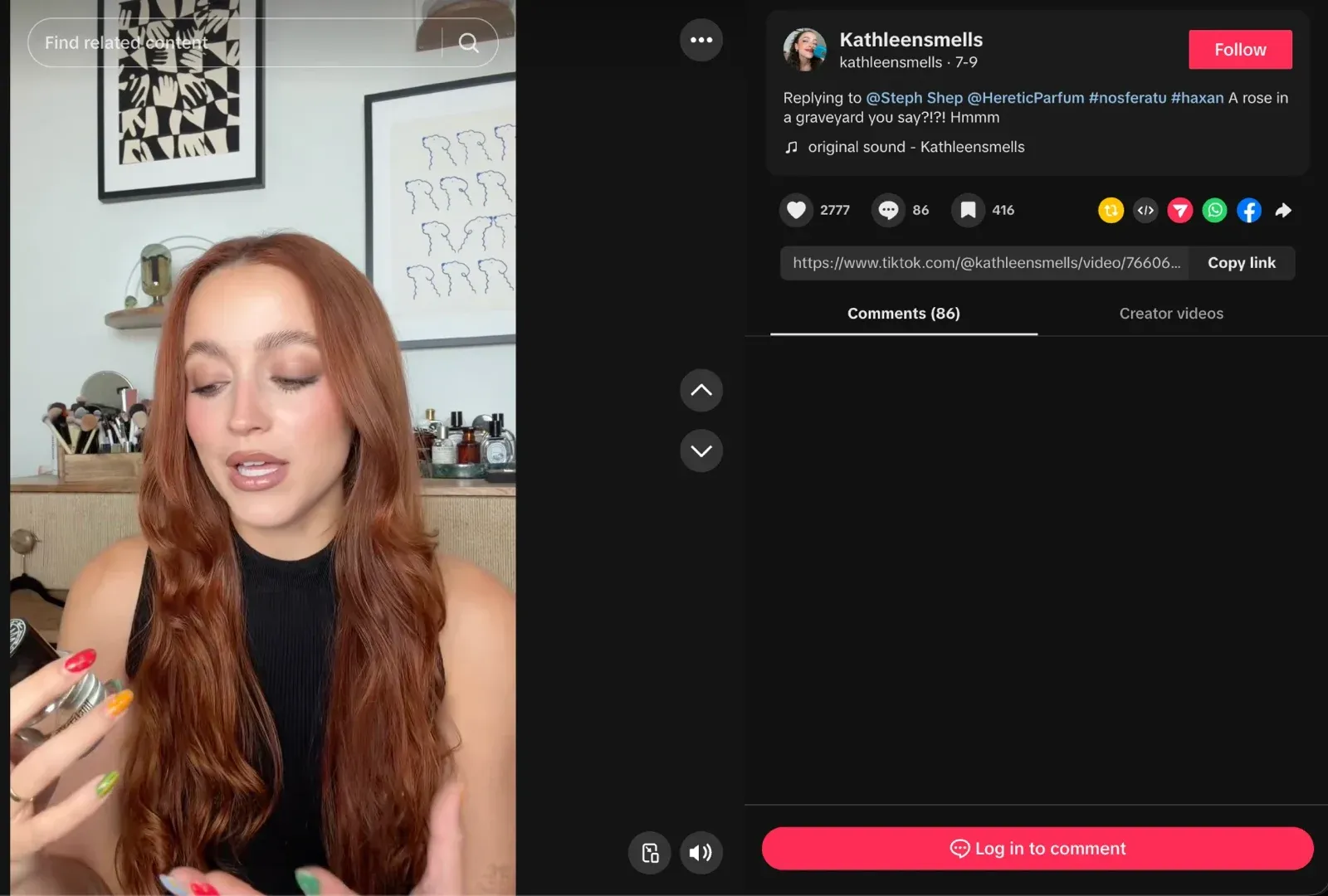
A fragrance creator reviewing Nosferatu on TikTok, July 2026.
Results: in Joybyte's results announcement, the agency reports a 1,047% increase in affiliate sales in the first 60 days, overall TikTok Shop sales up 476% over the campaign period, 900+ affiliate videos and 3,000+ units sold. Heretic is now repeating the film tie-in with a Werwulf collection for Robert Eggers' next film.
What to copy: look at who already talks about your product before recruiting anyone. Affiliate programs grow fastest when they start with creators who are already fans, and then pay them for every sale.
11. West Elm x Emma Chamberlain: a co-designed collection
Goal: product launch · Creator: Emma Chamberlain · Where: Instagram, West Elm stores and website · When: March 2026
Emma Chamberlain didn't just post about West Elm. She designed a collection with its in-house team: around 100 pieces for small apartments, from $20 ceramics to a $3,696 sofa, with motifs taken from her own tattoos. Her launch post reads like a personal announcement rather than an ad, because for her it was one.
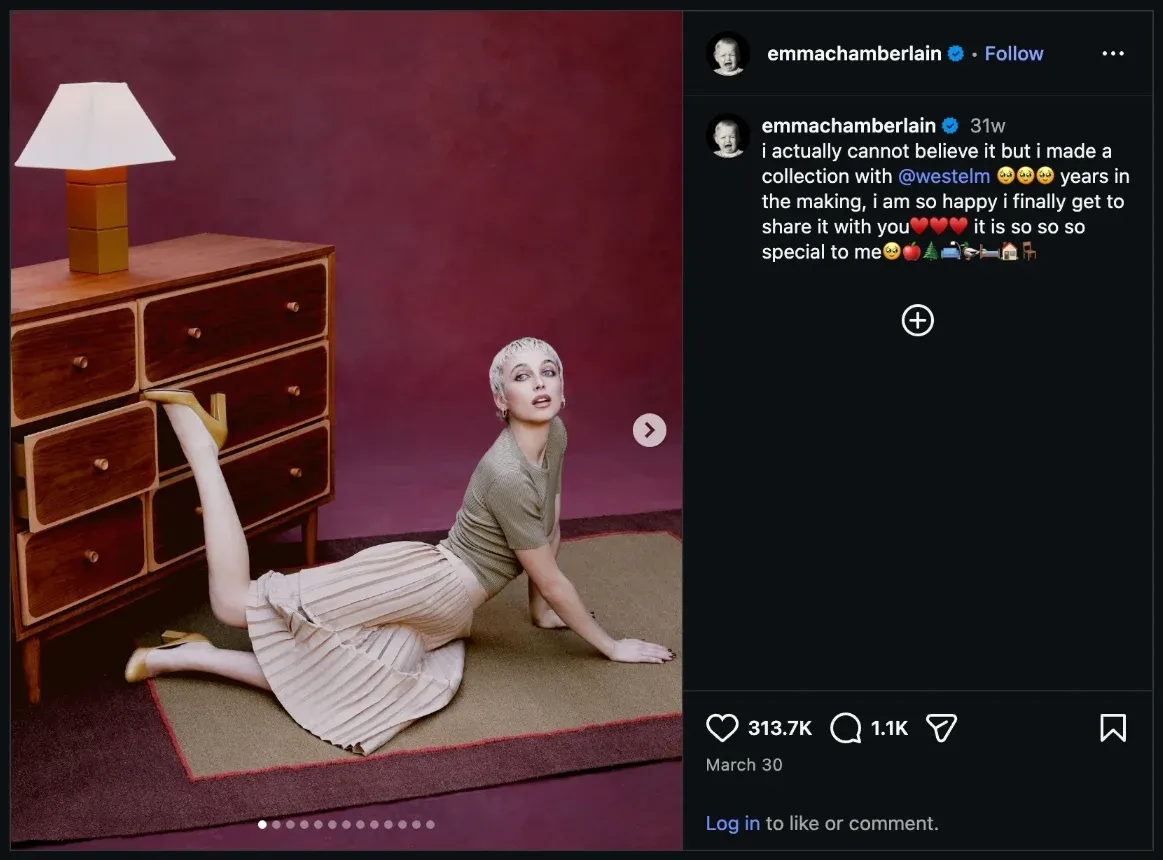
Emma Chamberlain announcing the collection on March 30, 2026.
Results: West Elm hasn't shared sales figures. Her announcement shows more than 310,000 likes, and the launch drew wide coverage, including this first look at the collection from Fast Company.
What to copy: co-creation gives a creator a real reason to promote something for months instead of one post. The smaller version is a limited product, colorway, bundle or recipe, developed with one creator who shares in its success.
12. Gymshark athletes: the long-term version of influencer marketing
Goal: community and sales · Creators: fitness creators and athletes · Where: YouTube, Instagram, TikTok · When: 2012 to today
Gymshark grew up alongside fitness YouTube. In 2012, when the brand was still tiny, it sent its clothes to fitness creators Lex Griffin, Matt Ogus and Chris Lavado, who became its first athletes, according to the official Gymshark story. Today the Gymshark athlete program has no application form and no follower minimum: the partnerships team scouts creators for content quality, brand fit and engagement.
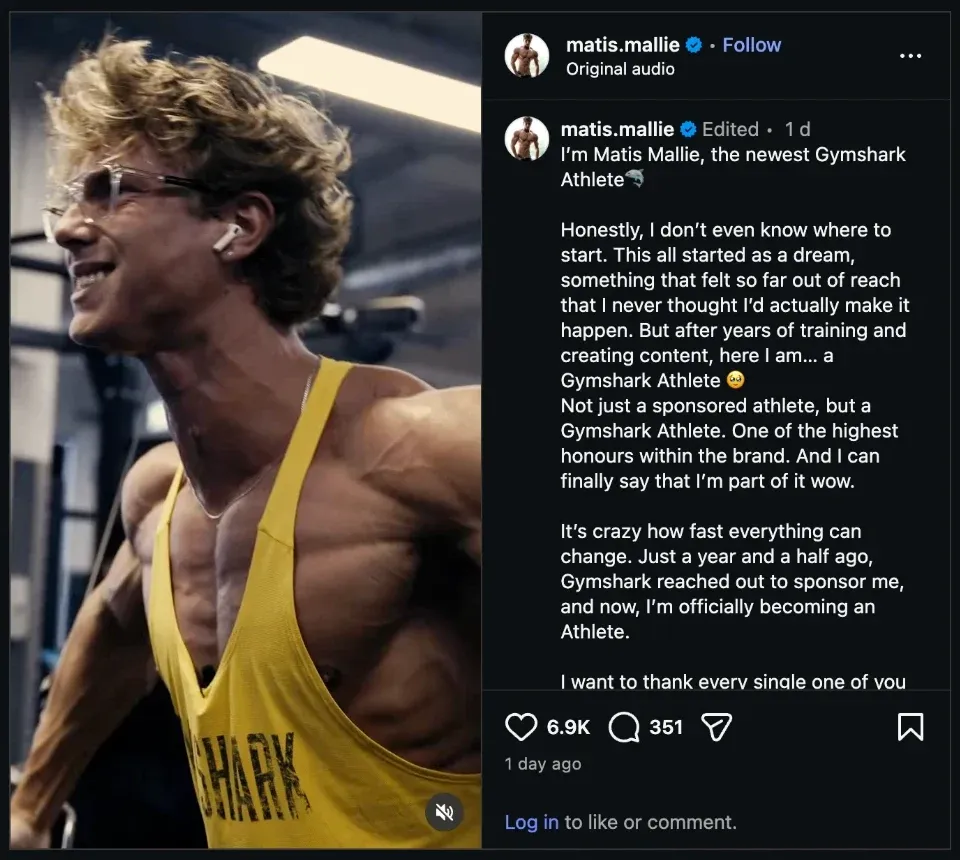
Creator Matis Mallie announcing he became a Gymshark Athlete after a year and a half of sponsorship.
Results: Gymshark doesn't publish program metrics, but creators announce the athlete title as a career milestone, as in the post above.
What to copy: turn your best campaign creators into long-term partners, with a step up that means something. Creators talk about a brand differently when they feel part of it.
What these campaigns have in common
Budgets ranged from a Super Bowl ad to a box of cookies, but the same patterns repeat.
- One goal per campaign. Salesforce wanted people using Slackbot, Upwork wanted job posts, Heretic wanted sales.
- Creators chosen for trust. Melani Sanders for midlife women, Lyas for fashion, fragrance creators for a perfume brand. Not follower count.
- The creator's voice stays intact. The TurnUpTwins sang, Rob Rausch joked, Redditors complained. The brands gave context, not scripts.
- Paid spend follows proof. Midi, Crumbl and Heretic boosted what already worked instead of guessing in advance.
- Small starts grow into programs. Gymshark, Daniel Wellington and Heretic kept the creators who delivered and built around them.
How to plan an influencer marketing campaign in 6 steps
The practical guide to influencer marketing covers the full process in depth. Here is the short version for a single campaign.
1. Pick one goal and the number that proves it
Finish this sentence first: "This campaign succeeds if ___." Salesforce measured players, Upwork sign-ups, Heretic sales. Each goal calls for different creators and formats, so pick one and treat the others as a bonus.
2. Find creators by audience, not by follower count
Start with the people who already mention your product, then look at who your customers follow and which creators your competitors work with.
Before reaching out, check who comments, what they ask and where they live, and scroll through past sponsored posts: if every post is an ad, the audience has probably stopped listening. Creators are usually grouped as nano (under 10,000 followers), micro (10,000 to 100,000), mid-tier (100,000 to 500,000), macro (500,000 to 1 million) and mega (above 1 million), and this comparison of micro vs. mega influencers helps match creator size to the goal.
3. Choose the format and set the budget
Match the format to the goal using the types above, then build the budget creator by creator. Here is what a single sponsored piece typically costs, by creator size and platform:
| Creator size | Instagram post | TikTok video | YouTube integration |
|---|---|---|---|
| Nano, 1K to 10K followers | $50 to $250 | $25 to $200 | $50 to $500, often product plus a fee |
| Micro, 10K to 100K | $250 to $1,500 | $150 to $1,200 | $200 to $1,500 (up to 50K subscribers) |
| Mid-tier, 100K to 500K | $1,500 to $5,000 | $800 to $6,000 | $1,000 to $10,000 (50K to 500K) |
| Macro and mega, 500K and up | $5,000 to $12,000 | $4,000 to $15,000 (500K to 1M) | $5,000 to $20,000 (500K to 1M) |
At these rates, five micro creators on Instagram cost roughly $1,250 to $7,500 in fees. Usage rights, exclusivity and extra deliverables add to that. Keep part of the budget, a fifth for example, to boost the posts that perform.
The Instagram and TikTok ranges come from 12,000 campaigns analyzed by CreatorsJet, and the YouTube ranges from 1of10's sponsorship benchmarks, which group channels by different subscriber brackets. The full influencer rate benchmarks also cover X, niches and usage rights.
4. Write a brief that leaves room for the creator
Share the goal, the audience, the key message, the must-haves and the no-gos, then let the creator decide how to say it. This guide on how to structure a brief for influencers includes a template you can copy. Settle payment, usage rights, exclusivity and approval timing in writing before anyone films. For U.S. audiences, follow the FTC's disclosure guidance for influencers: the FTC doesn't treat a platform's paid partnership label as enough on its own, so the post itself should make clear it's an ad.
5. Launch, then put money behind what works
After a few days, compare posts on your step 1 metric and boost the best ones from the creator's handle, through Meta partnership ads or TikTok Spark Ads, as Midi and Crumbl did. This only works if paid usage was agreed in step 4.
6. Measure, then decide who to work with again
Report against your goal, then review each creator: who drove results, who was easy to work with, and who is worth a longer partnership. The next section shows what to track for each goal.
How to measure an influencer campaign
Pick your metrics from your goal, and set up tracking before launch.
| Campaign goal | What to track | How to track it |
|---|---|---|
| Awareness | Reach, views, branded search, mentions | Creator screenshots of insights, search trends, social listening |
| Engagement and trust | Comments, saves, shares, sentiment | Post insights and a read of the comment section |
| Traffic and sign-ups | Clicks, sign-ups, cost per sign-up | UTM links, vanity URLs, QR codes |
| Sales | Orders, revenue, cost per acquisition | Discount codes, affiliate links, platform shop data |
| Content for ads | Ad performance of creator content | Ad account results compared with brand-made ads |
Two limits are worth knowing. Codes and links miss people who buy later through search or in a store, which is why some brands ask "how did you hear about us?" at checkout. And earned media value is an estimate, useful for comparing campaigns but not proof of return. For more on which numbers matter at each stage, see this breakdown of the influencer marketing KPIs brands actually track.
A one-page campaign plan you can copy
Fill this in before contacting any creator. A blank line is where the campaign is most likely to go wrong.
- Goal: this campaign succeeds if ___.
- Success metric and target: for example, 300 sign-ups at under $20 each.
- Audience: who you want to reach, and where they already spend time.
- Creators: how many, what size, which niche, and any must-haves, such as a mostly U.S. audience.
- Deliverables per creator: for example, one TikTok and three stories.
- Budget: creator fees, product, and the share kept for boosting the best posts.
- Key message: one sentence the audience should remember.
- Must-haves and no-gos: claims to include, claims to avoid, competitors not to mention.
- Terms: usage rights (where and for how long), exclusivity, approval window, payment date.
- Disclosure: the platform label plus a clear "ad" or "sponsored" in the post.
- Tracking: a link or code for each creator, plus insights screenshots after 7 and 30 days.
- Timeline: brief sent, drafts due, go-live date, report date.
- Next step: which creators you want to work with again, and why.
Borrow the idea, not the budget
Most of the ideas above work without the budgets behind them: a challenge built around your product, an honest review, a creator from a neighboring niche, or an affiliate program that starts with your existing fans.
Few of these brands won on spending alone. What they share is a clear goal, creators their audience already trusted, and the discipline to build on what worked.