
MVMT is a useful micro-influencer case study because the brand did not win by chasing the largest creators first. It built a repeatable creator system: find people whose content matched the product, send product, give a clear brief, track each creator, and reuse the best content across the rest of the marketing funnel.
That distinction matters. A campaign does not get a 3x ROI because a creator has “micro” in their bio. It gets there when audience fit, tracking, creator content, and conversion intent work together.
One caveat before the breakdown: public sources do not expose every internal MVMT campaign cost or revenue line. GRIN’s MVMT case study confirms the creator-management system, Shopify integration, unique promo links, 7x creator growth, 100,000 affiliate-code conversions, and 39,000 pieces of influencer content. Practical Ecommerce also reports a Mediakix campaign with 62 fashion and lifestyle influencers, 100,000 likes, 2,800 comments, and a 6% engagement rate. So the practical lesson is less “copy one magic number” and more “copy the system that made ROI measurable.”
Why MVMT was a good fit for micro-influencers
MVMT sold a visual product with a clear lifestyle identity: minimalist watches at a more accessible price point than legacy watch brands. That made the product easier to place naturally in creator content.
Micro-influencers worked because they could make the watch feel like part of a real outfit, trip, desk setup, or daily routine. The audience did not need a celebrity endorsement to understand the product. They needed to see whether it fit their taste.
The creator fit was specific:
- Fashion and lifestyle creators could show the watch in outfits and everyday settings.
- Travel creators could make the product feel aspirational without looking like a hard ad.
- Entrepreneurship and productivity creators could connect the watch to a clean, ambitious personal brand.
- Photography-minded creators could produce content MVMT could reuse beyond the original post.
This is also why micro-influencer strategy is not just about follower count. The CreatorsJet guide on micro vs mega influencers explains the same idea: smaller creators can outperform broad reach when the campaign needs relevance, trust, and niche context.
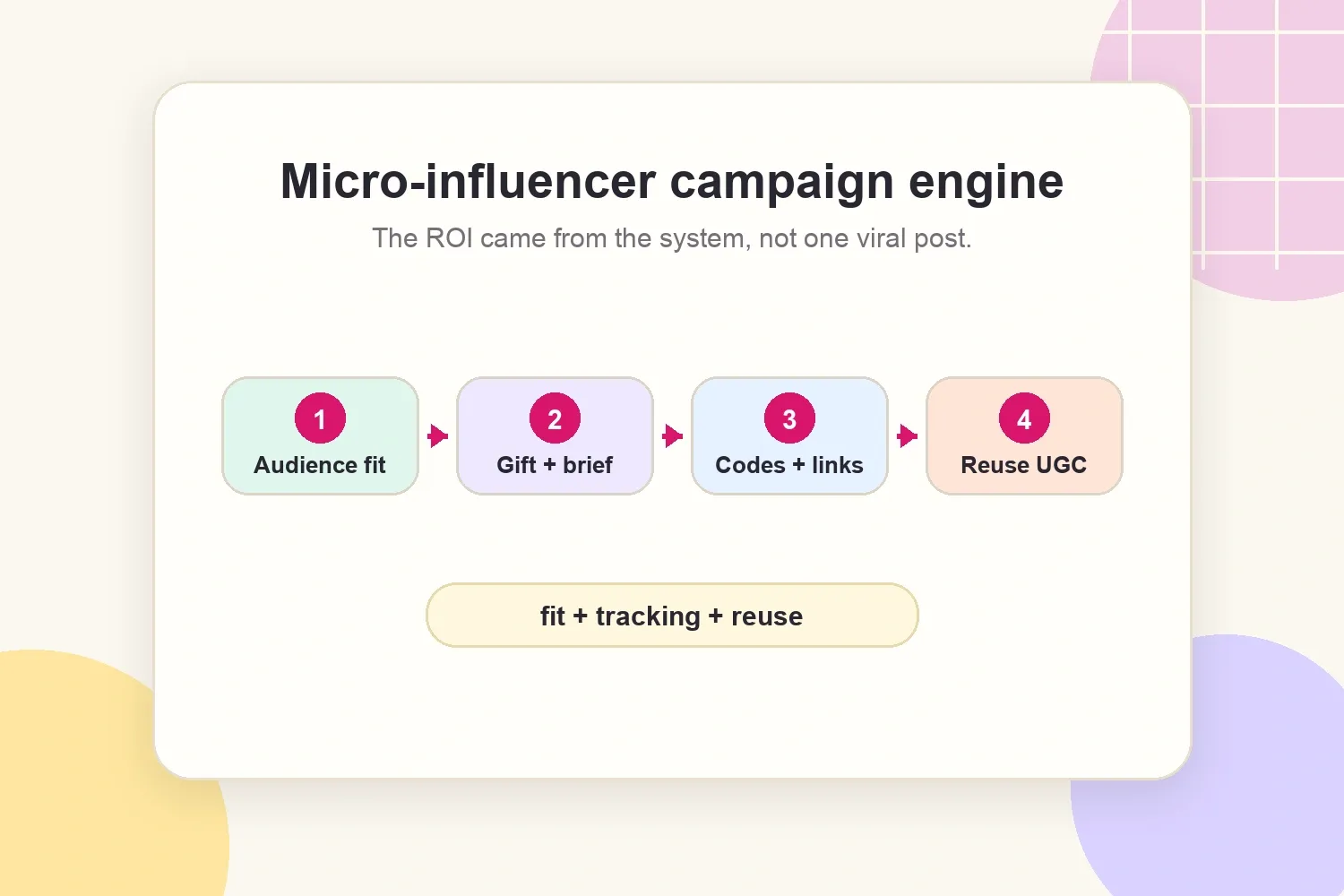
The campaign engine: fit, brief, tracking, reuse
The campaign worked because MVMT combined four pieces that many influencer campaigns keep separate.
First, the brand recruited creators who already matched the visual world of the product. A creator’s feed mattered because MVMT was not only buying reach. It was buying content that could make the brand feel desirable.
Second, creators received product and direction without making the content look too scripted. The best micro-influencer campaigns usually give enough structure to protect the brand, but enough space for the creator to keep the post believable.
Third, MVMT used unique promo links and discount codes. GRIN’s case study specifically highlights Shopify-connected creator links and product fulfillment as part of the system. That changed the campaign from “did this post look good?” to “which creator drove traffic, code use, and sales?”
Fourth, the brand reused high-performing creator content. This is where many brands miss the real economics. A creator post can drive direct sales, but it can also produce paid ad creative, product-page proof, email visuals, and social proof for future campaigns.
What the 3x ROI claim really means
The headline number is useful, but it should be read correctly. A 3x ROI does not mean every creator produced the same result. It means the campaign model can work when the brand tracks cost, revenue, and content value at the creator level.
For a micro-influencer program, the ROI stack usually looks like this:
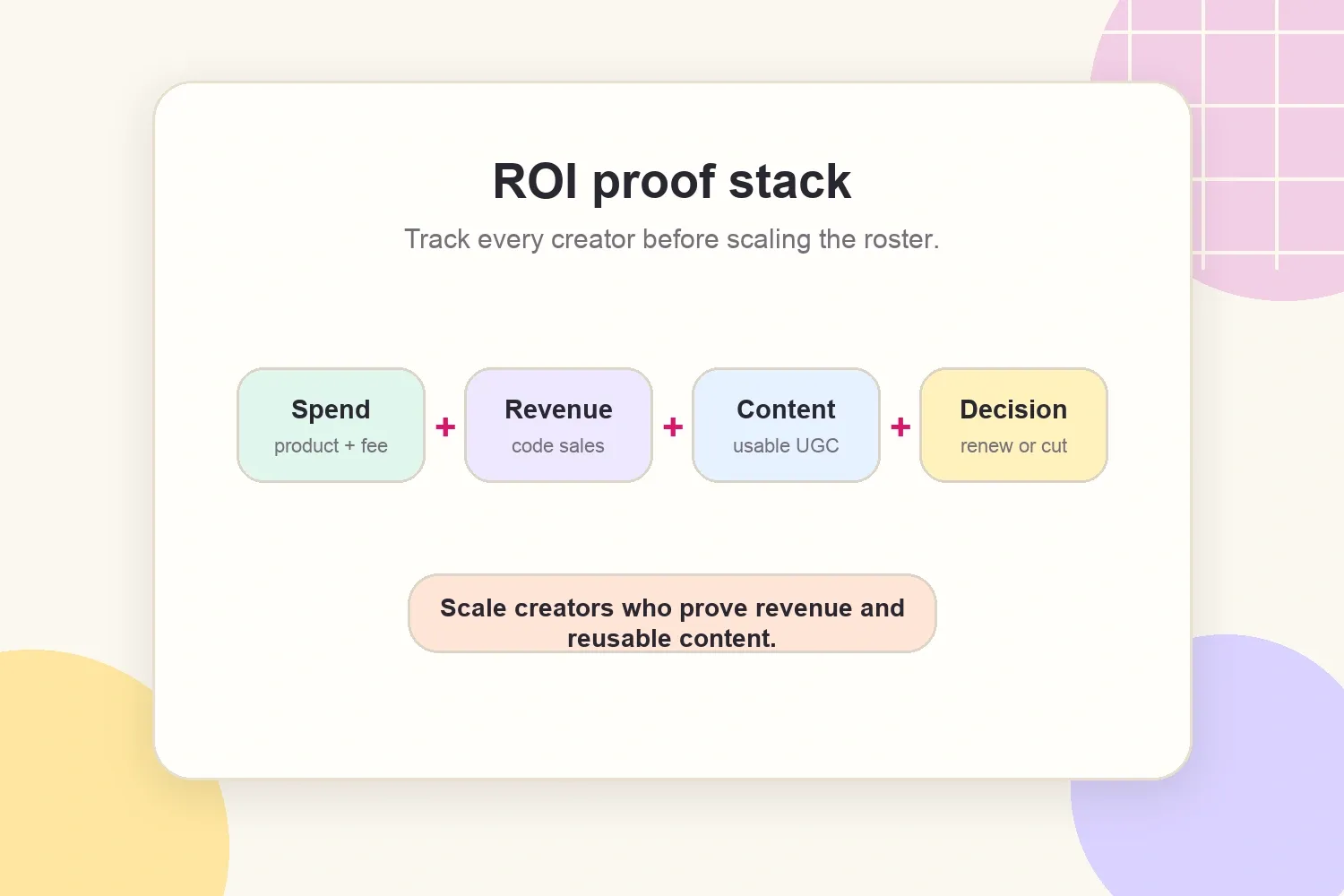
| Metric | What to track | Why it matters |
|---|---|---|
| Creator cost | Product, fee, shipping, platform cost | Shows the real investment per partner |
| Direct revenue | Code sales, affiliate sales, tracked link revenue | Shows which creators actually converted |
| Content value | Usable photos, videos, whitelisting potential | Explains value beyond immediate sales |
| Renewal signal | CPA, ROAS, comments, saves, content quality | Decides who gets another brief |
If a creator costs $400 including product and fee, drives $1,200 in tracked sales, and produces two usable ad creatives, the brand has a clear reason to continue. If another creator gets likes but no code use, no qualified comments, and no reusable content, the campaign should not be scaled just because the post looked polished.
Why micro-influencers helped lower risk
The advantage of micro-influencers is not that every small creator converts. The advantage is that the brand can test more audience pockets without betting the whole budget on one large personality.
For MVMT, that meant the brand could learn which creator angles worked:
- Minimal outfit photos.
- Travel and lifestyle shots.
- Desk, founder, and productivity content.
- Gift-guide and holiday positioning.
- Discount-code posts with direct response captions.
The campaign became a learning system. Each creator gave the brand a small signal: which audience cares, which visual style travels, which CTA drives clicks, and which content can be reused.
What brands should copy from the case study
The important lesson is not “use micro-influencers only.” It is to build a campaign that can separate creators who create attention from creators who create business value.
Brands can copy the structure:
- Start with a narrow creator profile. Choose the aesthetic, audience, niche, geography, and content format before outreach starts.
- Give a clear brief without over-controlling the creator. The content should include the product clearly, but still feel native to the creator’s normal feed.
- Use unique codes and links from day one. If tracking is added later, the brand loses the cleanest ROI signal.
- Score content separately from sales. Some creators may not convert immediately but produce high-quality UGC that lowers paid creative costs.
- Renew only the creators with proof. A second campaign should be based on sales, content quality, audience comments, and fit, not vibes.
This is how influencer marketing becomes a repeatable channel instead of a one-off spend. It also connects directly to long-term creator relationships. The CreatorsJet guide on building long-term influencer partnerships that drive ROI explains why the best creators usually become more valuable after the first campaign.
What creators can learn from the MVMT example
Creators can use this case study too. MVMT did not need creators who simply posted “nice watch” content. It needed creators who could show the product in a believable lifestyle context and make the audience understand why it fit.
That means creators pitching similar brands should show:
- Past content with clean product integration.
- Audience comments that show buying interest.
- Examples of photos or videos a brand could reuse.
- Clear niche positioning, not just follower count.
- A simple way to track results, such as code clicks, link clicks, or campaign screenshots.
The most convincing creator pitch is not “the audience loves fashion.” It is “this product fits the way this audience already shops, and here is the proof.”
Final takeaway
MVMT’s micro-influencer campaign worked because the brand made creator marketing measurable. It matched creators to the product, used affiliate-style tracking, turned creator content into reusable assets, and scaled the partners that created proof.
That is the real takeaway for brands and creators. Micro-influencers are not automatically cheaper magic. They become powerful when the campaign is built around fit, tracking, content reuse, and renewal decisions.