A brand deal can sound simple in an email and become expensive once the contract arrives. The rate may be correct, but the agreement can still give the brand unlimited usage, unlimited revisions, broad exclusivity, or payment only after an approval process you do not control.
A useful way to read the contract is as a map of what you must deliver, what the brand may do with the content, when you get paid, and how either side can leave. This guide is educational, not legal advice. If the deal is unusually valuable, exclusive, international, or difficult to understand, have a qualified lawyer review it before signing.
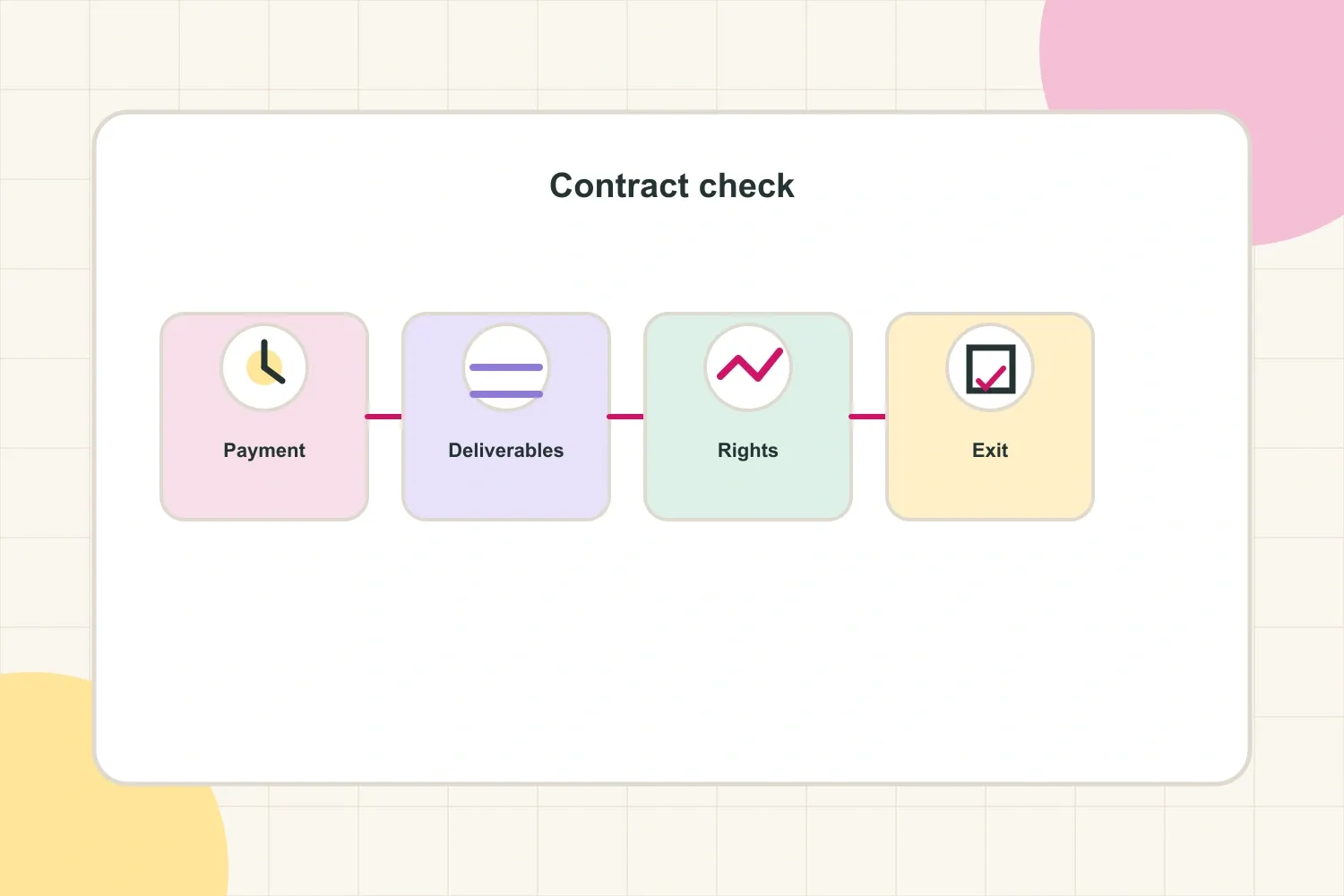
If you only have a few minutes, prioritize the payment trigger, exact deliverables, usage rights, exclusivity, revision limits, cancellation terms, and disclosure obligations. Those clauses often determine whether the deal is as valuable and manageable as the headline fee suggests.
Start with the parties and the scope of work
Before the ten clauses, check that the contract identifies the right people and documents the deal you actually discussed. The legal name of the brand, your legal or business name, the campaign name, and any attached brief should match the email agreement.
The scope should also say which document controls if the contract, brief, email, and message thread use different terms. A creator should not have to guess whether the latest brief quietly replaces the payment or usage terms in the signed agreement.
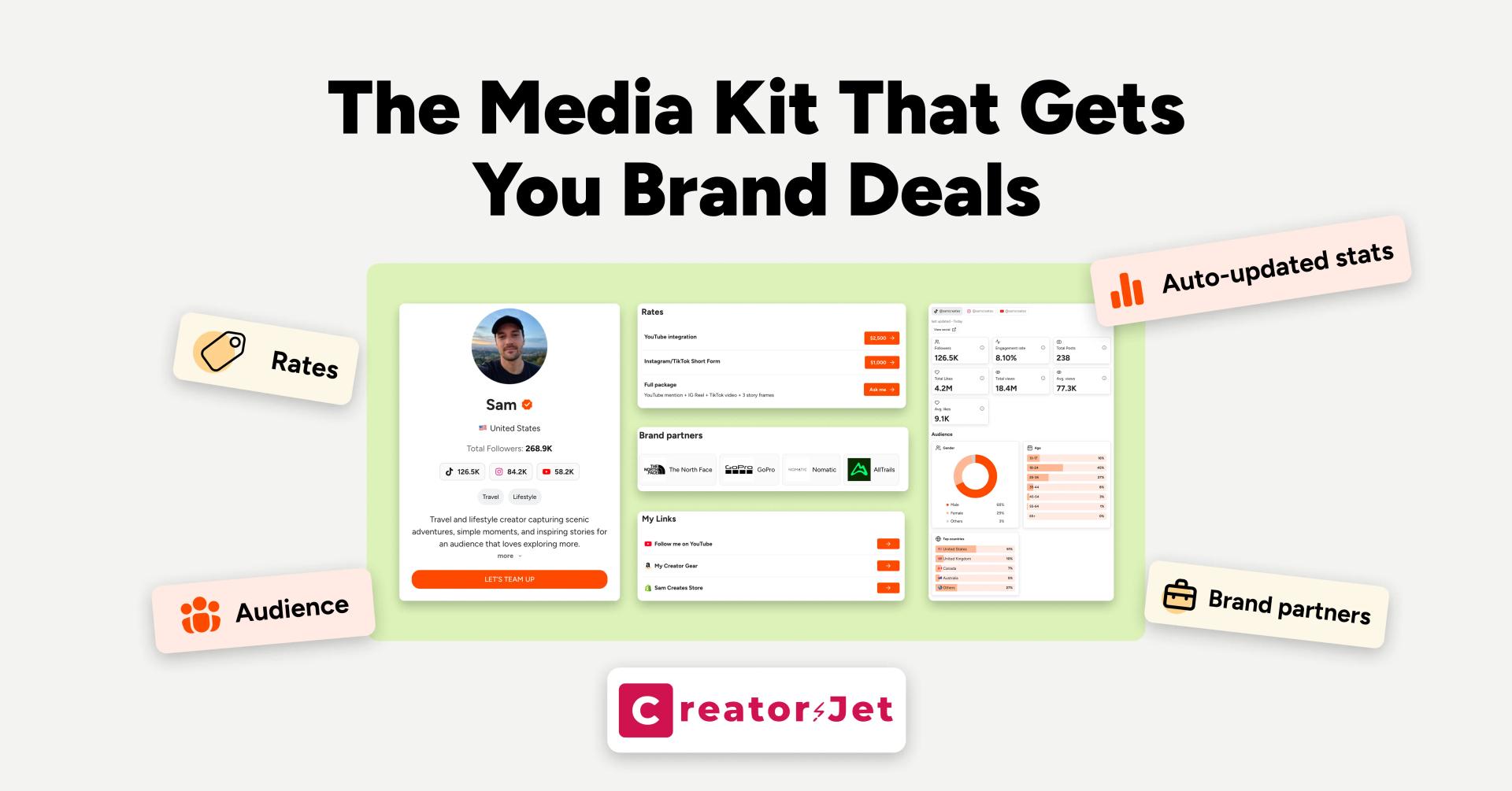
Keep supporting documents easy to find. If your contract refers to audience statistics or recent examples, an updated influencer media kit can provide useful context as an attachment, but it should not replace clear contract language.
1. Payment terms and what triggers payment
The payment clause should make the amount, currency, invoice process, due date, and payment trigger unambiguous. “Paid for the campaign” is not enough if the contract later says payment happens only after the brand approves every asset, receives platform results, or gets paid by its own client.
Check:
- the total fee and whether it includes taxes, expenses, products, or affiliate compensation;
- the deposit or milestone schedule, if there is one;
- the invoice requirements and the meaning of terms such as Net 30;
- late-payment treatment and any bank or transaction fees;
- whether extra deliverables, rush work, raw files, or paid usage are paid separately.
If the brand wants the creator to start production before any payment, decide whether that risk is acceptable. A contract that makes payment conditional on vague “satisfaction” gives the brand room to delay payment indefinitely. Ask for an objective approval step and a payment deadline tied to delivery or acceptance.
2. Deliverables, platforms, and format
The deliverables clause should describe exactly what you are creating and where it will appear. Count the assets, not just the campaign name. “Social media content” could mean one Reel, three Stories, raw footage, still images, a usage cutdown, and a repost across several platforms.
Look for:
- the number and type of posts, videos, Stories, livestreams, or files;
- the platform and account that will publish each deliverable;
- the required length, aspect ratio, tags, links, captions, and hashtags;
- whether the brand receives drafts, raw footage, project files, or alternate versions;
- the expected performance report and what data you can realistically provide.
If a brief says “up to” a certain number of assets, get the maximum scope and fee clarified. Deliverables should be measurable enough that both sides can tell when the work is complete.
3. Deadlines, publishing dates, and availability
The timeline should cover more than the day you post. It should show when the product arrives, when you submit a concept or draft, how long the brand has to review it, when revisions are due, and when the content goes live.
Check whether the publishing date is fixed or only a target. You could be held responsible for a missed deadline while waiting for a late product shipment or delayed approval unless the contract explains how those dependencies move the schedule.
Build a realistic process for changes: if the brand misses its review window, you should not automatically lose the agreed launch slot or be required to work overnight. The contract should also state how long the content must remain live if the brand expects a minimum posting period.
4. Approval process and revisions
Approval clauses define who can request changes, how many rounds are included, and what counts as a reasonable revision. Without those limits, “one round of edits” can turn into a chain of new concepts, reshoots, and conflicting feedback.
Clarify:
- the person or team authorized to approve the content;
- the number of included revision rounds;
- the difference between a correction and a new creative direction;
- whether reshoots caused by a changed brief cost extra;
- the review deadline and what happens if the brand does not respond.
For example, factual, legal, brand-safety, or brief corrections may be included, while a new hook, location, product angle, or script after approval may be additional work. Put that distinction in writing.
5. Usage rights, ownership, and paid media
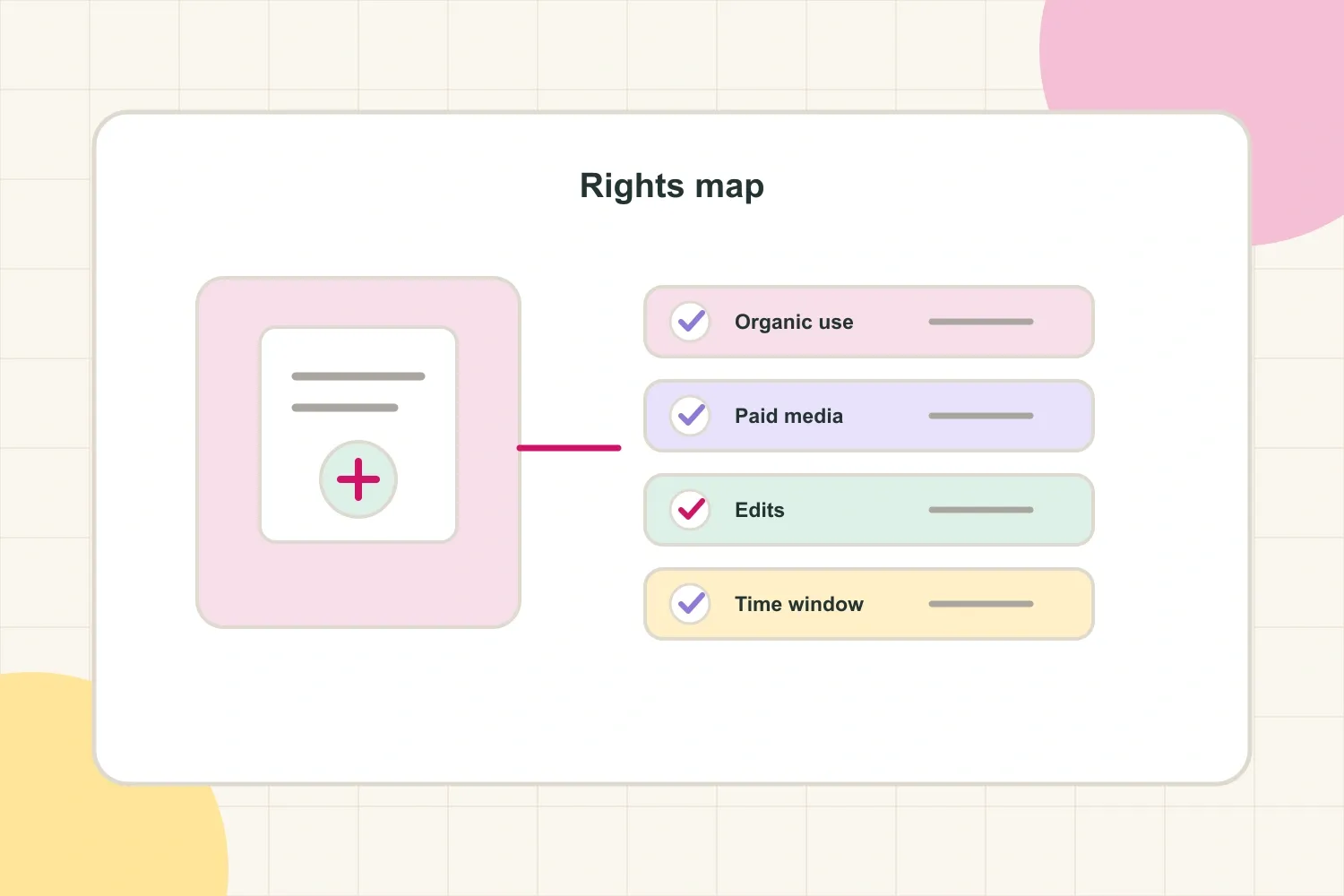
Usage rights are often one of the clauses with the biggest financial impact. The contract should say where, for how long, in which formats, and for which purpose the brand may use your content, name, image, voice, handle, and likeness.
Separate these questions:
- Can the brand repost the content organically on its own social accounts?
- Can it use the content on a website, product page, email, or retail display?
- Can it run the content as an ad, boost the original post, or authorize whitelisting?
- Can it edit, crop, subtitle, translate, or combine the content with other assets?
- Does the brand receive ownership, a limited license, or only permission to publish the agreed deliverable?
Avoid vague language such as “all media, worldwide, in perpetuity” unless the fee and strategic value genuinely justify it. A time-limited, purpose-limited license is easier to understand and price. If the contract includes paid media, specify the platforms, campaign dates, spend or account access, and whether extensions require a new fee.
6. Exclusivity and competing brands
Exclusivity limits which other brands you may work with. The clause should define the competing category, geographic market, restricted platforms, and exact start and end dates.
“No competing brands” is not a workable definition for a creator in beauty, fitness, tech, food, or fashion. Ask whether the restriction applies only to sponsored content or also to ordinary recommendations and affiliate links. Also check whether the exclusivity period extends beyond the campaign and whether it is paid.
If the brand wants a broad category restriction, negotiate a narrower list of named competitors or a shorter window. Exclusivity can be valuable, but an unpaid restriction can quietly prevent several future deals.
7. Product claims, talking points, and creator responsibilities
The contract may require specific claims, demonstrations, links, or talking points. You should be able to identify which statements are mandatory, which are optional, and which must be supported by the brand.
Be careful with health, financial, performance, environmental, or comparative claims. Do not promise a result you have not experienced or repeat a claim the brand cannot substantiate. The contract should give you an approved brief, product information, and a contact for questions.
Also check responsibility for products, music, images, trademarks, and other third-party material. A one-sided indemnity clause can make the creator responsible for legal problems caused by brand-supplied claims or assets. If the risk is broad or unclear, pause and get legal advice.
8. Cancellation, termination, and kill fees
Cancellation language answers what happens when the campaign changes after you reserve time, buy materials, film, or submit work. It should protect both sides without allowing the brand to cancel after receiving most of the value for free.
Look for:
- the notice required to cancel;
- what payment is owed for work already completed;
- whether a partial or full kill fee applies when the creator held the date;
- what happens to products, drafts, and unpublished assets;
- termination for breach and the opportunity to fix a problem;
- whether the brand can cancel for convenience while the creator cannot.
If you have already filmed and the brand cancels for internal reasons, the contract should not leave the payment question open. A clear stage-based cancellation schedule is easier to discuss before signing than after the campaign disappears.
9. Disclosure and compliance requirements
The contract should state how the sponsorship must be disclosed, but it cannot transfer the creator’s full compliance responsibility to the brand. In the United States, the FTC says influencers should make material connections clear and conspicuous, and the disclosure should appear with the endorsement itself. Read the FTC’s Disclosures 101 guide for social media influencers for platform examples and wording guidance.
Check which disclosure format the brand requires, whether the platform’s paid-partnership tool is also needed, and whether the disclosure must appear in the video, caption, Story frame, livestream, or more than one place. Avoid a contract that asks you to hide the relationship, use vague wording, or make claims that conflict with your genuine experience.
Rules vary by country and platform. If the audience, brand, or campaign crosses borders, confirm the applicable requirements instead of assuming one jurisdiction’s wording works everywhere.
10. Approval of the final terms, signatures, and dispute language
Before signing, read the final version rather than relying on the proposal or a previous email. Check the signature date, contract duration, governing law, notice method, dispute process, and whether referenced schedules or platform terms are attached.
If the agreement incorporates a brief, creator policy, payment portal terms, or a master services agreement, read those documents too. Important terms may sit outside the page titled “influencer agreement.” For a contract-specific example, the SAG-AFTRA influencer agreement checklist shows how compensation, deliverables, usage rights, and exclusivity can be addressed; it is a reference example, not a universal contract for every creator.
For a high-value or unusual deal, legal review is not overkill. A lawyer can help assess ownership, indemnity, exclusivity, termination, tax, and jurisdiction risks that a practical checklist cannot resolve.
Red flags that deserve a pause
Pause before signing if the contract combines several of these signals: payment only after vague approval, perpetual worldwide usage, broad unpaid exclusivity, unlimited revisions, cancellation without payment for completed work, or responsibility for claims and assets supplied by the brand. One unusual clause does not automatically make a deal unacceptable, but it tells you what to clarify or negotiate first.
A final pre-signing checklist
Before signing, confirm that you can answer “yes” to these questions:
- Is it clear exactly what must be created, published, sent, and reported?
- Is the payment amount, trigger, invoice process, and due date clear?
- Are approval deadlines and revision limits written down?
- Are usage rights limited by purpose, platform, territory, and time?
- Is paid media separate from ordinary organic reposting?
- Is exclusivity narrow, dated, and compensated?
- Are cancellation, termination, and payment for completed work clear?
- Are disclosure and product-claim responsibilities realistic and lawful?
- Have all attachments and linked policies incorporated into the agreement been read?
- Is it clear who can answer questions and where formal notices must be sent?
The goal is not to make every contract complicated. It is to make the deal clear before production starts. A creator who understands the ten clauses can spot missing terms early, price the real scope more accurately, and sign with fewer surprises.