An influencer CRM should make creator relationships easier to manage, not simply add another database to maintain. For agencies and talent managers, the right choice depends on whether the team needs to discover creators for campaigns, manage a represented roster, coordinate deliverables, or report results across several clients.
This comparison covers six established platforms with different strengths. Modash is the most balanced option for campaign-focused agencies, while CreatorsJet is the clearest fit for teams whose main priority is creator roster management.
The best influencer CRM tools at a glance
| Tool and best for | Main advantage | Main limitation |
|---|---|---|
| Modash: Influencer campaign agencies | Discovery, relationship management, tracking, and payments in one workflow | Less focused on presenting an exclusive talent roster |
| CreatorsJet: Creator roster management | Rosters, pitch decks, media kits, and campaign reports stay connected | Less focused on discovering creators outside the agency roster |
| CreatorIQ: Enterprise agencies | Large-scale creator data, governance, and reporting | More complexity than a small team may need |
| GRIN: Ecommerce creator programs | Creator relationships connected to product seeding and revenue | Primarily shaped around brand and DTC workflows |
| Aspire: Custom campaign workflows | Flexible recruitment, approval, and campaign automation | More campaign-focused than talent-representation-focused |
| Upfluence: Outreach and performance tracking | Discovery, CRM stages, campaign management, and payments | Its broad feature set may be excessive for a small roster |
How these influencer CRM tools were selected
The ranking focuses on the work agencies and talent managers handle after a creator name enters the system. That includes keeping profiles current, understanding relationship history, moving campaigns forward, sharing talent with clients, coordinating deliverables, and proving performance.
The main comparison criteria were:
- Creator and roster management: how clearly the platform organizes creators, contacts, history, and ownership.
- Campaign operations: briefs, deliverables, approvals, deadlines, content tracking, and reporting.
- Discovery and outreach: whether teams can find new creators and manage communication from the same system.
- Agency presentation: media kits, pitch decks, creator profiles, and client-facing information.
- Scale and team fit: whether the platform suits a small talent manager, a campaign agency, or an enterprise operation.
An agency moving from ten creators to a much larger operation also needs repeatable ownership and campaign stages. For a practical framework, see our guide to scaling an agency from 10 to 100 creators; it explains why software works best when the underlying process is already clear.
1. Modash: best overall for influencer campaign agencies
Modash’s influencer marketing platform is the most balanced choice for agencies that need to find creators, manage ongoing relationships, track content, and handle payments from one connected workflow. Its CRM keeps campaign history, notes, statuses, communication, and performance context attached to each creator instead of splitting that information across spreadsheets and inboxes.
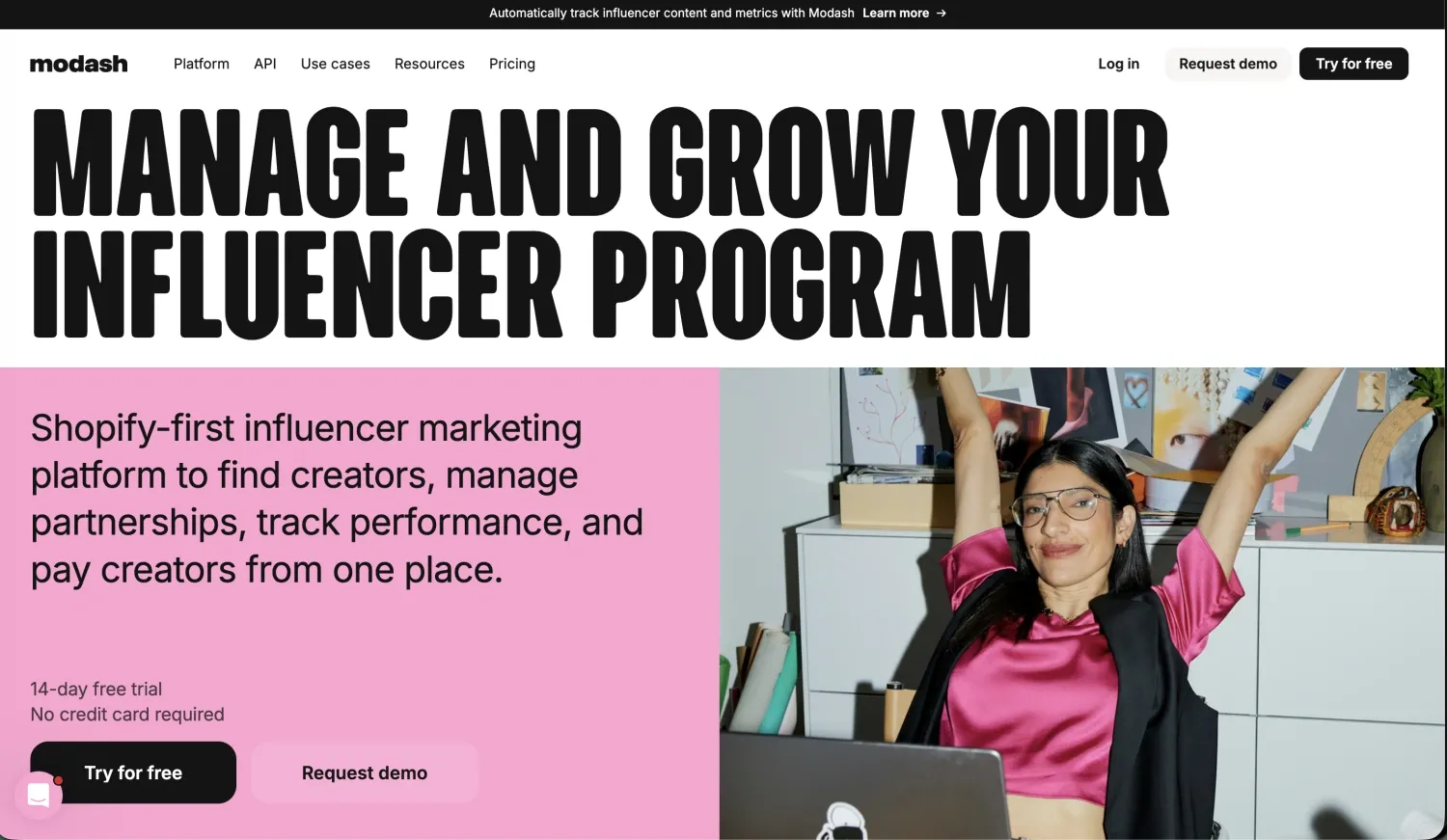
The platform is particularly useful when discovery remains part of the agency’s daily work. Teams can research potential partners, import existing creators, organize them with custom fields and labels, and connect campaign tracking to the same records. That makes Modash a practical option for agencies running recurring activations across many creators.
The trade-off is focus. Modash is designed around influencer marketing programs and campaign relationships, not primarily around packaging an agency’s exclusive talent roster into media kits and multi-creator decks. Talent managers should decide whether sourcing creators or presenting represented talent is the bigger job.
Choose Modash if: the agency regularly discovers, contacts, activates, and measures creators for client campaigns.
2. CreatorsJet: best for creator roster management
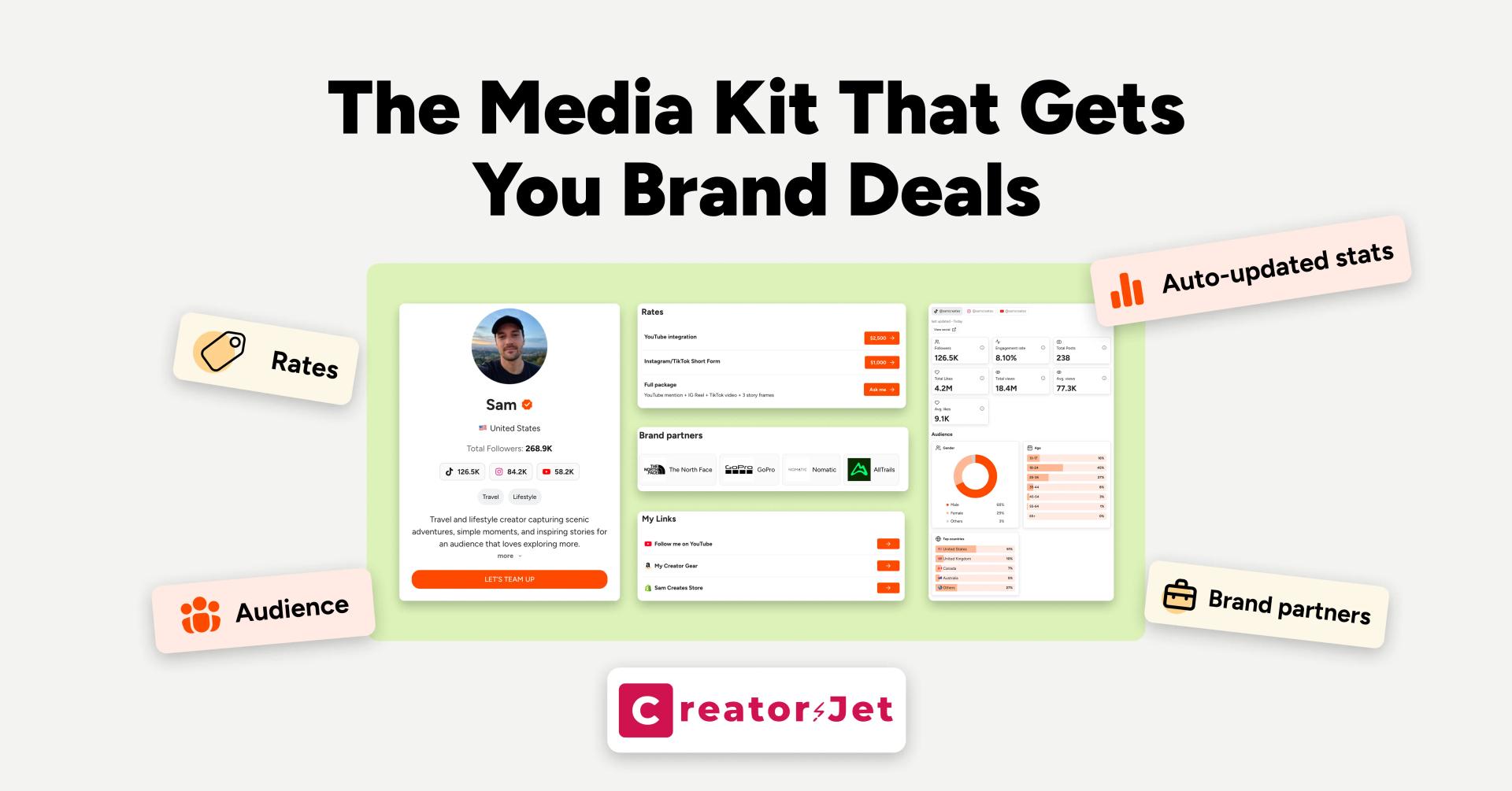
CreatorsJet’s influencer CRM is designed for agencies and talent managers that need to manage a creator roster in one place. It combines roster management with automatically updated media kits, pitch decks, and campaign reports.
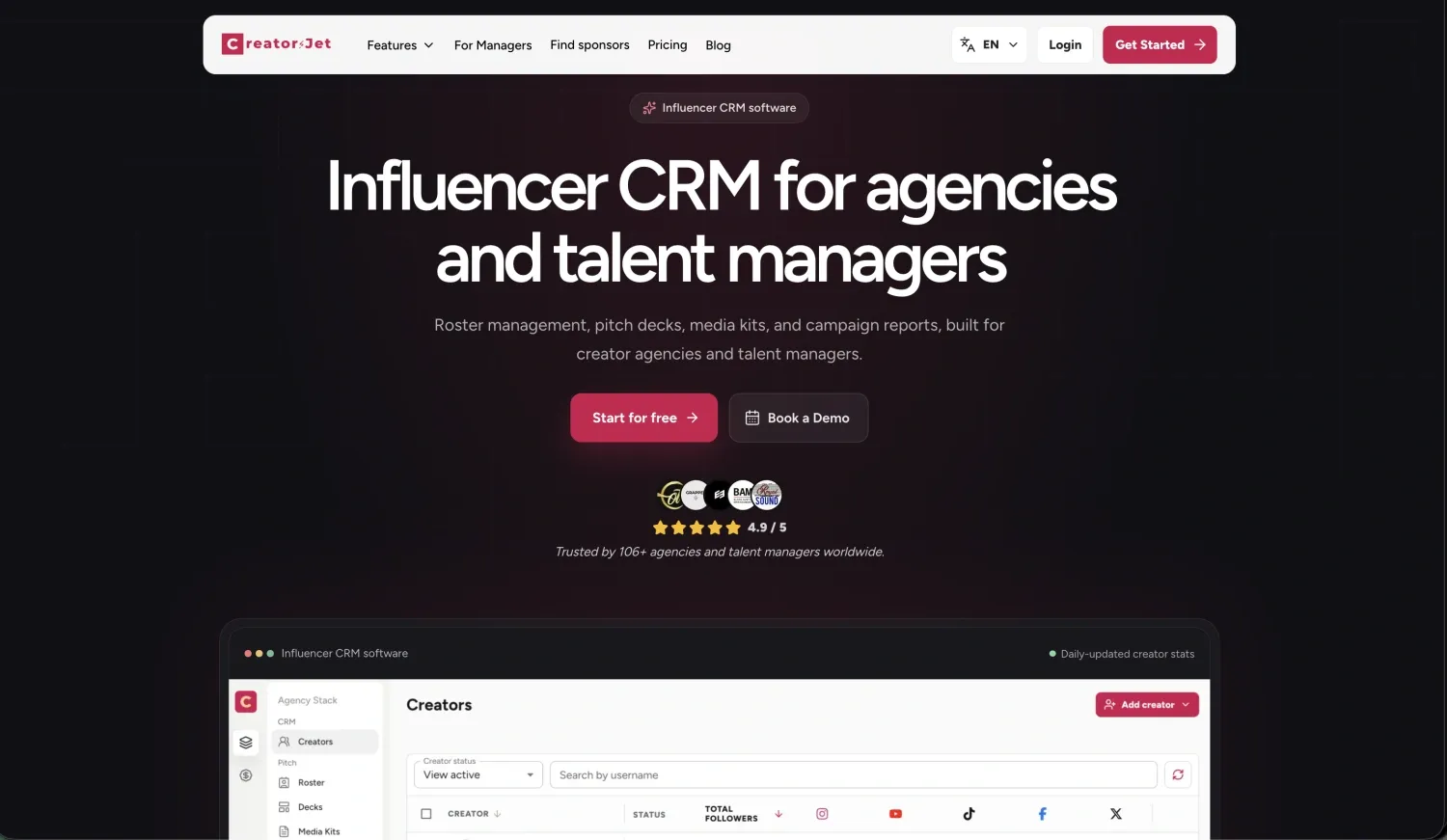
It is particularly relevant for teams representing their own talent rather than searching a large external creator database. The main advantage is keeping creator data and client-facing materials connected and current.
Agencies can organize creators by client, category, or project, then reuse the same current roster data in branded pitch decks and individual media kits. Campaign reporting stays connected to each creator, post, and tracked link, while campaign monitoring does not require every creator to open a CreatorsJet account.
Choose CreatorsJet if: the agency’s main asset is its represented roster and the team needs a cleaner way to organize and present that talent.
3. CreatorIQ: best for enterprise agencies
CreatorIQ’s enterprise creator marketing platform is built for agencies and large organizations that need a private creator database, authenticated social data, structured collaboration, and reporting across complex programs. It can bring creator profiles, campaign history, communication, content, performance, and team activity into one system of record.
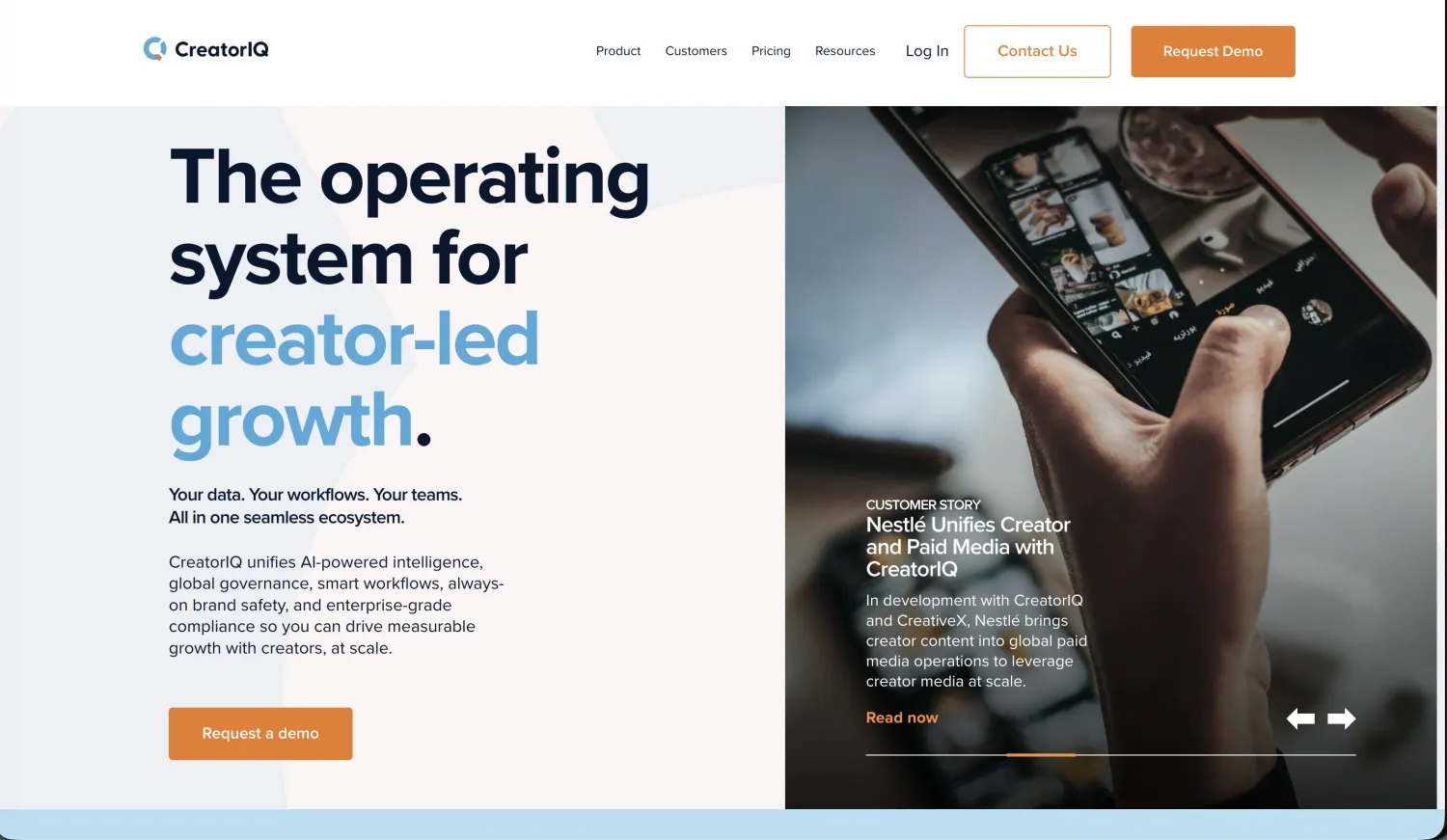
Its advantage is depth at scale. Enterprise teams can apply custom attributes, work with large creator networks, control access, and connect creator information with broader marketing and analytics systems. That matters when several departments, markets, or client teams need consistent governance.
The same depth can be a disadvantage for a smaller agency. Implementation, permissions, reporting requirements, and enterprise buying processes may be disproportionate when a few managers only need a clear roster and campaign view.
Choose CreatorIQ if: the agency operates at enterprise scale and needs governance, integrations, and detailed cross-program reporting.
4. GRIN: best for ecommerce creator programs
GRIN’s creator management platform connects creator relationship management with the operational details of ecommerce influencer programs. Teams can manage communication, campaigns, briefs, contracts, product fulfillment, content, payments, and performance without treating each activation as a separate project.
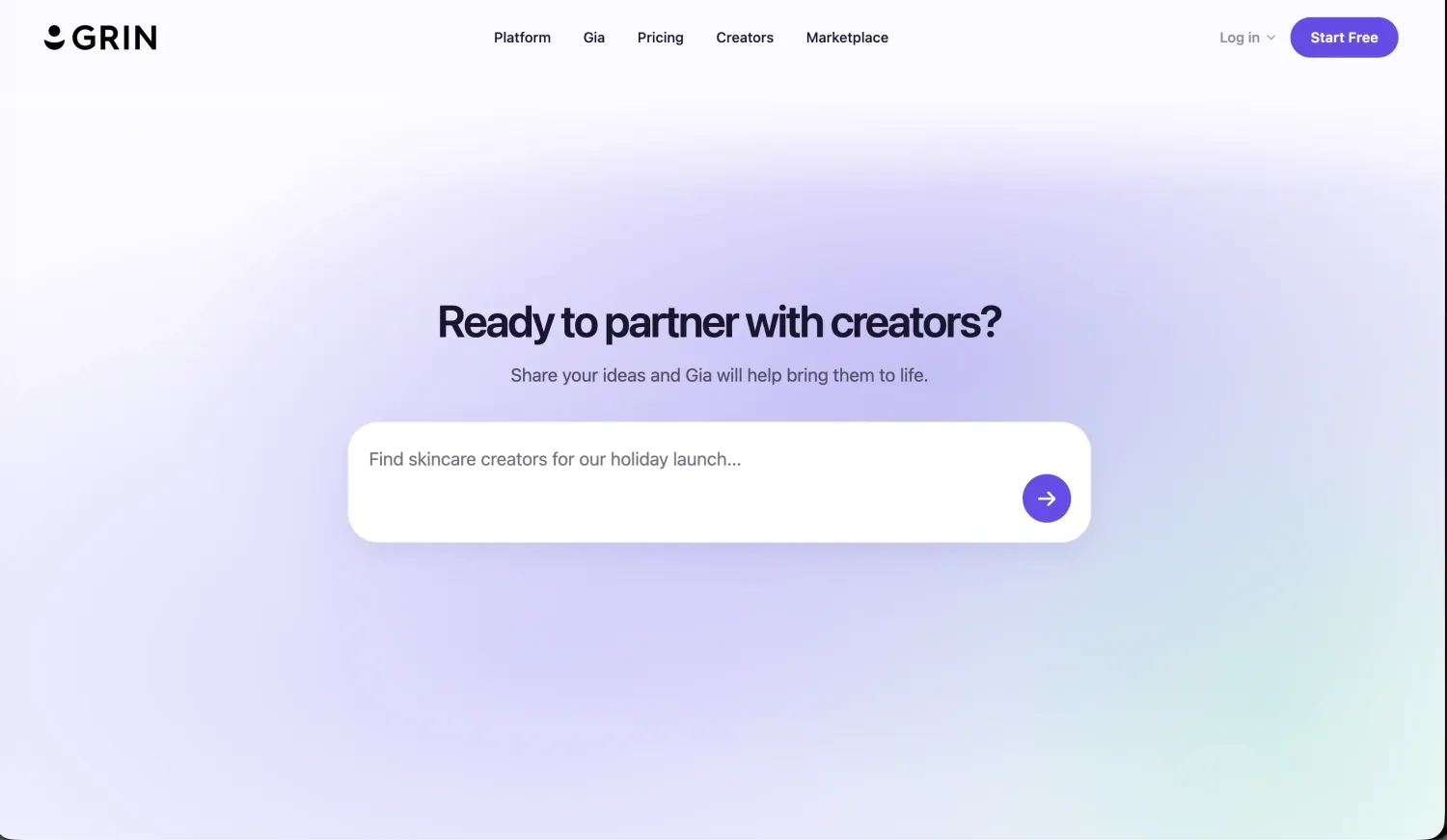
That makes it especially relevant to DTC brands and agencies managing gifting, affiliate links, discount codes, and measurable creator revenue. The CRM is not only a contact list; it connects the creator relationship to what was shipped, published, and generated.
GRIN is less naturally aligned with a talent agency whose primary job is representing creators to brands. Its workflows are oriented toward organizations activating creators for marketing. For a concrete example, the CreatorsJet case study of GRIN and MVMT’s micro-influencer program shows how that ecommerce and attribution model works in practice.
Choose GRIN if: ecommerce execution, product seeding, affiliate activity, and revenue attribution are central to the program.
5. Aspire: best for customizable campaign workflows
Aspire’s influencer marketing platform is a good fit for agencies that need flexible workflows across creator recruitment, briefs, agreements, approvals, content, incentives, and reporting. Its marketplace and discovery tools can bring creators into a program, while configurable stages and automation help move each partnership forward.
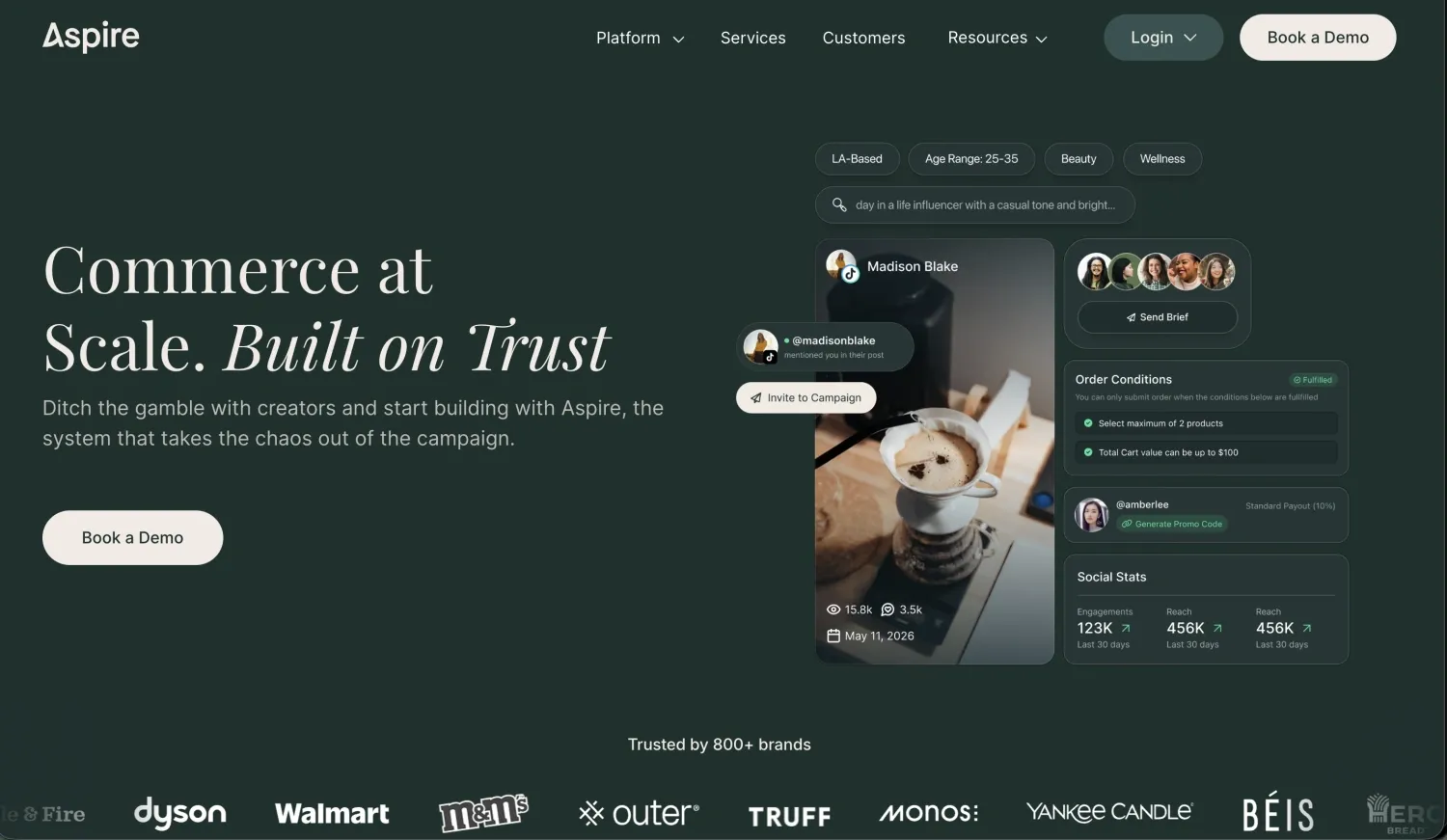
The platform is useful when an agency runs different campaign types for different clients. A gifting program, paid influencer campaign, affiliate initiative, and ambassador community do not need to follow exactly the same steps. Flexible workflows reduce the pressure to force every collaboration into one rigid pipeline.
Aspire is still primarily a creator marketing platform rather than a dedicated talent representation system. Agencies should check whether its recruitment and commerce capabilities are valuable enough to justify the broader setup.
Choose Aspire if: the team needs adaptable campaign stages, creator recruitment, content approval, and automation across several program types.
6. Upfluence: best for outreach and performance tracking
Upfluence’s influencer marketing platform combines creator discovery with relationship management, outreach, campaign assignment, performance measurement, and global payments. Custom statuses and table views allow teams to shape the CRM around their own creator journey instead of relying on one fixed sequence.
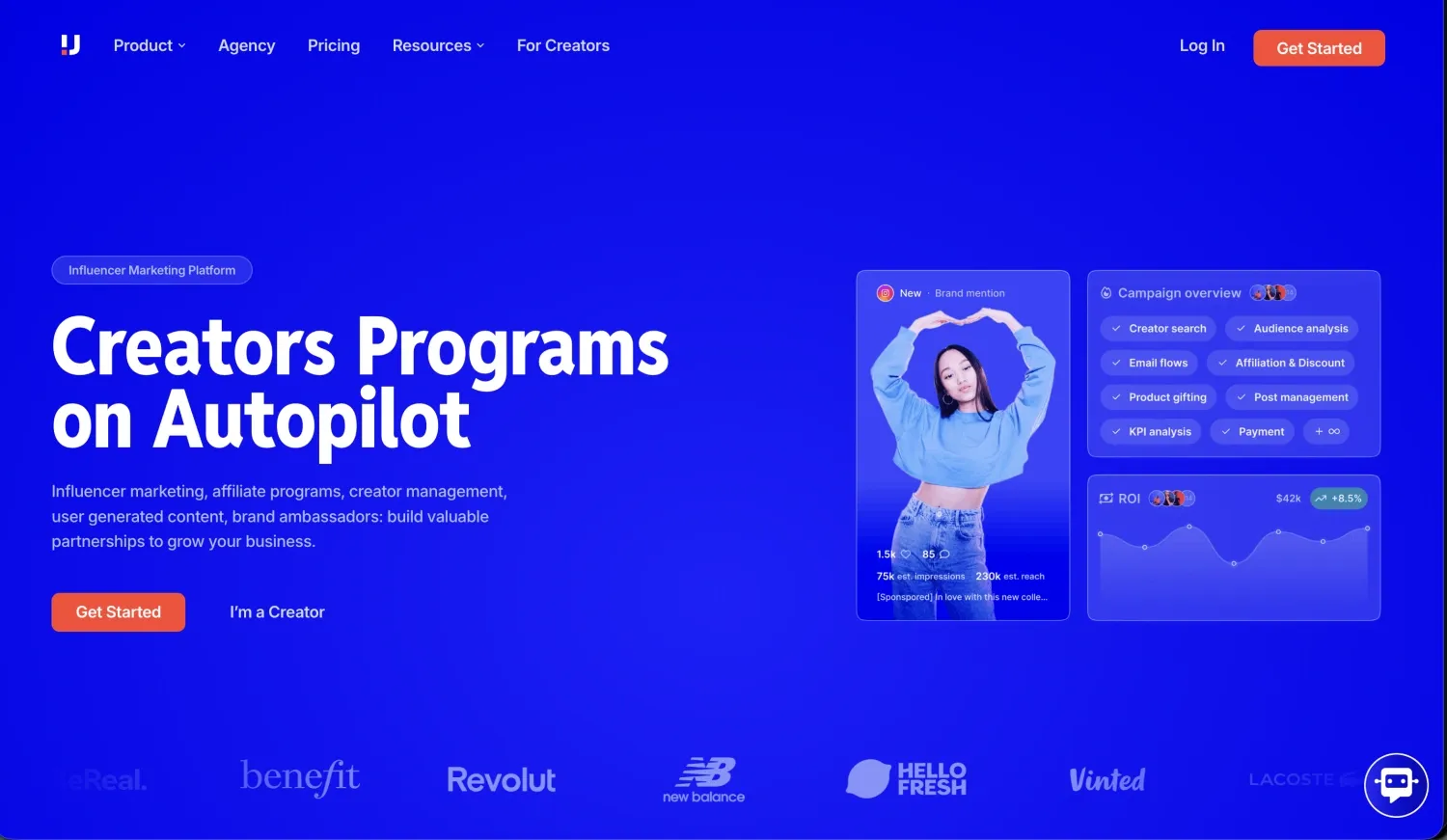
Its main advantage is breadth. An agency can identify creators, organize outreach, connect them to campaigns, track results across collaborations, and see which relationships deserve more investment. Ecommerce integrations also make it relevant when creator performance must connect to sales.
That breadth can create unnecessary complexity for a small talent management team that already knows every creator on its roster. In that situation, discovery and large-scale outreach may matter less than accurate creator profiles and polished client-facing assets.
Choose Upfluence if: the agency wants discovery, outreach, relationship stages, commerce data, and payments inside a broad influencer marketing platform.
Campaign agency CRM vs. talent management CRM
The phrase influencer CRM is used for two different jobs.
A campaign agency usually manages creators on behalf of brand clients. Its system needs discovery, outreach, briefs, content approval, tracking, payments, and client reporting. The creator pool may change from one campaign to the next. Modash, CreatorIQ, GRIN, Aspire, and Upfluence are mainly designed around this model.
A talent management agency represents a defined roster. Its job is to keep creator information current, present the right talent to brands, build pitch materials, and organize campaign activity around represented creators. CreatorsJet is the more focused option for this workflow.
Some businesses do both. If an agency represents twenty exclusive creators but also sources another hundred for client activations, one platform may not cover both sides equally well. The practical decision is to identify which workflow creates the most repeated work and which information must remain the source of truth.
How to choose the right influencer CRM
Start with the agency’s operating model, not the longest feature list.
- Choose Modash when discovery, outreach, campaign tracking, and payments need to work together for an active creator program.
- Choose CreatorsJet when roster management, media kits, pitch decks, and campaign reports are the priority.
- Choose CreatorIQ when enterprise governance, authenticated data, integrations, and multi-team reporting are required.
- Choose GRIN when ecommerce, product seeding, affiliate activity, and revenue attribution drive the workflow.
- Choose Aspire when different campaign types need customizable stages and automation.
- Choose Upfluence when broad discovery, outreach, CRM, commerce tracking, and creator payments are needed in one platform.
The best product on paper can still be the wrong operational choice. A small team may benefit more from a focused system that everyone updates than from an enterprise suite with unused modules. A large agency may outgrow a lightweight roster database if client reporting, permissions, and integrations become critical.
Final recommendation
Modash is the most balanced option for campaign-focused agencies that need discovery and relationship management in the same workflow. CreatorsJet is the clearer choice for agencies and talent managers centered on a represented creator roster.
Treat the other platforms as specialist options: CreatorIQ for enterprise governance, GRIN for ecommerce operations, Aspire for configurable workflows, and Upfluence for broad outreach and commerce tracking. The right influencer CRM is the one that removes the agency’s most repeated work while keeping creator history and client reporting easy to trust.