

A media kit can be the difference between a brand understanding your value quickly and leaving your pitch for later. The goal is not to make a huge PDF. The goal is to use a media kit checklist that helps you confirm your audience, content, proof, collaboration options, and contact details are ready before you start outreach.
Before pitching a brand, review your media kit like a brand manager would. Can they understand who you are in 20 seconds? Can they see who follows you, what kind of content you make, what results you have, and what collaboration options are available? If not, the problem may not be your audience. The problem may be how hard your media kit is to scan.
The pre-pitch media kit checklist
Use this checklist before sending your media kit to a brand:
Start by checking the essentials: your creator snapshot, audience quality, content examples, performance proof, collaboration options, brand fit, contact details, and freshness. If one part feels weak, fix that section before sending the pitch.
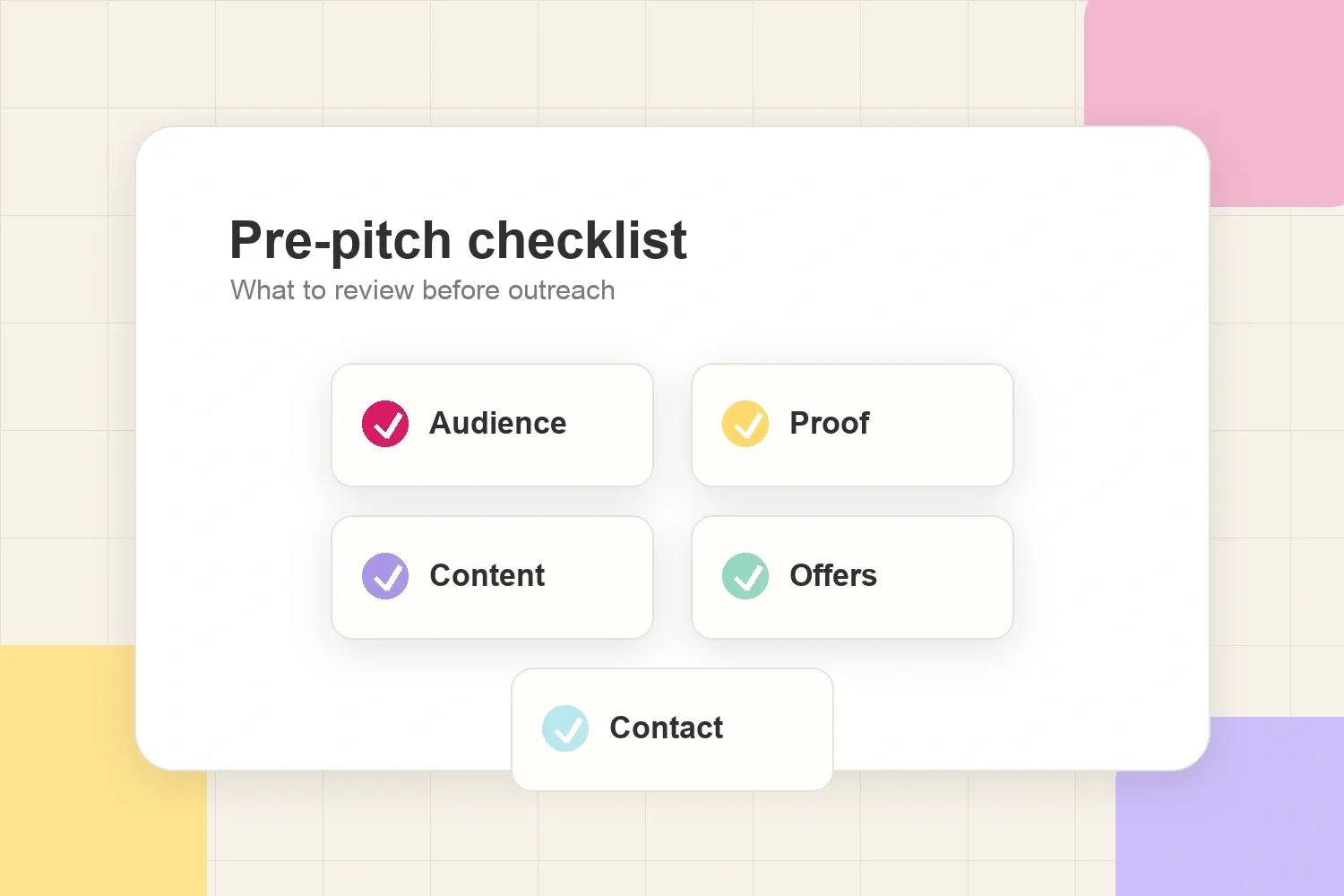
This is not about making the media kit look bigger. It is about removing friction. A brand should not need to ask basic follow-up questions before deciding whether the conversation is worth continuing.
Start with a clear creator snapshot
The first section should explain who the creator is and why the audience pays attention. Keep it short. Brands do not need a long biography before they know whether the creator fits the campaign.
A useful creator snapshot includes:
- Your creator name or brand name.
- Your niche or content category.
- Your main platforms.
- Your location or primary market.
- A short line that explains what your audience comes to you for.
For example:
Skincare creator based in Toronto, creating practical routines and product comparisons for women with sensitive skin.
That is more useful than:
Content creator passionate about beauty, lifestyle, travel, wellness, and helping brands grow.
The second version sounds broad and hard to place. The first version gives the brand a reason to keep reading.
Check that your audience section explains value
A media kit should not stop at follower count. Follower count gives scale, but brands also need to know whether the audience is relevant.
Include audience details such as:
- Total followers by platform.
- Average reach or views for your main content format.
- Top countries and cities.
- Age range and gender split when relevant.
- Niche-specific audience signals, such as recurring questions, saves, replies, or product interest.
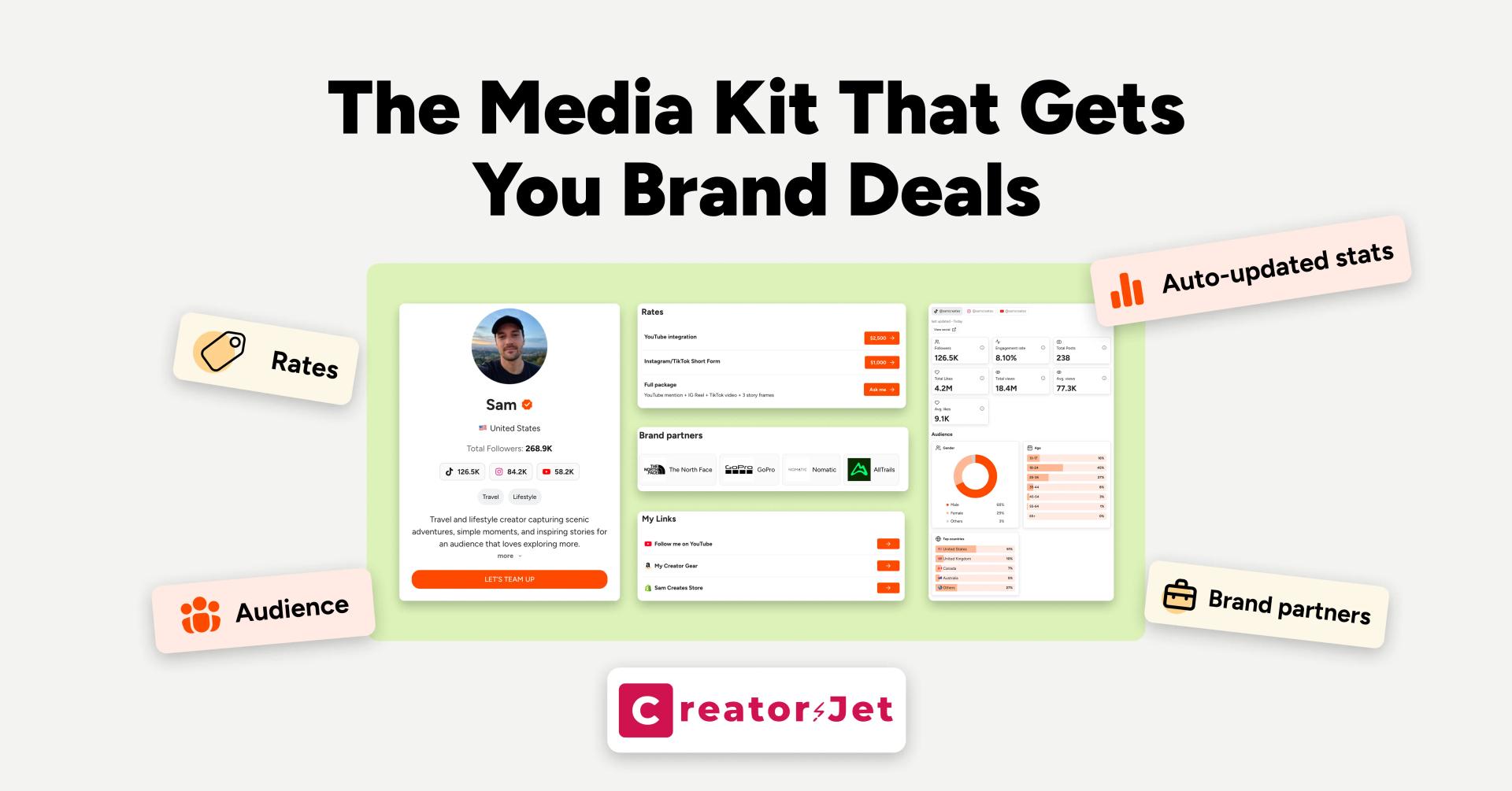
An audience section is easier to trust when it combines platform totals, performance metrics, and audience breakdowns in one place.
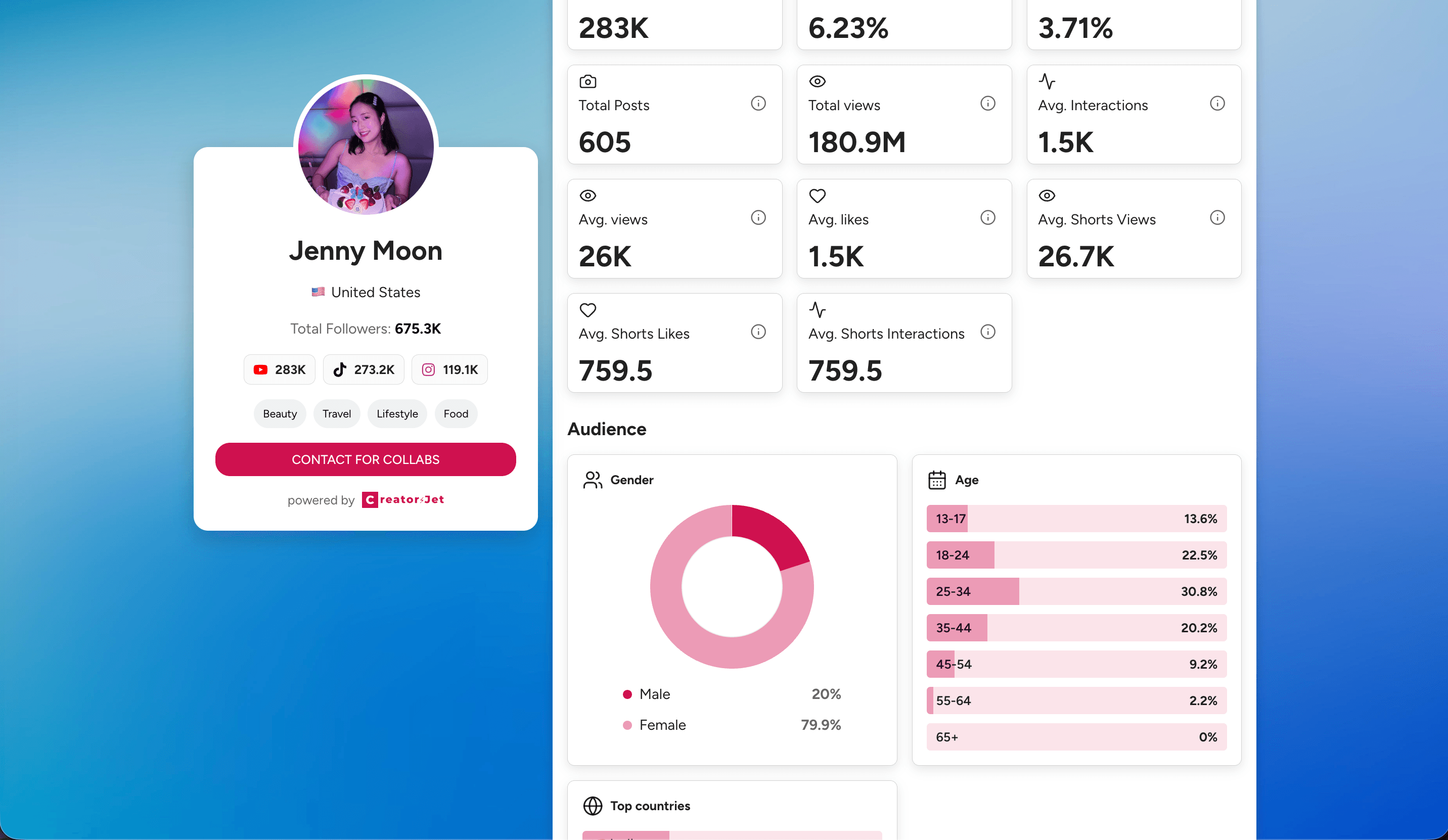
This is where a media kit becomes more persuasive. A brand does not only want to know that 24,000 people follow you. It wants to know whether those people are likely to care about the product.
If your audience quality is one of your best arguments, link your thinking to a deeper audience explanation. A creator who can show why their audience is valuable will usually sound more prepared than one who only sends a follower count. This is also why the audience section should connect naturally with your audience value for brands, not sit as a random stat block.
Make your content examples easy to judge
Brands use content examples to decide whether your style fits their product. Do not include every post you like. Include examples that help the brand imagine a collaboration.
Good examples usually show:
- Product integration that feels natural.
- Clear visuals or storytelling.
- Content formats the brand may buy, such as Reels, carousels, Stories, YouTube integrations, or UGC.
- A range of angles, such as tutorial, review, routine, comparison, or lifestyle use case.
- Clean links or screenshots that are easy to open.
If you include screenshots, make sure they are recent and readable. If you include links, test them before pitching. Broken links make the whole media kit feel neglected.
One practical rule: include fewer examples, but make each one obvious. A brand should immediately understand what the example proves.
Add proof that matches the collaboration you want
Proof should match the type of collaboration you are pitching. A creator asking for a Reel sponsorship should not only show a static photo example. A creator pitching UGC should show content quality, hooks, edits, and product framing. A creator pitching Story traffic should show link clicks, replies, sticker taps, or screenshots.
Useful proof can include:
- Recent reach or views.
- Engagement rate with context.
- Saves and shares on practical content.
- Story replies or link clicks.
- Screenshots of audience questions, with private details removed.
- Past campaign results or brand feedback.
- Testimonials when they are specific and believable.
The mistake is adding proof that looks impressive but does not help the brand make a decision. A viral post from two years ago may be less useful than a recent product post with saves, comments, and buyer questions.
Review your collaboration options
Brands should know what they can book. You do not need to include every possible service, but the options should be clear enough that the brand can imagine a package.
Collaboration options might include:
- Sponsored Instagram Reel.
- Sponsored carousel or static post.
- Instagram Story set.
- TikTok video.
- YouTube integration.
- UGC video package.
- Event coverage.
- Product photography.
- Usage rights or paid amplification.
- Monthly creator partnership.
Keep the list realistic. Only include deliverables you can produce consistently. If you are not comfortable with usage rights, exclusivity, or paid ads from your handle, do not add them casually. Those terms affect pricing and scope.
The practical version is simple: your media kit should show what you offer, but your pitch can still recommend the best option for that specific brand.
Decide whether to include rates
Some creators include starting rates. Others prefer to discuss pricing after learning the campaign scope. Both can work.
Rates are useful when:
- You want to filter out brands with budgets that are too low.
- Your packages are simple and repeatable.
- You often receive vague inquiries.
- You want to look more prepared for paid work.
Rates may be better left out when:
- Campaign scope changes a lot.
- Usage rights, exclusivity, deliverables, and deadlines vary.
- You are pitching a brand for the first time and want to start a conversation.
- You need more context before pricing accurately.
If you include rates, label them as starting points. A media kit rate should not lock you into every possible usage, revision, or paid amplification request.
Make the brand's first scan easy
Before sending the media kit, ask whether the brand can understand the essentials without reading every line.
The first scan should answer:
- Who is this creator?
- What audience do they reach?
- What content do they make well?
- What proof supports the pitch?
- What collaboration options are available?
- How does the brand contact them?
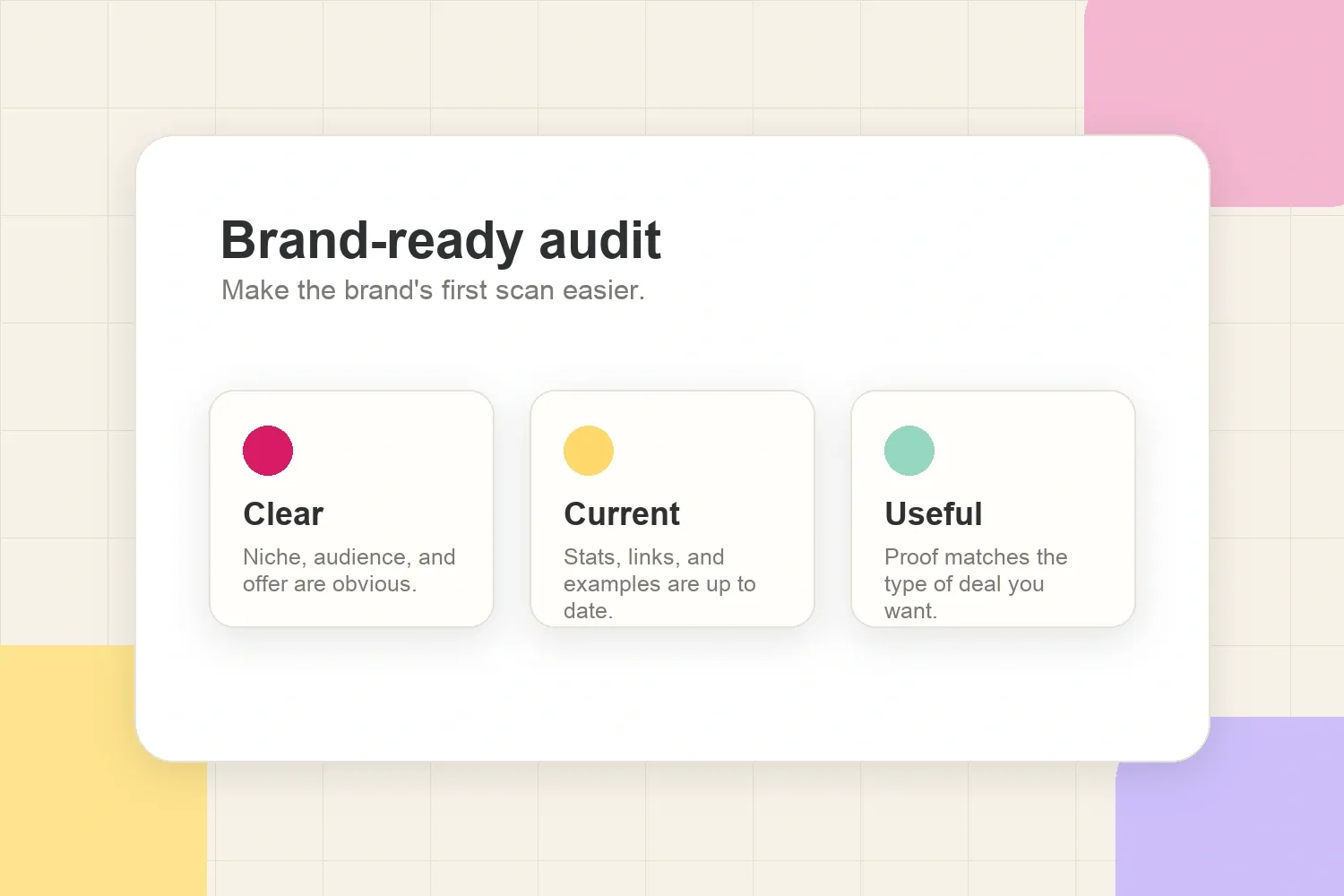
This matters because many brand managers compare several creators at once. When your influencer media kit is easy to scan, they can understand the creator faster and forward the opportunity internally without rewriting the whole case themselves.
That is also how brands are told to evaluate creator partnerships. Team Lewis' guide to evaluating influencer metrics for brand campaigns puts audience demographics and engagement quality close to the center of the decision. A pre-pitch checklist should make those signals easy to find.
Check compliance and brand-safety basics
A media kit is not a contract, but it should not create confusion. Before pitching, make sure the brand will not see avoidable risk.
Check for:
- Accurate follower and performance numbers.
- No fake claims about guaranteed sales.
- No private follower information exposed in screenshots.
- No logos from brands you did not actually work with.
- No unclear usage rights or deliverables.
- No categories you would refuse to promote.
- No content examples that conflict with the type of brand you are pitching.
If you work on sponsored content, also understand basic disclosure expectations. Sprout Social's overview of FTC influencer guidelines explains that brand relationships should be clearly disclosed in sponsored posts, videos, or captions. You do not need to turn the media kit into a legal document, but you should show that you understand sponsored work is a real business relationship.
Remove anything that weakens trust
Many media kits lose credibility because they include too much. Extra sections can look impressive at first, but they often make the brand work harder.
Remove:
- Old stats that no longer represent your account.
- A long biography that does not explain your niche.
- Too many content examples without context.
- Unclear package names.
- Rates without deliverable details.
- Screenshots with private information visible.
- Generic claims like "highly engaged audience" with no proof.
- Brand logos used only to look bigger.
Every section should earn its place. If it does not help the brand understand audience, content, proof, offer, or contact details, cut it or simplify it.
Use a final pre-send check
Before attaching or linking the media kit, do one final review:
| Final check | What to verify before sending |
|---|---|
| Links | Open every social link, portfolio link, booking link, and content example. |
| Numbers | Check follower counts, reach, engagement, views, rates, and campaign results. |
| Screenshots | Make sure screenshots are readable, recent, and free of private follower details. |
| Contact details | Confirm your email, social profiles, location, time zone, and booking link. |
| Brand fit | Match the examples, proof, and offer to the category you are pitching. |
| Pitch alignment | Make sure your pitch and media kit tell the same story. |
| File name | Save the file with a clean name, such as `creator-name-media-kit.pdf`. |
This last step sounds basic, but it prevents small mistakes that make a creator look careless. A good media kit should make the brand feel like the creator is easy to work with.
How the media kit should support your pitch
The media kit is not the pitch by itself. It supports the pitch.
The pitch should explain why the creator is relevant to the brand. The media kit should prove it. If the pitch says your audience is interested in low-maintenance skincare, the media kit should show audience details, content examples, and proof that make that believable.
After a collaboration goes live, the same professional habit continues. Creators who send clear materials before the campaign should also send clear results after the post is live. That post-campaign message is covered in the guide on what to send a brand after a sponsored post.
Final take
A media kit checklist helps creators pitch with fewer gaps. Before outreach, check that your media kit explains who you are, who you reach, what content you make, what proof you have, what collaborations you offer, and how the brand can contact you.
The best media kit is not the longest one. It is the one that helps a brand understand your value quickly and trust that you can handle a collaboration professionally.