

To get a talent manager as an influencer, you need to show a manager that you already have brand demand they can turn into deals. In practice, that means steady inbound brand inquiries, an engaged audience that brands want to reach, and content a brand can safely put money behind. Once you have that, find managers who represent creators in your niche and at your size, send them a short pitch with your numbers and recent deals, and vet the contract before you sign.
This guide covers when you're ready, what managers check, how to find and pitch them, what they take, and how to avoid a bad contract.
What a talent manager does for an influencer
An influencer talent manager runs the business side of your brand partnerships. The day-to-day work usually includes:
- Answering and filtering inbound brand inquiries
- Quoting rates and negotiating fees, usage rights, exclusivity and deliverables
- Reviewing and redlining contracts
- Pitching you to brands for new partnerships, often longer ambassador deals
- Chasing invoices and late payments
- Planning bigger moves, like a product line, a book or licensing deals
A manager doesn't make your content, grow your audience for you or guarantee a number of deals. Their income depends on yours, which is why they're selective about who they sign.
"Manager" also means different things depending on where you look:
| Who | What they do | How you get one |
|---|---|---|
| Influencer talent manager | Handles brand deals, negotiation and career planning for a commission | Pitch them, or get approached once brands already come to you |
| Talent agent | Procures paid work and, in California, needs a state license. Many influencer agencies combine agent and manager roles | The same way as a manager: referrals, roster research and pitching |
| YouTube Partner Manager | YouTube staff member who gives one-on-one channel strategy support | Invite-only, so creators can't apply |
| YouTube channel manager | Freelancer or employee who uploads videos and handles thumbnails and metadata | Hire one, then give them access in YouTube Studio |
If you searched for a YouTube manager, check which one you actually need. YouTube runs an invite-only Partner Manager program that gives selected channels six months of one-on-one support, based on their size, activity and Community Guidelines history. And when you add someone as a Manager on your channel, you're only giving them access to your channel. Neither one negotiates brand deals for you. The rest of this guide is about talent managers.
Signs you're ready for a manager
Follower count isn't the real test. Managers sign creators when the commission on their deals is worth the time it takes to manage them. Talent manager Johanna Voss took on her first influencer client when that creator had about 19,000 Instagram followers.
What matters more:
- Brands already come to you. You get regular inbound inquiries, and some go unanswered because you don't have time.
- You have deal history. You've closed paid partnerships, ideally a few repeat ones, so there's a rate and a track record to build on.
- Business work is eating your content time. Negotiation, contract reviews, revisions and invoice follow-ups take hours every week.
- You suspect you're underpricing. You've given away usage rights or exclusivity without charging for them, or you don't know what to quote for a package.
Lifestyle creator Danielle Gervino, who now has more than 100,000 Instagram followers, describes the point where she signed in much the same way. After years of doing everything herself, she was ignoring brand emails, skimming contracts and putting off projects she wanted to take. She had turned agencies down by reflex, but in the middle of a demanding year-long partnership she agreed to an intro call and said yes. Her managers now go through every contract, and catching clauses she used to miss, like usage rights, has led to higher fees.
It's probably too early if you get few or no inbound inquiries, haven't closed a paid deal yet, or want a manager mainly to grow your audience. The math explains why. At a 20% commission, a creator earning $1,000 a month from brand deals brings the manager $200. Few managers can spend hours pitching for that, so they wait for creators with more demand or clear momentum.
What managers look at before signing a creator
Managers evaluate you much like a brand would, because brands are who they'll sell you to.
- Engagement that holds up. Consistent views, comments and saves across recent posts, not one viral outlier. Managers compare your average views to your follower count.
- An audience brands pay to reach. Country split, age range and gender that match categories with budgets. For US brands, a large US share matters.
- Brand-safe content. A manager will scroll your recent posts and comment sections. Content a brand's legal team would hesitate over narrows who they can pitch.
- Inbound deal flow. How many brand emails you get each month, and from what kind of brands. This is the clearest sign they'll earn back their time.
- Past partnerships and results. Brands you've worked with, repeat bookings, and results you can share, like link clicks or code redemptions.
- A clear niche. "Outdoor travel with gear reviews" is easier to sell than "lifestyle."
- Reliability. Meeting deadlines, replying quickly and handling revisions calmly. Managers ask brands about creators, and brands remember.
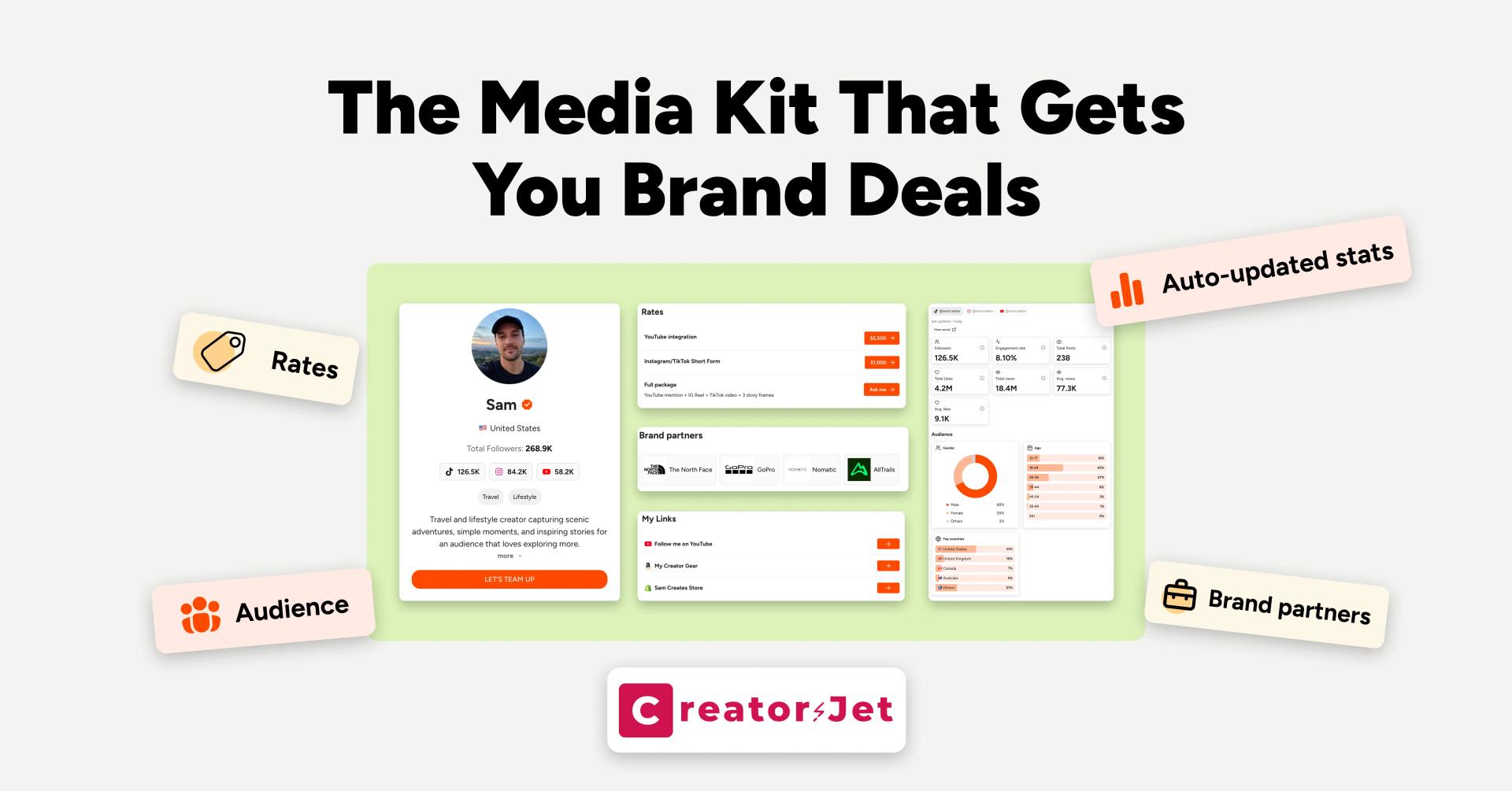
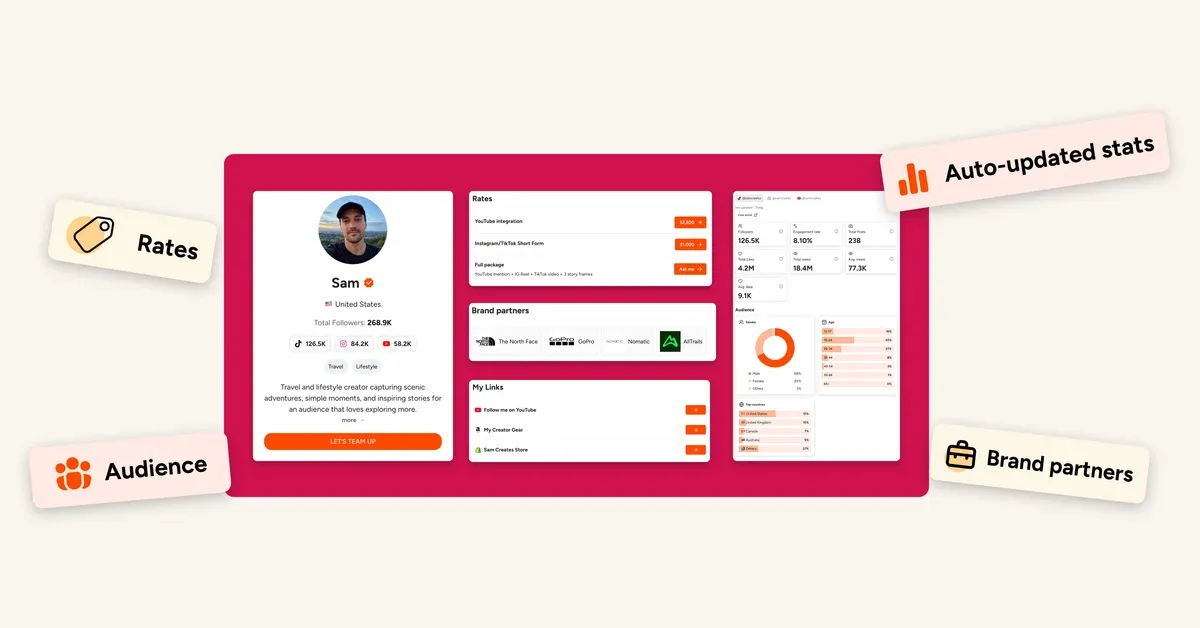
A media kit puts most of this on one page: audience stats, engagement, top countries, rates and past brand partners.
How to find talent managers who fit you
Creators usually get a manager in one of two ways. Either a manager reaches out after noticing your brand work, or you pitch them. If a manager contacts you first, treat it like any other pitch: check their roster, then use the vetting questions below before you agree to anything. If no one has reached out, go looking.
The best manager for you already represents creators like you: same niche, similar size, similar brands.
- Check creators one or two steps ahead of you. Many list a "management" or "business inquiries" email in their Instagram or TikTok bio, or on their YouTube channel page. The email domain usually reveals the agency.
- Read agency roster pages. Management companies publish their rosters. If a roster is all creators with millions of followers, or has no one in your niche, move on.
- Ask creators you know. A referral from a signed creator gets read. Ask who they'd recommend, and who they'd avoid.
- Ask your brand contacts. Influencer marketers deal with managers every day and know who is organized and fair.
- Go where managers are. Creator events like VidCon, niche industry conferences, and LinkedIn, where many managers post about their roster.
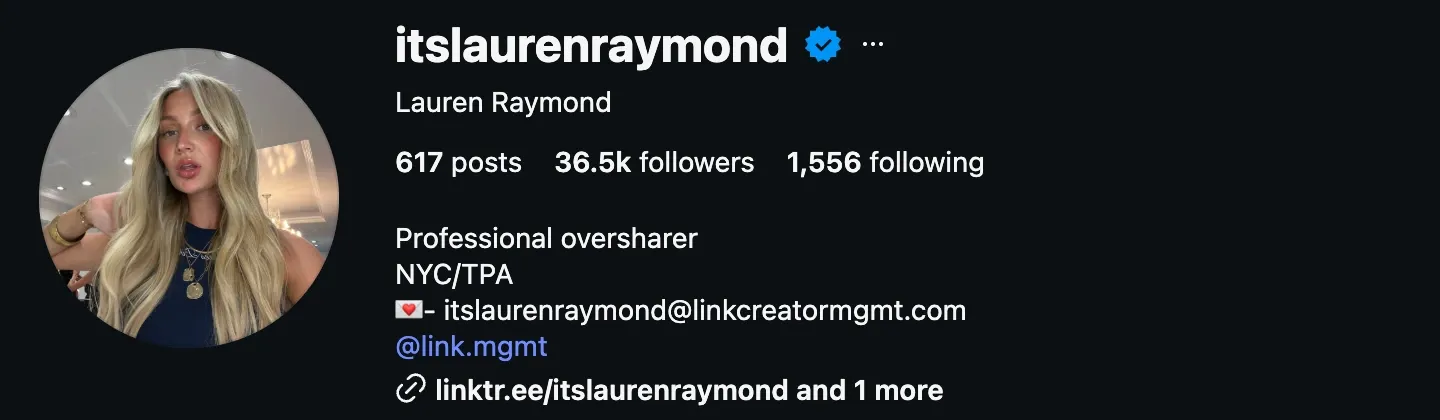
Here's what the first step looks like in practice. New York creator Lauren Raymond, with about 36,500 Instagram followers, lists a business email on the linkcreatormgmt.com domain and tags @link.mgmt, a boutique talent management agency, right below it.
Also decide what size of team suits you. A boutique manager with a small roster usually gives you more personal attention and knows your content well. A large agency brings more brand relationships and in-house support for contracts and payments, but you may be one of many creators on a junior manager's list. Either can work if the person handling your account has time for you.
Be careful with "managers" who DM you offering representation for a sign-up fee or a paid course. Legitimate managers earn commission on the deals they close.
Aim for a short list of five to ten managers or agencies, with the creators that led you to each one.
How to pitch a talent manager
Keep it short. A manager wants to know in under a minute whether you're a fit and whether there's business to manage. Include:
- Who you are, your niche and your platforms, in one line
- Followers and average views or engagement on your main platform
- An audience snapshot: top countries and age range
- Recent paid deals and repeat brands
- How many brand inquiries you get each month
- What you want help with
- A link to your media kit, so they can check your current stats without asking for screenshots
Here's a template you can adapt:
Subject: Representation inquiry: [Name], [niche] creator, [platform and size]
Hi [Manager name],
I'm [Name], a [niche] creator on [platforms]. I saw you represent [creator name], and my audience overlaps a lot with theirs.
Quick snapshot:
- [X] followers on [platform], averaging [X] views per [video or Reel]
- Audience: [X]% US, mostly [age range]
- Recent partnerships: [Brand], [Brand] and [Brand] (repeat)
- Around [X] brand inquiries a month, and I'm turning some down for lack of time
I'm looking for a manager to take over negotiation and contracts and help me land longer partnerships in [category].
Media kit: [link]
Would you be open to a short call?
[Name]
Follow up once after about a week, and once more a week or two later. If there's still no answer, move on to the next name on your list.
If a manager replies, expect an intro call. Have your current rates, your brand income over the last few months and your goals for the next year ready. The call is also your chance to interview them.
How much a talent manager takes
Most influencer managers work on commission, usually 10% to 20% of the deals they handle, and some agencies take more. Many creators treat 20% as the standard. The percentage matters less than what it applies to, so ask about:
- Gross or net. Is commission taken on the full brand fee, or after costs like production?
- Deals you bring in. Some managers take commission on every deal. Others take less, or nothing, on partnerships you already had.
- Post-term commission. Many contracts let the manager keep earning on deals they negotiated after you part ways. Ask for how long.
Commission is the only cost. A manager who asks for money upfront is not working on commission.
How to vet a manager before you sign
Questions to ask on the intro call:
- Who do you represent at my size and in my niche, and can I talk to them?
- Who will handle my account day to day, and how many creators does that person manage?
- Do you pitch brands proactively, or mainly handle my inbound?
- Can I see the pitch you'll send brands about me, and will I be copied on brand emails?
- Will I see every offer, including the ones you turn down?
- Who receives the brand payment, and how fast do I get my share?
- What happens with brands I already work with?
- Is there a minimum earnings quota to stay on the roster?
- How do I leave if it isn't working?
Then talk to two or three creators on their roster, including one who left if you can find them.
Contract terms to read closely:
- Term and renewal. How long the agreement lasts, and whether it renews automatically.
- Exclusivity. Whether it covers only brand deals, or all your work.
- Scope of commission. Watch for "360" wording that takes a cut of ad revenue, merch, courses or affiliate income the manager doesn't work on.
- Payment flow. If brand money goes to the manager first, the contract should say when it's paid out to you and that you'll get statements.
- Approval rights. You should approve every deal and every contract signed in your name.
- Termination. The notice period, the conditions, and how the post-term commission applies after you leave.
Approval rights only help if you know what you're approving. Once you know the clauses that matter in influencer contracts, like usage rights, exclusivity and payment terms, you can ask your manager the right questions before you sign.
One US-specific point: in California, anyone who finds paid work for artists counts as a talent agency and needs a state license from the Labor Commissioner. An unlicensed manager can still negotiate alongside a licensed agency, at that agency's request. If you or your manager are based in California, ask whether they hold a license or work with a licensed agency, and have an entertainment lawyer review the agreement before you sign.
Red flags that should end the conversation:
- Any upfront or monthly fee to be represented
- Refusing to let you speak with creators they represent
- Vague answers about when and how you get paid
- Commission on all your income, including work they don't touch
- A long, auto-renewing exclusive term with no clear way out
- Pressure to sign quickly
If no manager will sign you yet
A "not yet" is common, and it's usually about timing. Use that time to build what managers sign for:
- Close deals yourself. You can get brand deals without a manager by pitching brands directly, and every deal you close adds to the track record a manager will ask about.
- Log every inbound inquiry. Note the brand, the budget and the outcome. After a few months, this log is the most convincing part of a manager pitch.
- Keep campaign results. Save views, clicks and code redemptions from each partnership and turn the best ones into short case studies.
- Get admin help without a commission. If the inbox is the main problem, a part-time assistant paid by the hour can handle triage, scheduling and invoicing.
When your numbers change, pitch again and lead with what's new since your last email.
Make the decision easy for the manager
A manager signs you when the business case is obvious. Brands are already reaching out, your audience matches what they buy, your content is safe to sponsor, and your past deals show you deliver. Put that proof in one place, pitch the managers who already represent creators like you, and read every line of the contract before you sign. If the answer is no for now, keep closing your own deals and come back with better numbers.