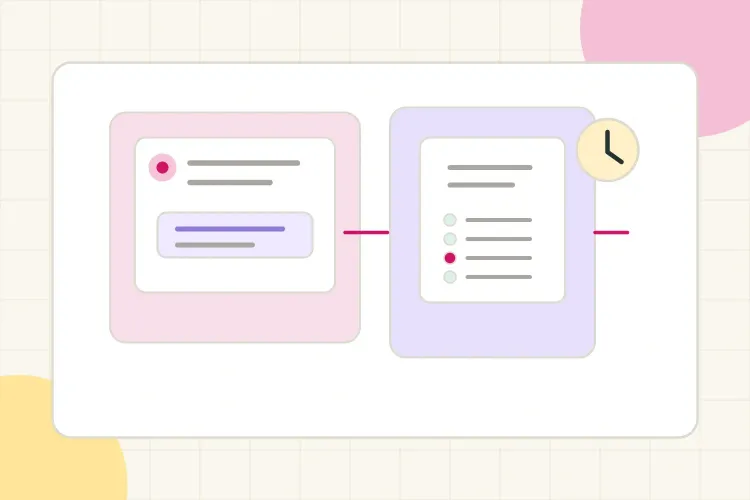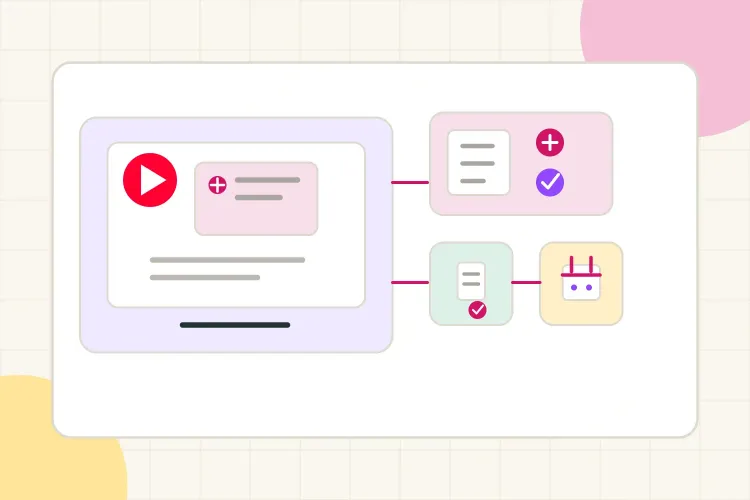

A brand asks for “a few small changes,” but the request adds a new hook, a reshoot, and another version for a second platform. That is not a normal revision anymore. It is a scope change, and treating it as one keeps the collaboration clear without making the conversation adversarial.
The practical way to handle brand revision requests is to compare each request with the agreed brief, deliverables, and approval process. Fixes that make the agreed content accurate, compliant, or easier to understand are usually revisions. A new concept, deliverable, platform, reshoot, or campaign angle needs a new agreement on scope and timing.
How to classify brand revision requests
Start with the brief and the version of the content the brand approved. Do not decide based only on how long the email sounds. A short sentence can still create hours of work if it changes the concept or requires a new shoot.
Reasonable revisions
These usually stay within the agreed scope:
- correcting a product name, price, link, or factual detail;
- adding a mandatory talking point that was already in the brief;
- adjusting a caption, on-screen label, format, or disclosure so it meets the brief or platform rules;
- trimming a section, changing the order, or clarifying wording without changing the creative idea;
- fixing a technical issue such as a missing tag, wrong aspect ratio, or audio problem.
Scope changes
These usually deserve a separate discussion:
- replacing the approved concept with a different creative direction;
- adding a second video, platform, cutdown, raw file, or round of Stories;
- asking for a new location, product demonstration, script, or reshoot after approval;
- adding a new claim, audience, campaign objective, or usage requirement;
- requesting changes because the brand’s internal team changed its mind, not because the content missed the brief.
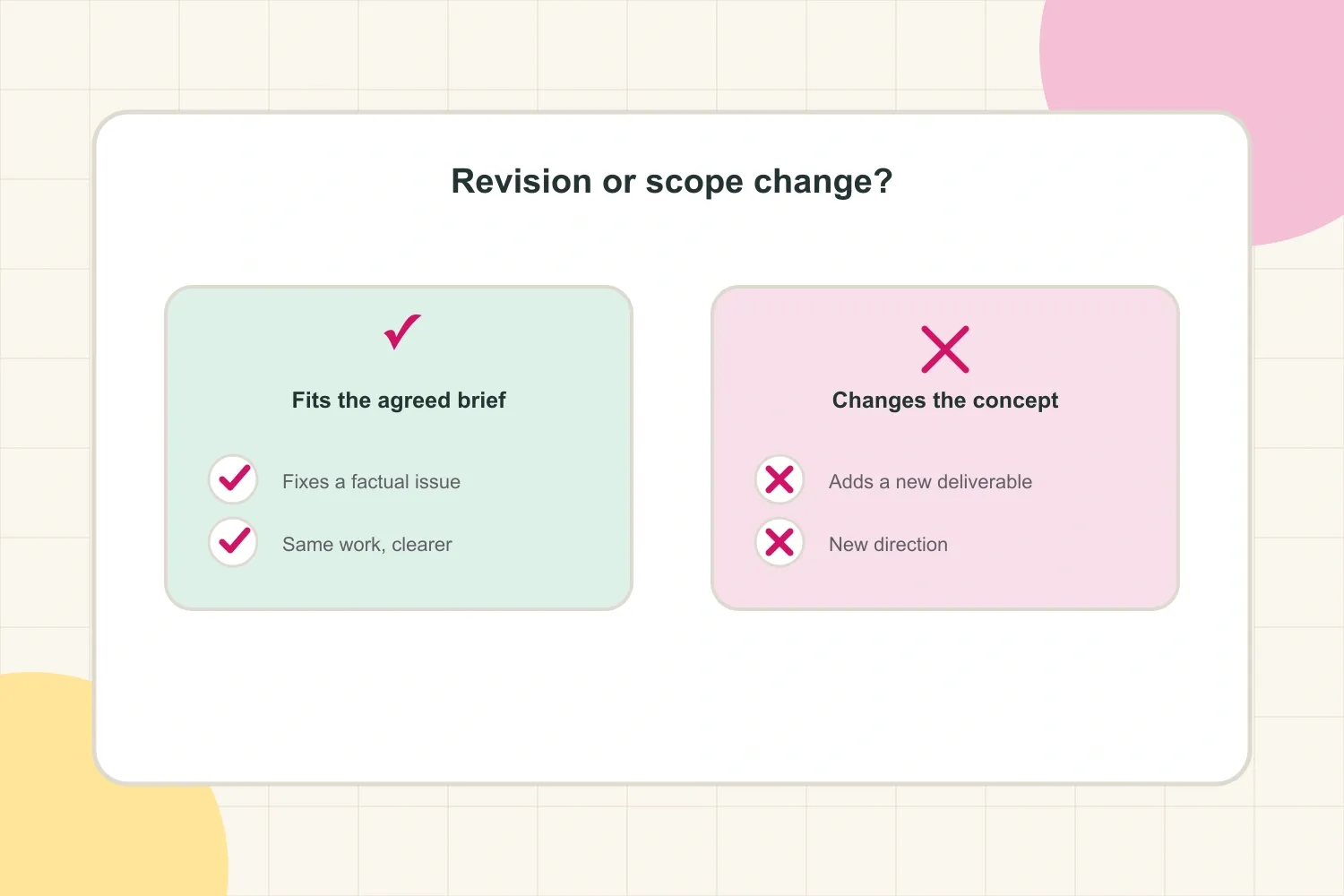
The distinction is simple: a revision improves the agreed deliverable; a scope change creates new work or changes the basis of approval.
Use three questions to decide quickly: Was the request already in the brief? Does it correct an error or omission in the agreed deliverable? Does it require new production? A request that fits the brief or fixes your own missed requirement is usually part of the original work. A request that introduces a new direction and requires new footage, files, or deliverables should be discussed as a scope change. If you missed a mandatory brief point, acknowledge it and fix it; do not present your own omission as extra work.
Agree on revision limits before production starts
The easiest revision request to handle is the one the original agreement already explains. Before filming or editing, confirm how many revision rounds are included, who gives final approval, and how quickly the brand must respond.
Also define what happens when feedback arrives in one long message from several people. Ask the brand to consolidate comments through one decision-maker. Otherwise, a creator can fix one request only to receive a conflicting request from another stakeholder later.
Your pre-production agreement should clarify:
- the number of included revision rounds;
- whether a round means one consolidated set of comments or unlimited messages;
- whether reshoots are included and what causes one to be required;
- the review deadline for each draft;
- how a missed approval deadline affects the publishing date;
- what happens when the brief changes after filming.
Before production, use this YouTube sponsorship checklist to confirm the talking points, deliverables, approval steps, and deadlines before the camera turns on. Then use the influencer contract clause guide to make sure revision limits, approval terms, and cancellation language are written into the agreement.
If the brief is still vague, Influencer Marketing Hub’s campaign brief guide offers a practical checklist of the information a brand should define before production.
What to do when the contract says “unlimited edits”
“Unlimited edits” is not a useful operating process. It may mean the brand wants reasonable corrections until the content matches the brief, or it may leave the door open to endless creative changes. Ask for the intended meaning before accepting the work.
A creator-friendly clarification separates included corrections from new creative work. For example, factual corrections, required disclosures, brand-safety issues, and missing brief points may be included. A new opening, location, script, product angle, or reshoot after approval should be treated as additional scope.
The goal is not to refuse every change, but to make the boundary clear while the relationship is still easy to manage. If the brand will not change the wording, ask for a practical limit in writing: one consolidated review round, a review deadline, and a process for changes that materially alter the approved concept.
How to respond professionally
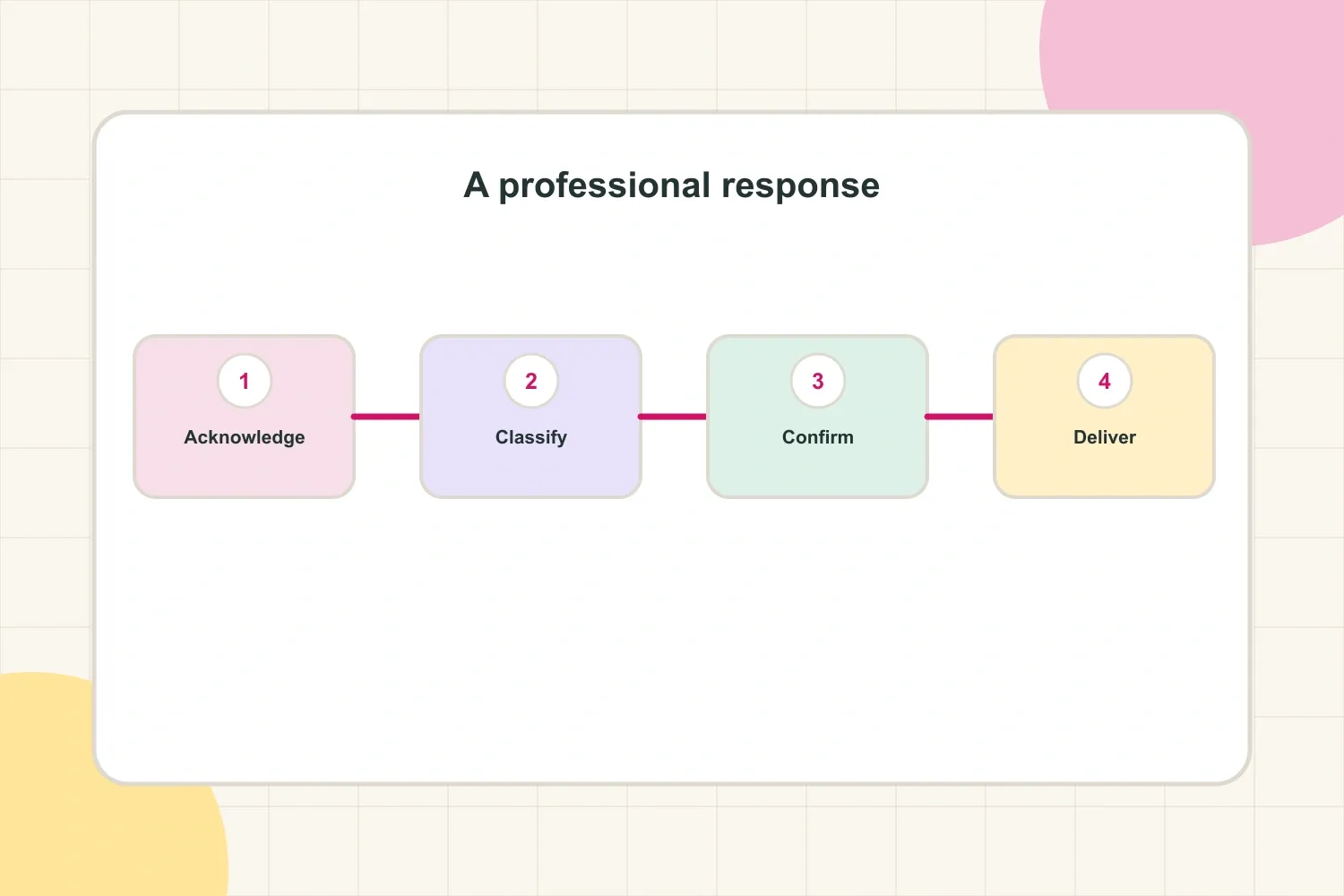
A good response does four things: acknowledges the feedback, shows that the request was understood, classifies the work, and confirms the next step.
Use this structure:
- Thank the brand or acknowledge the notes without agreeing to every request immediately.
- Restate the changes in concrete terms so both sides are discussing the same list.
- Separate changes that fit the approved brief from changes that add new production work.
- Confirm the revised delivery date, approval deadline, and any scope question before continuing.
Ask the brand to send one consolidated list of actionable notes, ideally with timestamps or a clear reference to the relevant line, scene, or asset. If the feedback is subjective, such as “make it more engaging,” ask what audience response or campaign objective the change is meant to improve. That turns a vague preference into a decision you can evaluate against the brief.
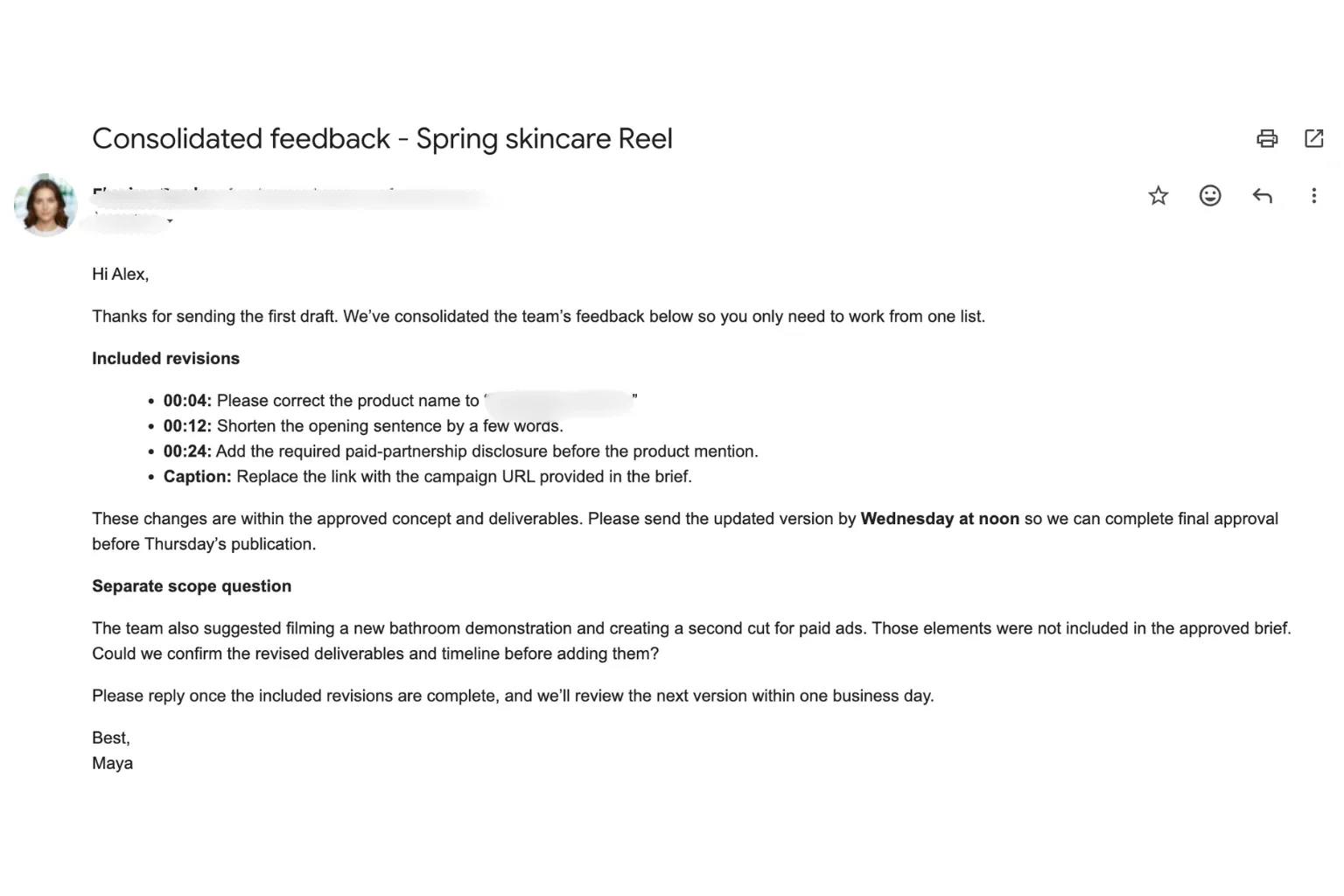
Once the feedback is specific and consolidated, use the four-step response below to acknowledge it, decide whether it stays within scope, confirm the next action, and set the delivery expectation.
For a normal revision, a concise reply could be:
“Thanks for consolidating the notes. The product-name correction, shorter opening, and updated disclosure fit the approved brief, so those can be included in the next revision. Please confirm the final wording by Thursday so the current publishing date stays on track.”
For a likely scope change, use a calm explanation:
“The request for a new demonstration and a second cut changes the approved concept and adds production work. The current deliverable includes one edited video and one revision round. If the new version is important, please confirm the added deliverables and revised timeline before filming again.”
Avoid labels such as “unreasonable” or “out of scope” without explaining why. The useful language is specific: “This changes the concept,” “This adds a deliverable,” or “This requires a reshoot after approval.”
Protect your approval deadlines
Revision cycles become difficult when the brand can send feedback at any time but still expects the original publishing date. Set a review window for each draft and make the dependency clear: late feedback may move the next delivery or publishing date.
When a deadline is approaching, send a short status message rather than silently rushing. For example: “The draft is ready for review. Notes received by Tuesday at noon can be included for Thursday’s post; later feedback may move the publishing date.” This is professional project management, not pressure.
Do not publish sponsored content while approval is still unresolved unless the agreement clearly says you can. If several stakeholders are involved, ask who has final approval and keep that confirmation in writing.
When the request conflicts with your voice or experience
A brand can request a change that is technically within the brief but still conflicts with your experience, audience, or way of speaking. A creator should not make a personal claim, performance promise, health statement, or comparison that is not honest or supportable just because it appears in a revision email.
Explain the concern and offer an alternative. “I can’t present that result as a personal experience because it is not something I have tested. I can explain the product feature, demonstrate how it works, or use the approved factual wording instead.”
The same principle applies to disclosure. A request to make the sponsorship less visible is not an ordinary style preference. Keep the required disclosure clear and ask the brand to approve wording that is both natural and compliant in the relevant market.
If the brand keeps changing its mind
Repeated changes usually signal a process problem rather than one difficult comment. Pause production and summarize the current version: what has been approved, what remains open, which requests are new, and what decision is needed.
Ask the brand to choose one direction before another draft is made. If the concept has moved materially, confirm the new deliverables and timeline in writing. Continuing to revise without resetting the agreement makes it difficult to tell when the work is complete.
A final checklist before you reply
Before answering, run the request through this final check:
- Which exact deliverable, scene, line, or asset does the note affect?
- Is the change in the brief, or does it correct an error or omission on your side?
- Does it require a reshoot, new file, extra platform, or new claim?
- How many revision rounds have already been used?
- Who has final approval, and when must the brand respond?
- Will the request affect the delivery or publishing date?
- Can the change be made honestly and in your normal voice?
- What exactly needs to be confirmed in writing before work continues?
The professional goal is not to win a debate over every edit. It is to keep the brief, feedback, workload, and deadlines aligned. When a request fits the agreed work, handle it clearly and promptly. When it changes the work, name the change early and reset the scope before production continues.