

Brands rebook creators who make the next campaign easy to approve. That means three things: the first collaboration ran smoothly, the results can be explained to someone who was not involved, and the creator proposes a clear next step instead of waiting to be remembered.
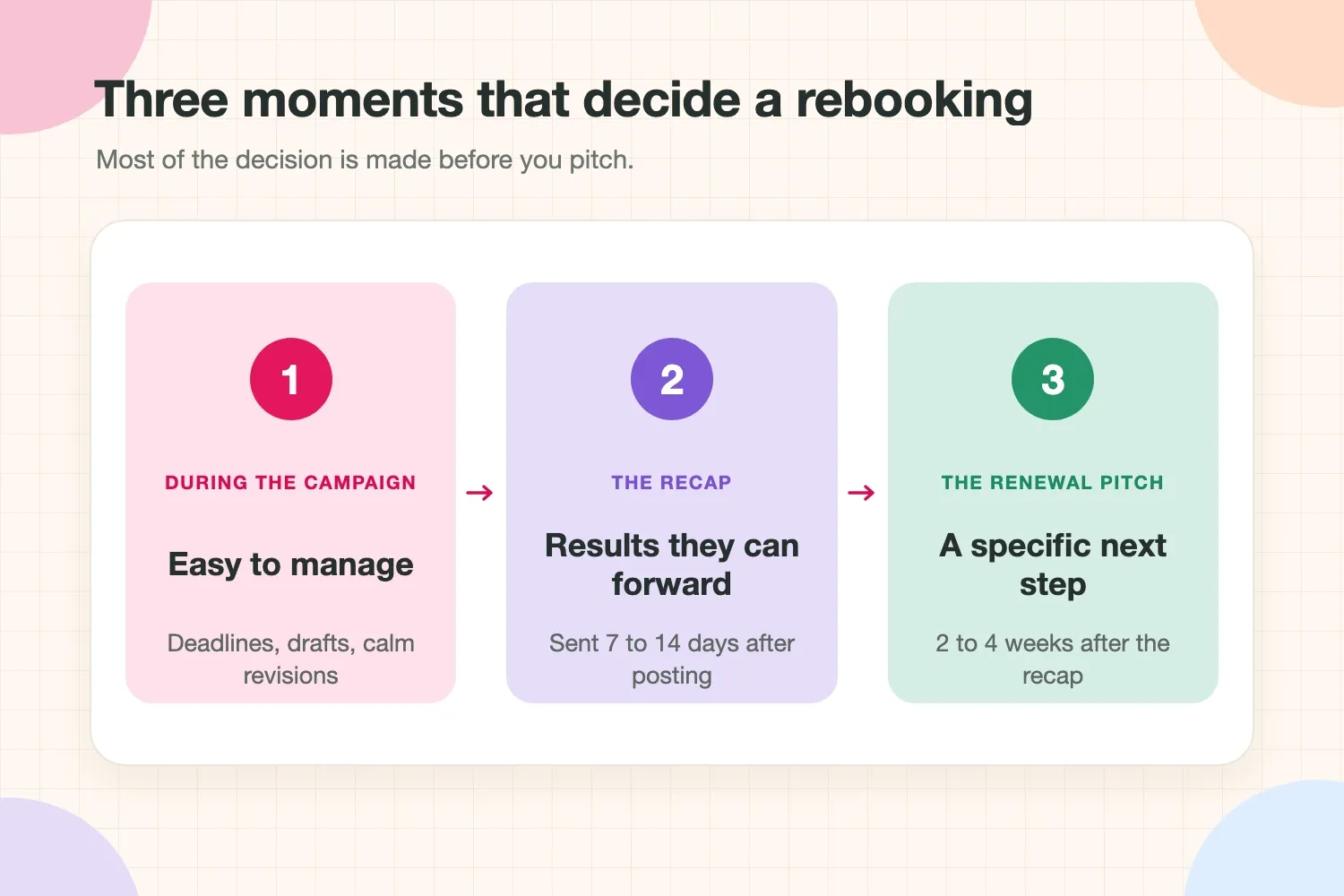
Most of that work happens before you ever ask for a second deal. The way you handle the brief, the recap you send and the timing of your follow-up decide whether your contact argues for you when the next budget is assigned.
Repeat bookings are less common than many creators assume. The Influencer Marketing Factory's 2026 brand deals report, which analyzed more than 316,000 sponsored posts, found that one-off partnerships still make up 49% to 72% of brand-creator relationships, depending on the platform. A second booking rarely happens by default, so it is worth building deliberately.
What brands weigh before booking a creator again
Your contact rarely decides alone. A marketing manager usually has to justify the renewal to a budget owner, a client or an agency lead. The easier you make that conversation, the more likely the rebooking.
Most brands look at five questions:
- Did the content meet the campaign goal? Reach, clicks, sales, sign-ups or content quality, depending on what the brief asked for.
- Was the creator easy to manage? Deadlines met, drafts on time, revisions handled without friction.
- Can the content be reused? Assets that work in ads, emails or on product pages extend the value of the deal.
- How did the audience react? Comments with questions, purchase intent or product mentions carry weight.
- Is the price justified compared with other options? The brand compares your cost with alternative creators and channels.
A creator does not need to win on all five. But a weak answer on the second point, ease of collaboration, often ends the relationship even when the numbers are fine.
Make the first campaign easy to manage
The rebooking starts during the first campaign, not after it. Brand teams remember which creators made their job harder.
Practical habits that make a difference:
- Confirm the deliverables, deadlines, posting dates and approval steps in writing before you start.
- If the campaign goal is sales or sign-ups, ask for a dedicated link or discount code before posting so the results can be attributed to your content.
- Send the draft on the agreed date, with a short note explaining your creative choices.
- Answer messages within one business day, even if the full answer comes later.
- Handle feedback calmly. Fix what falls within the brief, and when a request adds a new concept, platform or reshoot, treat it as a scope change rather than a normal revision and agree on the extra time or fee first.
- Post at the agreed time, with the correct links, tags and disclosure.
- Deliver files in the agreed formats with clear names, so the team can find and reuse them without chasing you.
- Flag problems early. A delay announced three days ahead is a minor issue. A delay discovered on posting day is a reason not to rebook.
None of this is remarkable on its own. Together, it signals that working with you again will be low effort, which is exactly what a busy marketing team wants.
Send a recap that supports the renewal
The recap is the document your contact will forward internally. Treat it as their argument for booking you again.
Send it once the results have settled, usually 7 to 14 days after posting for short-form content, and closer to 30 days for YouTube videos that keep gaining views. Include:
- The live links and confirmation that every deliverable was completed.
- The results that match the campaign goal, with screenshots from native analytics.
- Two or three audience comments that show interest in the product.
- One observation about what worked, such as the hook, format or timing.
- One idea for what could work even better next time.
The last point matters most for rebooking because it shows you are already thinking about the next campaign. To structure the rest of the recap, including a short message to send with it, follow this guide on what to send a brand after a sponsored post goes live.
Ask for feedback before you pitch again
Before proposing a second campaign, ask a few questions. The answers tell you what to pitch and who needs to approve it.
Useful questions:
- How did the team feel about the content and the results?
- Which metric mattered most internally?
- Is anything planned for the next quarter, such as a launch, a seasonal push or a new product line?
- Who decides on the next round of creator partnerships?
Keep it short. Two or three questions in the same message as your recap, or in a follow-up a few days later, are enough. If the brand shares feedback that is less positive, you get the chance to address it before they move on.
Time the rebooking pitch
A rebooking pitch works best when it matches the brand's planning calendar rather than your own availability.
Three timing rules help:
- Pitch two to four weeks after the recap. The campaign is still fresh, and the team has had time to review results.
- Pitch seasonal ideas early. The same report found that the fourth quarter accounts for 29% to 31% of annual sponsored post volume across platforms. To be considered for holiday campaigns, send ideas by late summer or early autumn, before plans are locked.
- Follow product news. A launch, a new collection or an expansion into your market is a natural reason to propose a new campaign.
If the brand works through an agency, keep the agency contact informed. Agencies often manage several brands and can bring you into campaigns for other clients as well.
Propose a specific next campaign
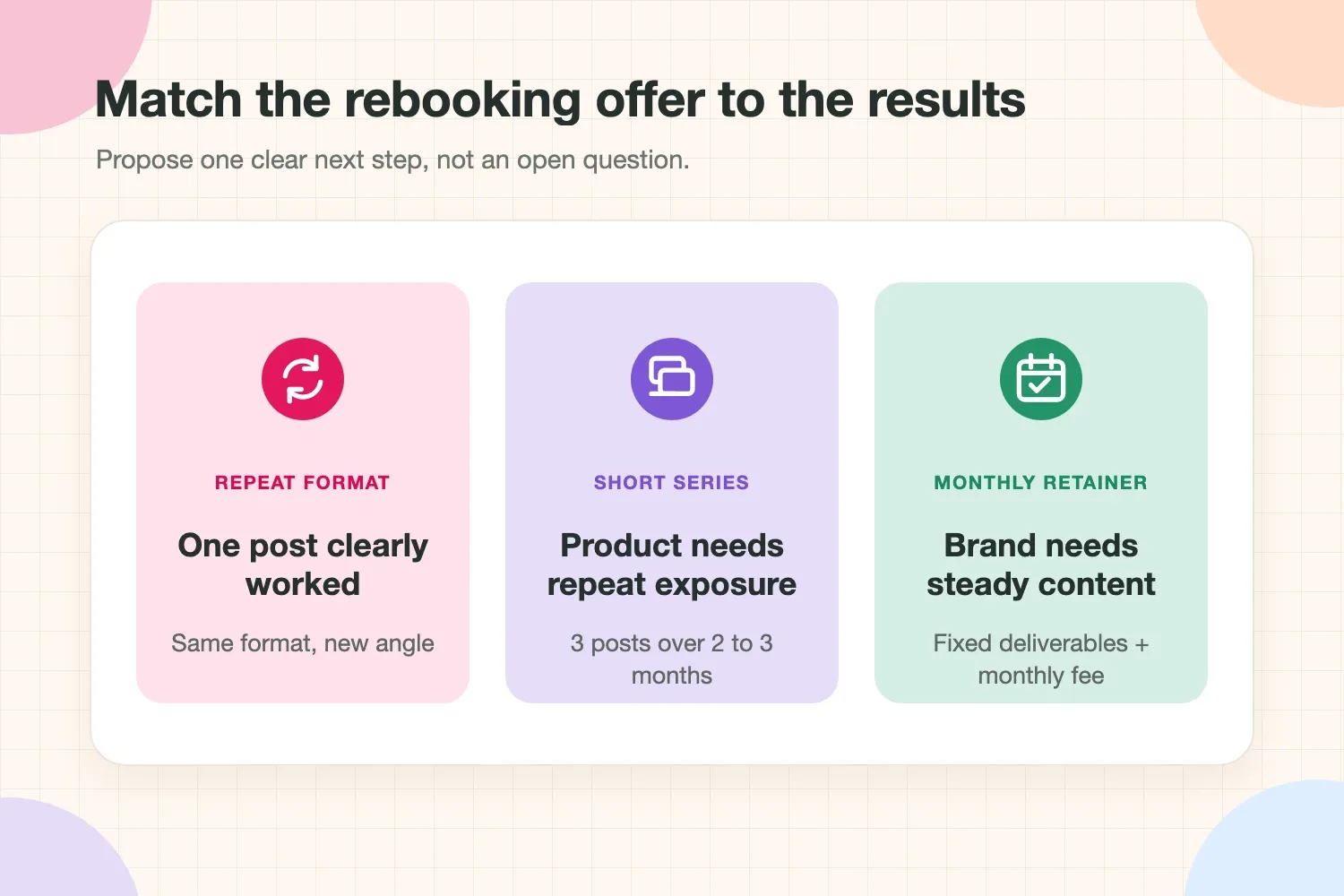
"Let me know if you want to work together again" is easy to ignore. A concrete proposal is easy to forward and approve.
Base the offer on what the first campaign proved:
Repeat the format that worked
Best when one piece of content clearly performed well. Propose the same format with a new angle, such as a different use case, a seasonal hook or a follow-up showing results after a few weeks of use.
Propose a short series
Best when the product needs repeated exposure, such as skincare, apps, subscriptions or higher-priced items. Three pieces of content over two or three months let the audience see the product more than once and give the brand more data.
Offer a monthly retainer
Best when the brand already works with you regularly or needs a steady flow of content. Define a fixed number of deliverables per month, a monthly fee, a minimum duration and how ideas are approved.
Add usage rights to existing content
Best when your content performed well organically. The brand may want to run it as paid ads or reuse it on its own channels. Licensing existing content is a fast second deal because nothing new needs to be produced.
Price the second deal correctly
A rebooking is not a reason to lower your rate. If the first campaign performed well, your value to this brand has increased.
Some practical pricing guidelines:
- Keep your base rate for a single repeat deliverable, or raise it if your audience or results have grown.
- Offer a package discount only in exchange for commitment. A modest reduction for a confirmed series or a minimum three-month retainer is reasonable. A discount for a single post is not.
- Price usage rights, exclusivity and raw footage separately. These add value for the brand and should not disappear into a lower package price.
- Write the payment schedule into the agreement, especially for retainers. Monthly invoices with clear due dates protect both sides.
If the brand pushes back on price, offer a smaller scope instead of discounting the same work, such as fewer deliverables, shorter usage or no exclusivity. This practical guide to influencer rate negotiation explains how to present those options without sounding defensive.
A rebooking message you can adapt
Keep the message short and specific. Adapt this structure to your campaign:
Subject: Next campaign idea for [Brand]
Hi [Name],
Thanks again for the [product] campaign. The [format] reached [result], and the comments showed real interest in [specific feature].
Based on what worked, I'd suggest [specific idea], posted around [timing or launch]. This could run as a single [deliverable] or as a short series of [number] pieces over [period].
I've attached a short proposal with deliverables and pricing. Would it be useful to discuss this before your [quarter or season] plans are set?
Best,
[Your name]
Attach a one-page proposal with deliverables, timeline, usage terms and price. That makes it easy for your contact to forward the idea without rewriting it.
Stay visible between campaigns
A rebooking pitch lands better when the brand still remembers you. Light, useful contact between campaigns keeps you in mind without turning every message into a request.
- Say that you want to work together again. Many brands assume a creator has moved on unless told otherwise. One sentence in your recap or thank-you message is enough.
- Share late results. If the content keeps gaining views, saves or sales weeks later, send a short update with the new numbers.
- Engage with the brand's content. Thoughtful comments on launches and campaigns keep your name familiar to the social media team.
- Mention the product only if you still use it. Genuine mentions can reinforce the partnership, but disclosure rules may still apply because you have a business relationship with the brand.
Keep the rhythm modest. One relevant touchpoint every month or so is enough.
When the brand asks you first
Sometimes the brand comes back before you pitch. That is the best case, but it is still a new deal to scope and price.
- Reply quickly, confirm your interest and ask for the brief before quoting a price.
- Use the first campaign's results to suggest the format, rather than only accepting the scope the brand proposes.
- Do not assume the previous rate, usage terms or timeline still apply. Review them, and adjust if the scope, your audience or your results have changed.
- Put the new collaboration in a new written agreement, even with a familiar contact.
A brand that returns on its own has already seen the value of your work. That is a reason to price on proven results, not to offer a loyalty discount.
If the results were average
Not every first campaign hits its target. Average results do not rule out a rebooking, but hiding them does.
Explain what happened honestly. Point to one or two likely causes, such as a weak hook, an unusual posting time or a product that needed more explanation. Then propose a specific change for the next attempt.
Brands often rebook creators who can diagnose a result and suggest a fix, because that is what a reliable partner does. They rarely rebook creators who present weak numbers as a success.
If the brand goes quiet
Silence after a recap or a pitch is common. Budgets change, contacts leave and priorities shift.
Send one follow-up 7 to 10 days after your pitch. If there is still no answer, stop pitching for now and keep the light contact described above. Send a new proposal only when you have a relevant reason, such as a product launch or a seasonal campaign.
If that proposal also goes unanswered, keep the door open without chasing. A brand that goes quiet in spring may return in autumn with a new budget.
Rebooking is earned during the first campaign
Getting rebooked by a brand is less about the final pitch and more about everything before it. Run the first campaign smoothly, send a recap your contact can forward, ask what matters to them, stay visible and propose a specific next step at the right moment.
Price the second deal on the value you have proven, not on the hope of more work. Each rebooked collaboration makes the next one easier to win, with the same brand and with others.