


Long-term influencer partnerships are not just more posts with the same creator. The good ones feel like a relationship the audience can understand: the creator already talks about the problem, the product fits naturally, and the brand gives the collaboration enough room to improve over time.
A one-off post can create a useful spike. A longer partnership can create familiarity. The difference is that long-term work needs more structure. Without clear goals, reporting, usage rules, and creative rhythm, a monthly deal can quickly become repetitive sponsored content that neither the audience nor the creator enjoys.
The aim is simple: build long-term influencer partnerships that make sense for the creator, feel useful to the audience, and give the brand a repeatable way to measure ROI.
Why long-term partnerships usually beat one-off posts
One-off campaigns are useful when a brand wants to test a creator, launch something quickly, or compare several audiences at once. But they also have limits. The creator has one chance to introduce the product, the audience has little time to build familiarity, and the brand often judges the whole relationship from a single post.
Long-term partnerships give both sides more room. The creator can explain the product in different contexts, answer audience questions, and make the promotion feel less random. The brand can see how the audience responds over several posts instead of relying on one performance snapshot.
This is especially useful when the product needs trust. A creator can mention a skincare product, software tool, travel service, course, or creator platform once, but repeated natural use usually feels more believable than a single sponsored mention.
The risk is repetition. If every post says the same thing, the partnership starts to feel lazy. A good long-term setup should give each post a slightly different job: introduce the product, show a use case, answer objections, share results, compare options, or bring the product into a real routine.
Start with fit before talking about a monthly deal
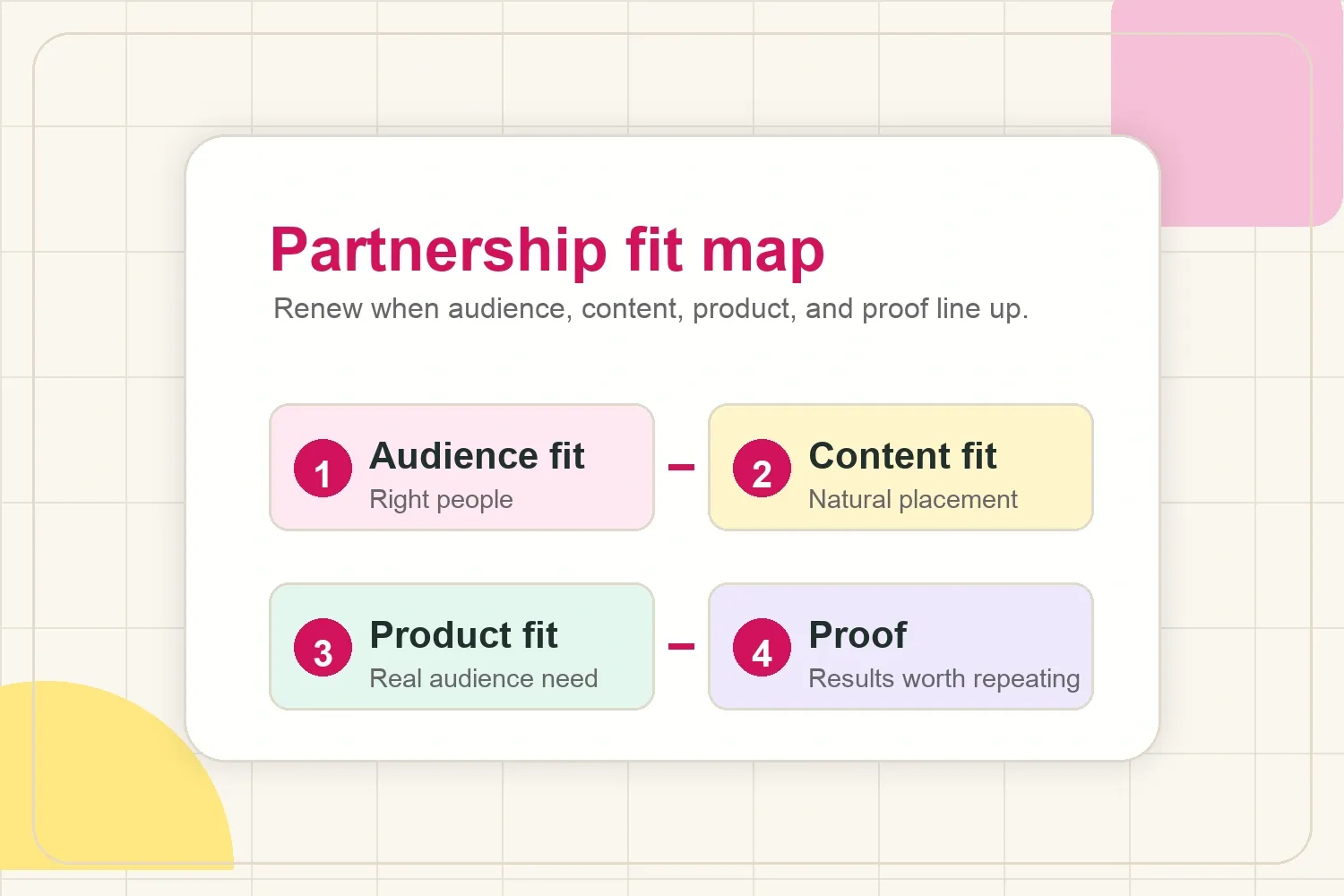
The first question is not “Can this creator post three times per month?” It is “Would this creator make sense for the brand even if no money changed hands?”
Good fit usually comes from four overlaps: audience fit, content fit, product fit, and proof.
Audience fit means the creator reaches people the brand actually wants to reach. Content fit means the product can appear without breaking the creator’s usual style. Product fit means the offer solves a real audience problem. Proof means there is enough evidence to justify another step, even if the creator is still small.
This is where brands often overvalue follower count. A creator with 12,000 followers in a tight niche can be more useful than a broader creator with 120,000 followers and no obvious product connection.
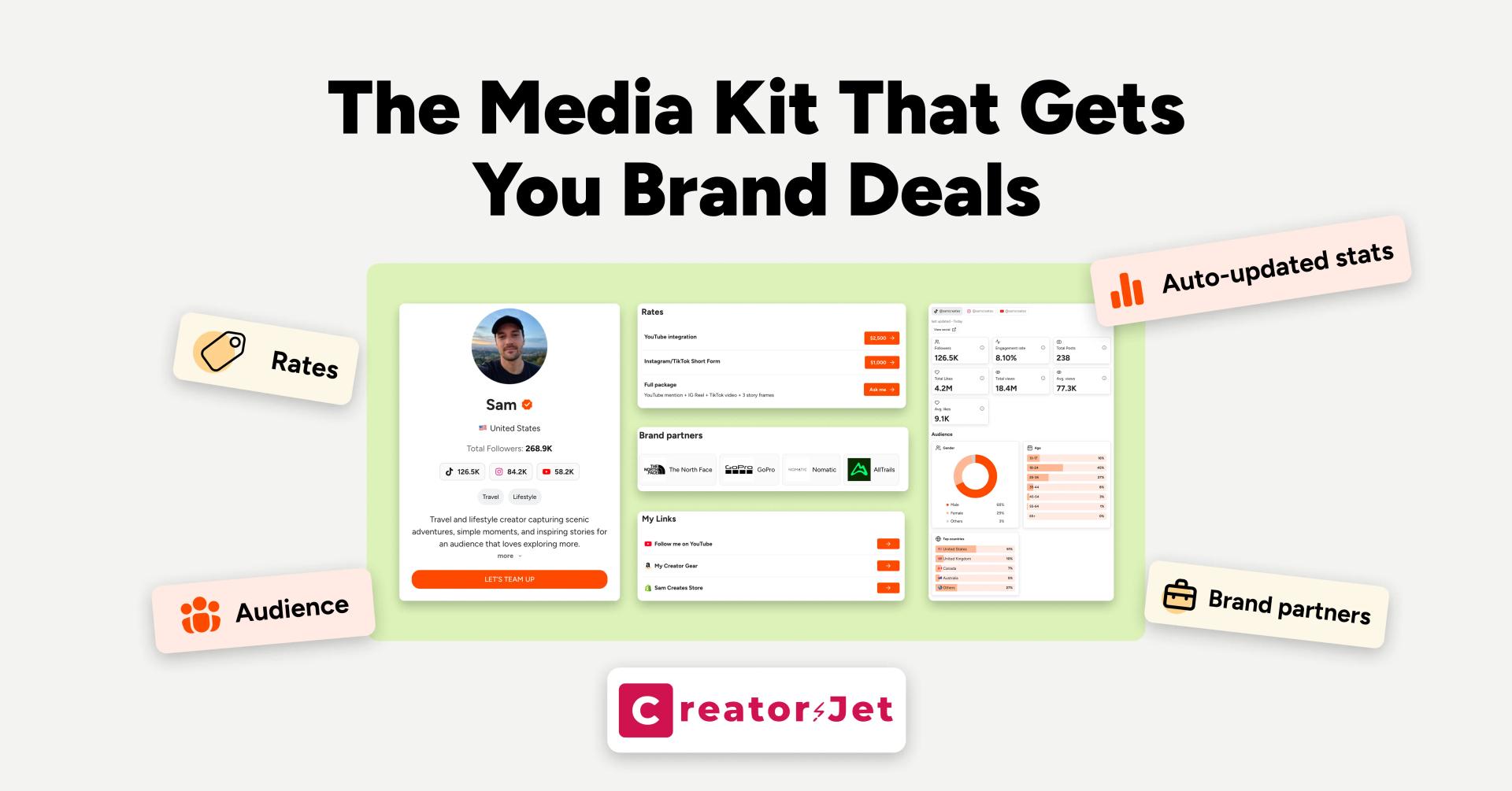
For creators, this is also where a clean influencer media kit helps. It should make the fit easy to understand: audience, platforms, engagement, past work, content examples, and the type of partnerships that make sense.
Use the first campaign as a clean test
A long-term partnership should usually start with a small test, not a huge commitment. The first campaign gives both sides a way to learn without overcomplicating the relationship.
The test should answer practical questions. Did the audience understand the offer? Did the comments show real interest? Did people click, save, reply, use a code, or ask questions? Did the creator deliver on time? Was feedback easy to manage? Did the content feel natural enough to repeat?
This is also where the brand needs to define what ROI means before the post goes live. Sometimes ROI is direct sales. Sometimes it is qualified traffic, email signups, app installs, creator content the brand can reuse, or audience learning.
The important thing is to avoid judging everything from one vanity metric. Views are useful, but they do not tell the whole story. A post with fewer views but better comments, clicks, and buyer fit can be more valuable than a viral post that reaches the wrong people.
Track the KPIs that match the partnership goal
The first campaign should not use the same scorecard for every brand. A launch campaign, a retention campaign, and a paid social test all need different proof.
| Goal | KPI | What to track |
|---|---|---|
| Awareness | Reach, impressions, video views | Cost per 1,000 views and audience fit |
| Engagement | Saves, comments, replies, shares | Engagement quality, not only totals |
| Traffic | Clicks, CTR, landing page visits | UTM links and creator-specific links |
| Sales | Code usage, conversions, ROAS | Revenue by creator and offer |
| Content value | Reusable assets, ad performance | Usage rights and paid social results |
This makes the renewal conversation cleaner. Instead of asking whether the post “worked,” both sides can look at the goal, the signal, and what should change in the next round.
Set the working rules before the second post
Long-term partnerships can get messy when the first post performs well and everyone rushes into a bigger scope without defining the rules.
Before renewing, both sides should agree on deliverables, deadlines, revision rules, usage rights, exclusivity, approval process, reporting expectations, and payment schedule. These details are not boring admin. They protect the relationship.
Usage rights are especially important. If the brand wants to reuse creator content in ads, landing pages, emails, or paid social, that should be priced and written clearly. The same goes for exclusivity. Blocking a creator from working with competitors has value, so it should not be treated as a casual extra.
A useful agreement should define:
- Organic usage rights: where the brand can repost the content without paid media.
- Paid ad usage rights: whether the brand can use the content in ads, and for how long.
- Whitelisting or Spark Ads: whether the brand can run paid media through the creator’s handle.
- Exclusivity period: how long the creator avoids direct competitors.
- Competitor categories: which brands actually count as competitors.
- Revision limits: how many edits are included before extra fees apply.
- Cancellation terms: what happens if the campaign is paused or moved.
- Reporting deadline: when the creator sends links, screenshots, clicks, codes, and learnings.
- Content ownership: who can use the assets after the campaign ends.
Disclosures also matter. The FTC’s social media disclosure guidance is a useful baseline for sponsored content rules in the US. The exact rules can vary by market, but the principle is simple: the audience should understand when a post is sponsored.
Choose the partnership structure that fits the goal
Not every long-term deal needs to look like a classic ambassador program. The structure should match the brand’s goal and the creator’s capacity.
- 3-month ambassador deal: useful when the brand wants repeated visibility and audience familiarity.
- Monthly content retainer: useful when the creator produces a fixed number of posts, stories, or UGC assets each month.
- Affiliate + fixed fee hybrid: useful when the brand wants performance upside without making the creator carry all the risk.
- Product seeding to paid partnership: useful when the brand wants to test fit before committing budget.
- Creator advisory partnership: useful when the brand wants feedback from someone close to the audience.
- UGC + paid ads package: useful when the creator’s content will be reused in paid social.
Choose a partnership structure before calling it long term
A long-term partnership does not always mean the same deliverable every month. The structure should match the brand’s goal, the creator’s workflow, and the amount of proof already available.
Common structures include:
- 3-month ambassador deal: useful when the brand wants repeated visibility and enough time to see whether the audience warms up.
- Monthly content retainer: useful when the brand needs a steady flow of creator content, not only posted reach.
- Affiliate plus fixed fee hybrid: useful when the brand wants performance upside but the creator still needs guaranteed pay.
- Product seeding to paid partnership: useful when the brand wants to test fit first, but it should not turn into endless unpaid work.
- Creator advisory partnership: useful when the creator’s audience insight, feedback, or product taste is part of the value.
- UGC plus paid ads package: useful when the brand wants content it can run through paid social after the organic post.
Keep the content natural over several posts
The easiest way to ruin a long-term partnership is to make every post feel like a repeated ad read.
A better approach is to give each piece of content a different angle. One post can introduce the problem. Another can show how the creator uses the product. Another can answer a common objection. Another can compare the product to a common alternative. Another can show a result, routine, or audience question.
For example, a creator partnership around a media kit tool could include:
- A behind-the-scenes post about preparing for brand outreach
- A screen recording showing how the creator updates rates or audience stats
- A story answering a follower question about pitching brands
- A Reel about mistakes creators make when sending screenshots instead of a clean portfolio
- A follow-up post showing how the creator organizes brand deal information
This keeps the partnership from feeling like the same ad in a different outfit. It also gives the brand more data. Some angles will drive clicks. Others may drive saves, comments, replies, or better sales conversations.
Different industries can use the same long-term structure in different ways:
- SaaS: tutorial, workflow, case study, comparison, feature update.
- Beauty: routine, before/after, product education, ingredient explanation.
- Fitness: progress tracking, challenge, weekly use, recovery routine.
- Travel: itinerary, hotel stay, local guide, packing or planning content.
- Creator tools: media kit setup, brand pitching, rate updates, reporting results.
Match the partnership to the industry
Long-term creator partnerships work better when the format fits how people actually buy in that category.
For example:
- SaaS: tutorials, workflows, case studies, onboarding tips, and comparison content can show repeated product value.
- Beauty: routines, before-and-after content, product education, and seasonal launches work well because trust builds over repeated use.
- Fitness: progress tracking, challenges, weekly use, and habit-based content make the product part of a visible routine.
- Travel: itineraries, hotel stays, local guides, and destination recaps help the audience imagine the full experience.
- Creator tools: media kit setup, brand pitching, reporting, pricing, and collaboration workflows are useful because the creator can show the tool inside their real process.
Turn reporting into the renewal conversation
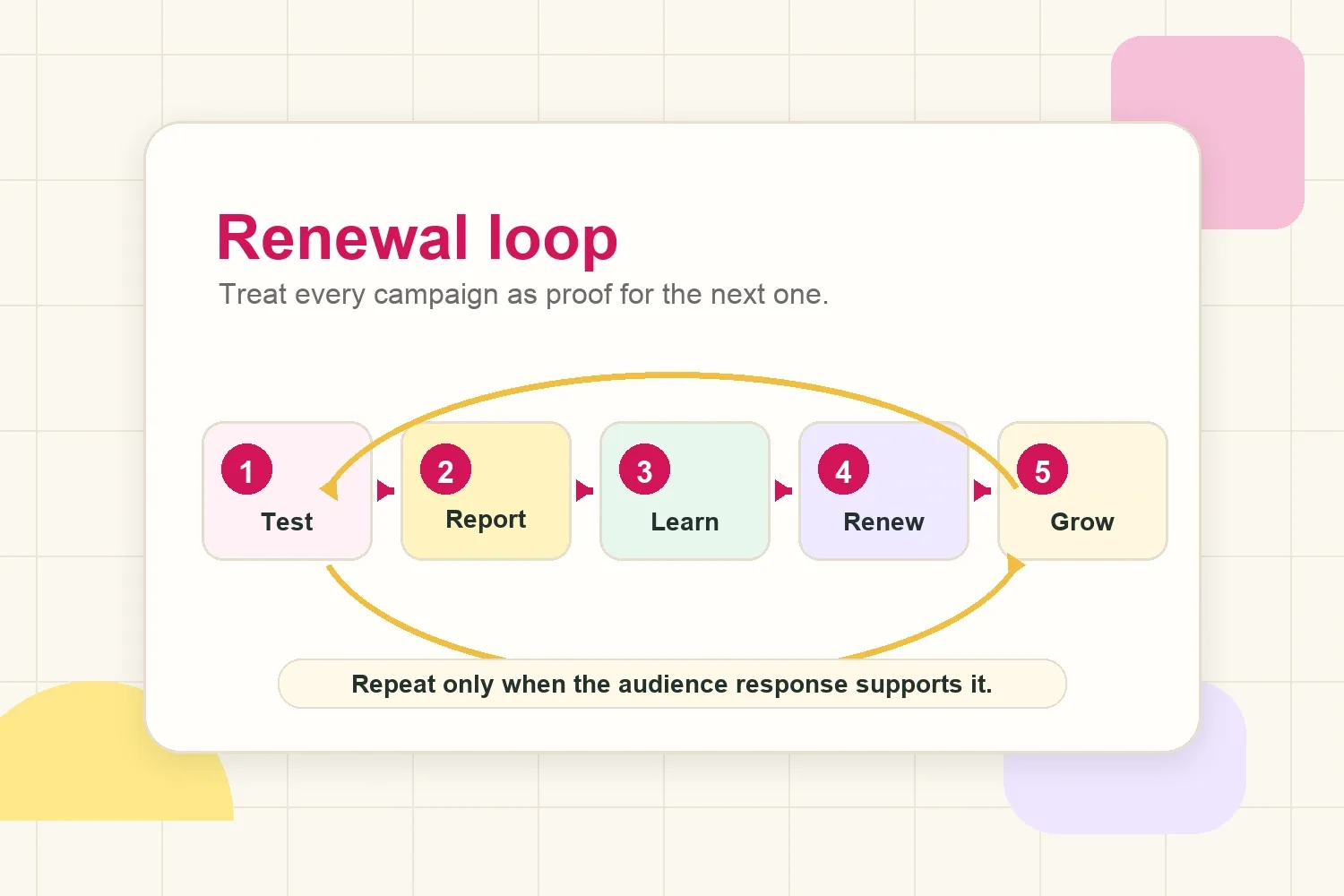
Reporting should not only be a PDF at the end of the campaign. It should be the start of the renewal conversation.
A useful recap explains what happened, why it probably happened, and what should change next. The creator can share the published links, reach, engagement, saves, comments, clicks, story replies, sales code usage, and qualitative audience feedback. The brand can compare those results with campaign goals and previous creator work.
Then both sides can make a better decision. If the audience response was clear, the next scope can grow. If the content was good but the offer was wrong, the brand can adjust the angle. If the creator did not fit, the partnership can end without forcing a renewal.
This is the difference between “Another post could help” and “Here is what worked, here is what did not, and here is the next version that makes sense.”
Know when to renew, pause, or end
Not every partnership should become long-term. That is fine.
Renew when the creator is a clear fit, the audience response is useful, the workflow is smooth, and both sides can see a better next campaign. Pause when the idea is good but the timing, product, offer, or content angle needs work. End when the product does not fit the audience, the creator does not want to keep making the content, or the numbers do not support another round.
Brands should avoid turning a creator into a permanent placement just because one post performed well. Creators should avoid accepting a long-term deal if the product will become hard to talk about naturally.
A good long-term partnership should make the next post easier to believe, not harder.
What creators should prepare before pitching long-term work
Creators who want recurring partnerships need to show more than one good post. Brands need to see a reliable pattern.
That usually means having clear positioning, consistent content, audience proof, previous collaboration examples, and a simple way to explain available packages. A creator does not need a massive audience, but they do need to make the business case easy to understand.
The short version is this: pitch the relationship, not only the post.
Instead of asking for a long-term partnership immediately, a creator can frame the first campaign as a test with a clear follow-up plan. For example: one Reel and three Stories now, a performance recap after seven days, then a second concept if the audience response is there.
That feels much more professional than asking a brand to commit to months of content without proof.
Use simple templates to keep the partnership organized
A long-term partnership is easier to renew when the next step is already documented. The templates do not need to be complex. They just need to make the work clear.
Creator renewal email:
“Hi [brand name], the first campaign is live and early response looks promising. The clearest signals were [result], [comment theme], and [click/save/reply data]. A useful next step could be [next content idea] because [reason]. Would you like me to send a 3-month package with deliverables, usage rights, and reporting dates?”
Monthly partnership brief template
Use this before each monthly campaign so the creator and brand agree on the scope before content starts.
| Brief item | What to define |
|---|---|
| Goal | Awareness, engagement, traffic, sales, or content production |
| Main audience | Who the content should reach |
| Deliverables | Reels, Stories, TikToks, posts, UGC assets, or usage |
| Key message | The main point the content should communicate |
| Usage rights | Organic use, paid ads, whitelisting, Spark Ads, duration |
| Approval deadline | When drafts need to be reviewed |
| Publishing dates | Exact posting window |
| Reporting deadline | When results should be sent |
Partnership recap template
Use this after each campaign to decide whether the partnership should continue.
| Recap item | What to include |
|---|---|
| Published links | Links to all live posts |
| Reach and impressions | Top-level visibility |
| Saves, comments, replies, shares | Engagement quality |
| Clicks, codes, or conversions | Traffic and sales signals |
| Best audience feedback | Useful comments, DMs, objections, questions |
| What to repeat | Content angles that worked |
| What to change | Format, message, timing, or offer improvements |
Templates that make long-term partnerships easier
The more repeatable the partnership, the less both sides should rely on scattered DMs. Simple templates keep the work professional without making it feel heavy.
Useful templates include:
- Outreach email template: explains why the creator fits the brand, what audience they reach, and one realistic collaboration idea.
- Creator renewal email: summarizes what worked, what could improve, and what the next month or quarter could include.
- Monthly partnership brief template: lists deliverables, dates, messaging points, usage rights, approval deadlines, and reporting expectations.
- Reporting template: tracks reach, views, saves, comments, clicks, conversions, content links, and key learnings.
- Partnership recap template: turns campaign results into a clear case for renewal, pause, or a different structure.
Final thoughts
Long-term influencer partnerships work best when they are built slowly and measured clearly. The first post should prove fit. The second should improve the angle. The renewal should come from evidence, not hope.
For brands, the goal is not to lock in as many creators as possible. It is to find the creators whose audience, content, and trust make the product easier to understand over time.
For creators, the goal is not to say yes to every recurring deal. It is to build relationships that fit the audience, protect creative trust, and give the brand a real reason to keep coming back.