A post that underperforms is frustrating. A post that gets removed, a LIVE restriction, or an account warning is different: it is a signal to stop, understand the rule, and change the workflow before the next upload.
The practical answer is not to create cautiously to the point of being bland. It is to know the behaviors that can lead to content removal, feature restrictions, recommendation limits, or an account ban. TikTok says a ban may follow a single severe violation, repeated violations, evading enforcement, or operating accounts dedicated to rule-breaking. The current TikTok Community Guidelines set out the official rules; this article turns the creator-relevant parts into a working checklist.
First, do not confuse a removed post with a ban
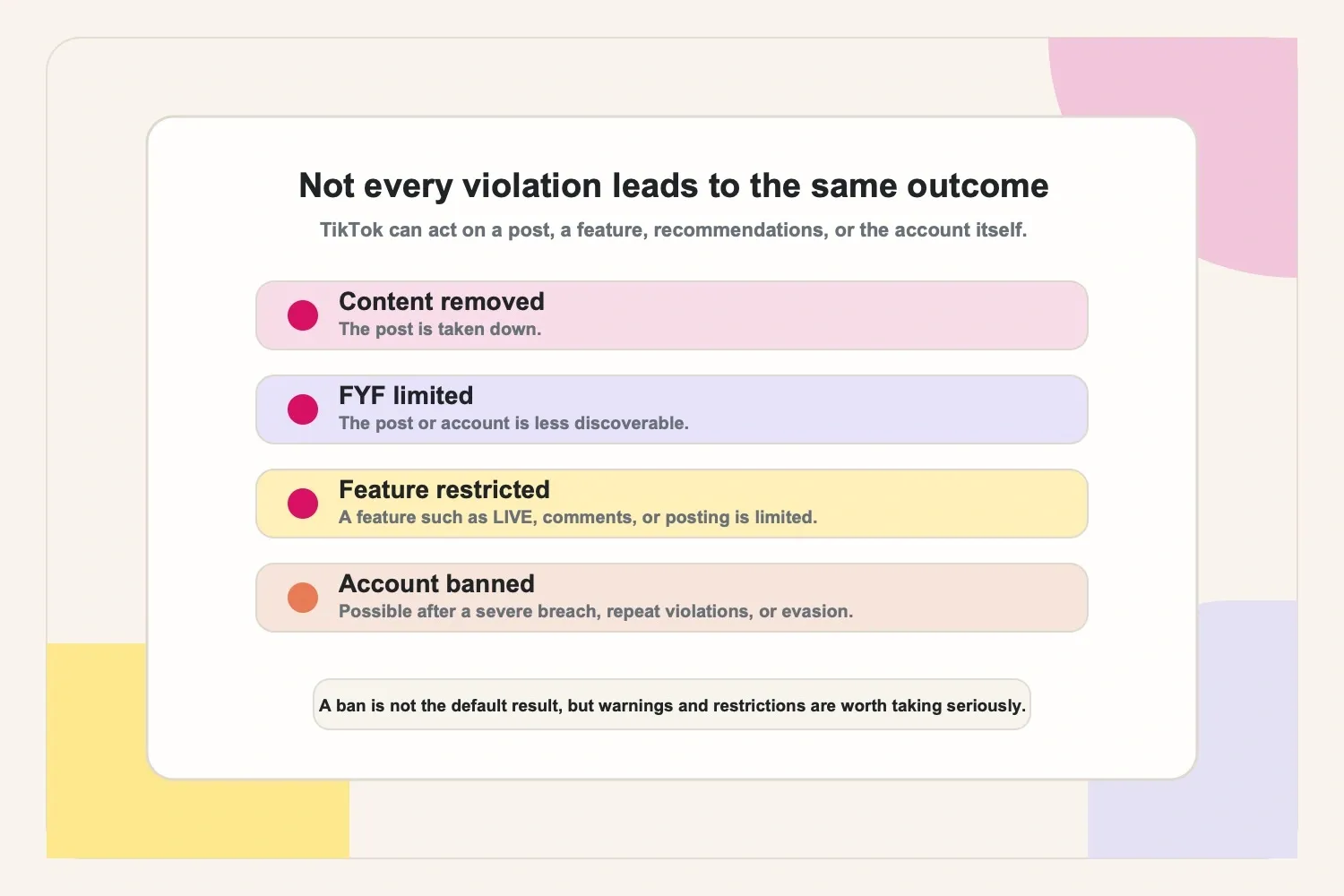
One mistake does not automatically mean a permanent ban. TikTok can remove a video, make it ineligible for the For You feed, restrict a feature such as comments or LIVE, or act against the whole account. The outcome depends on the rule, severity, history, and context.
That distinction matters because it changes the right response. Do not upload the same clip again through another account, buy replacement engagement, or assume a changed caption fixes the underlying issue. Read the notice, remove related drafts if needed, and appeal only when the decision appears wrong.
1. Reposting material you do not have the right to use
Downloading another creator’s video, clipping a show or sports broadcast, or re-uploading branded material with only a watermark crop is not a shortcut to original content. TikTok can remove material that violates intellectual-property rights, and unoriginal uploads can also lose For You feed eligibility.
Use your own footage, license the material, get written permission, or add genuinely transformative commentary where that is legally and platform-appropriate. A trending sound available in the app is not a universal clearance for every commercial use, especially when a brand is involved.
2. Buying followers, using bots, or automating engagement
Follow-for-follow rings, bought views, mass comments, and tools that operate accounts in bulk create a bigger problem than inflated metrics. TikTok explicitly prohibits manipulation of engagement signals, spam networks, and automation used to register or operate accounts.
Creators working toward brand deals should be especially careful. A smaller audience with real replies, watch time, and audience fit is more useful than numbers that cannot survive a basic brand review. Build distribution through better hooks, consistency, and content people actually choose to share.
3. Trying to get around a warning, restriction, or ban
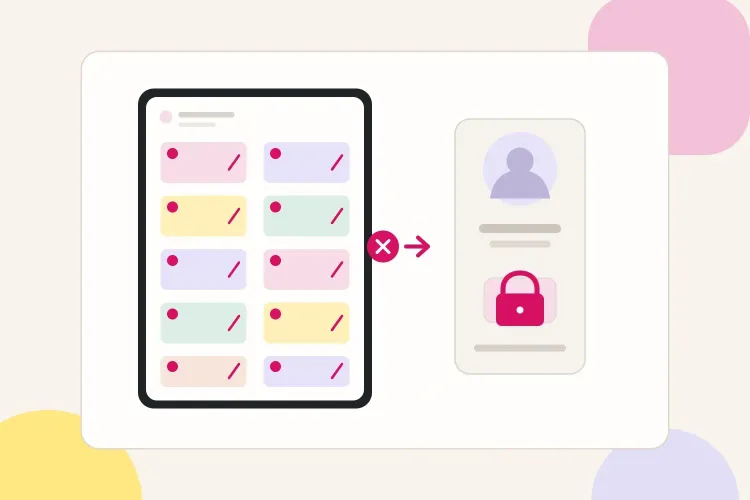
Opening a second account to repeat behavior that caused a restriction is not a workaround. TikTok’s rules cover circumvention, including using an alternative account to maintain access after a ban or bypass a feature restriction. In serious cases, related accounts may also be affected.
If a feature is restricted, pause the behavior, review the reason, and use the in-app appeal path when there is a factual error. Do not move the same content, activity, or audience manipulation to another profile.
4. Leaving paid or gifted promotion undisclosed
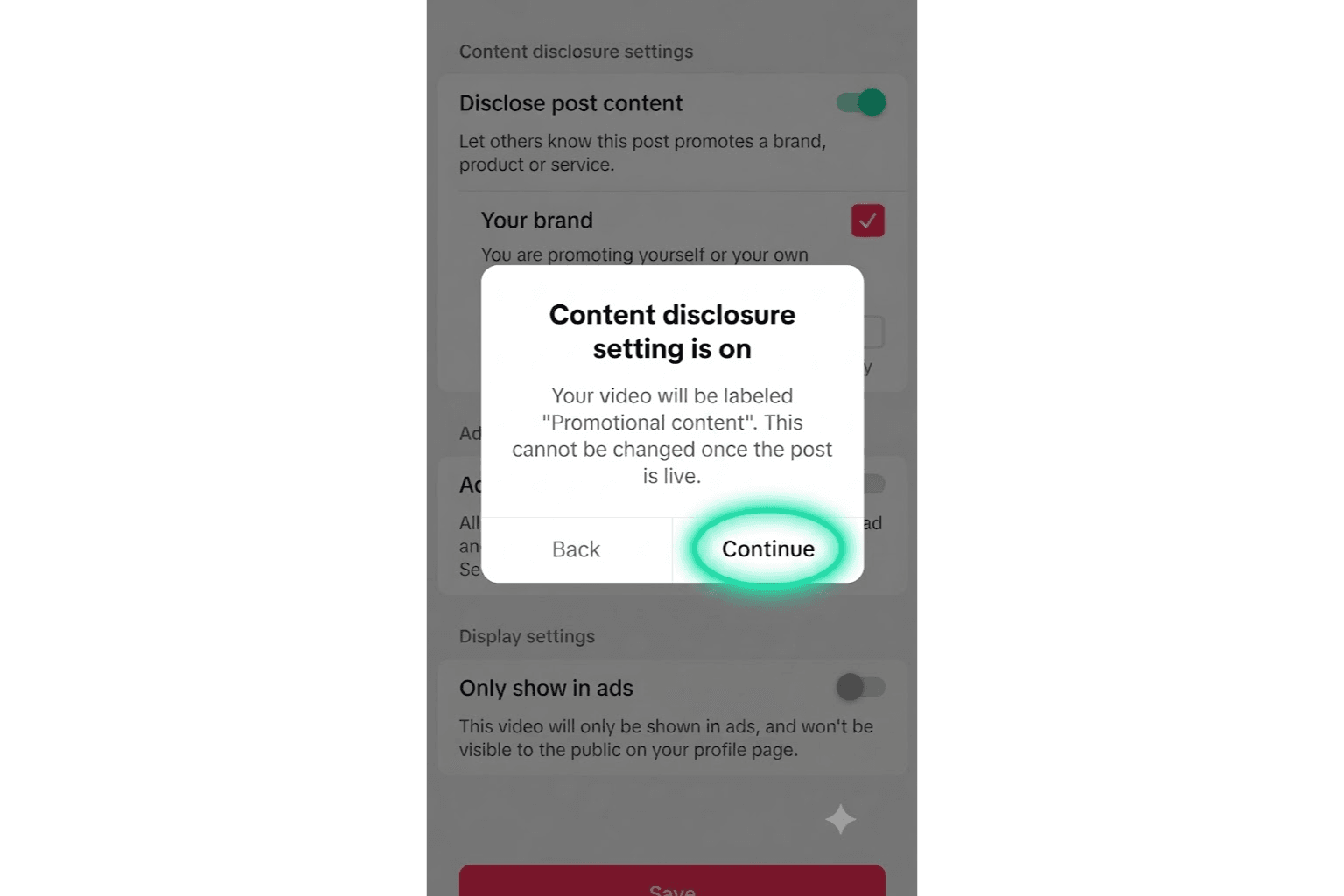
A brand deal is not just a creative brief. If a post promotes your own business or a third party in exchange for payment, products, travel, or another benefit, TikTok requires the content disclosure setting. If the correct disclosure is missing, TikTok says it may remove or restrict the post; repeated problems create more account risk.
Put disclosure into the production checklist before filming, not as an afterthought at publishing. For paid amplification of a creator post, also clarify the scope and permissions. The details in this TikTok Spark Ads guide help separate an organic creator post from paid distribution.
5. Publishing misleading claims, deceptive AI content, or scams
“It is only a hook” is not a useful defense when a claim could affect someone’s health, finances, safety, or civic understanding. TikTok prohibits misinformation that creates harm and deceptive synthetic content about matters of public importance. It also prohibits fraud and deceptive schemes.
For a product post, verify results claims, prices, eligibility, and before-and-after context. For a commentary post, distinguish a personal view from a claim of fact. When a synthetic visual could make a real person or event appear to have done something they did not do, do not rely on a vague caption to carry the context.
6. Sharing private information or directing people toward someone
Publishing an address, private phone number, travel location, financial details, or identifying information can expose someone to stalking, identity theft, or fraud. The risk can also arise through a screen recording, an unblurred delivery label, or an audience prompt that sends followers to confront another person.
Before posting, check the entire frame, not only the main subject. Blur messages, plates, documents, background screens, and anyone who has not agreed to be featured. A reaction video can critique an idea without exposing the person behind it.
7. Turning criticism into harassment or hate
Creators can disagree, review a bad experience, or talk about public behavior. The line is crossed when the content humiliates, threatens, targets, or encourages an audience to pile onto a person or group. TikTok’s policies cover harassment, hateful behavior, and threats, including in comments and direct messages.
Focus on the conduct, not someone’s protected traits or private identity. Avoid asking followers to “go tell them,” publishing identifying details, or using a mocking edit to invite targeted harassment. When a post depends on the audience attacking somebody, it is a poor creative choice and a safety risk.
8. Promoting dangerous, illegal, or regulated activity
The rules cover content that promotes dangerous activities, crime, prohibited goods, and some regulated goods or services. A stunt that looks harmless in a 15-second edit can still encourage a risky imitation. The same applies to content that markets products or services with age, licensing, or legal restrictions.
Do not frame unsafe behavior as a challenge, a growth tactic, or a quick way to make money. If a creator covers a sensitive subject for education or news, context matters, but it does not turn instructional or promotional content into a safe post.
9. Mishandling content that involves minors
Content involving children requires an extra safety margin. Never publish material that sexualizes, exploits, endangers, or reveals personal information about a minor. Do not use a child’s appearance, school, routine, or private life as a casual content asset without considering consent and risk.
TikTok also requires account holders to meet its minimum age requirements, subject to local rules. Family and child-focused creators should build a filming rule: no identifying details, no distress used for entertainment, and no content a child could reasonably regret being online later.
10. Treating notices as something to ignore
The most avoidable route to an account problem is repeating the same pattern after warnings, removals, or restrictions. Save the notice, identify the exact post and policy, then adjust the workflow: source material, editing, disclosure, comment moderation, or account access.
TikTok’s rules explain that repeated violations, a severe violation, evasion, and accounts dedicated to rule-breaking can lead to a ban. They also distinguish account enforcement from content that is simply ineligible for recommendation.
Check account status before trying to work around a problem
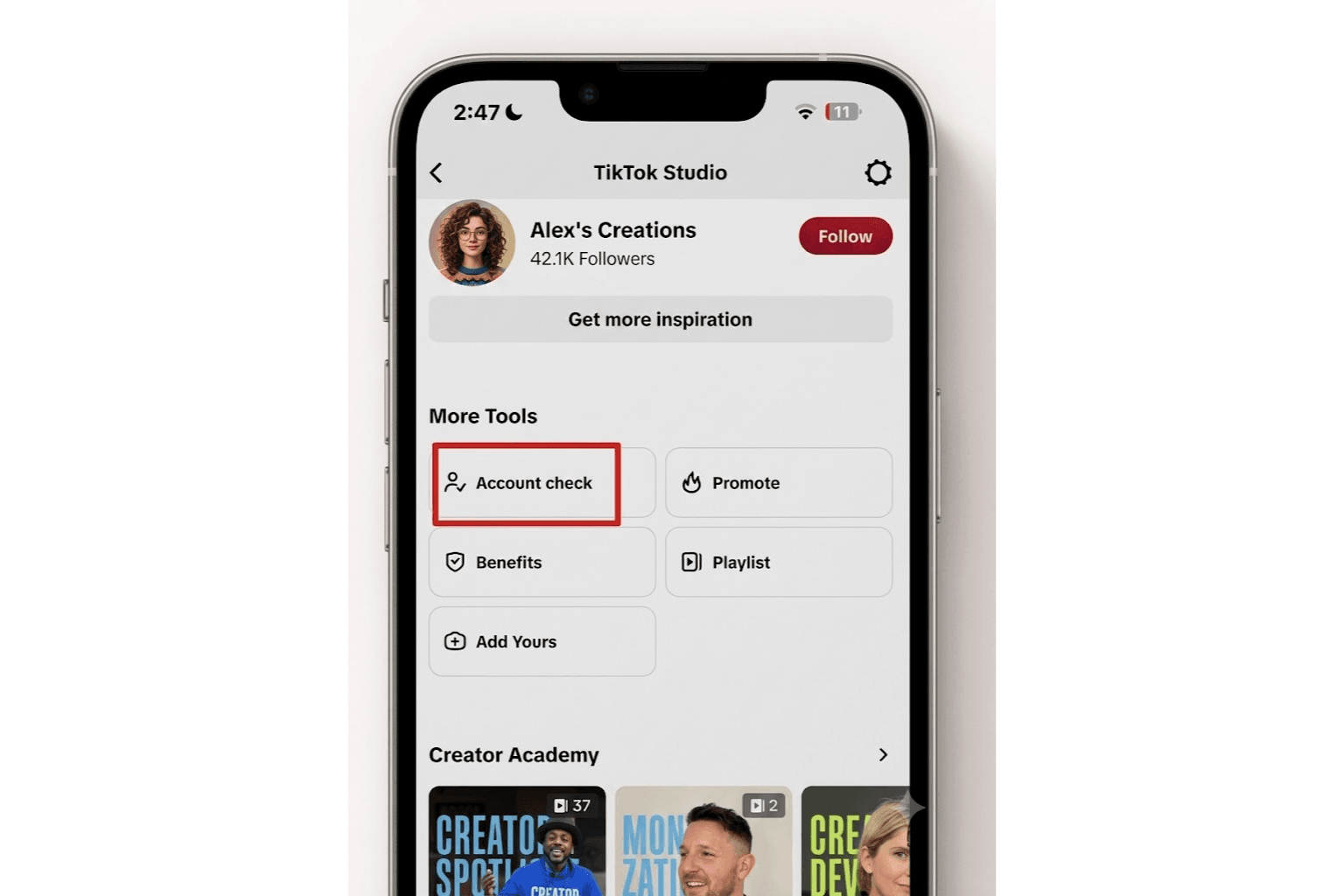
If TikTok removes a post or limits a feature, check Account check in TikTok Studio or the Safety Center before making changes. TikTok’s Account status instructions show the current in-app route. It can show whether login, posting, comments, profile editing, direct messages, or a post have an active restriction. Screen labels can vary slightly by app version.
Run this check before you publish
The fastest protection is a repeatable pre-publish review. It is particularly useful for brand posts, commentary, reused clips, giveaways, high-risk topics, and any video that asks the audience to take an action.
Ask six questions: Is the material original or licensed? Are the claims supported? Is commercial content disclosed? Could the post target or expose someone? Does it promote a dangerous or illegal act? Is the account growth method authentic?
Keep account safety separate from creator personality
You do not need to flatten your opinions or make every video look like a corporate ad. The safer route is clear context, original work, honest disclosure, and responsible account behavior. Those habits also make a profile easier for a brand to assess.
Once the safety basics are in place, use this guide on making a TikTok profile brand-ready to make the public-facing side of the account easier to understand. Account safety protects the work already built; profile clarity helps the right opportunities find it.