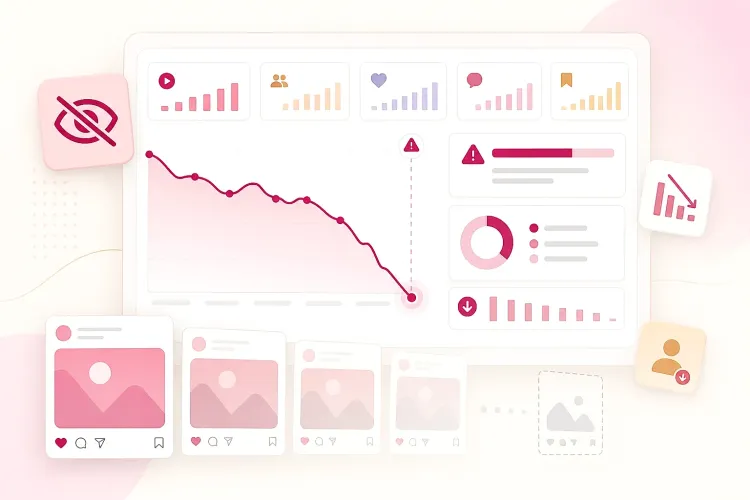
A sudden reach drop can feel personal. One week a creator is getting normal views, saves, comments, and profile visits. The next week, posts barely leave the existing follower base and every hashtag feels silent.
That is usually what creators mean when they say they are shadowbanned. The platform has not necessarily banned the account, but the content may be getting less recommendation surface, less hashtag visibility, or fewer non-follower impressions than usual.
The practical move is not to panic or chase hacks. It is to diagnose what changed, clean up anything risky, and rebuild trust signals with consistent content.
What creators usually mean by shadowban
A shadowban is not always an official label. Most creators use the word to describe a sudden visibility drop where content still posts normally, but fewer people see it.
On Instagram, that can look like less reach from Explore, Reels, hashtags, or suggested content. Instagram has public guidance around recommendation eligibility, and its Instagram recommendations guidance for creators is a better reference point than random shadowban myths.
On TikTok, it can look like a video not reaching the For You feed, or an account getting limited after repeated violations. TikTok also gives creators account-level visibility through TikTok’s account status guidance.
The difference matters. If reach drops because a post is not engaging, the fix is content quality. If reach drops because the account has warnings, spam behavior, or repeated low-originality content, the fix is account hygiene.
How to check before assuming a shadowban
Before changing everything, check the basics. A real visibility issue usually shows up across several signals at once, not just one post underperforming.
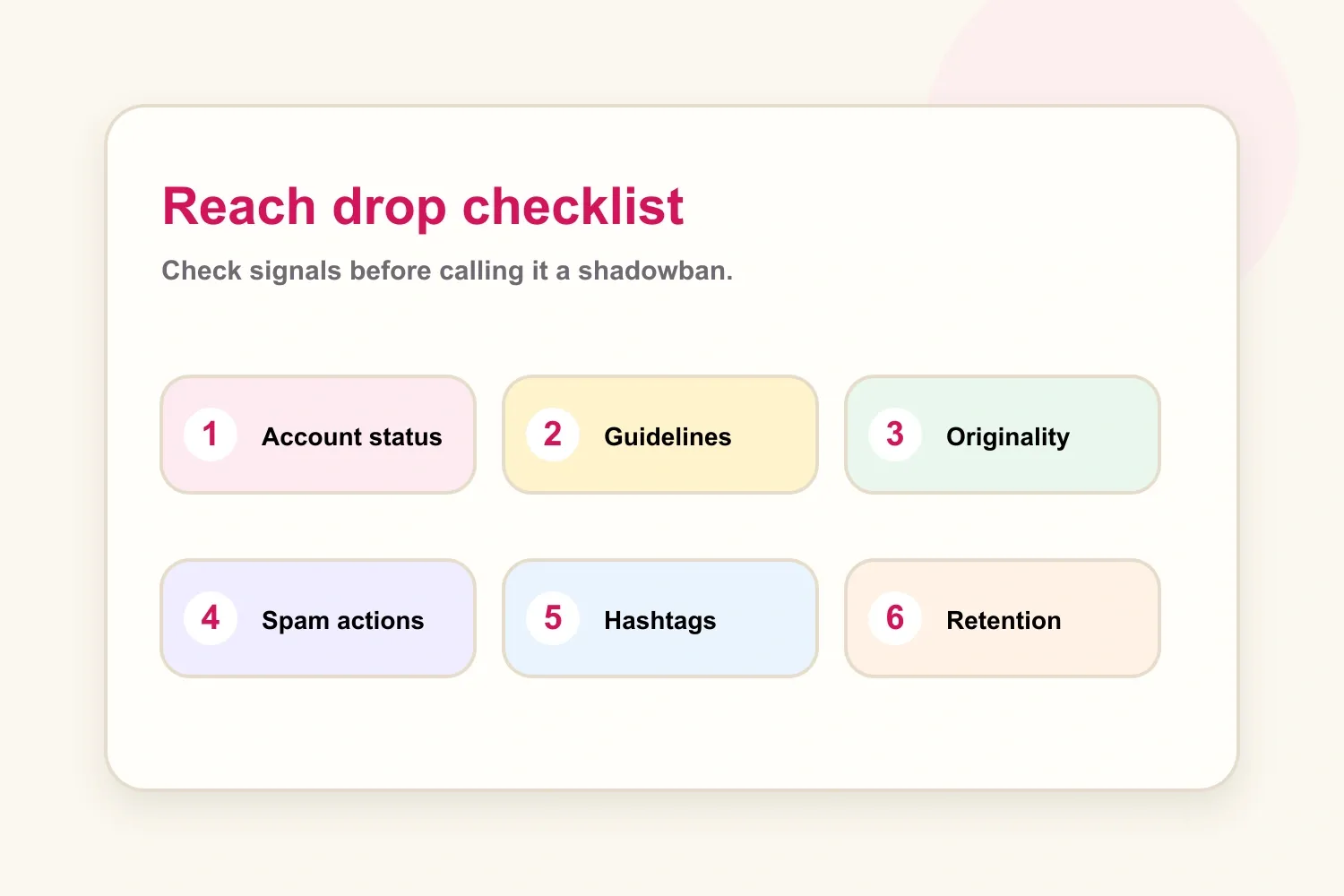
Useful checks include:
- Account status or warning screens inside the platform.
- Reach from non-followers versus followers.
- Hashtag, Explore, For You, Shorts, or search impressions.
- Whether the drop affects one post, one format, or the whole account.
- Whether recent content used risky hashtags, copyrighted material, heavy reposting, or automation.
- Whether watch time, saves, shares, comments, or retention also dropped.
If the only issue is one weak post, it is probably not a shadowban. If every post suddenly loses discovery reach after a warning, a content removal, or spam-like activity, there is more to investigate.
For Instagram, comparing the drop against normal engagement can help. If saves, comments, and profile visits fell together, this guide on getting more views on Instagram Reels can help separate distribution issues from content performance issues.
1. Your content is not eligible for recommendations
The most important thing to understand is that platforms can reduce recommendation eligibility without fully banning an account. A post can stay visible on the profile and still be less likely to appear in discovery surfaces.
That includes Explore, Reels recommendations, For You feeds, suggested posts, search results, or similar discovery areas.
This often happens when content gets too close to platform rules, even if the account is not suspended. Topics around misinformation, unsafe behavior, adult content, harassment, spam, engagement bait, or sensitive claims can be treated differently by recommendation systems.
The fix is simple, but not always instant: review recent posts, remove anything clearly risky, check account status, and avoid reposting similar borderline content while the account recovers.
2. The account has warnings, removals, or reports
A content removal is not just a one-time issue. It can affect how the platform evaluates the account for a while, especially if violations repeat.
Creators often miss this because the profile still looks normal. Posts still publish. Followers can still visit. But recommendation systems may be more cautious with the next few uploads.
This is where account status screens matter. If a platform shows removed content, appeal options, restrictions, or warning history, handle that first before changing the whole content strategy.
| Symptom | Likely issue | What to check first |
|---|---|---|
| Hashtag reach disappears | Recommendation or hashtag visibility issue | Account status and recent hashtags |
| One video underperforms | Content performance issue | Retention, hook, topic fit |
| Every post drops after a warning | Account trust issue | Removed content and appeals |
| Views recover after a pause | Risky behavior or posting pattern | Automation, spam actions, posting spikes |
A good rule: fix the account signal before trying to outpost the problem.
3. Your hashtags look spammy or irrelevant
Hashtags can still help context, but they can also make content look messy when they are copied, irrelevant, or attached to restricted topics.
The risk is not only “banned hashtags.” It is also using hashtags that do not match the post, stacking the same set on every upload, or adding trending tags just because they are trending.
A skincare creator using beauty, acne, and product-review tags makes sense. That same creator adding unrelated celebrity, crypto, or giveaway tags creates weak context. The platform has to decide who should see the post, and bad tags make that harder.
Better hashtag hygiene looks like this:
- Use a smaller set of relevant tags.
- Rotate tags based on the actual topic.
- Avoid tags attached to spam, adult content, scams, or policy-heavy topics.
- Stop copying the same block across every post.
- Check whether reach drops only on posts with a specific hashtag group.
4. Automation or spam-like behavior is hurting trust
Creators sometimes try to fix reach with the exact behavior that makes reach worse: mass following, unfollowing, liking, commenting, DMing, or using tools that act like a human at unnatural speed.
Platforms are built to detect this. Even if the account does not get suspended, spam-like behavior can reduce trust.
This also includes engagement pods, repetitive comments, fake saves, bought followers, bought views, and anything that creates artificial activity around the account.
If TikTok is the platform causing trouble, this guide on common TikTok account ban mistakes is a useful companion because many “shadowban” problems start with behavior that looks automated or policy-risky.
5. Reposted or low-originality content is doing too much of the work
Reposting clips, using watermarked videos, copying trends without adding anything, or publishing content that looks too similar to other accounts can reduce discovery potential.
This does not mean every trend is bad. Trends work when the creator adds a clear angle, personality, edit, format, story, or useful twist. The problem is content that feels copied without enough original value.
Instagram has been especially clear that original creators should get more credit in recommendations. This example is worth watching because it shows the direction platforms keep moving toward: more reward for original work, less reward for recycled content.
The practical fix is to make every post more obviously yours. Use original footage, original commentary, original editing, clearer hooks, creator voice, and a reason for people to save or share.
6. The content no longer matches your audience
Sometimes the account is not shadowbanned at all. The audience simply stopped responding.
This can happen after a niche shift, format change, posting break, trend pivot, or sudden move into sponsored content. If followers do not watch, save, share, or comment, the platform gets weaker signals about who should see the post next.
A creator who built an audience on practical fitness tips may see weaker reach after switching to broad lifestyle vlogs. A TikTok creator known for funny edits may struggle when posting static educational clips. The platform is not punishing the account. It is testing content against an audience that no longer reacts the same way.
The fix is to compare recent winners against recent losers. Look for differences in hook, topic, format, length, promise, pacing, and audience payoff.
7. Low retention is being mistaken for a shadowban
Low reach can feel like suppression, but sometimes the content loses people too quickly.
Short-form platforms care about early signals. If viewers skip in the first second, stop watching before the payoff, or do not engage after watching, the content may not travel far.
This is especially common when creators start a post too slowly, hide the point, use a weak first frame, or publish content that only makes sense to existing followers.
Signals worth checking:
- Average watch time.
- Completion rate.
- Replays.
- Saves and shares.
- Comments that show real interest.
- Profile visits after the post.
If those signals are weak, the problem is less likely to be a hidden restriction and more likely to be content-market fit.
What to do if reach suddenly drops
The recovery plan should be boring on purpose. Do not delete everything, spam new posts, or switch niches overnight.
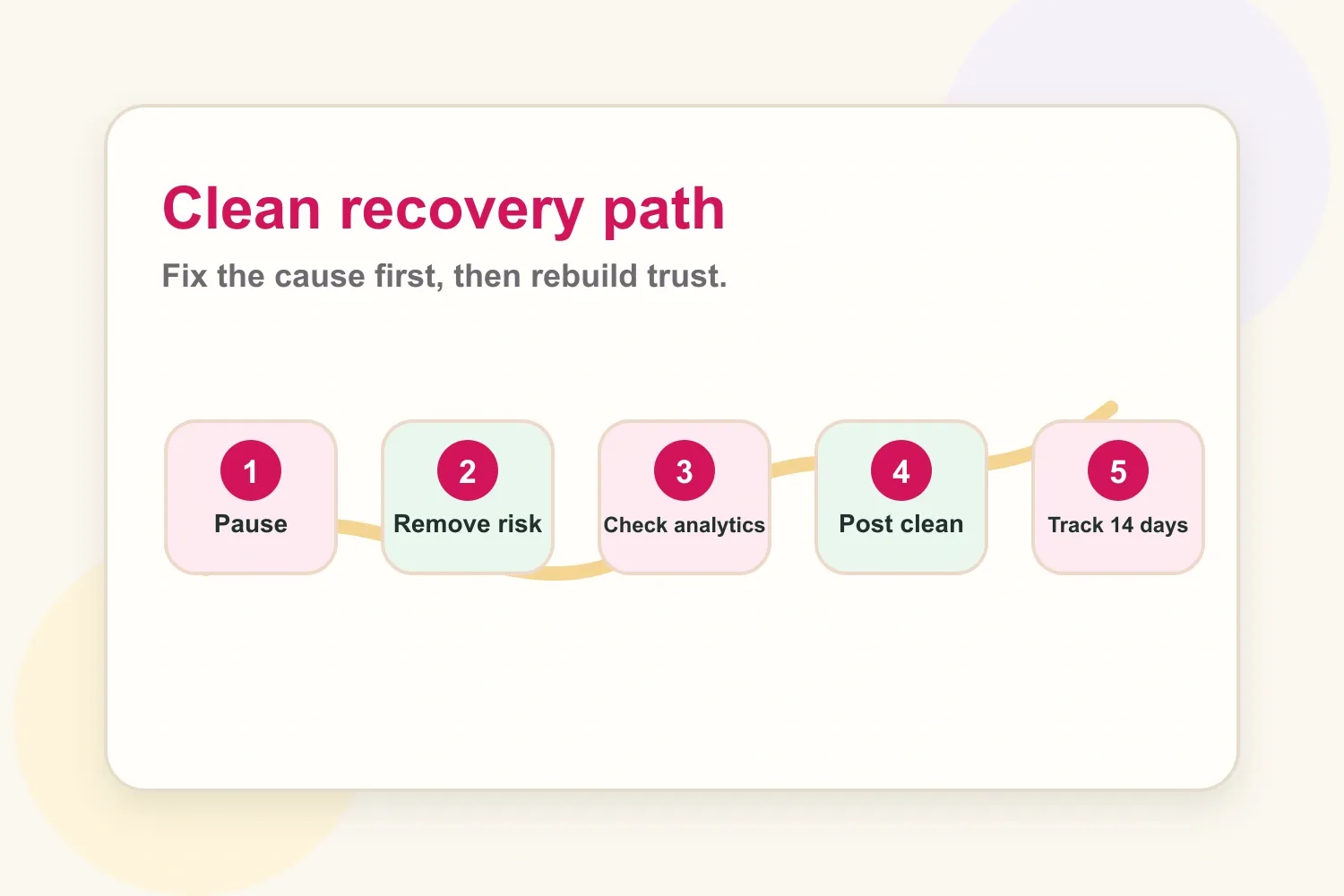
Start with this order:
- Pause risky behavior for a few days.
- Check account status, removed content, appeals, and warning screens.
- Remove obviously risky hashtags from recent posts.
- Stop automation, engagement pods, repetitive comments, or mass actions.
- Post original content that matches the audience again.
- Track reach, non-follower impressions, saves, comments, and retention for the next 7-14 days.
- Compare recovery by format instead of judging the whole account from one post.
A shadowban recovery plan should feel like cleaning the account, not tricking the algorithm.
How long does a shadowban last?
There is no universal timeline. Some reach drops recover in a few days. Some account-status issues take longer, especially when there are repeated violations or unresolved appeals.
A practical window is 7-14 days of clean activity before judging whether the account is recovering. During that time, keep posting useful content, avoid risky tags, stop automation, and watch whether non-follower reach starts coming back.
If nothing improves, check whether the issue is actually content performance. The account might be clean, but the posts may need stronger hooks, clearer topics, or better audience fit.
Final thoughts
A shadowban is usually not one mysterious switch. It is usually a mix of recommendation eligibility, account trust, content originality, posting behavior, hashtag context, and audience response.
The best creators do not treat every reach drop like a disaster. They check the data, clean up the account, remove obvious risks, and get back to posting content that gives the platform a clear reason to recommend them again.