


A TikTok profile is not only a place for a profile photo and a short bio. For creators who want paid work, it is often the page a brand checks before replying, asking for a media kit, or deciding that the fit is too vague.
The goal is not to make the profile look busy. The goal is to make it easy for a new viewer or a brand manager to understand what you create, who trusts you, and why your content is useful within a few seconds.
Start with clear creator positioning
Before changing your bio or profile picture, define the sentence your profile needs to prove: "This profile creates [content type] for [audience] around [topic]." A beauty creator might focus on sensitive-skin routines. A food creator might focus on budget recipes for busy parents. A fitness creator might focus on beginner home workouts.
This matters because vague profiles are hard to evaluate. "Lifestyle creator" can mean almost anything. "Affordable skincare routines for acne-prone skin" gives a brand a reason to keep looking.
If the profile is meant to support brand deals, avoid making every line about growth, virality, or being available for collaborations. Brands first need to see relevance and audience fit. Availability only matters after the profile already feels useful.
Make the bio answer three questions
A good TikTok bio does not need to be clever. It needs to be clear. It should answer three questions: what you create, who it is for, and what someone should do next.
For example, "Skincare routines for sensitive skin | honest product tests | media kit below" is more useful than "Creating my dream life one video at a time." The first version gives context. The second might sound nice, but it makes the visitor do the work.
Keep the bio short enough to scan on mobile. If you need to mention a niche, a proof point, and a next step, prioritize the words that help a stranger understand the account. Specific beats poetic on a profile page.
Use the profile photo, username, and pinned videos to remove friction
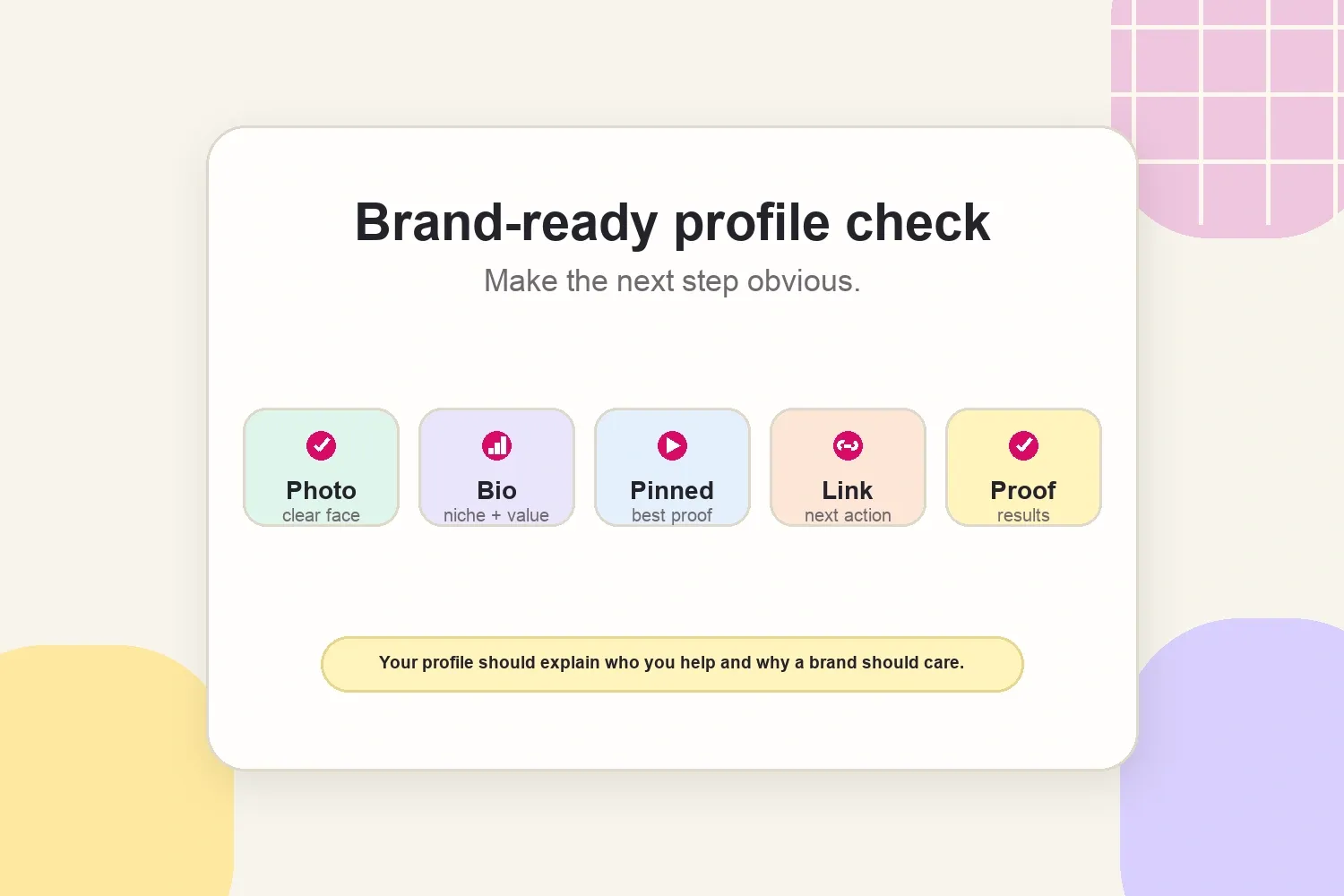
The profile photo should make recognition easy. A clear face, product-focused creator mark, or consistent visual identity is usually better than a low-contrast image that only works when it is large.
The username should be easy to remember and close to your name or creator identity on other platforms. If a brand sees your TikTok profile after finding your Instagram, YouTube, or media kit, the connection should feel obvious.
Pinned videos are where many creators lose momentum. Do not only pin the video with the highest views. Pin the videos that explain the account best: one that shows your niche, one that shows trust or audience response, and one that shows the kind of content a brand could imagine using.
This is especially important if one viral video brought unrelated traffic. A brand should not have to guess whether your profile is built around a consistent topic or a one-time spike.
Make the link useful, not decorative
If your account can add a website link, use it for a page that helps someone take the next step. TikTok explains how creators can link a website or social account in its profile linking guide, but availability can depend on account settings and eligibility.
For creators, the link should usually point to a media kit, portfolio, email page, or a clean creator landing page. A random storefront, outdated link hub, or broken form weakens the profile because it creates doubt at the moment someone is interested.
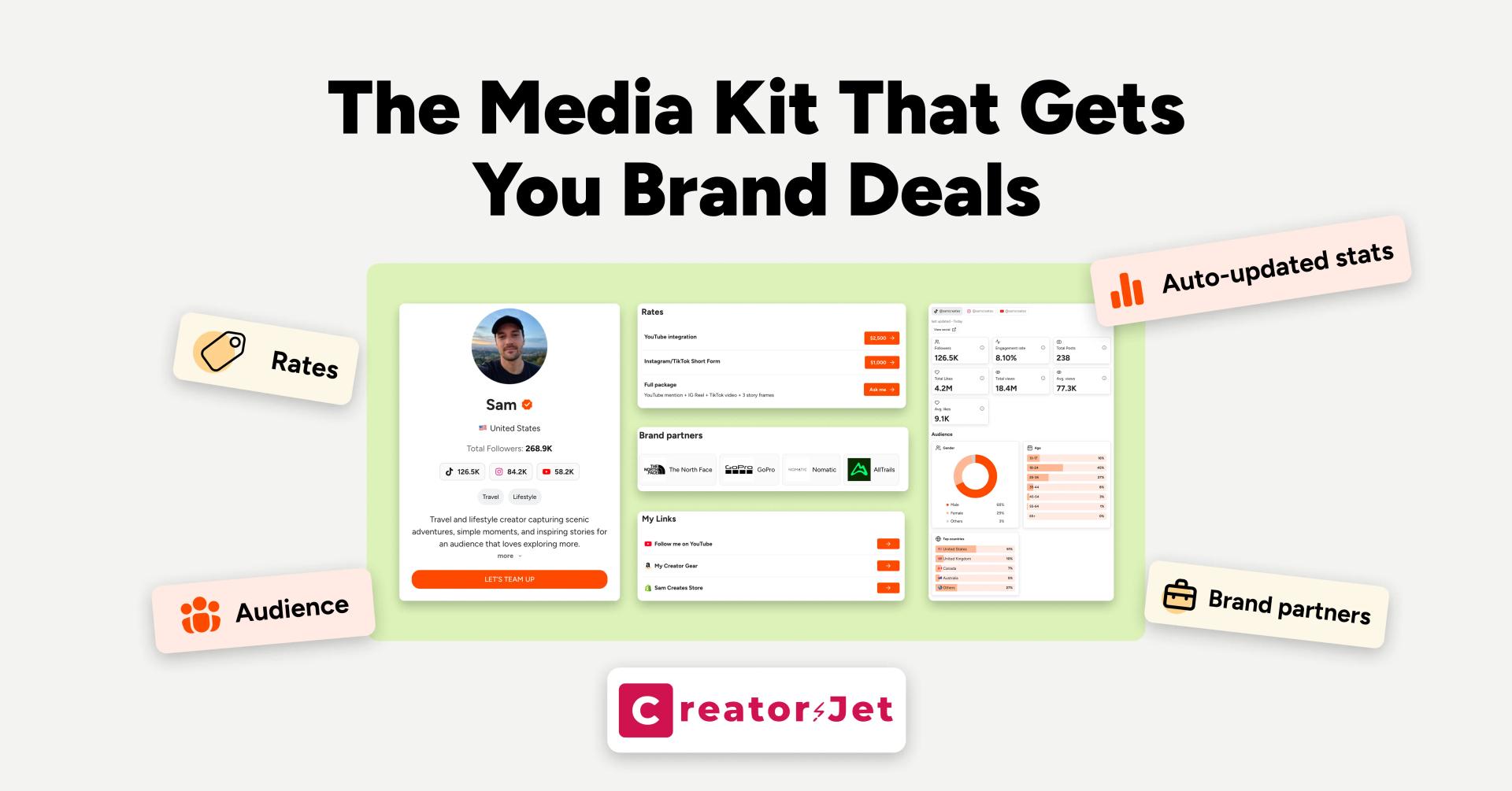
If you already use a media kit, connect it clearly from the profile. A good influencer media kit can carry the details that do not fit in a TikTok bio: audience demographics, past collaborations, content examples, deliverables, and contact information.
Align content pillars with what you want brands to understand
Your profile becomes more persuasive when the recent videos support the same promise as the bio. If the bio says you create budget travel tips, the first few rows should not be mostly unrelated memes, personal updates, or experiments that make the niche hard to identify.
This does not mean every video must be identical. It means the pattern should be visible. Brands look for topic consistency, audience response, and signs that the creator can repeat the result, not just get lucky once.
TikTok's Creator Search Insights also reinforces a useful habit: think about the topics people actively search for and the content gaps your account can answer. Search-friendly topics can make the profile easier to understand because the account is organized around problems viewers already recognize.
For post ideas, use a simple mix: education, proof, personal context, product use, and comparison. Then make sure the pinned videos and recent grid show that mix clearly.
Show brands the profile behind the numbers
Follower count can help, but it is not the whole argument. Brands often care more about whether the audience reacts, whether comments look real, whether the creator has a repeatable style, and whether the account matches the customer they want to reach.
That is why the profile should make proof visible. Save a pinned video with thoughtful comments. Keep recent videos on topic. Make product mentions feel natural. If a brand wants more detail, the profile should lead them to a media kit or contact page instead of leaving them to search.
This also connects with what brands check before offering a deal. If you want a deeper audit, read what brands look for in an influencer before offering a deal. The TikTok profile is one of the first places those signals show up.
Common TikTok profile mistakes
The first mistake is writing a bio that only makes sense to people who already know you. A new visitor needs context. Inside jokes, vague slogans, and decorative phrases can work after someone is already a fan, but they do not help a brand evaluate fit.
The second mistake is pinning only viral videos. A viral post may prove reach, but it does not always prove the account's positioning. If the viral topic is not what you want to be hired for, pinning it first can create the wrong signal.
The third mistake is using the link as an afterthought. If the link is broken, cluttered, or unrelated to brand work, it interrupts the path from interest to contact.
The fourth mistake is treating hashtags as the whole strategy. Hashtags can help categorize content, but they cannot fix unclear positioning. A profile grows faster when the account promise, video topics, hooks, and proof all point in the same direction. If hooks are the weak point, use these TikTok hook templates to make the opening of each video easier to understand.
A simple profile audit before pitching brands
Before sending a pitch, open your TikTok profile like a stranger would. Ask whether the top of the profile answers what you create, who it helps, and why a brand should trust the account.
Then check the first nine visible videos. Do they support the same niche? Do the captions make the topic clear? Do the comments show audience interest? Is there at least one pinned video that demonstrates quality, not just reach?
Finally, test the next step. Tap the link. Check the contact path. Open the media kit. If any part feels confusing, fix it before pitching. A good pitch can still fail when the profile creates friction.
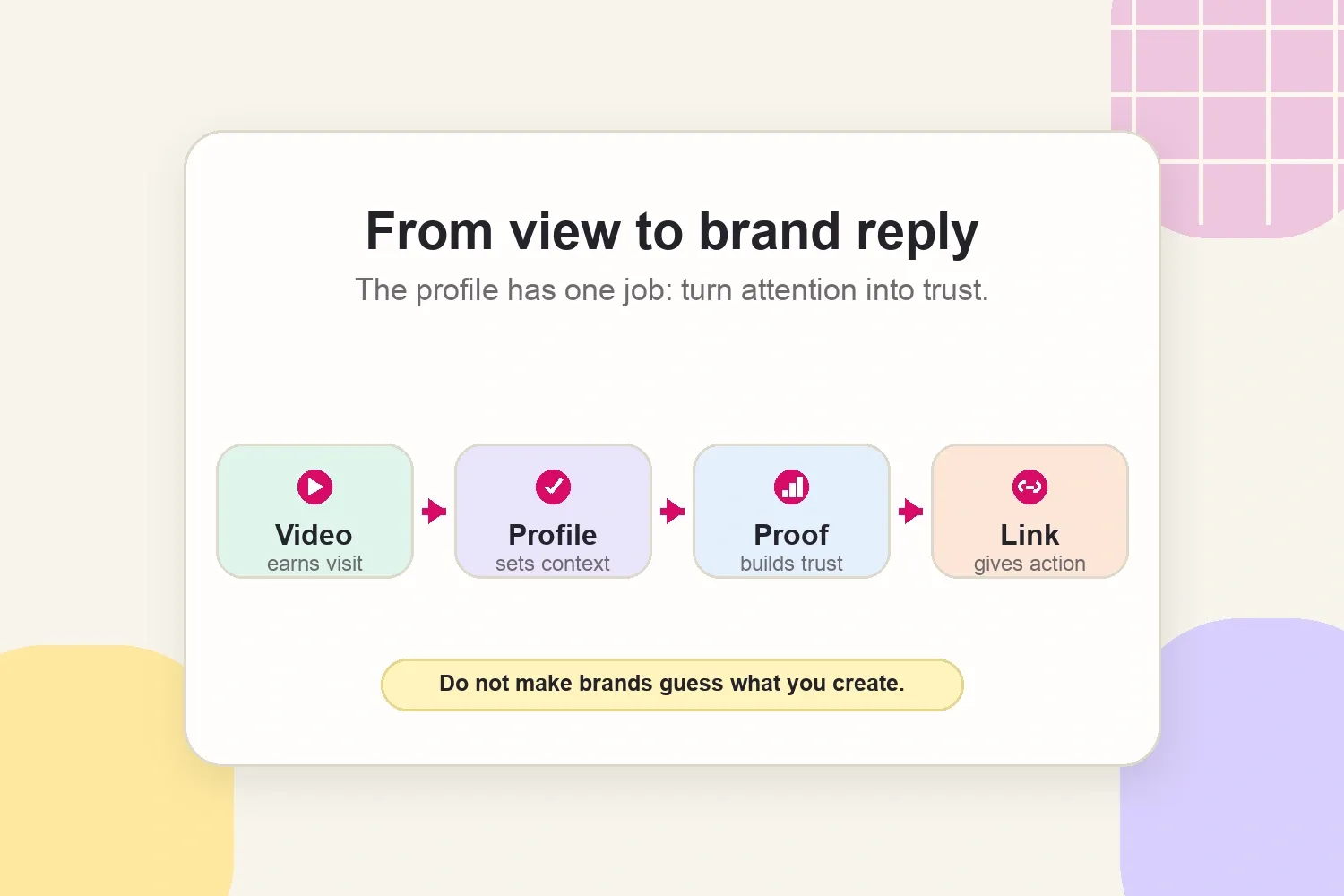
The best TikTok profile is not the prettiest profile. It is the one that turns attention into a clear reason to follow, click, or reply. When the bio, pinned videos, content pillars, and link all point to the same creator promise, brands can understand the opportunity faster.