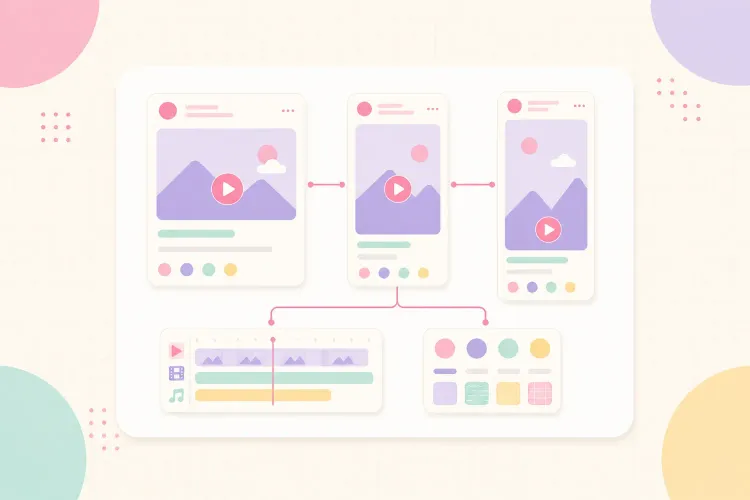
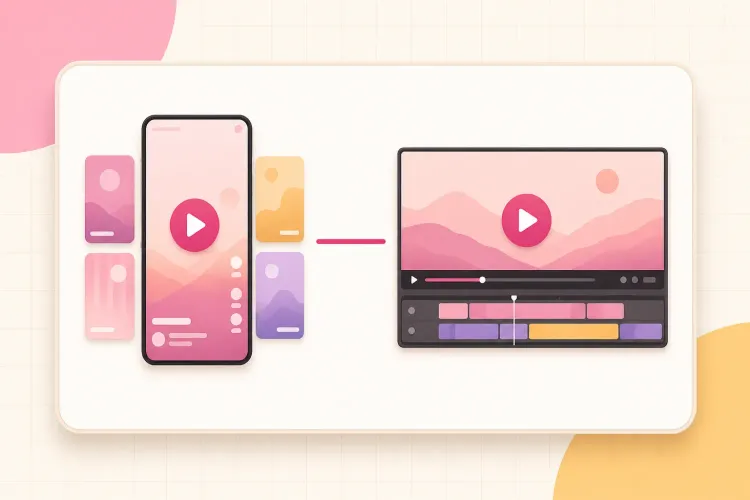
A creator choosing between Shorts and long-form videos is really choosing what the channel needs most right now: discovery, depth, production flexibility, or monetization. Shorts can help a new idea reach viewers quickly, while long-form videos usually give the audience more time to understand the creator and the subject.
There is no universal winner. If production time is limited and the immediate goal is to test hooks or reach new viewers, Shorts may deserve priority. If the goal is authority, search traffic, watch time, or more detailed sponsorships, long-form is usually the better foundation. The most sustainable strategy gives one format the main job and uses the other deliberately.
For most creators, a sensible default is to make long-form the channel’s home and use Shorts as the discovery and testing layer, as long as long-form production is sustainable. If a long-form workflow is not ready yet, start Shorts-led while building toward a repeatable longer format.
The practical difference between Shorts and long-form
YouTube Shorts are vertical or square videos of up to three minutes for standard channels, while long-form videos are regular Watch Page uploads, commonly in a wider format and built for a longer viewing session. The difference is not only duration. Each format creates a different production process and viewer expectation.
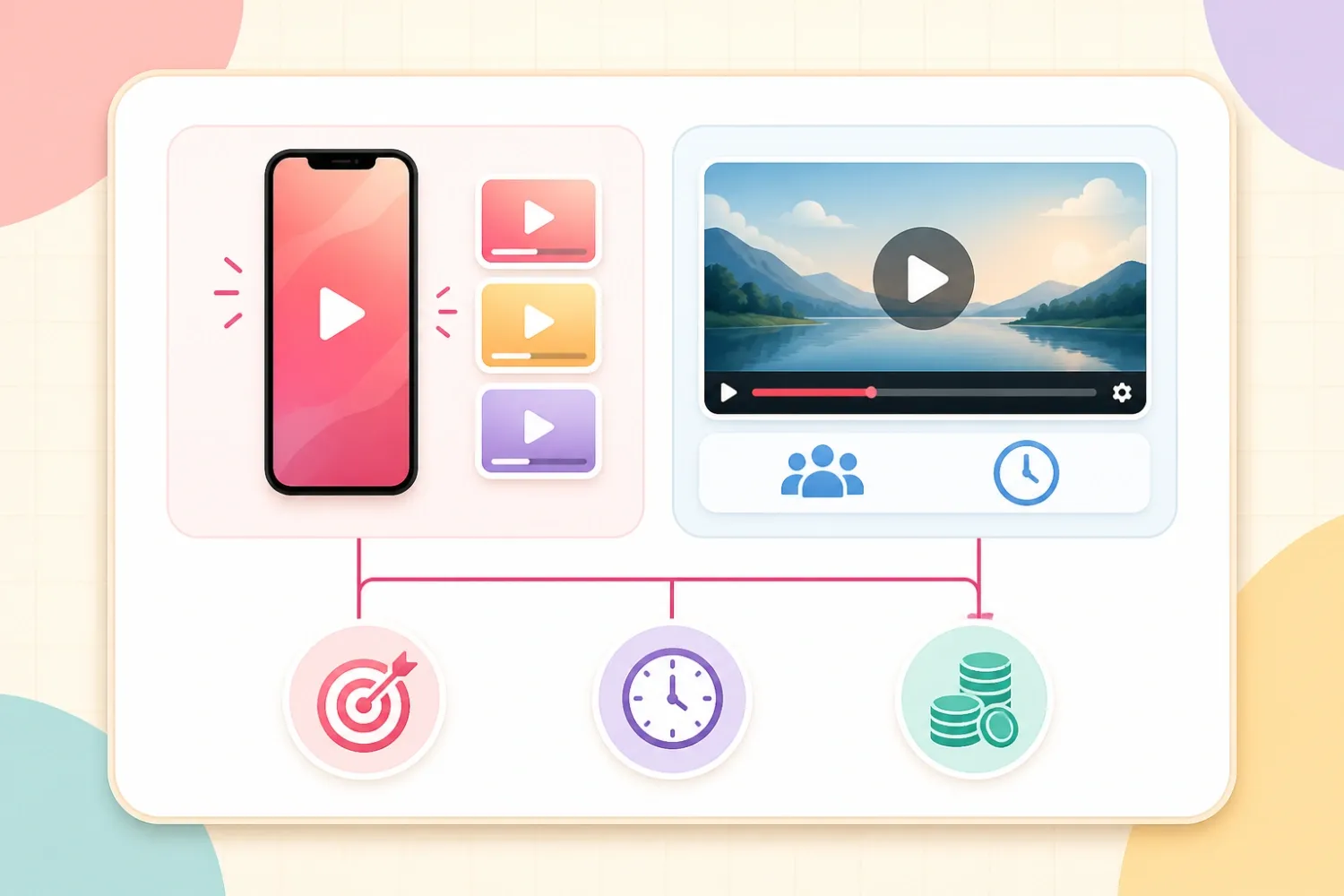
| Decision factor | YouTube Shorts | Long-form videos |
|---|---|---|
| Discovery | Fast testing and broad feed distribution | Search, home, suggested videos, and returning viewers |
| Viewer commitment | Low time commitment | Higher attention and deeper context |
| Production | Easier to publish frequently | More planning, filming, editing, and packaging |
| Best audience outcome | Awareness and first contact | Trust, education, community, and repeat viewing |
| Monetization role | Shorts Feed revenue, discovery, and extra sponsor assets | Watch Page revenue, detailed sponsorships, products, and services |
The table is a starting point, not a promise about performance. A well-made long-form video can outperform dozens of Shorts, and a Short can reveal a topic that is not ready to support a full episode.
Prioritize Shorts when discovery and testing matter most
Shorts are a useful priority when the channel needs more opportunities to be discovered or when the creator is still learning which ideas deserve deeper production.
Shorts are particularly suited to:
- Testing hooks, questions, opinions, demonstrations, and recurring formats quickly.
- Reaching viewers who do not yet know the channel through the Shorts feed.
- Turning one narrow insight into a complete piece of content without building a full episode.
- Publishing consistently when the creator has limited filming time or editing capacity.
- Creating several entry points into a topic before investing in a longer tutorial, review, or story.
The important caveat is that Shorts reach does not automatically become long-form attention. A viewer may enjoy a 20-second tip without wanting a 20-minute explanation. Shorts work better as a channel strategy when the topic, promise, and audience are connected to the rest of the channel.
For practical ideas about hooks, repeatable formats, and connecting Shorts to a wider channel system, see the guide on using YouTube Shorts to grow a channel. This comparison focuses on the format decision rather than repeating that growth playbook.
Prioritize long-form when depth and trust are the product
Long-form deserves priority when the value comes from explanation, demonstration, narrative, or a viewer’s willingness to spend more time with the creator.
Long-form is usually the better home format for:
- Tutorials, reviews, comparisons, case studies, interviews, and detailed commentary.
- Topics where the audience needs context before it can make a decision.
- Searchable content that can keep attracting viewers after publication.
- Building a recognizable point of view and a library of related videos.
- Sponsorships that need product education, a full demonstration, or a meaningful integration.
Long-form also gives the creator more room to shape a viewer relationship. The viewer sees how the creator thinks, explains, tests, and responds to questions. That depth can matter more than a large view count when the channel earns through services, products, memberships, affiliate recommendations, or brand partnerships.
Match the format to the channel’s actual goal
Ask what the next six months need to produce. The answer usually points toward the format to prioritize.
- Reach a new audience: start with Shorts, then develop the topics that attract the right viewers into longer content.
- Build authority: make long-form the core and use Shorts to surface one useful idea at a time.
- Teach a complex skill: prioritize long-form, with Shorts reserved for mistakes, quick demonstrations, or answers to recurring questions.
- Test a new niche: use Shorts to test several angles before committing to a full production series.
- Earn from detailed sponsorships: build around long-form, because integrations and product-led explanations need enough context to feel credible.
- Create extra deliverables for a campaign: use Shorts as a defined add-on only when the short asset has its own audience promise and price.
The goal should also influence the metrics. Shorts can be judged by engaged views, retention, subscribers gained, and whether the right viewers visit the channel. Long-form can be judged by impressions, click-through rate, watch time, average view duration, returning viewers, and the quality of comments or conversions.
Monetization is not the same in both formats
YouTube offers separate paths into the YouTube Partner Program. A channel can qualify with 1,000 subscribers and either 4,000 valid public watch hours from long-form videos in the last 12 months or 10 million valid public Shorts views in the last 90 days. Watch hours from views in the Shorts Feed do not count toward the 4,000-hour threshold. The current requirements are listed in YouTube’s Partner Program eligibility guidance.
That distinction matters for planning. Shorts can create reach and subscribers, but a creator pursuing the watch-hour route needs public long-form viewing time. Long-form can also support mid-video context, detailed affiliate explanations, direct-response demonstrations, and sponsor integrations that would not fit naturally into a very short clip.
Shorts still have a monetization role. They can earn through the Shorts Feed once the relevant YPP terms are active, and they can make useful campaign add-ons when a brand wants a quick vertical asset. The format should not be treated as a cheaper version of a long-form deliverable. It has a different audience behavior, creative structure, and commercial use.
For the sponsorship side of the decision, the guide to YouTube sponsorship rates explains why average views, format, production work, usage rights, and exclusivity all affect the offer.
Use both formats without creating two unrelated channels
A hybrid strategy works when both formats serve the same audience promise. The simplest model is to let long-form provide the depth and let Shorts create more entry points into the same topics.
For example, a home-organization channel might publish a long-form video about setting up a small kitchen, then create Shorts about one storage mistake, one product test, and one before-and-after result. Each Short should make sense on its own, but the audience should still recognize the same subject and point of view.
YouTube also lets creators turn parts of eligible long-form uploads into Shorts, and those Shorts can link back to the original video. The official guide to creating Shorts from existing videos explains the workflow. Use it when the clip has a clear standalone promise, not simply because every long-form upload needs to be cut into content.
The weak version of a hybrid strategy is random volume: unrelated Shorts attract one audience while long-form videos speak to another. That can create impressive view totals without building a useful channel. A better test is whether Shorts viewers show interest in the same themes, return to related uploads, or respond to the same recurring format.

Let production capacity set the publishing rhythm
The right format is also the one the creator can produce repeatedly without lowering quality or exhausting the channel’s ideas. A sustainable schedule may look like:
- Shorts-led: several Shorts each week, with one longer video when a topic proves it deserves more depth.
- Long-form-led: one or two carefully produced videos each month, with Shorts used to test hooks, answer comments, or extend the life of each upload.
- Balanced: a consistent long-form anchor supported by a small number of Shorts that share its subject and audience.
These are patterns, not quotas. A creator with a research-heavy niche may need more time between long-form uploads. A creator who films casually may be able to publish more often. The useful question is whether the rhythm leaves enough capacity to review performance and improve the next piece.
Choose a format you can sustain
The better decision is not which format wins a short experiment. It is which format the creator can produce consistently enough to build a recognizable channel and learn from comparable uploads.
Choose a primary format by checking:
- Whether it matches the channel’s main goal.
- Whether the production workload fits the creator’s available time, skills, and budget.
- Whether the format supports the audience relationship and monetization path the channel needs.
- Whether the creator can imagine producing several related uploads without exhausting the idea or lowering the quality.
Use the other format only when its job is clear. Shorts might test hooks, answer comments, or introduce a long-form topic. Long-form might develop the subject, build search depth, or provide the main sponsorship environment. Review comparable uploads after a meaningful body of work, then adjust the mix without treating one unusual result as a verdict.
The practical answer
Prioritize YouTube Shorts when the channel needs discovery, fast testing, and a lighter production loop. Prioritize long-form when the channel is built around depth, search, trust, watch time, and detailed monetization. If both formats fit, make their jobs explicit: Shorts open the door, while long-form gives the right viewers a reason to stay.