YouTube Shorts can be one of the easiest ways to start getting new viewers on YouTube. They are easier to produce than long-form videos, they fit mobile behavior, and they can introduce a channel to people who would never search for it first.
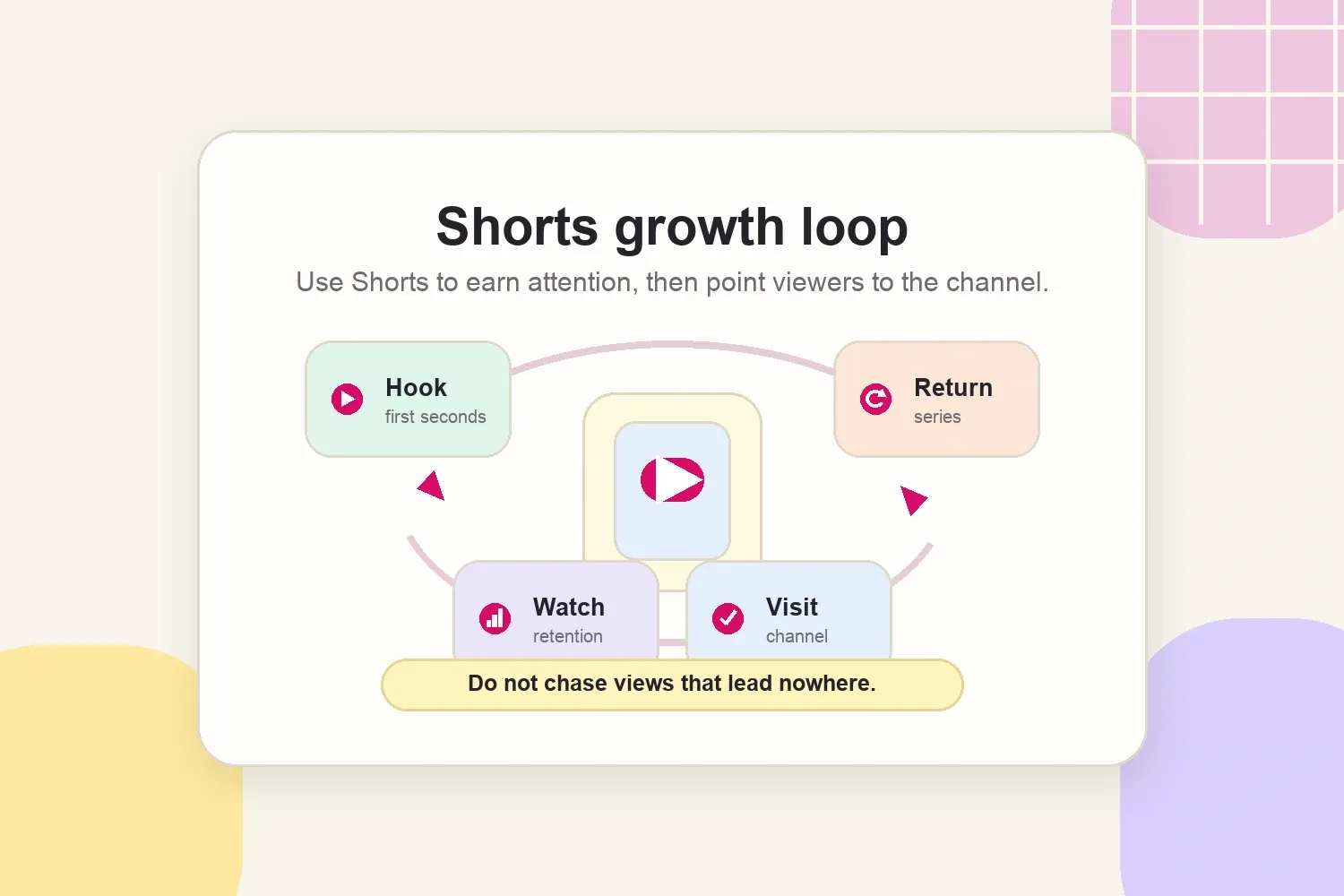
But Shorts are not magic. A channel does not grow just because a creator uploads short vertical clips. Shorts work best when they create a path from attention to channel trust: a viewer watches, understands the topic, recognizes the creator's style, and has a reason to watch another video.
What YouTube Shorts actually do for channel growth
Shorts are useful because they lower the entry barrier. A viewer can discover a creator in the Shorts feed, search results, the homepage, subscriptions, notifications, or the channel page. YouTube explains those discovery surfaces in its Shorts creation guide.
That matters for smaller channels. A new creator might not rank for competitive YouTube search terms yet, but a useful Short can still reach someone who is already watching similar topics.
The mistake is treating Shorts as a separate game from the rest of the channel. A Short should not only get a view. It should help the viewer understand what the channel is about, why the creator is worth remembering, and what kind of video might be worth watching next.
Start with one viewer promise
Every useful Short has one clear viewer promise. It can answer one question, show one mistake, compare two options, explain one result, or preview one larger idea. If the Short tries to do five things, viewers have no reason to stay.
For a cooking channel, that promise might be "one high-protein breakfast that takes five minutes." For a finance channel, it might be "one budgeting mistake that makes rent feel harder." For a creator-education channel, it might be "one reason a video gets views but no subscribers."
The more specific the promise, the easier the opening becomes. Instead of starting with "Here are some tips," the creator can start with the actual tension: "This is why your Shorts get views but nobody visits your channel."
Make the first seconds understandable
Shorts do not need loud editing, but they do need immediate clarity. The first seconds should tell the viewer what is happening, why it matters, or what question will be answered.
A practical opening usually does one of these jobs:
- Names the problem: "Your Shorts are getting views but no subscribers."
- Shows the result first: "This one edit made the full video easier to understand."
- Creates a clear contrast: "Do this for YouTube Shorts, not this."
- Starts inside the action: show the recipe, setup, result, dashboard, product, or before-and-after before explaining it.
The point is not clickbait. The point is removing confusion. If the viewer needs five seconds to understand the topic, the Short is already asking for too much.
Use Shorts to support a channel, not replace it
Shorts can bring new people in, but a channel still needs a reason for them to stay. That is where long-form videos, playlists, series, community posts, and a clear channel page matter.
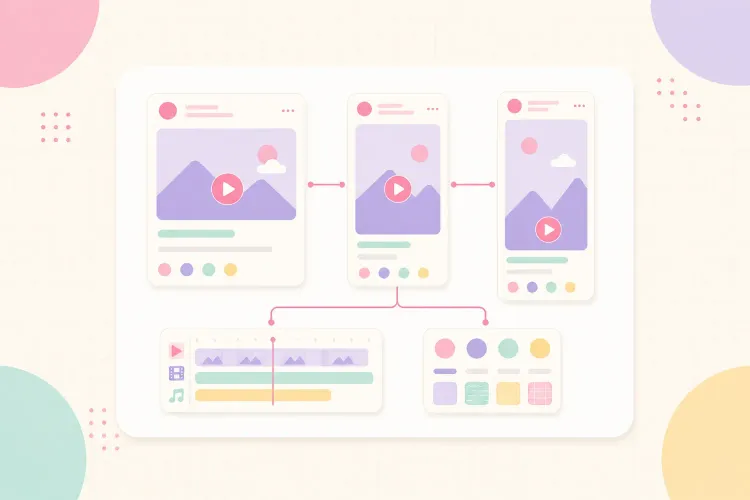
One good pattern is to use Shorts as entry points into bigger ideas. A long tutorial can become three Shorts: one mistake, one quick result, and one surprising detail. Each Short stands alone, but all of them point back to the same channel promise.
This is why a Shorts strategy should not only ask, "What could go viral?" It should also ask, "What would make the right viewer trust this channel faster?"
For broader YouTube strategy, the same logic applies to titles, topics, and packaging. This guide on what works on YouTube is a better next step when the issue is not Shorts alone but the whole channel system.
Format the Short so it is easy to watch
YouTube says Shorts creation tools can make short-form videos up to three minutes long, and the format is built around mobile creation and viewing. Longer is not automatically better. Use more time only when the idea needs it.
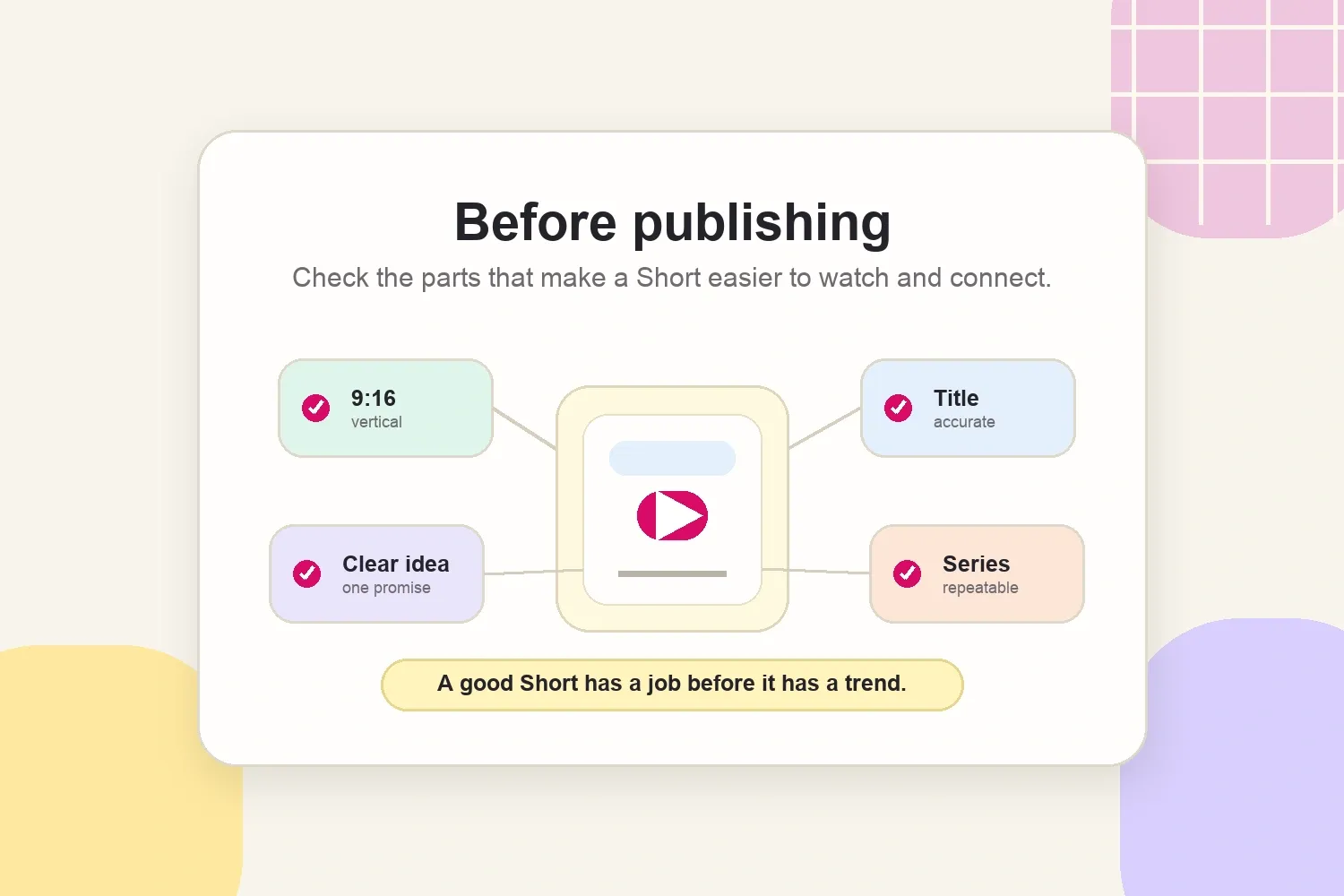
A simple publishing check:
- Use a vertical format, usually 9:16, so the video feels native to the Shorts feed.
- Keep the idea narrow enough to understand without a long setup.
- Write a title that reflects the actual video, not a vague curiosity line.
- Make the ending feel connected to the channel, not just the individual clip.
YouTube also recommends clear, accurate titles and using data to improve content in its creator optimization guidance. That applies to Shorts too, especially when Shorts appear in search, on channel pages, or outside the feed.
Measure more than raw views
Raw Shorts views can be misleading. Starting March 31, 2025, YouTube updated Shorts views so a view counts when a Short starts to play or replay, with no minimum watch time. YouTube also keeps "Engaged views" in Analytics so creators can compare how many viewers chose to continue watching.
That means a creator should not judge a Short only by the biggest view number. Better questions are:
- Did viewers continue watching after the opening?
- Did the Short bring profile visits, subscribers, comments, or returning viewers?
- Did it support a topic that the channel can repeat?
- Did it help a long-form video, playlist, or series get more qualified attention?
For creators who want brand deals later, this matters because brands usually care about proof, not just spikes. A Short that brings the right audience back repeatedly is more useful than one random viral clip that never connects to the channel. That same logic shows up in YouTube sponsorship pricing, where content fit and audience trust matter alongside reach.
Build repeatable Shorts series
The easiest Shorts ideas are often repeatable. A series gives viewers a reason to recognize the format and return. It also gives the creator a way to test without reinventing the channel every day.
Examples:
- "One thing beginners get wrong about..."
- "Before you buy..."
- "Tested so viewers do not have to..."
- "What nobody explains about..."
- "Three signs your [topic] needs fixing..."
The series should be flexible enough to run for weeks, but specific enough that the audience knows why it exists. If every Short feels unrelated, the channel may get views without building memory.
Do not ignore packaging outside the Shorts feed
Shorts often get discovered in the feed, but they can also appear in search results, on the homepage, and on the channel page. That makes titles, topic clarity, and channel packaging more important than many creators think.
Thumbnails matter less inside the swipe feed than they do for long-form videos, but they still matter in places where Shorts appear as tiles. The same principle from YouTube thumbnail strategy applies: the viewer should understand the topic quickly without decoding clutter.
The channel page also needs to support the promise. If the Short is about home workouts, the channel should not look like a random collection of unrelated tests. A viewer who taps through should immediately understand what they will get by subscribing.
Common Shorts mistakes
The first mistake is copying trends without connecting them to the channel. A trend can create attention, but it does not automatically create a subscriber.
The second mistake is making Shorts too broad. "How to grow on YouTube" is vague. "Why your Shorts get views but no subscribers" is clearer.
The third mistake is ending abruptly. A Short can be short and still feel complete. The viewer should leave with one idea, one result, or one reason to watch more.
The fourth mistake is posting Shorts that attract the wrong audience. A creator can get views from a funny one-off clip, but if the channel is really about education, product reviews, or tutorials, that attention may not help.
A simple 30-day Shorts plan
For the first 30 days, pick one channel promise and three repeatable Shorts formats. For example, a fitness creator might test beginner mistakes, quick form fixes, and five-minute routines.
Post enough to learn, but do not publish random clips just to stay active. After each week, compare retention, engaged views, comments, subscribers, and topic fit. Keep the formats that attract the right viewers and cut the ones that only create empty reach.
Here is what that can look like in practice. A beginner fitness creator has one long-form video about knee-friendly home workouts. Instead of cutting random clips from it, they turn the video into three Shorts: one common squat mistake, one 20-second form correction, and one five-minute routine preview. After a week, the form correction has fewer raw views than the trend-style clip, but it brings more comments, more subscribers, and more visits to the full tutorial. That is the Short worth turning into a repeatable series.
At the end of the month, turn the best-performing Short topics into long-form videos or deeper series. That is where Shorts become more than discovery. They become a testing system for the whole channel.
YouTube Shorts can be an easy way to grow a channel, but only when they are connected to a bigger creator strategy. The practical goal is not just more short views. It is more viewers who understand the channel, remember the creator, and come back for the next useful video.