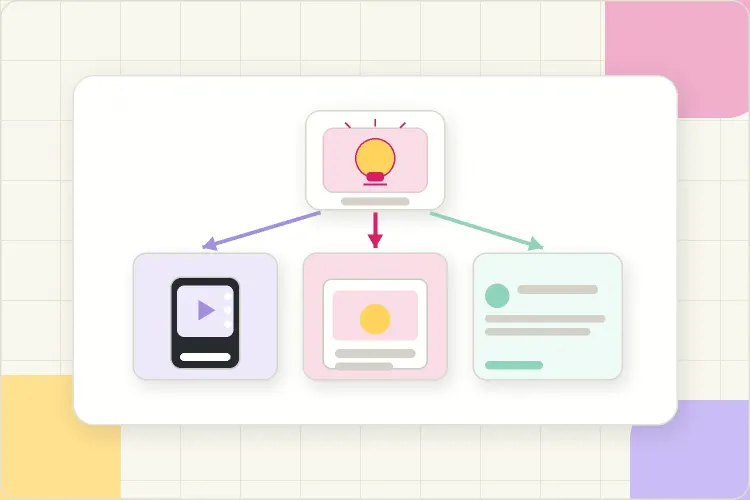
Creators often lose time by treating repurposing as a file-export problem. They publish the same video, caption, and call to action on Instagram, TikTok, and LinkedIn, then wonder why one version feels flat.
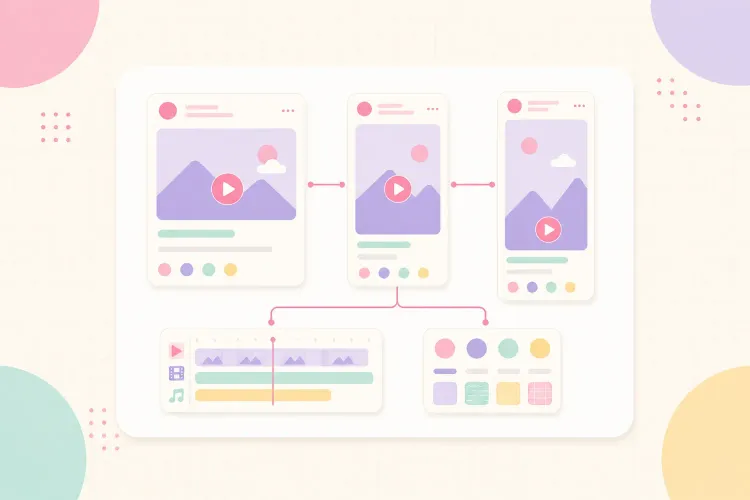
The better approach is to keep the central idea and rebuild the experience around each platform. Instagram may need a visual worth saving, TikTok may need a fast hook and a spoken demonstration, while LinkedIn may need a clear professional lesson. The idea stays consistent; the delivery changes.
Repost, reuse, or repurpose?
These three approaches are related, but they are not the same:
- Repost: publish the same piece again with little or no change.
- Reuse: keep the same concept and make light edits, such as a new caption, crop, or opening.
- Repurpose: create a new piece from the original idea, adapted to a different format, audience, or platform.
This guide focuses on the third approach. The goal is not to distribute one finished post everywhere, but to give one useful idea a reason to exist in each feed.
This short explanation of the three Rs shows the difference in practice before you adapt the idea:
Start with one idea, not one finished post
Before opening an editor, write down the idea in one sentence. It should describe the useful point, not the final format.
For example:
- “Creators can make a brand pitch more relevant by showing where their audience lives.”
- “A campaign recap is more useful when it explains what the numbers mean, not just what they are.”
- “One product can support several pieces of content when each piece has a different job.”
That sentence becomes the source material. It is not the Instagram caption, TikTok script, or LinkedIn post yet.
The distinction matters because each platform gives the audience a different reason to stop. If the first version is already locked into a long caption or a vertical video, creators tend to copy the same structure everywhere. Starting with the idea leaves room to adapt it properly.
Decide what changes by platform
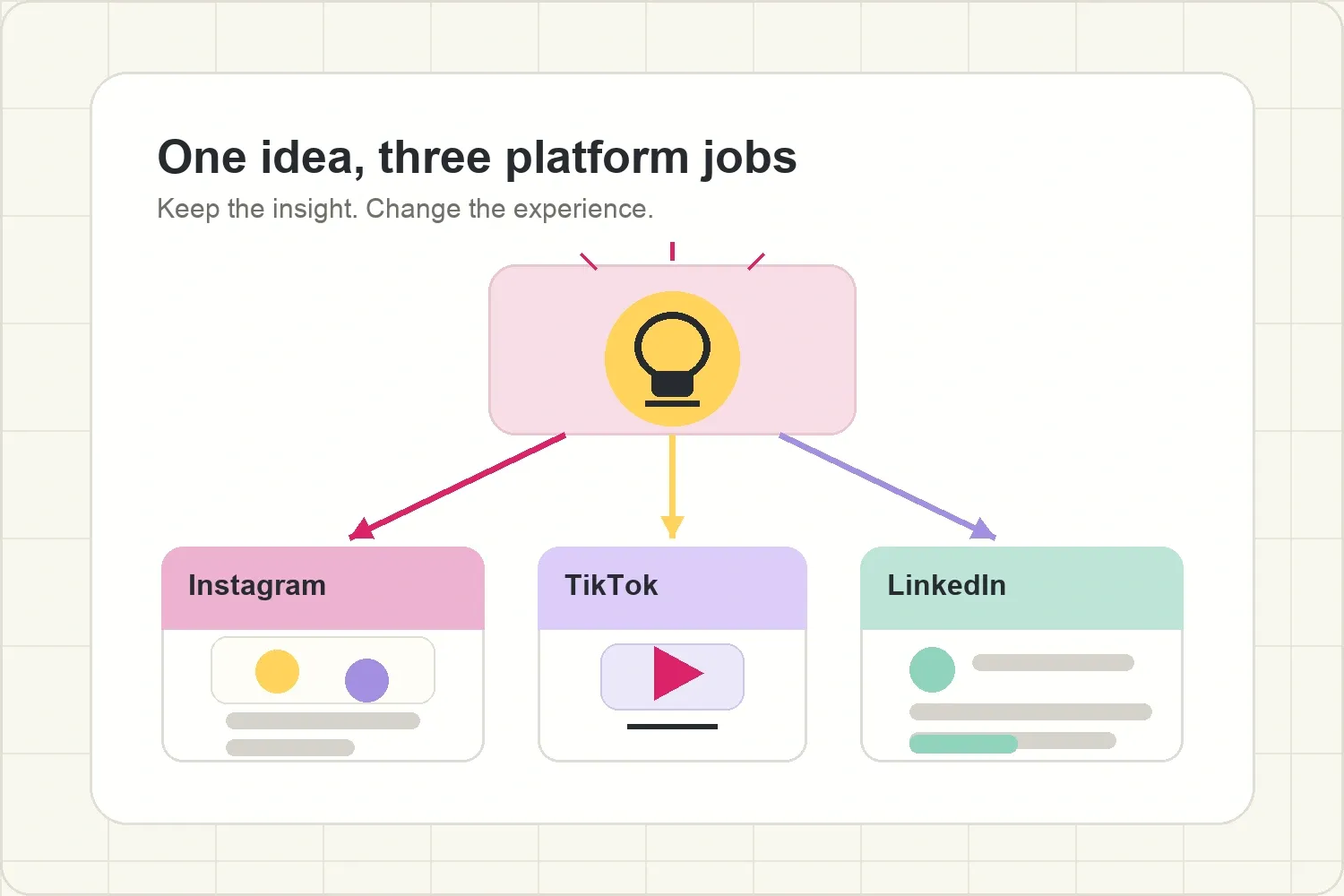
Repurposing content for Instagram, TikTok, and LinkedIn works when each version has a clear platform job.
| Platform | What the audience expects | What to adapt |
|---|---|---|
| A visual point of view, useful details, and something worth saving or sharing | The visual sequence, caption context, and community-oriented action | |
| TikTok | A reason to stay in the first seconds, natural delivery, and a story that moves quickly | The opening hook, pacing, spoken explanation, and comment prompt |
| A clear insight connected to work, business, or a professional lesson | The framing, evidence, paragraph structure, and discussion question |
This does not mean forcing a different personality on every platform. It means respecting how people use each feed. TikTok’s Creative Center resources are useful for studying current creative patterns, hooks, and story structures.
LinkedIn’s own content principles for marketers also reinforce the need for a clear audience, useful point of view, and format that supports the message.
The goal is not to make three unrelated posts. The goal is to make three native expressions of the same useful idea.
Build a short idea brief once
Write the shared information before adapting anything. A simple brief prevents the three versions from drifting into different claims.
Include:
- Core point: the one thing the audience should remember.
- Audience problem: the question, frustration, or decision the idea helps with.
- Proof: an example, result, observation, screenshot, process, or experience that makes the point credible.
- Useful detail: the step, comparison, or explanation that makes the post worth keeping.
- Next action: what the audience can do next, such as save the post, comment with a question, or apply the idea to a current project.
Keep the proof consistent across platforms, but do not present it in the same shape every time. A screenshot may work as a carousel slide on Instagram, a quick screen recording on TikTok, and a short case detail inside a LinkedIn post.
Creators who regularly work with brands can also connect this brief to their deliverable planning. A package should define the role of each format before price is discussed, as explained in the guide to Instagram deliverable packages. The same logic applies to organic content: every version should have a job.
Adapt the idea for Instagram
Instagram usually benefits from a visual structure that can be understood quickly and revisited later. The format might be a Reel, carousel, single image, or Stories sequence, but the viewer should know what the post is about without reading a large block of caption text first.
Choose the Instagram treatment
- Use a carousel when the idea has steps, comparisons, examples, or a checklist.
- Use a Reel when the idea depends on demonstration, personality, movement, or a before-and-after moment.
- Use Stories when the goal is conversation, a quick update, a poll, a link, or a sequence of smaller points.
- Use a single image when one visual proof point can carry the idea and the caption adds the useful context.
Then rewrite the opening so it works on the screen. Instead of beginning with a general statement, use a clear promise or tension:
Your audience location can matter more to a local brand than your follower count.
The caption can then add the explanation, example, and caveat. The visual should not simply be a screenshot of the LinkedIn version resized for Instagram. Give it a visual rhythm: a strong first slide, one idea per frame, and a final slide that tells the reader what to do with the information.
For a sponsored or brand-facing topic, keep required tags, disclosure, product claims, and brand language visible in the Instagram version. Do not assume that a requirement written for one platform automatically fits the others.
Adapt the idea for TikTok
TikTok needs the idea to arrive earlier and sound more like a person explaining something than a document being read aloud. Start with the tension, result, or surprising detail that gives viewers a reason to stay.
Possible openings for the same audience-location idea:
- “A brand in London does not need a creator with the biggest global audience.”
- “Here is the audience metric I would check before follower count.”
- “If you pitch local brands, this part of your analytics matters more than you think.”
The rest of the video can follow a simple movement:
- State the problem in one sentence.
- Show the proof or screen recording.
- Explain what the number changes for the viewer.
- Give one practical action.
- Invite a relevant comment or question.
The TikTok version does not need the same on-screen paragraphs as the Instagram carousel. Use spoken explanation, short text overlays, movement, or a visual demonstration. If a screenshot contains several numbers, highlight the one that supports the point instead of leaving viewers to scan the entire screen.
Keep the claim honest. A strong hook should make the idea easier to understand, not promise a result the evidence cannot support.
Adapt the idea for LinkedIn
LinkedIn usually needs more explicit context. The reader may be interested in the same topic, but the post should connect it to a professional decision, process, or lesson.
For the audience-location example, the LinkedIn version might follow this structure:
Follower count is an easy way to compare creators. It is not always the most useful way.
For a local campaign, audience location can tell a brand whether the creator is reaching the market it actually needs. A smaller audience concentrated in the target region may be more relevant than a larger audience spread across countries the brand does not serve.
Before pitching, check your top countries or cities, compare them with the campaign territory, and include the result with a short explanation.
Which audience signal changes your pitch most often: location, niche, engagement, or buying intent?
The point is not to turn every creator idea into a corporate case study. It is to make the lesson legible to people who think in terms of audiences, decisions, campaigns, and outcomes.
LinkedIn can support a longer text-led explanation, a document post, or a native video. Choose the format that helps the reader follow the reasoning. Avoid importing an Instagram caption full of emojis, line breaks, and generic hashtags if the content needs a more precise professional frame.
Example: one idea, three different posts
Here is a complete adaptation example using the idea: a campaign report should explain the meaning behind the numbers.
- Format: carousel.
- First slide: “Do not send a brand ten analytics screenshots without context.”
- Middle slides: show reach, clicks, replies, and one sentence explaining what each signal reveals.
- Caption: add the reporting principle and a short example.
- Action: invite readers to save the structure for their next campaign recap.
TikTok
- Format: short talking-head video with a screen recording.
- Opening: “A brand does not need more screenshots. It needs to know what happened.”
- Middle: show one metric, explain the content placement or audience reaction behind it, then contrast it with a number shown without context.
- Action: ask viewers which metric they find hardest to explain.
- Format: text post or document post.
- Opening: “Reporting is not the same as forwarding a dashboard.”
- Middle: explain how a creator can connect a metric to the campaign goal, content choice, and next recommendation.
- Action: close with a question about what makes campaign reporting useful to a brand team.
The evidence is shared. The hook, pacing, format, and reader action are not.
Change more than the caption
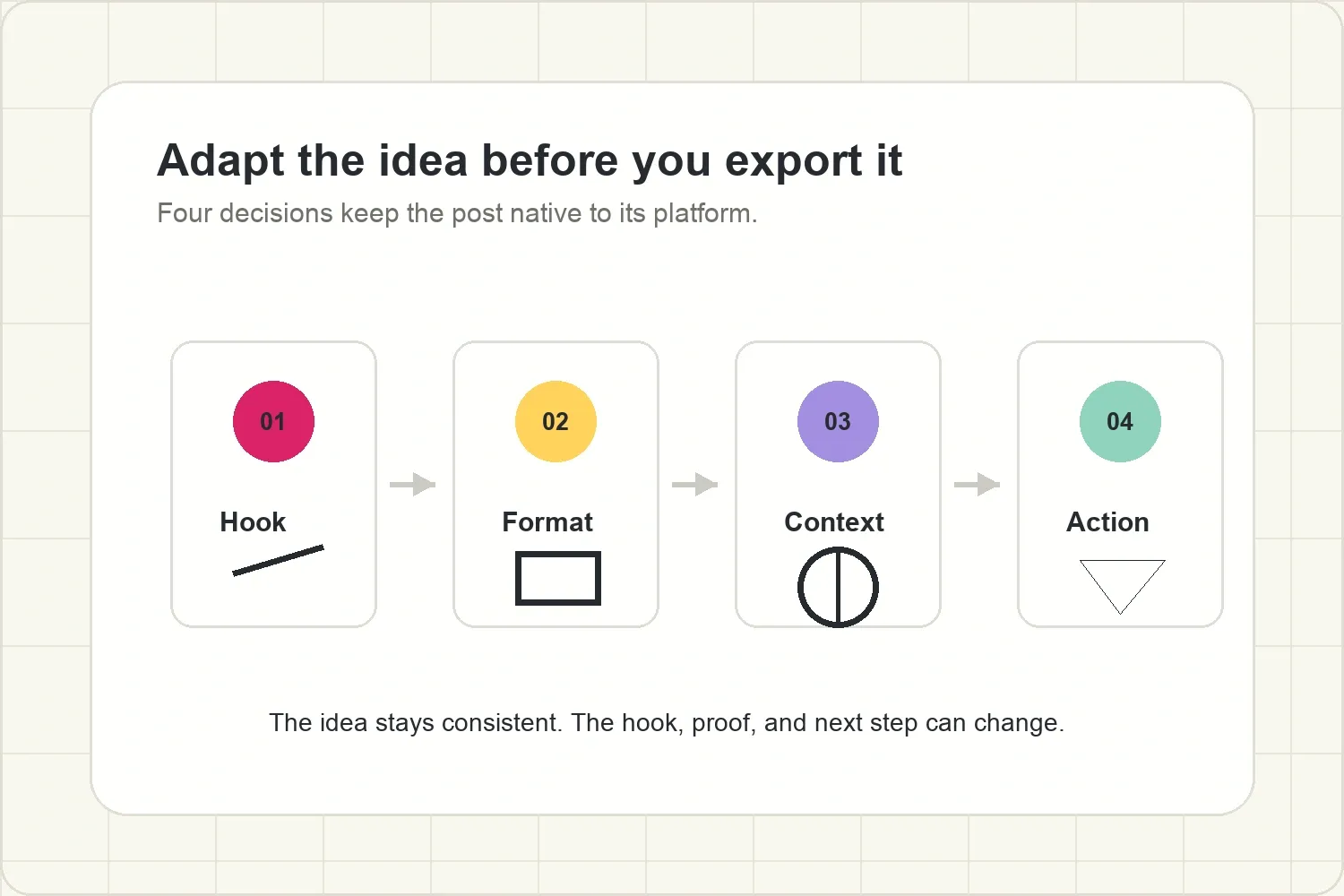
Copying the same script into three templates is still duplication. Before publishing, check the parts that shape the actual experience:
- Opening: Does the first line or first visual fit the way people stop on this platform?
- Length: Is the explanation long because it needs to be, or because it was copied from another version?
- Visual language: Does the post need a carousel, talking-head delivery, screen recording, document, or text-led layout?
- Proof placement: Should the evidence appear immediately, after the hook, or as a conclusion?
- Call to action: Is the best next step a save, comment, click, share, follow, or professional conversation?
- Metadata: Are the tags, keywords, disclosure, mentions, and hashtags appropriate for this platform?
- Audience context: Would a viewer on this platform understand the example without the explanation that appeared in the original post?
This check is especially important when repurposing a brand collaboration. Organic posting, paid usage, creator licensing, and cross-platform publication can be separate parts of the scope. Clarify what the brand receives instead of quietly turning one approved asset into unlimited reuse.
Use a repeatable repurposing workflow
Once the adaptation logic is clear, the process can stay lightweight.
- Capture the idea: write the claim, audience problem, proof, and useful action in a short brief.
- Choose the platform jobs: decide whether Instagram will make the idea saveable, TikTok will make it watchable, and LinkedIn will make it discussable. Adjust those jobs to the actual audience and topic.
- Draft native openings: write a different first line or first visual for each platform before editing the rest.
- Build the right format: create the carousel, video, document, or text post that supports that platform’s job.
- Check the claim: make sure examples, numbers, sponsored requirements, and product language still match across versions.
- Publish and compare by objective: evaluate saves, watch time, comments, clicks, replies, or qualified conversations according to what each version was meant to do.
- Record the learning: keep the useful lesson, not just the top-performing format. The next idea may need a different treatment.
The aim is not to make every platform perform identically. A TikTok may create discovery, an Instagram carousel may create saves, and a LinkedIn post may create a thoughtful conversation. Those outcomes can all be useful without being interchangeable.
How to avoid a copy-and-paste feel
Run a final reader test: if someone follows you on all three platforms, would they feel that each post gave them a reason to exist?
Signs that the versions are too similar:
- The first sentence is identical everywhere.
- The same clip starts and ends the same way on every platform.
- The call to action asks for the same behavior even though the audiences use the feeds differently.
- The post depends on a caption to explain a visual that never received a native adaptation.
- The LinkedIn version uses casual feed language without a work or decision context.
- The TikTok version sounds like a carousel being read aloud.
Fixing these issues does not require inventing new ideas. It requires making the platform’s role visible.
Conclusion
To repurpose content for Instagram, TikTok, and LinkedIn, separate the idea from the post that first expressed it. Keep the central point and proof consistent, then change the hook, format, context, pacing, and action for the platform.
That approach gives creators more useful content from the same thinking without making audiences read the same post three times. It also creates a clearer system for brand work, because each deliverable has a purpose instead of being another copy of the original.