Yes, a small streamer can get a sponsorship on Twitch without celebrity-level reach. But a brand still needs to see who watches, how active the community is, what the audience cares about, and what the partnership would look like on stream.
The practical path is to package your average concurrent viewers, community activity, audience fit, and reliable stream habits into a focused offer. Then pitch brands that already make sense for your content instead of sending the same message to every gaming company.
What brands look for in a small Twitch streamer
Follower count is easy to notice, but it is rarely enough to make a sponsorship decision. Brands want a reasonable expectation of attention and a creator who can make the placement feel natural.
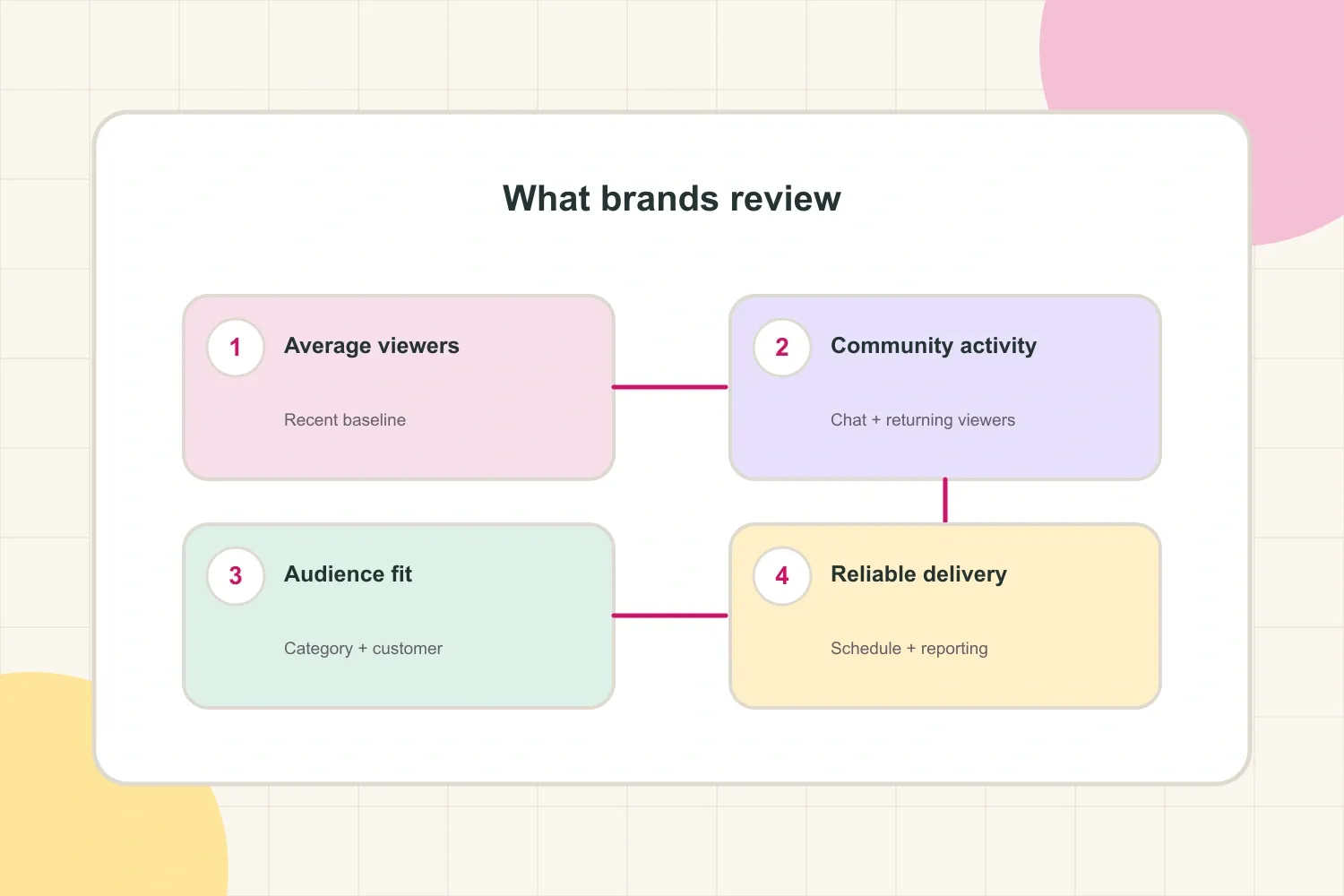
For a small streamer, the most useful proof usually sits in four areas:
- Average concurrent viewers: how many people typically watch at the same time across recent streams.
- Community activity: whether viewers talk, return, participate, subscribe, click, or respond when you introduce something.
- Audience fit: whether the viewers match the brand’s category, customer, geography, and buying context.
- Execution reliability: whether you stream consistently, follow a brief, disclose paid content, and send the agreed results afterward.
This is why a channel with 35 average viewers and an active, relevant chat can be more interesting than a channel with 2,000 followers and almost no live participation.
Treat average viewers as a useful baseline, not a pass mark
Average concurrent viewers (ACV) is usually more useful than a peak-viewer screenshot. A peak shows what happened once; the average gives a brand a more realistic sense of the audience available during a normal broadcast.
Use a recent period, such as the last 30 or 90 days, and explain the context. A creator who streams three times a week in one category should not present a single event stream as the normal audience.
Include:
- average concurrent viewers over the selected period;
- number of streams and hours streamed;
- typical stream length and schedule;
- peak viewers when it adds useful context;
- the categories or games that produced the most consistent response.
Do not invent a universal minimum viewer count. Twitch sponsorship opportunities vary by campaign, category, geography, offer type, and whether a brand wants reach, live interaction, content, or affiliate conversions. Twitch’s guidance on setting up your Creator Profile explains that completed profiles help its Ads team and vetted brands and agencies find creators, so keep the information current before you start pitching.
Can you get sponsored with fewer than 50 average viewers?
There is no universal viewer cutoff, but a smaller audience usually changes the type of opportunity available. You may be a better fit for a product trial, affiliate campaign, product seeding, or a small fixed-fee test than for a large recurring sponsorship.
Keep the offer types separate when you pitch:
- Paid sponsorship: the brand pays a fixed fee for defined placements or content.
- Affiliate campaign: you earn a commission when viewers purchase or sign up through your link or code.
- Product seeding: you receive a product, with no automatic payment or guaranteed campaign.
None of these is automatically better than the others. The important point is to label the arrangement accurately, check the terms, and show why your audience is a relevant, low-risk test for the brand. Twitch’s Sponsorship Portal is also eligibility-based, so an offer available to one creator may not appear for another.
Show the community behind the number
Average viewers tell a brand how many people may be present. Community activity helps explain what those viewers do while they are there.
Useful signals can include:
- average or typical chat activity during comparable streams;
- recurring viewers, regulars, or returning community members;
- chat participation during questions, polls, challenges, or game choices;
- subscriptions, bits, channel-point participation, or tracked clicks when relevant;
- moderation and community habits that keep sponsored segments comfortable and on-topic.
You do not need to turn the pitch into a dashboard dump. Pick two or three signals that match the campaign. A peripheral brand may care about clicks and product questions; a game studio may care more about live reactions and how many viewers stay through a sponsored play segment.
Avoid inflating activity with bots, forced chat prompts, or a community that only appears when there is a giveaway. Brands can usually tell when interaction is connected to the creator rather than to an incentive.
Make audience fit specific
“My audience is gamers” is not enough. Explain the audience in the language a brand uses to decide whether a campaign is worth testing.
Describe:
- the main games, categories, or interests covered on the channel;
- audience geography and language;
- relevant age or gender information when available and appropriate to share;
- the viewer problem or purchase context connected to the content;
- adjacent platforms where the same community follows you.
The best fit is not always the brand with the biggest budget. A small hardware company, indie game, productivity tool, snack brand, or local event may value a focused community more than broad but disconnected reach.
Offer placements that fit the stream
Do not pitch “exposure” as if it were one deliverable. Tell the brand exactly where the partnership appears and what the viewer will experience.
Common Twitch sponsorship placements include:
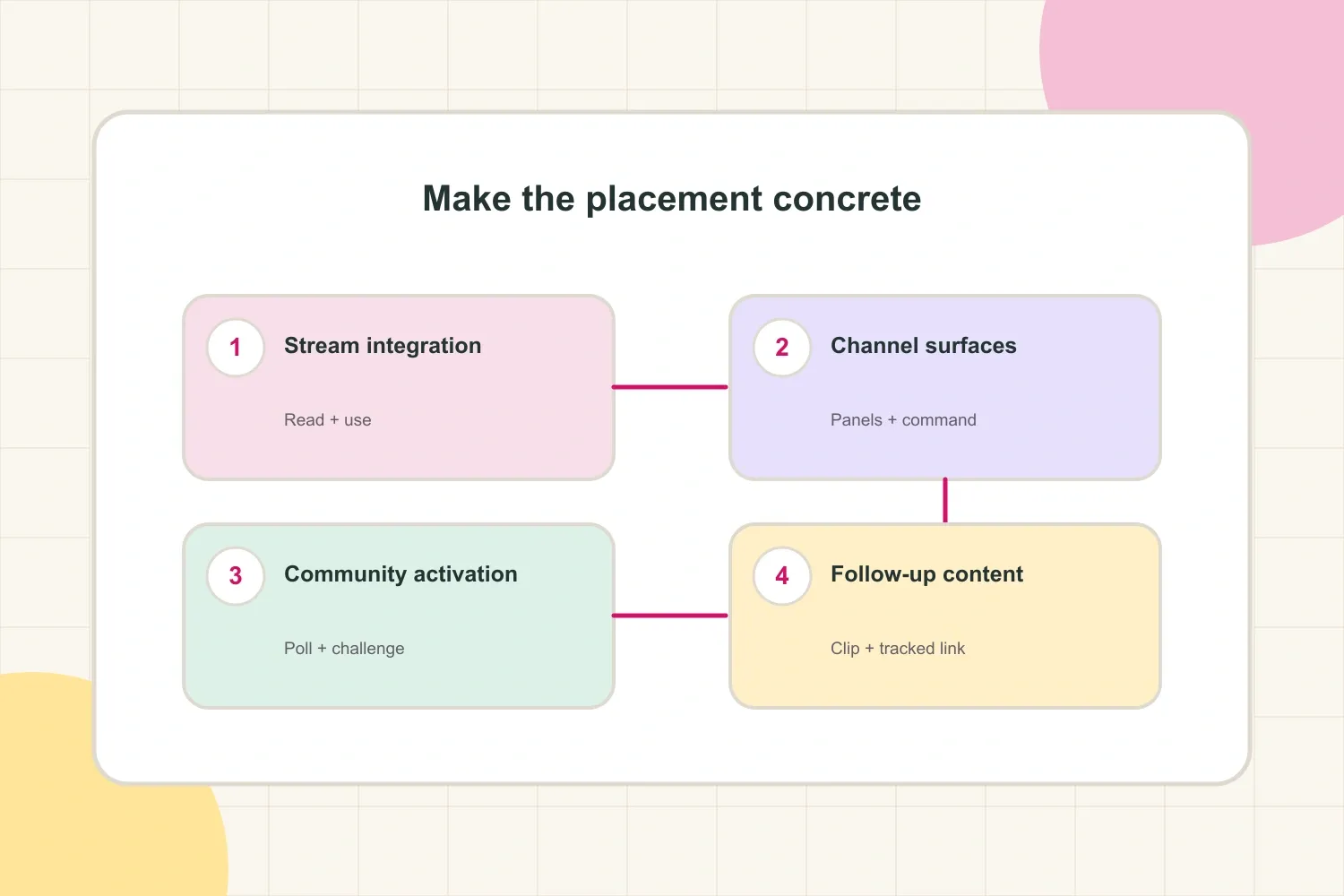
| Placement | What it can include | Best suited to |
|---|---|---|
| Stream integration | Streamer-read mention, product use, sponsored challenge, or branded segment | Brands that want live explanation and reaction |
| Channel surfaces | Panels, profile link, chat command, overlay, or scheduled panel placement | Offers that need repeated visibility |
| Community activation | Giveaway, poll, challenge, or chat-led product discussion | Brands that want participation |
| Follow-up content | Clip, short video, social post, or recap with a tracked link | Campaigns that need a second discovery point |
The placement should match the audience’s reason for being there. A two-minute read can work inside a Just Chatting stream, while a game sponsor may be better served by a short setup, playthrough, or challenge that viewers can react to.
Keep the boundaries clear in the proposal: number of streams, timing, talking points, links, tracking code, approval process, usage rights, exclusivity, and reporting. Only promise a format you can deliver without making the stream feel like an interruption.
Build a sponsor-ready profile before outreach
Before you contact brands, make it easy for someone to answer three questions: who is this streamer, who watches, and what could the brand ask you to do?
Your Twitch profile and media kit should work together. Include:
- a one-sentence channel positioning statement;
- recent average viewers and stream schedule;
- audience details and community signals;
- the categories you cover and examples of your best content;
- available placements and a simple campaign idea;
- contact details and links to relevant platforms.
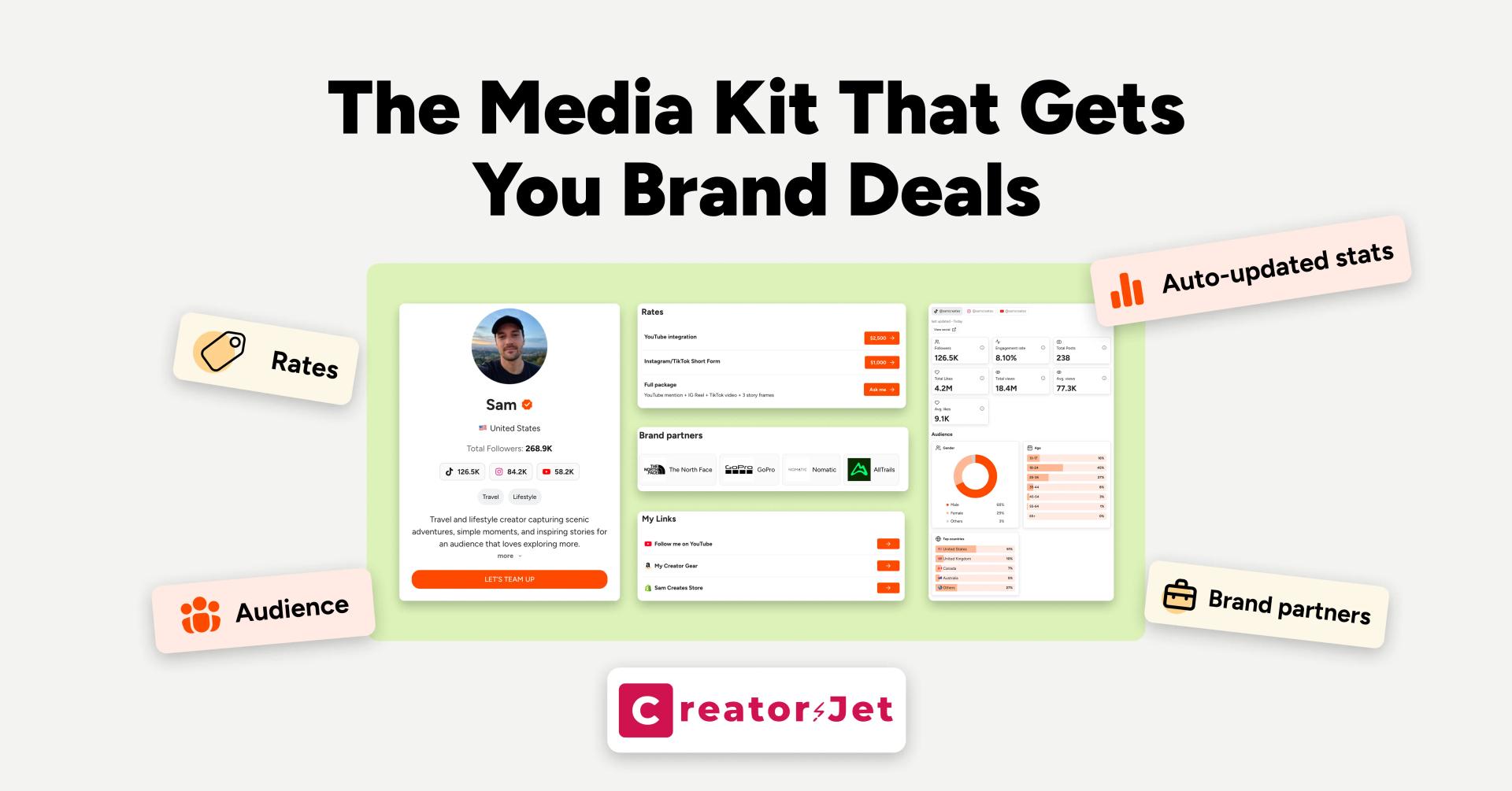
CreatorsJet’s guide to creating an influencer media kit can help you organize the proof and examples a brand needs before replying. Keep the document short enough to scan, and update the numbers when your channel changes.
Find brands that can realistically fit
Start with companies that already have a reason to reach your viewers. Look at brands appearing in your category, tools your community already discusses, products that solve a problem in your streams, and companies that have worked with creators at a similar scale.
Twitch’s Sponsorship Portal gives eligible creators access to campaign opportunities, and Twitch lists formats such as channel skins, streamer-read ads, and sponsored subscriptions. It is worth completing the official Creator Profile even if you also pitch independently. For broader prospecting, you can find relevant sponsors with CreatorsJet.
Before adding a prospect to your list, check:
- Does the product make sense for the channel’s content and audience?
- Has the brand worked with streamers or creators before?
- Is there a clear contact path or partnership application?
- Can you explain one useful campaign idea in a sentence?
- Would the collaboration still feel credible if viewers asked questions in chat?
That last test matters. A sponsor may pay for attention, but the creator is also lending trust. If you would not recommend the product without the contract, it is probably a poor fit.
Pitch the campaign, not just the channel
A useful pitch is short because the brand should understand the opportunity quickly. Lead with relevance, then provide proof and a simple next step.
A practical structure:
- Why the brand fits: connect the product to your content and audience.
- Who you reach: share average viewers, category, geography, and one community signal.
- What you can create: propose one clear placement or a small package.
- How you will measure it: mention tracked clicks, code uses, live reactions, or post-campaign reporting.
- What happens next: offer to send the media kit, availability, and a tailored proposal.
For example:
Hi [Name], I stream [category/game] for an average of [X] concurrent viewers, with a community concentrated in [audience detail]. Because my viewers often ask about [relevant problem], I think [product] could fit a short sponsored segment where I [specific activation]. I can share recent channel data, placement options, availability, and a simple tracking plan if this is relevant to your next campaign.
Do not lead with a generic “I would love to collaborate” message or a list of follower counts. The brand needs to see the connection between its goal and the stream experience.
Protect the relationship and your audience
Read the agreement before accepting. Confirm payment terms, deliverables, approval rights, exclusivity, usage of clips, disclosure requirements, cancellation terms, and what happens if the stream is delayed or the product does not arrive.
Paid promotion should be disclosed clearly and in a way viewers can understand. Twitch says its sponsorship tools apply a paid-promotion disclosure, but creators still need to follow the campaign’s disclosure instructions and applicable advertising rules. Keep the disclosure visible or verbal at the beginning and during the relevant segment when required.
Be careful with offers that require you to buy inventory, pay an upfront fee, promise guaranteed sales without a fair structure, or promote a product you cannot verify. For performance-based offers, confirm how payment is calculated, when it is paid, and whether there is a minimum payout. Label the arrangement accurately before you agree.
A realistic first outreach plan
You do not need to pitch 100 brands in one afternoon. Build a list of 15 relevant prospects, group them by category, and tailor the campaign idea to each one. Send a small batch, track replies, and revise the offer when the same question appears repeatedly.
A simple weekly rhythm is enough:
- review recent channel data and update the proof;
- add five relevant brands to the prospect list;
- send three to five personalized pitches;
- publish or save one stream example that demonstrates your sponsored format;
- follow up once with a useful detail, not just “checking in.”
The goal is not to look like the biggest streamer in the category. It is to look like a reliable creator with a specific audience, a credible idea, and a campaign that a brand can evaluate.
The practical answer
Small streamers get sponsorships by making the opportunity easy to understand. Track average concurrent viewers, show real community activity, explain audience fit, propose placements that belong in the stream, and pitch a campaign instead of asking vaguely for a partnership. Relevance and execution can make a small channel worth testing long before it becomes a large one.