A creator can be offered a fixed fee for a sponsored post, a commission for every sale, or a mix of both. The right choice is not simply the deal with the highest headline number. It depends on whether you need predictable income, how much work the content requires, how naturally the product fits your audience, and who carries the performance risk.
The short answer: choose a paid sponsorship when predictability and clear deliverables matter most. Choose an affiliate deal when the product genuinely fits, the audience is likely to buy, and the commission can justify the uncertainty. A hybrid deal can make sense when a brand wants guaranteed content and performance-based distribution.
Paid sponsorship vs. affiliate deal at a glance
A paid sponsorship pays for agreed creator work, such as a video, integration, post, Story set, livestream mention, or content package. The brand is buying creative execution and access to the audience, so payment is normally agreed before publication.
An affiliate deal pays when a tracked action happens, usually a sale, lead, or app install. The creator may receive a link or discount code, but there is no guarantee that the content will generate meaningful income.
| Factor | Paid sponsorship | Affiliate deal |
|---|---|---|
| Payment | Agreed fee, usually paid on a schedule | Commission after tracked actions |
| Main advantage | Predictable revenue | Upside from repeated sales |
| Main workload | Brief, production, revisions, reporting | Content plus ongoing recommendation and optimization |
| Main risk | Scope creep or approval friction | Low or uncertain conversion revenue |
| Best fit | Awareness, launches, creative production | Products with demand and an easy buying path |
This is a starting point, not a universal rule. A small creator in a highly commercial niche may earn more from a well-matched affiliate offer than from a one-off sponsorship. Another creator may have excellent engagement but an audience that is not ready to buy, making a guaranteed fee more sensible.
When a paid sponsorship is the better choice
A sponsorship is usually safer when you are committing production time, direct costs, or a specific publishing date. The fee should compensate you for the work itself, even if the campaign later performs below expectations.
Choose a paid sponsorship when:
- the brand needs a guaranteed deliverable or launch date;
- the content requires scripting, filming, editing, travel, samples, or several approval rounds;
- you are being asked for a dedicated video, custom concept, or full content package;
- the product is new and your audience has not shown buying intent;
- you need predictable income rather than a speculative payout.
A sponsorship separates content value from conversion value. The brand pays for creative work, audience access, and distribution. Performance can still matter for a renewal, but one campaign’s fee does not depend entirely on the algorithm, landing page, or final checkout decision.
That does not make every sponsorship easy. Define deliverables, revision rounds, approval deadlines, usage, disclosure, and payment date. A fixed fee is not protection against a vague brief or unlimited edits.
For a platform-specific example of those variables, see YouTube sponsorship rate factors. The same principle applies elsewhere: format, audience fit, workload, rights, and campaign expectations affect the value.
When an affiliate deal can be better
Affiliate partnerships become more attractive when the product solves a problem your audience already has and the path from recommendation to purchase is simple. A creator who reviews software, gear, beauty products, courses, or travel services may recommend a useful product repeatedly instead of delivering one sponsored mention and moving on.
Affiliate may fit when:
- your audience already asks about products in that category;
- the product is easy to explain, test, compare, or buy;
- the commission rate and attribution window are clear;
- content can keep producing clicks or sales after publication;
- you are willing to test, update, and optimize the recommendation.
The upside is evergreen distribution. A tutorial, review, resource page, or pinned video can keep generating conversions long after publication. That upside only matters if people trust the recommendation and the merchant converts interested visitors.
Check the commission basis before accepting. Is it calculated on the full order or only the first payment? Are refunds deducted? Is attribution last-click? How long is the cookie window? Are repeat purchases eligible? These details can change the expected value more than the headline percentage.
Affiliate income also needs clear disclosure. The FTC’s Endorsement Guides: What People Are Asking explains how creators should disclose material connections, including affiliate relationships and discount codes.
Compare guaranteed payment with commission potential
Separate guaranteed value from expected value.
Expected sponsorship income = agreed fee minus direct costs and taxes
Expected affiliate income = qualified clicks × conversion rate × average commission
Use realistic assumptions. If 1,000 people click, 3% purchase, and the average commission is $12, projected commission is $360. That may be worthwhile for an evergreen asset that takes one hour to create. It is less attractive if the campaign requires a production day, several revisions, and ongoing support.
Ask for historical benchmarks where available: conversion rate, average order value, refund rate, attribution window, and typical earnings for comparable partners. “Top creators make thousands” is a possibility, not a forecast.
Run a break-even test
Before accepting commission-only work, calculate how many sales would be needed to match the fee you could reasonably charge for the same content.
Break-even sales = fair content fee ÷ commission per sale
If the content is worth $600 and the commission is $15 per sale, you need 40 tracked sales just to match the guaranteed fee. That may be realistic for a highly relevant product and an evergreen tutorial. It is a warning sign when the brand expects a dedicated production day but cannot show a credible path to those conversions.
The calculation is not a promise of performance. It is a way to make the unpaid risk visible before you commit your time.
Watch for commission-only offers with sponsorship-level demands
An affiliate offer becomes less attractive when the brand also wants a guaranteed publishing date, a dedicated concept, several approval rounds, exclusivity, paid usage, or customer support. Those requirements create value before a sale happens, so they deserve a fixed fee, a hybrid structure, or a smaller scope.
Compare workload, not just payout
A fixed sponsorship often concentrates the work around one campaign: agree on the concept, produce the deliverable, handle approval, publish, and report the required results.
Affiliate work can be lighter at first but more open-ended. It may include product testing, comparison content, link placement, comment replies, updates, reminders, and performance reviews. That work is worthwhile when the content has a long shelf life or the product belongs naturally in your editorial system.
Ask:
- How many hours will research, production, revisions, and reporting take?
- Are there costs for samples, software, travel, editing, or customer support?
- Does the brand expect exclusivity or a minimum number of mentions?
- Will you keep promoting the product after the initial deliverable?
- Can the content be reused in a portfolio or future pitch?
A commission-only deal should not quietly become a full campaign service. If the brand wants a guaranteed video, multiple revisions, paid usage, or a fixed publishing date, discuss a fee or hybrid structure.
Check audience fit before accepting
Audience fit matters in both models, but it shows up differently. A sponsorship can work when a product is relevant enough for people to pay attention, even if most viewers do not buy immediately. Affiliate needs a stronger buying connection because you are paid only after the audience acts.
Look for recurring questions, requests for links or comparisons, past clicks or purchases in the category, a price that matches the audience, and a customer experience you can recommend honestly.
Do not accept affiliate just because the percentage looks generous. Thirty percent of a product nobody wants can be worth less than a modest fixed fee for a relevant campaign. Likewise, a high-fee sponsorship can damage trust if the product is disconnected from your usual content.
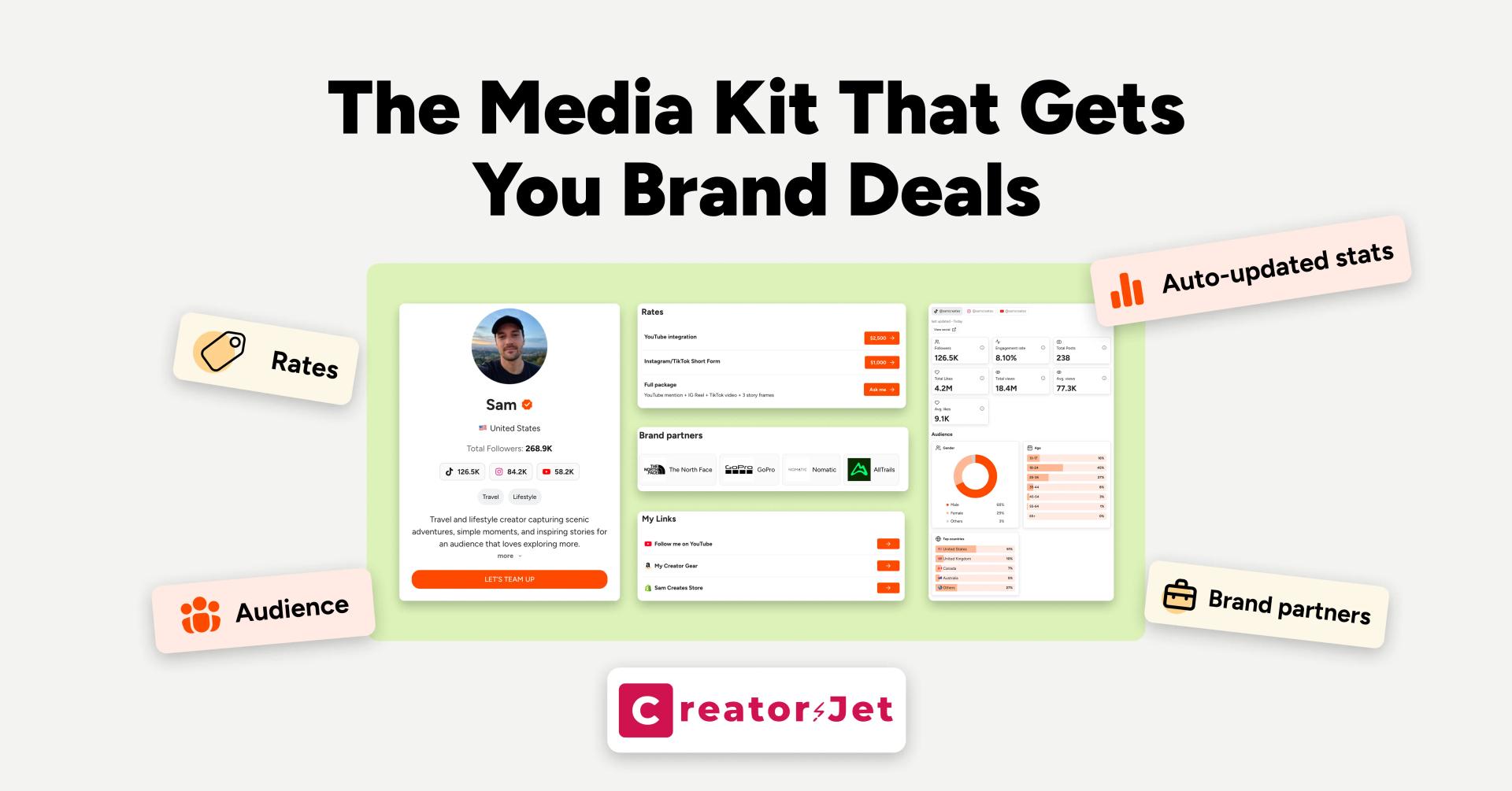
A clear media kit helps brands understand audience fit, formats, and the partnership you can deliver. The CreatorsJet influencer media kit guide is useful when you need to present that information before discussing either model.
Understand the risks
Sponsorship risk usually sits in the agreement and workflow: vague deliverables, unpaid extra rounds, late payment, unclear approval authority, rushed claims, or usage that goes beyond the fee.
Affiliate risk sits more heavily in performance and reputation. Revenue can change because of reach, seasonality, tracking failures, landing-page quality, refunds, commission changes, or a merchant closing the program. You also carry the trust cost if the product disappoints customers.
Before accepting affiliate, confirm the commission trigger, attribution window, payment timing, refunds, rate changes, approved claims, and disclosure requirements. Before accepting a sponsorship, confirm those basics plus deliverables, revisions, deadlines, usage, exclusivity, and approval.
Should you ask for a hybrid deal?
A hybrid structure combines a guaranteed base fee with a commission, bonus, or performance tier. It can be fair when the brand wants creator commitment but also wants to reward measurable sales.
The base fee should pay for agreed production and distribution. The commission should define the product, link, code, attribution window, reporting source, and time period. The brand should not replace the base fee with an optimistic sales forecast.
A practical decision rule
- Choose paid sponsorship if the work is defined, production-heavy, time-sensitive, or important to your monthly income.
- Choose affiliate if the product is a natural recommendation, the audience has buying intent, and the content can keep working after publication.
- Ask for hybrid terms if the brand wants guaranteed creative work but the creator can also produce measurable sales.
- Decline or renegotiate if audience fit is weak, tracking is unclear, claims are uncomfortable, or workload is not reflected in the offer.
The best deal is the one whose payment model matches the value being created. Sponsorships pay for committed creative work and distribution. Affiliate deals pay for measurable action. Once that distinction is clear, the choice becomes less about chasing the most impressive number and more about choosing a model the creator, brand, and audience can support.