How to Monetise Social Media: 12 Practical Ways to Make Money as a Creator

May 17, 2026 -Monetization


by Flavien Roche

Co-founder of CreatorsJet

How to Monetise Social Media: 12 Practical Ways to Make Money as a Creator

Most creators think they need a massive audience before they can start making money from social media, but that is not really how creator monetization works anymore. A large audience can help, of course, but follower count alone does not decide whether you can earn money from your content.

What matters more is the relationship you have with your audience, the type of content you create, the niche you are in, and how clearly you can show your value to brands, clients, or followers.

You do not need millions of followers to monetise social media. You need a clear positioning, an audience that trusts you, and a monetization method that fits your current stage as a creator.

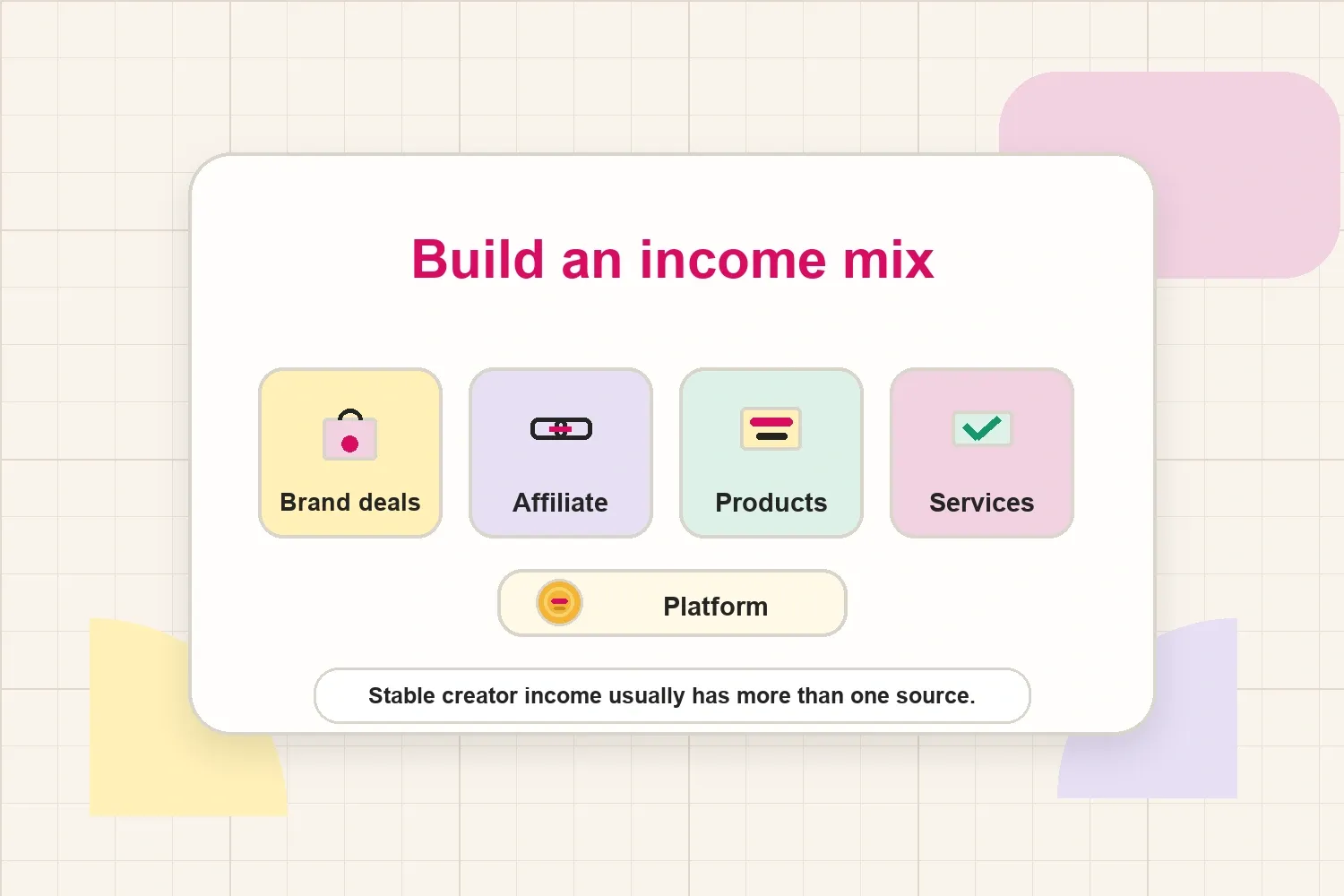
Some creators make money through brand deals. Others earn from affiliate links, digital products, UGC content, paid communities, coaching, services, or platform payouts. The strongest creators usually do not depend on only one revenue stream. They build several ways to earn over time, so their income does not rely on one platform, one algorithm, or one type of collaboration.

In this guide, we will break down the most practical ways to monetise social media and how to choose the right path for your content, audience, and goals.

What does it mean to monetise social media?

To monetise social media means turning your content, audience, influence, skills, or personal brand into income.

This income can come directly from social platforms, such as ad revenue, bonuses, subscriptions, or creator funds. It can also come from outside the platform, through brand collaborations, affiliate commissions, digital products, services, consulting, paid communities, or your own products.

For example, a creator can monetise social media by:

  • Getting paid for sponsored posts

  • Sharing affiliate links or discount codes

  • Selling templates, guides, presets, or courses

  • Creating UGC videos for brands

  • Offering coaching, consulting, or freelance services

  • Building a paid newsletter or private community

  • Promoting their own product, app, or business

  • Earning through platform monetization programs

The biggest mistake is thinking there is only one correct way to make money as a creator. The best monetization strategy depends on your audience, your skills, your content format, and the level of trust you have built.

1. Understand why people follow you

Before trying to monetise your social media, you need to understand why people follow you in the first place. This is one of the most important parts of creator monetization because your income will usually come from the trust, attention, or value you already create.

People may follow you because you educate them, entertain them, inspire them, help them discover products, show them a lifestyle they relate to, or solve a specific problem they care about.

A fitness creator may be trusted for workout advice, while a student creator may be trusted for study tips, productivity systems, or exam preparation. A beauty creator may be trusted for product recommendations, while a business creator may be trusted for strategy, tools, or practical lessons.

Your monetization should match that reason for trust. If your audience follows you for honest skincare reviews, beauty affiliate links or skincare brand deals can feel natural. If your audience follows you for study content, promoting study tools, selling templates, or working with education brands makes more sense than promoting unrelated products.

The better your offer matches your audience, the easier monetization becomes.

2. Choose a clear niche

A clear niche makes it easier to grow your audience and attract monetization opportunities. This does not mean you need to lock yourself into one tiny topic forever, but people should be able to understand what your content is about within a few seconds of visiting your profile.

A clear niche also helps brands understand whether your audience is relevant to them. A study app wants to work with creators who reach students. A fitness brand wants creators who reach people interested in training, health, or wellness. A travel company wants creators who inspire people to visit places, book experiences, or plan trips.

Good niches often connect three things:

  • What you enjoy creating

  • What your audience cares about

  • What brands or buyers are willing to pay for

For example, fitness, beauty, travel, education, business, fashion, parenting, food, gaming, personal finance, and productivity are all niches that can be monetised in many different ways. The key is not only choosing a topic with money in it, but choosing one where you can create consistently and build trust over time.

3. Build trust before trying to sell

Social media monetization depends on trust. If your audience does not trust you, they will not click your links, buy your products, join your community, hire you, or care about your recommendations.

Trust is built through consistency, honesty, and relevance. If every post feels like an ad, your audience will stop paying attention. If your recommendations feel useful and aligned with your usual content, monetization feels much more natural.

Good monetization should feel like an extension of your content, not a random interruption.

A student creator recommending a study planner makes sense. A photographer selling presets makes sense. A fitness creator offering a workout plan makes sense. A business creator recommending software they actually use makes sense.

The strongest creators protect their trust carefully because trust is the asset that makes monetization possible. You can always find more products to promote, but once your audience stops believing you, it becomes much harder to convert attention into income.

4. Create a professional media kit for brand deals

Creator reviewing a professional media kit on a laptop with audience stats, engagement cards, and brand collaboration visuals

If you want to make money through brand collaborations, you need a simple way to present your value. This is where a media kit becomes useful.

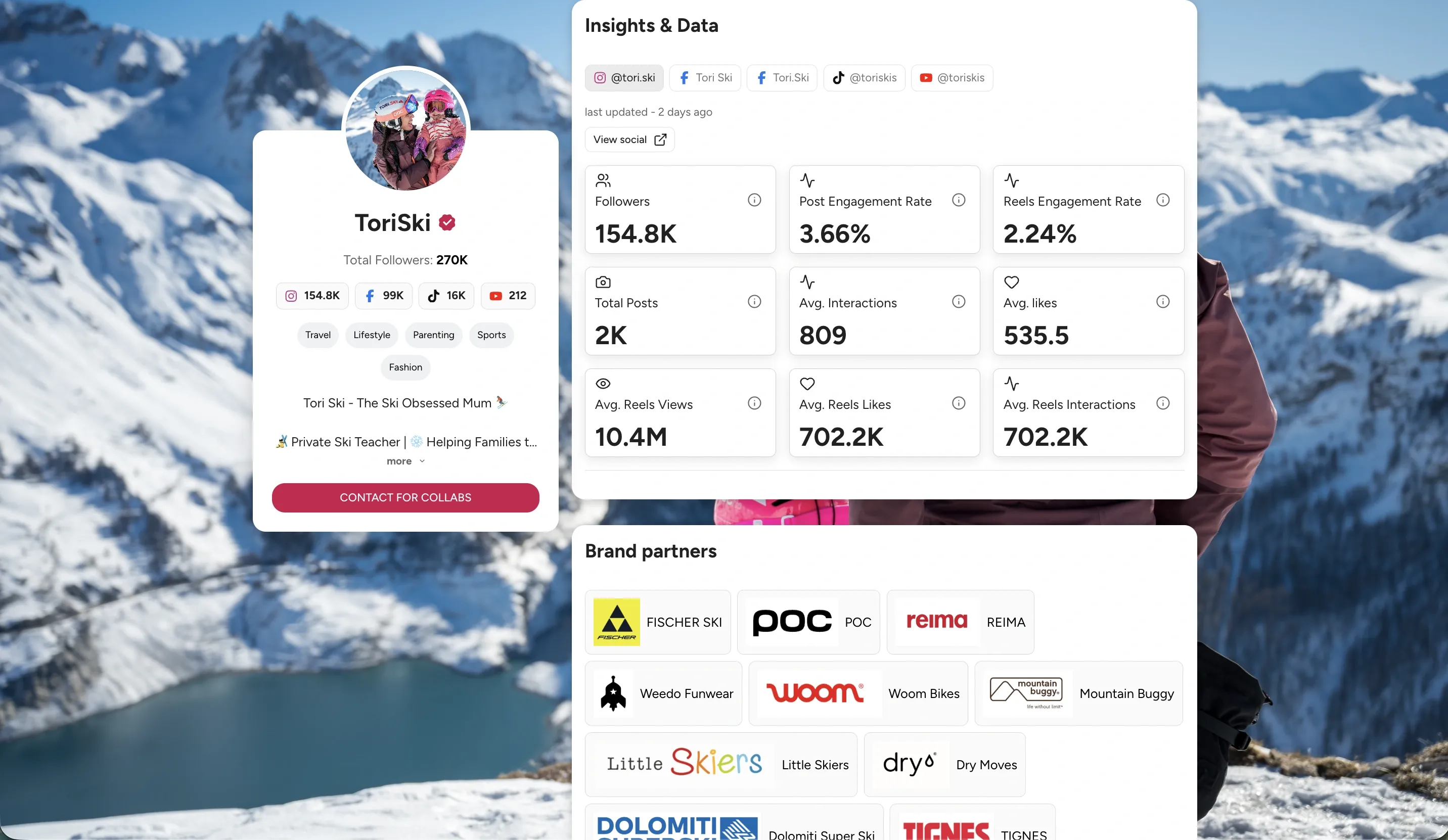
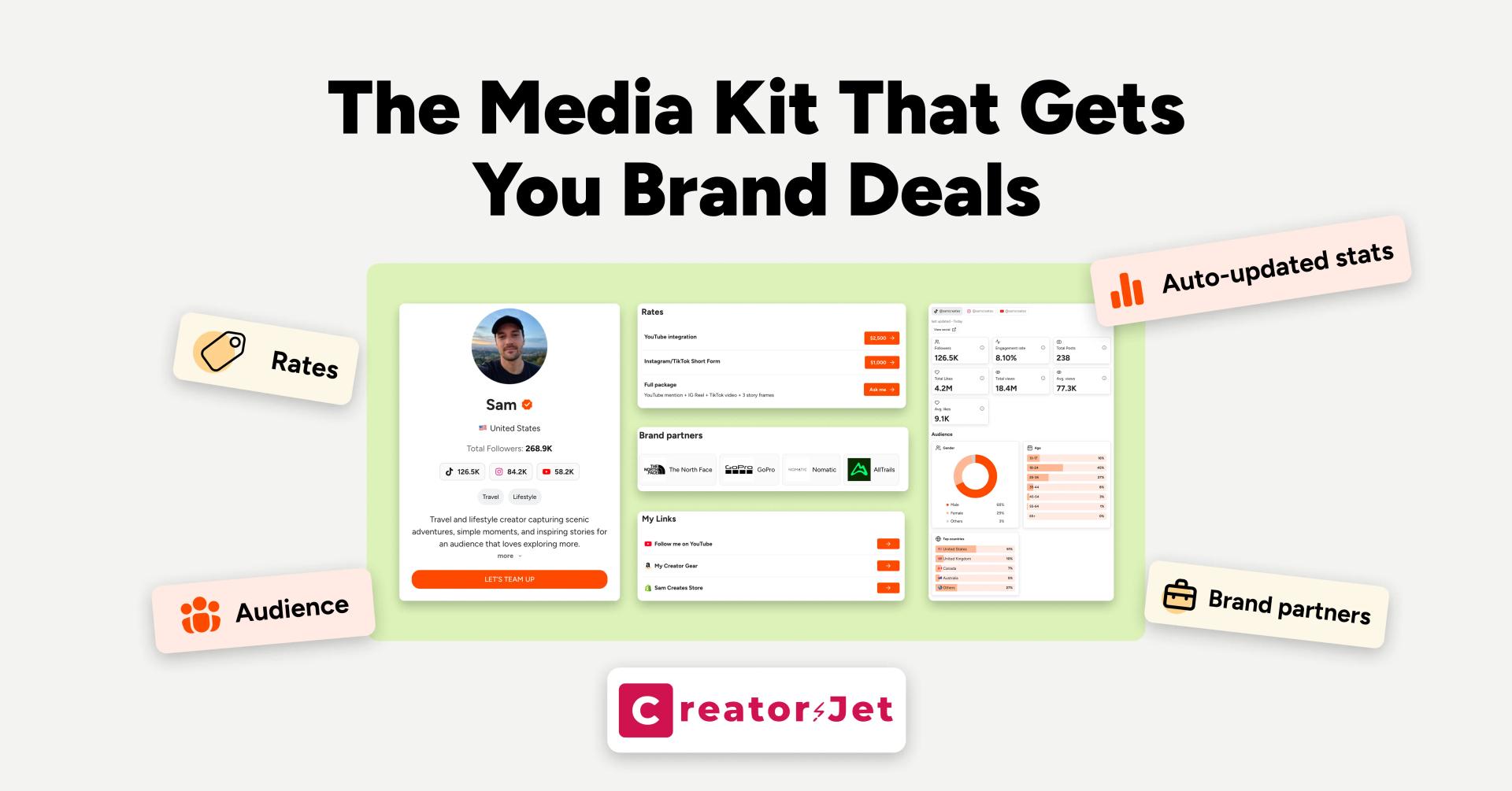
A media kit is a page or document that shows brands who you are, what audience you reach, what platforms you use, what type of content you create, and why you are a good fit for collaborations. It can include your bio, audience demographics, engagement, content examples, past collaborations, testimonials, and contact details.

Before pitching brands, it helps to create a professional media kit that presents your audience, platforms, engagement, past collaborations, and content examples in one clean place.

This makes you look more serious and saves time during outreach. Instead of sending screenshots, long messages, or scattered stats, you can share one link that gives brands the information they need to evaluate a potential collaboration.

A media kit is especially useful when you are not yet a huge creator because it helps you show value beyond follower count. Brands may care about your niche, audience quality, engagement, content style, and ability to create content that feels authentic.

5. Monetise with brand deals

Brand deals are one of the most common ways creators make money from social media. A brand deal happens when a company pays you to create content that promotes its product, service, app, destination, event, or campaign.

This can include sponsored Instagram posts, TikTok videos, YouTube integrations, story packages, product reviews, giveaway campaigns, event coverage, or long-term ambassador partnerships.

The best brand deals feel natural because the product fits the creator’s audience. If you create content about studying, a collaboration with an education app or productivity tool makes sense. If you create travel content, hotels, luggage brands, travel insurance, or tourism boards may be relevant. If you create beauty content, skincare, makeup, haircare, or wellness brands are obvious fits.

When pitching brands, focus less on “I have followers” and more on the value you can bring. Brands want to know who your audience is, what type of content you can create, how engaged your followers are, and what kind of result your content can support.

6. Know what to charge for sponsored content

Creator thinking about sponsored post pricing with coins, engagement icons, a brand deal document, and a calculator-style tablet

One of the hardest parts of social media monetization is knowing what to charge. Many creators undercharge because they do not know how to price their content, while others send random rates without being able to explain the value behind them.

Your price can depend on your follower count, engagement rate, niche, platform, content format, production quality, usage rights, exclusivity, turnaround time, and whether the brand wants to reuse your content in paid ads.

A sponsored Instagram Story does not have the same value as a full Reel. A TikTok video does not have the same value as a YouTube integration. A one-time post is not the same as a long-term partnership. Organic usage is not the same as paid ad usage.

If you are not sure what to charge for a sponsored post or Reel, an Instagram pricing calculator can help you estimate a starting point based on your audience size, engagement, and content format.

Your rate should be treated as a starting point, not a random number. As your audience grows, your content improves, and you build proof from past collaborations, you can increase your pricing with more confidence.

7. Use affiliate marketing

Affiliate marketing is one of the most accessible ways to monetise social media because you can start without waiting for a brand to pay you upfront.

With affiliate marketing, you earn a commission when someone buys through your link or uses your code. This can work well if your audience trusts your recommendations and your content helps people make buying decisions.

A beauty creator can recommend skincare products. A student creator can recommend study tools. A fitness creator can share equipment, supplements, or workout apps. A business creator can promote software. A travel creator can recommend hotels, travel apps, or booking platforms.

The best affiliate content usually explains why a product is useful, who it is for, how you use it, and what problem it solves. Simply dropping a link is rarely enough. People need context before they trust a recommendation.

Affiliate marketing can become a strong income stream over time, especially if your content keeps getting views after it is posted. Evergreen YouTube videos, blog posts, newsletters, and search-friendly social content can continue driving affiliate clicks long after the first day.

8. Sell digital products

Creator selling digital products through social media with a laptop, product cards, social engagement icons, and online income visuals

Digital products are powerful because you can create them once and sell them repeatedly. They are also flexible, which makes them useful for many different creator niches.

You can sell templates, guides, ebooks, presets, spreadsheets, workout plans, meal plans, Notion dashboards, study planners, checklists, mini courses, scripts, swipe files, or resource packs.

A good digital product solves a specific problem for your audience. If people often ask how you plan your week, you could sell a planning template. If they ask how you edit your videos, you could sell presets or editing guides. If they ask how you study, you could sell a study system, flashcard template, or exam preparation checklist.

The best digital product ideas often come from repeated questions in your comments, DMs, or emails. If your audience keeps asking for the same thing, that is usually a signal that the topic has demand.

You do not need to launch a huge course immediately. A simple, useful product is often better for testing demand.

9. Offer UGC content creation

UGC stands for user-generated content, but in the creator economy it often means creating content for brands to use on their own channels. The key difference is that you do not always need to post the content on your own account.

This makes UGC a strong monetization path for creators who are good at making short-form videos but do not yet have a large audience.

Brands need UGC because native-looking content often performs better than polished ads on platforms like TikTok, Instagram Reels, and YouTube Shorts. They want videos that feel natural, relatable, and easy to watch.

UGC content can include product demos, testimonials, unboxings, app walkthroughs, problem and solution videos, lifestyle clips, tutorials, or short reviews.

The main skill is making content that feels authentic while still helping the brand communicate a clear message. If you are comfortable on camera, understand hooks, and can show a product naturally, UGC can be one of the fastest ways to start earning.

10. Sell services through your content

If you have a skill, social media can help you sell services. This can be one of the fastest ways to make money because you do not need a huge audience to get clients.

A designer can sell brand identity or templates. A fitness creator can offer coaching. A photographer can sell shoots or editing services. A marketer can offer audits or strategy. A student creator who is strong in a subject can offer tutoring. A business creator can sell consulting or workshops.

Service-based monetization works because your content acts as proof. When people see your knowledge, taste, process, or results, they are more likely to trust you enough to hire you.

This is especially useful for smaller creators. You may not have enough reach yet for large brand deals, but you may only need a few clients per month to create meaningful income.

11. Build a paid community or subscription

Paid communities and subscriptions can create more predictable income because people pay you on a recurring basis. This could be a paid newsletter, private community, exclusive content library, monthly group call, premium resource hub, or accountability group.

This works best when your audience wants ongoing access to your knowledge, content, process, or network. For example, a fitness creator could offer monthly workout programming, a business creator could run a private founder community, and a study creator could offer exam prep resources or accountability sessions.

Subscriptions can be powerful, but they are not always the easiest place to start. People need a reason to keep paying every month, which means you need to deliver ongoing value.

For many creators, it makes sense to start with simpler monetization methods first, such as UGC, services, affiliate links, digital products, or brand deals, then launch a subscription once the audience is more engaged.

12. Use platform monetization without depending on it

Some platforms allow creators to earn money directly through ads, subscriptions, gifts, creator programs, or revenue share. This can be a useful income stream, especially on platforms where your content continues to get views over time.

However, platform monetization should not be your only strategy. Algorithms change, eligibility rules change, payouts change, and reach can fluctuate without warning.

A stronger creator business usually combines platform revenue with other income streams. For example, a YouTube creator may earn from ads, affiliate links, sponsorships, and digital products. A TikTok creator may use short-form content to attract UGC clients or sell templates. An Instagram creator may combine brand deals, affiliate links, and services.

The goal is to avoid depending completely on one platform or one monetization method.

How many followers do you need to monetise social media?

There is no fixed number of followers required to monetise social media. Some creators make money with a small audience because they have a clear niche, strong trust, and a valuable offer, while others struggle to earn even with a large audience because their followers are not engaged or their content is too broad.

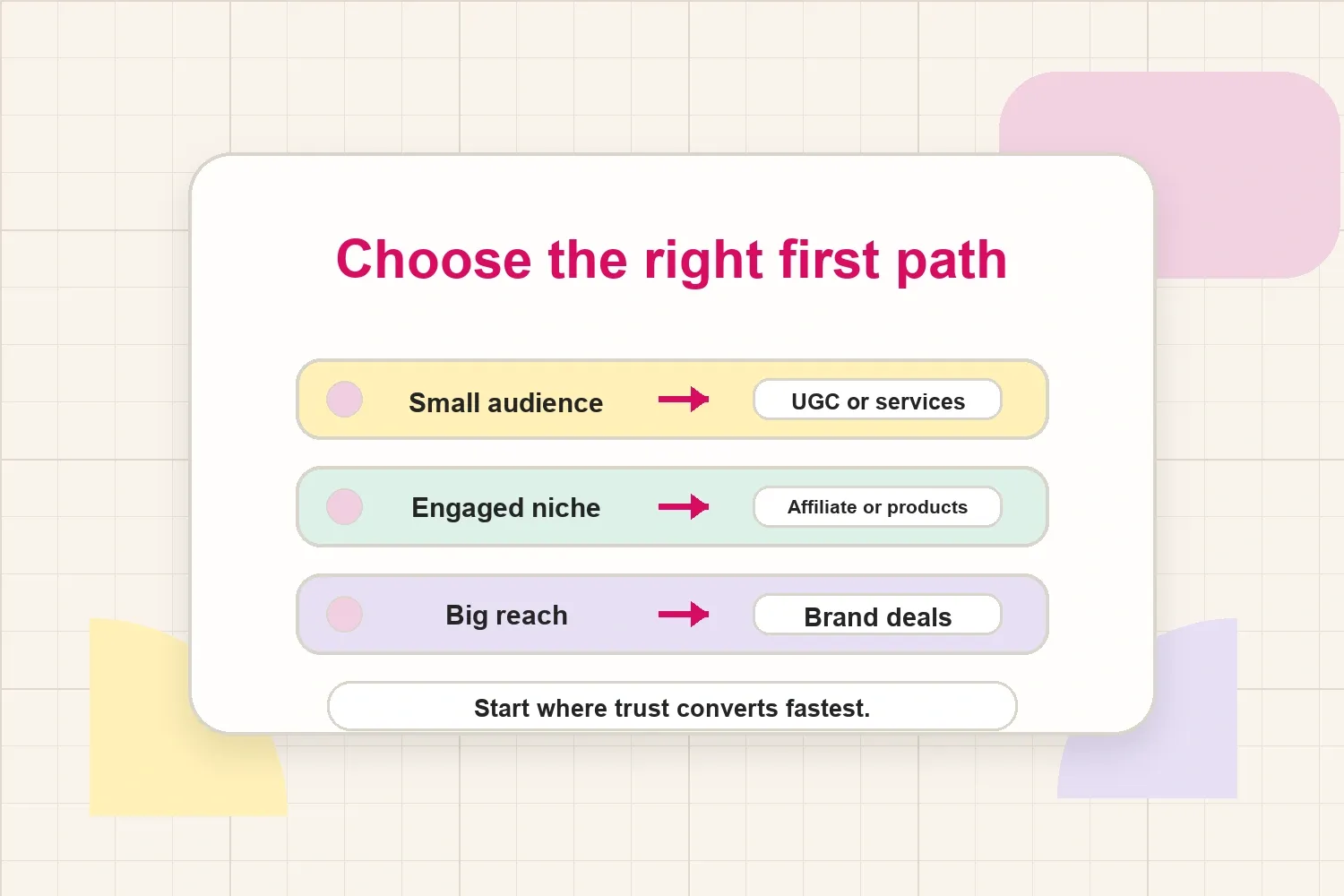
A smaller creator can monetise through UGC, services, affiliate links, digital products, or niche brand deals. A larger creator may have more access to sponsorships, long-term partnerships, product launches, paid communities, or licensing opportunities.

Follower count helps, but brands and buyers also care about audience fit, engagement, trust, content quality, niche relevance, and proof of past work.

Final thoughts

Monetising social media is not only about becoming famous. It is about understanding your audience, building trust, choosing the right income streams, and presenting your value clearly.

Start by asking what your audience trusts you for, then choose one monetization method that fits your current stage. If you are just starting, UGC, services, affiliate links, or a simple digital product may be easier than chasing large sponsorships. If you already have an engaged audience, brand deals, subscriptions, or product launches may become more realistic.

The most important thing is to start with one clear path instead of trying to monetise everything at once. Once you know what works, you can add more income streams over time and build a more stable creator business.

Create your media kit with CreatorsJet

Stand out from the competition with a professional media kit created with CreatorsJet. Share all your social media analytics with the click of a button.


🚀 Create your media kit in minutes

Automatically updated

💬 Share with the click of a button


free forever, no credit card required.