A lot of creators treat Instagram Reels views like they are mostly about luck. One post takes off, another disappears, and the easiest explanation is that the algorithm had a strange day.
The more useful explanation is usually simpler: the Reel was either easy to understand quickly, or it was not. People decide fast. If the first seconds are confusing, too slow, or too broad, most viewers leave before the idea has a chance to land.
Getting more views on Instagram Reels is not only about posting more. It is about making each Reel easier to watch, easier to finish, and easier for the right person to share.
That does not mean every Reel needs to be overproduced. Many high-performing Reels are simple. The difference is that they make the promise clear, remove dead space, and give the viewer a reason to keep watching.
Instagram describes Reels as short videos that can be discovered beyond an existing follower base on Instagram's Reels help page. That discovery potential is the reason Reels matter, but the content still has to earn the watch.
1. Make the first frame instantly clear
The first frame should answer one question: what is this Reel about? If someone needs five seconds to understand the topic, the Reel is already working too hard.
A clear first frame can be a simple visual, a creator facing the camera, a product in use, or a piece of on-screen context. The format matters less than the speed of understanding.
Vague openings are easy to skip. A Reel that starts with a random clip, a long setup, or a broad phrase like "Instagram tips" gives the viewer too much work. A sharper opening like "why your Reels get views but no follows" gives the viewer a reason to stay.
This is especially important when the Reel reaches people who do not know the creator yet. Existing followers may give a little more patience. New viewers usually do not.
2. Give the Reel one clear promise
One Reel should do one job. It can explain one mistake, show one process, answer one question, or prove one point. When a Reel tries to cover too many ideas, the viewer has no clear reason to finish it.
A useful promise sounds specific. Instead of "how to grow on Instagram," try an angle like "how to make a Reel easier to save" or "why short hooks still need context." The smaller idea is often easier to watch because the viewer knows exactly what is coming.
The promise also helps the edit. If the Reel is about one idea, every clip either supports that idea or gets removed. That makes the video feel tighter without making it rushed.
3. Use hooks that sound like real problems
Hooks work best when they match a real question in the audience's head. The goal is not to sound dramatic for no reason. The goal is to make the right viewer feel like the Reel is about something they already care about.
Good hooks often start from friction: a result that is not happening, a mistake that is easy to make, or a small detail that changes the outcome.
If you need more examples, this list of Instagram Reel hook formulas can help you turn common creator problems into clearer openings.
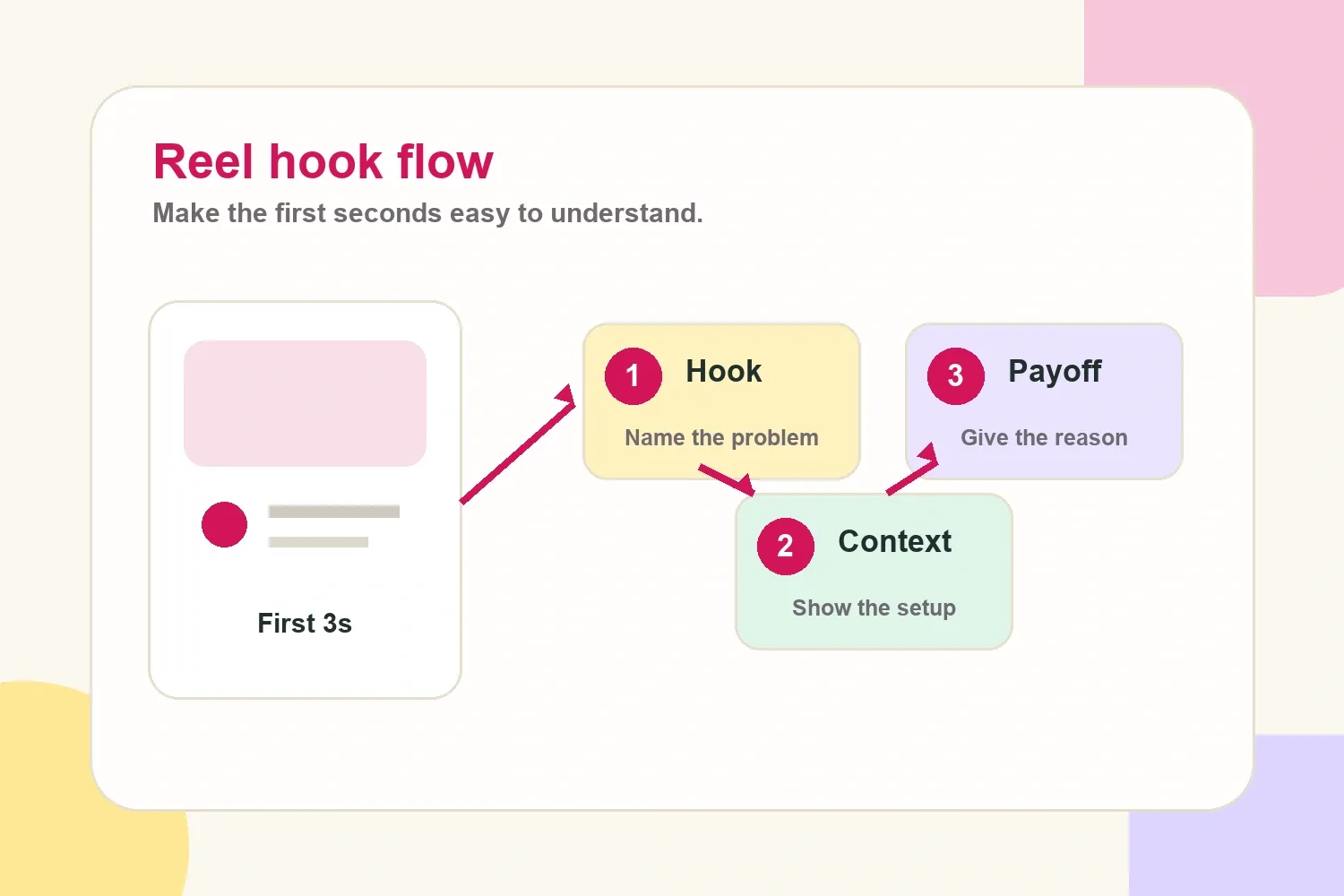
A hook like "stop doing this on Reels" can work, but it works better when it names the problem. "Stop using hooks that attract views but not followers" tells the viewer what is at stake.
The best hook is not always the loudest one. It is the one that creates enough curiosity while staying honest about what the Reel will actually deliver.
4. Keep the pacing tight, not chaotic
Reels need momentum, but momentum is not the same as speed. Fast cuts can help, but only if each cut makes the idea clearer. If the edit moves quickly while the message feels scattered, viewers still leave.
A useful way to think about pacing is tension. Each second should make the viewer want the next one: a question, a contrast, a visual change, or a small payoff that keeps the idea moving.
That is why retention is not only an analytics metric. It is a writing and editing choice. If the Reel loses tension, the viewer has no reason to stay.
A clean edit usually removes repeated phrases, long pauses, and clips that do not add new information. It also keeps the visual moving when the point needs energy: a zoom, a cutaway, a screen recording, a product shot, or a different camera angle.
For talking-head Reels, captions help because many people watch with sound low or off. Captions also make the Reel easier to follow when the topic is practical.
The simple test is whether someone can understand the main idea while half-distracted. If the Reel needs full concentration to make sense, the edit probably needs more structure.
5. Make the Reel worth saving or sharing
Views can happen because the opening was good. Saves and shares usually happen because the Reel gave someone something useful or relatable.
A save often comes from practical value:
- A checklist
- A pricing rule
- A content idea
- A common mistake
- A step-by-step process
- A comparison that makes a decision easier
A share often comes from recognition. People share Reels when the video explains something they have felt, makes a point their friends will understand, or gives them language for a problem.
If a Reel gets views but very little interaction, the topic may be interesting, but the payoff may not be clear enough. In that case, compare reach with engagement using an Instagram engagement rate calculator before assuming the format failed.
6. Post when the audience is ready to watch
Posting time does not save a weak Reel, but it can help a good Reel get cleaner early signals. If the first viewers are active and likely to watch, comment, save, or share, the Reel gets a better start.
The best time is usually not a universal chart. It depends on where the audience lives, when they open Instagram, and what kind of content is being posted.
A creator posting quick entertainment may see different timing than a creator posting educational content for marketers, students, parents, or business owners. Testing matters more than copying a generic best-time list.
Use a small test window. Post similar Reels at different times, then compare early retention and engagement. If a certain window repeatedly brings more reliable signals, keep using it until the pattern changes.
7. Track the right signals after posting
The view count is easy to notice, but it does not explain everything. A Reel can get views and still fail to build trust, followers, or useful engagement.
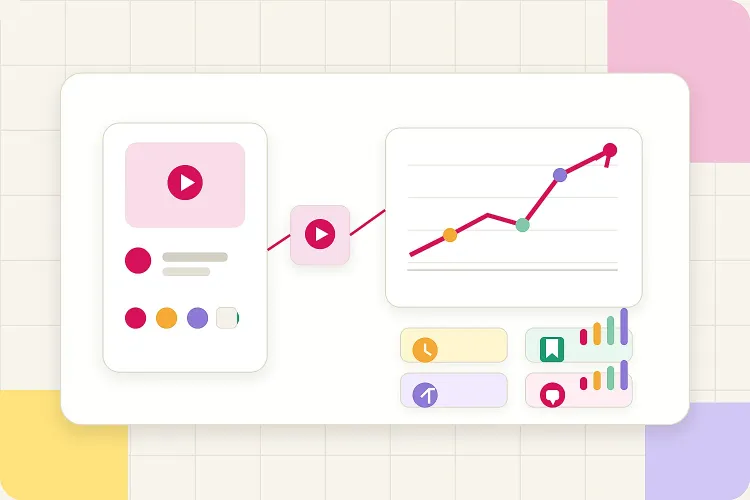
The better habit is to read a group of signals together. Watch time shows whether people stayed. Replays show whether the video had a moment worth watching again. Shares and saves show whether the idea had value beyond the first view.
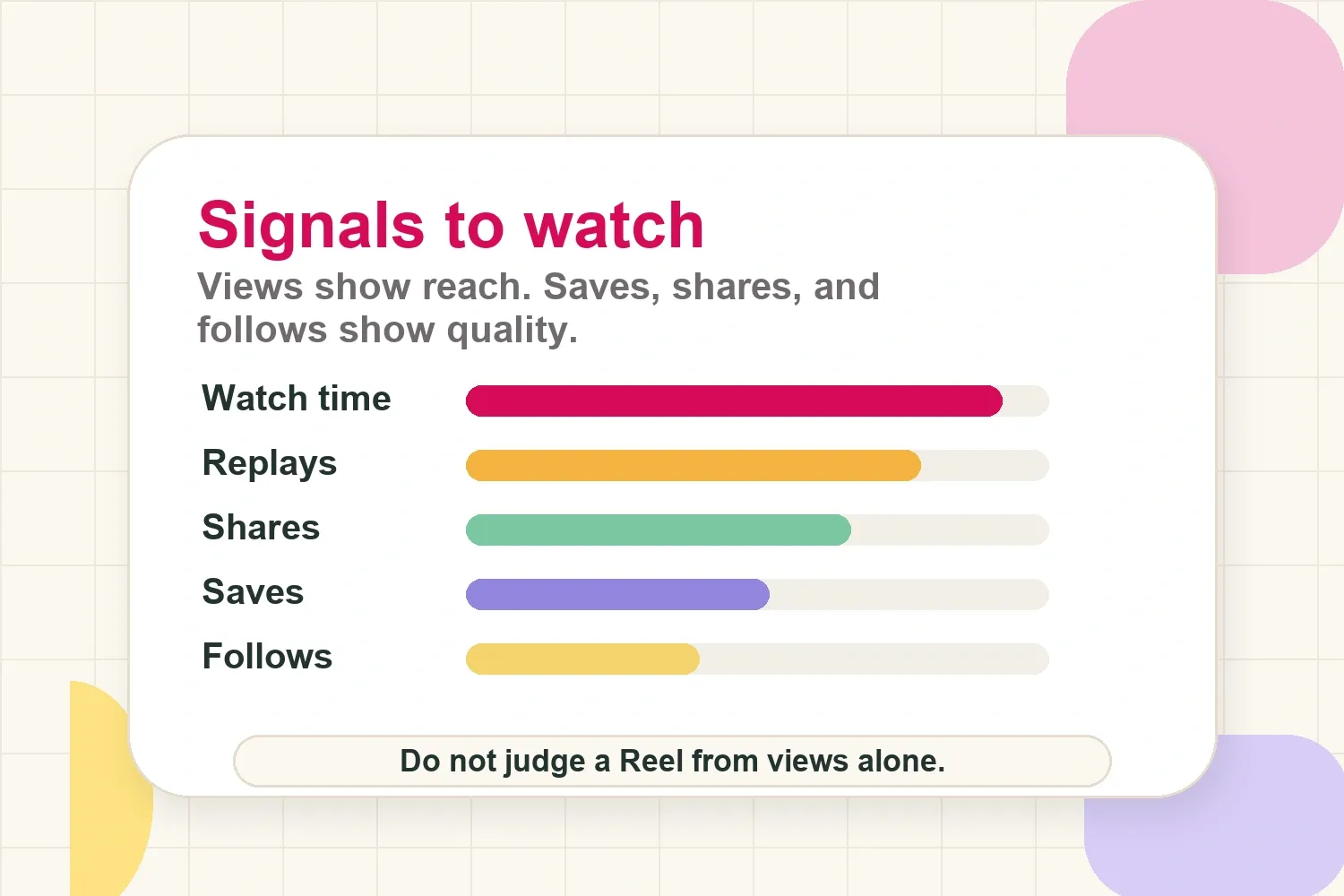
Follows are also important because they show whether the Reel attracted people who want more from the creator. A viral Reel with no new followers may have reached people, but it did not clearly connect to the profile.
Profile visits matter for the same reason. If a Reel sends people to the profile, the bio, pinned posts, and content grid need to make the next step obvious.
Final thoughts
Getting more views on Instagram Reels is not about finding one secret trick. It is usually the result of many small improvements: a clearer first frame, a sharper hook, a tighter edit, and a clearer reason to save or share.
The best approach is to improve one variable at a time. Change the hook, keep the topic similar, and compare the signals. Then test the pacing, the format, or the posting time.
Over time, the goal is not only to get more views. The goal is to understand which Reels bring the right views, the right engagement, and the right people back to the profile.