

Instagram account suspension feels dramatic because it can cut a creator off from their audience, brand conversations, saved content, and income in one move. But most suspensions do not come out of nowhere. They usually happen because Instagram sees a pattern that looks unsafe, misleading, spammy, or against its platform rules.
The tricky part is that creators often confuse three different problems: a suspended account, a restricted account, and a reach drop. A suspension means access to the account is limited or removed. A restriction can mean certain features are blocked. A reach drop can look scary, but it is not always a suspension. If the account is still live and posts are still visible, this guide on why creators get shadowbanned is the better place to compare reach issues.
For suspension risk, the first thing to understand is simple: Instagram is trying to protect users, advertisers, creators, and the platform itself. That means the platform watches content, identity, behavior, rights issues, and account security. If one of those areas looks risky enough, Instagram can remove content, restrict features, ask for verification, or suspend the account.
Why Instagram accounts get suspended
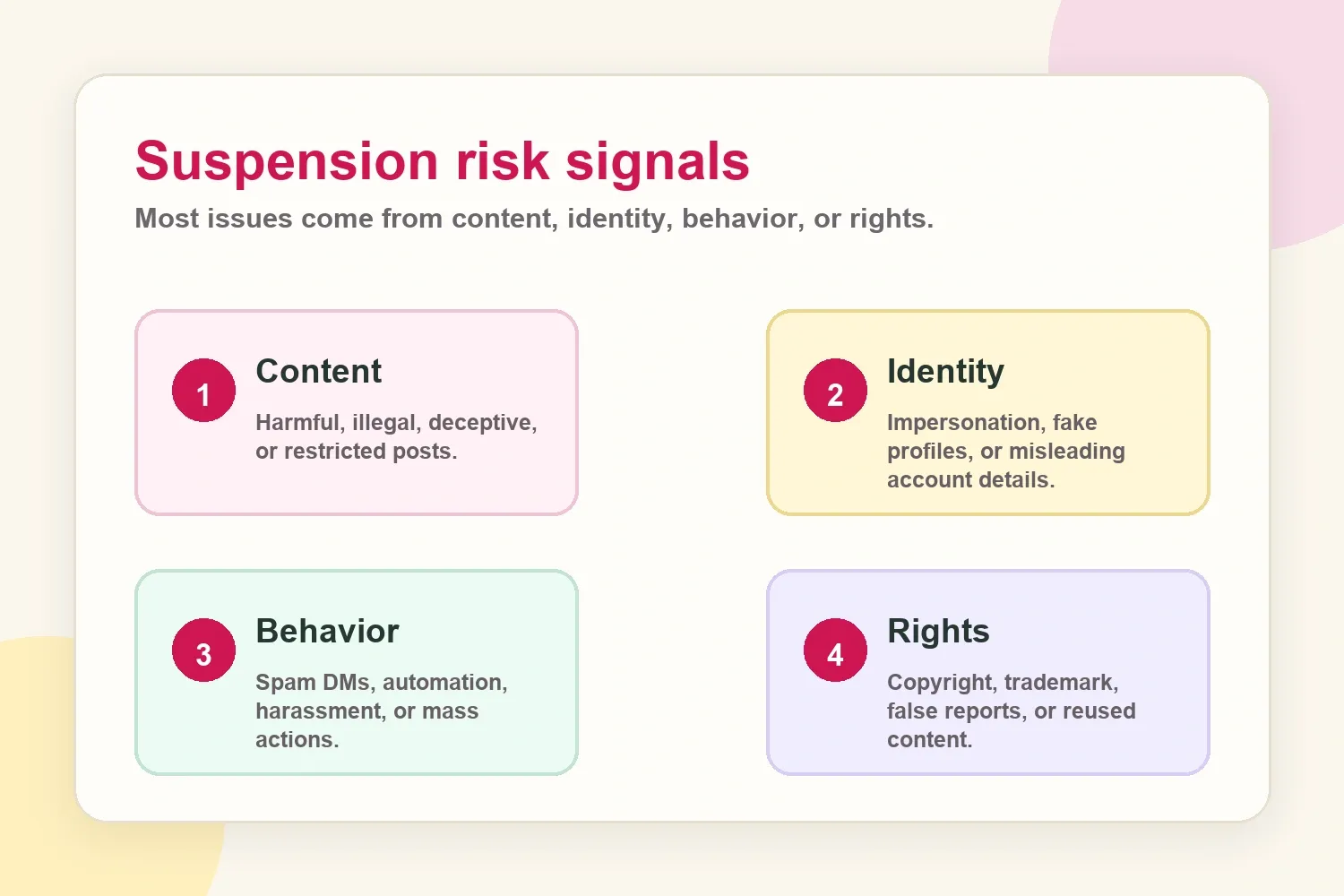
Instagram account suspension usually comes from one of six buckets: serious content violations, identity problems, spam or harassment, copyright or trademark issues, account trading, or compromised behavior.
Instagram explains its rules through Meta's Community Standards, which cover safety, authenticity, privacy, regulated goods, bullying, harassment, violence, hate speech, sexual content, scams, and other risky content. Creators do not need to memorize every policy line, but they do need to understand the direction of the rules.
A normal content mistake may lead to a removed post. A repeated or serious pattern can lead to stronger action. That is why account suspension is usually less about one tiny mistake and more about Instagram seeing enough risk to slow or stop the account.
1. Posting content that breaks Instagram rules
The most obvious reason for Instagram account suspension is content that breaks the platform's rules. This can include hate speech, threats, scams, violent content, sexual content that crosses policy lines, promotion of regulated goods, dangerous misinformation, or anything that encourages harm.
For creators, the risk is not always as obvious as posting something extreme. Sometimes the issue is a meme that uses copyrighted or harmful material, a repost with no context, a joke that reads like harassment, or a product recommendation that crosses into a restricted category.
This matters even more for creators who work with brands. Sponsored content, affiliate content, before-and-after claims, giveaways, and product reviews can all create policy risk if they are misleading or if the product category is sensitive. Beauty, wellness, finance, supplements, alcohol, crypto, and health claims need extra care.
A good rule is to ask whether the post could be misunderstood by a person who does not know the creator. If the answer is yes, add context, soften the claim, or avoid posting it. Instagram does not evaluate every post with the same nuance that a loyal follower might.
2. Impersonating someone or using a misleading identity
Instagram takes authenticity seriously. Accounts can run into trouble when they pretend to be another person, brand, public figure, creator, agency, or business. This includes using someone else's name, photos, logo, bio, or profile style in a way that could confuse people.
Creators sometimes get close to this line without meaning to. A fan page, parody account, repost account, or niche curation page can look misleading if the bio does not make the account's role clear. The same is true for accounts using a brand name inside a handle or pretending to represent a company partnership that does not exist.
For creators building a professional presence, clarity matters. A clean bio, original profile photo, honest category, and consistent content help reduce confusion. If the account represents a creator business, it should be obvious who owns it and what the account is for.
This also connects to brand trust. A creator who wants to look reliable should avoid anything that makes the account feel fake, copied, or unclear. This guide on Instagram content formats can help creators separate original content strategy from repetitive reposting.
3. Spam, automation, or aggressive account behavior
Instagram does not only look at posts. It also looks at behavior. If an account follows too many people too quickly, sends repetitive DMs, comments the same phrase everywhere, uses automation tools, mass-tags people, or repeatedly posts low-quality promotional content, it can trigger spam signals.
This is one of the most common problems for creators trying to grow fast. A creator may think they are being active, but Instagram may read the behavior as unnatural. The same thing can happen with aggressive outreach to brands, copy-pasted comments, engagement pods, or third-party tools that promise fast growth.
The safest growth pattern is boring but reliable: post original content, respond like a real person, avoid mass actions, and do not connect tools that need suspicious access to the account. If a tool asks for an Instagram password instead of using an official connection flow, that is a warning sign.
Spam risk can also come from DMs. Sending the same pitch to dozens of brands in a short window may feel efficient, but it can look automated. Creators should personalize outreach, keep volume reasonable, and avoid links or phrases that make the message look like a scam.
4. Harassment, bullying, or disruptive interactions
A creator can also get suspended because of how they interact with other people. Harassment, repeated unwanted messages, threats, coordinated attacks, hateful comments, or encouraging followers to target someone else can all become account-level problems.
This applies even when the creator thinks they are defending themselves. Public callouts, comment fights, and aggressive responses can escalate quickly. If followers pile on, the creator may still be connected to the harmful behavior, especially if the post or Story encourages it.
The practical move is to separate disagreement from harassment. Criticism can be firm without telling followers to attack someone. A creator can document a problem, report abuse, block accounts, or respond privately without turning the account into a conflict hub.
For creators working with brands, this is also a reputation issue. Brands check how creators communicate, not only how many followers they have. A creator who handles conflict calmly looks safer to partner with than one who turns every disagreement into a public fight.
5. Copyright, trademark, or content ownership problems
Copyright and trademark problems are another common reason accounts get restricted or suspended. This can happen when creators repost videos, use music, copy photos, sell designs they do not own, or use brand assets in a way that creates confusion.
Some creators assume that if content is already on Instagram, it is safe to reuse. That is not always true. Reposting someone else's Reel, using a photographer's image, copying a brand's logo, or uploading a clip from a show can still create rights issues.
False copyright reports can also cause problems. Reporting someone else just to remove competition is risky and can create account-level consequences. Rights tools are meant to protect real ownership, not to settle personal disputes.
Creators should keep source files, licensing details, creator agreements, and permission screenshots when content ownership matters. This is especially useful for UGC creators, editors, photographers, meme pages, and creators who work with brand assets.
6. Buying, selling, or transferring accounts in risky ways
Buying or selling accounts can create suspension risk because it often connects to fake engagement, identity confusion, scams, or account security problems. Even when the buyer thinks the account is clean, Instagram may see a sudden change in login location, content, audience behavior, name, and profile details.
The same risk appears when creators buy followers, use engagement pods, or pay for fake comments. These tactics may make the profile look bigger for a moment, but they create weak audience quality and suspicious account behavior.
For creators who want brand deals, fake growth is especially dangerous. Brands care about audience fit, engagement quality, saves, clicks, comments, and trust. Fake numbers can hurt performance and make the account look unreliable during a brand review.
What to do if your Instagram account is suspended
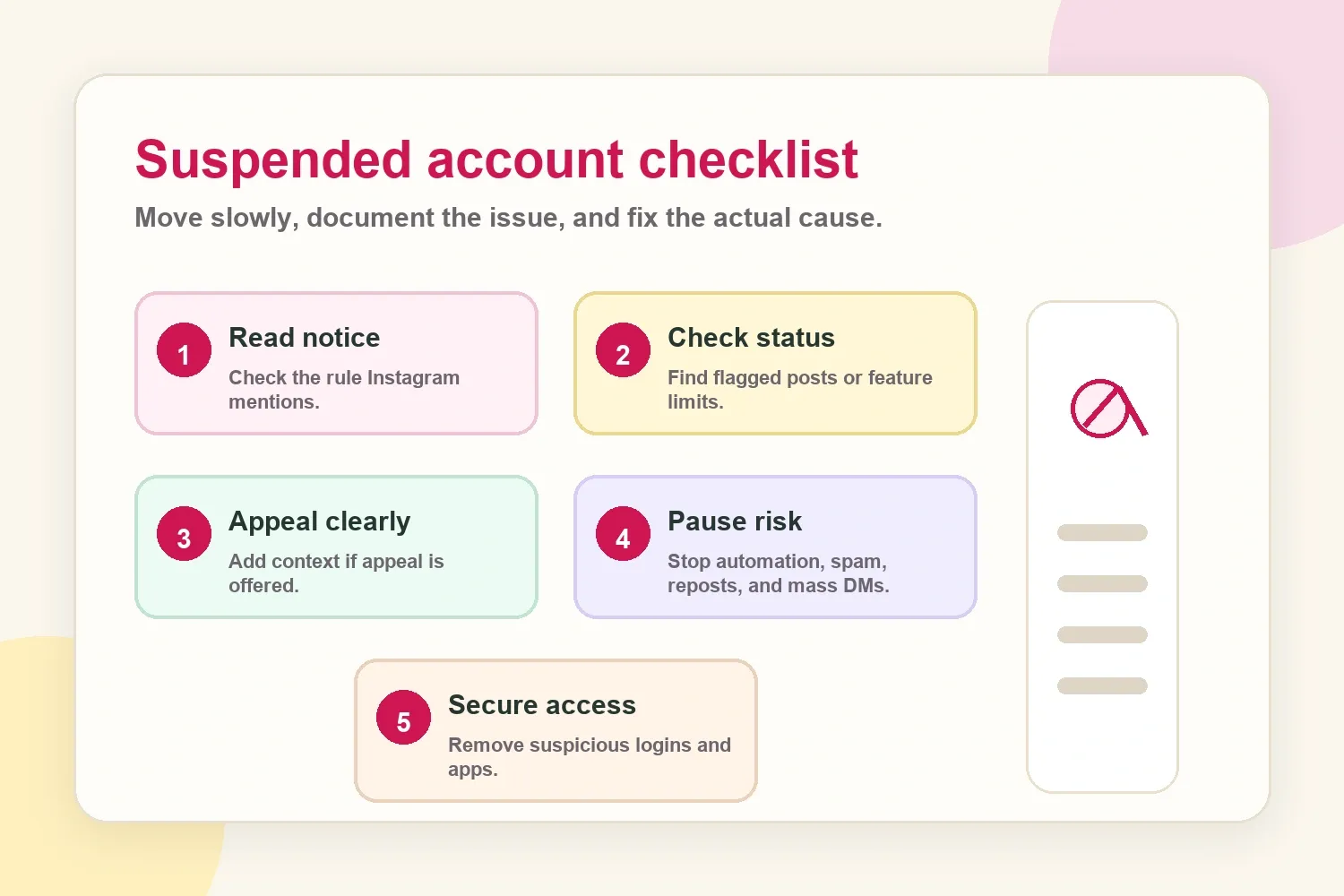
If an account is suspended, the worst move is to panic and start changing everything at once. Deleting lots of posts, creating multiple replacement accounts, sending angry appeals, or connecting random recovery tools can make the situation messier.
A cleaner approach is to read the notice, check what Instagram says, review Account Status, and follow the appeal process if one is available. The goal is to understand the specific trigger before making changes.
Recovery advice can get messy fast, so the useful filter is whether the steps stay close to Instagram’s own process: read the notice, review Account Status, complete verification if Instagram asks for it, and avoid shortcuts that promise guaranteed account recovery.
| Situation | What it usually means | What to do next |
|---|---|---|
| A post was removed | Instagram flagged specific content | Review the rule, avoid reposting the same thing, and appeal only if there is clear context |
| Features are limited | The account may have spam, safety, or rights signals | Pause risky actions and check Account Status |
| Login or identity is challenged | Instagram may need proof the account is real | Complete the requested verification carefully |
| The account was hacked | Suspicious activity may have triggered enforcement | Secure email, password, two-factor authentication, and connected apps |
How to reduce the risk of another suspension
The best prevention is not complicated. Keep the account authentic, post original content, avoid mass automation, respect rights, and keep outreach human. Most creator accounts do not need risky growth tools or aggressive tactics to grow.
It also helps to audit the account every few months. Look at the bio, recent posts, comments, linked tools, DMs, branded content, and reused content. If something would look suspicious to a platform reviewer, a brand partner, or a new follower, clean it up before it becomes a problem.
Creators should also protect account access. Use a strong password, turn on two-factor authentication, remove old third-party apps, and keep the recovery email secure. A hacked account can create policy problems even if the creator did nothing intentionally wrong.
Final thoughts
Instagram account suspension is usually a signal that the platform sees risk somewhere in the account's content, identity, behavior, rights history, or security. The fix starts with understanding which area caused the problem.
For creators, the safest path is to build like a real business: original content, honest profile details, careful outreach, clean rights management, and secure account access. That kind of account is easier for Instagram to trust, easier for followers to understand, and easier for brands to evaluate.