

Most creators do not need another vague answer about “posting consistently” or “using trending audio.” Those things can help, but they do not explain why one Reel gets 3,000 views while another with the same creator, same niche, and same effort suddenly takes off.
The useful answer is more practical: viral Reels usually make people understand the idea fast, keep watching long enough to reach the payoff, and feel something worth sharing, saving, or commenting on. The format can be simple. The editing does not need to be perfect. But the viewer needs a reason to stay.
This breakdown is based on an editorial review of 200 public viral Instagram Reels across creator, lifestyle, beauty, fitness, business, travel, and education-style content. Public analysis cannot see every private retention graph inside Instagram Insights, so the focus is on visible patterns creators can actually use: hooks, structure, length, format, captions, comments, shares, saves, and follow-through.
What this analysis looked at
The goal was not to prove that one magic hook makes every Reel go viral. Instagram distribution is too context-dependent for that. A Reel can perform because of the creator’s audience, the topic, the timing, the viewer’s past behavior, the comments, the saves, the shares, or the way the post fits a current trend.
Instead, the analysis looked for repeatable creative patterns:
- What happens in the first two seconds.
- Whether the Reel is clear without the caption.
- How quickly the viewer understands the promise.
- Whether the payoff arrives before attention drops.
- What kind of interaction the Reel invites.
- Whether the Reel is useful, surprising, relatable, or easy to send to someone.
- How the caption supports the post without doing all the work.
Instagram’s own ranking explanations point in the same direction. The platform says ranking uses predictions about what someone is likely to do with a post, including whether they might spend time with it, like it, comment, share it, or tap through to a profile. That is why viral Reels are usually built around viewer behavior, not only aesthetics. Instagram explains this in its ranking overview.
This is also why the creative job is so clear: make the first seconds easy to understand, make the payoff worth waiting for, and make the Reel useful enough that someone has a reason to interact with it.
The biggest pattern: clear beats clever
The most consistent pattern across viral Reels was not cinematic editing or complicated storytelling. It was clarity.
A viewer should understand the topic almost instantly. That can happen through a visual reveal, a strong first line, a text overlay, a recognizable problem, or a result that is already visible on screen.
Examples of clear Reel openings:
- “This is why your Reels get views but no followers.”
- “Three mistakes that make brand deals harder to close.”
- “Watch this room go from empty to fully styled.”
- “A pricing mistake most small creators make.”
- “The content format that got more saves than views.”
The hook does not need to be dramatic. It needs to answer one question: why should someone keep watching right now?
That is where a lot of Reels fail. They start with a slow setup, a generic aesthetic shot, or a caption that makes sense only after reading the description. By then, the viewer has already moved on.
If the article has one practical takeaway, it is this: write the first two seconds before filming. The hook decides what the video is actually about.
Viral Reels usually have a simple structure
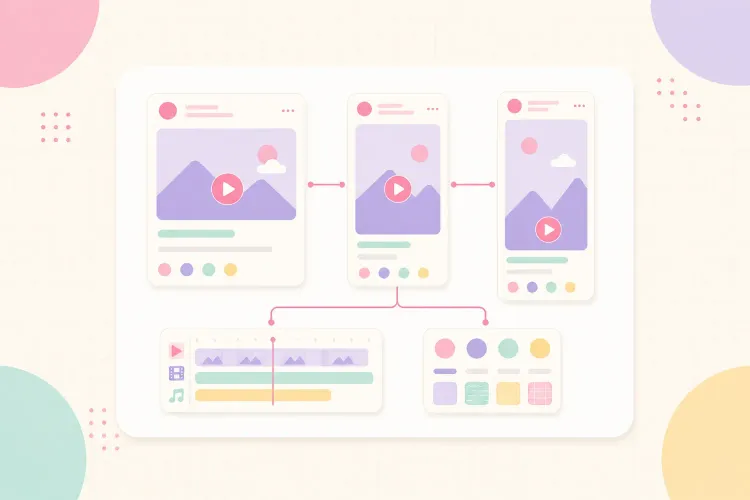
The strongest Reels followed a simple sequence: hook, retention, payoff, and share reason. The order matters because each part gives the viewer a new reason to stay.
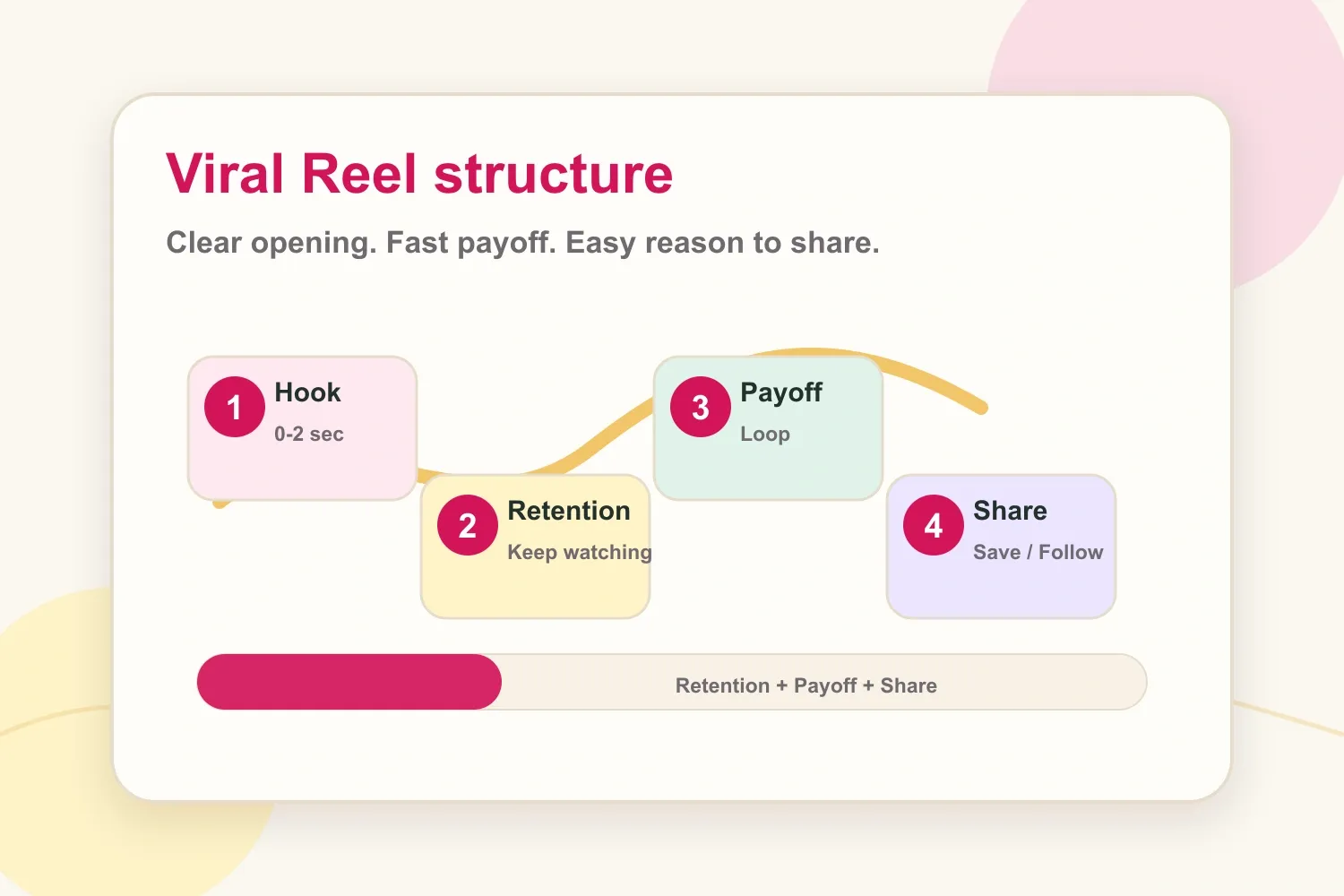
The hook creates attention. The middle keeps the viewer from feeling lost. The payoff makes the watch feel worth it. The share or save reason gives the Reel a second life after the first view.
This structure works across niches:
- A beauty creator can open with a messy before shot, show the process quickly, then reveal the result.
- A business creator can open with a mistake, explain the consequence, then give the fix.
- A fitness creator can show the result first, then explain the habit or exercise that created it.
- A travel creator can open with an unexpected location, then show why it is worth visiting.
The content can feel casual, but the structure should not be accidental.
Length matters, but only because retention matters
Short Reels often perform well because they are easier to finish and rewatch. That does not mean every Reel should be seven seconds. It means the length should match the promise.
A quick visual transformation might only need 8 to 12 seconds. A tutorial may need 20 to 35 seconds. A story can be longer if every few seconds give the viewer a new reason to stay.
The mistake is stretching a simple idea because the creator wants to explain everything. A Reel about one pricing mistake does not need the entire history of influencer marketing. A Reel about one outfit transition does not need five different angles before anything happens.
A practical rule:
- Use shorter Reels for reactions, transformations, quick tips, and visual payoffs.
- Use medium-length Reels for tutorials, examples, and mini case studies.
- Use longer Reels only when the story has enough tension, steps, or proof to hold attention.
For a deeper breakdown of length, this guide on the best Instagram Reel length for engagement is a useful companion.
The best hooks create a tiny open loop
A strong hook does not have to be clickbait. It just needs to create a small gap between what the viewer knows and what they want to know next.
Good open loops sound like:
- “Most creators price this wrong.”
- “This is why the second slide matters.”
- “A brand asked for usage rights, and here is what that means.”
- “This Reel got views, but the comments showed the real problem.”
- “If your reach drops after posting, check this first.”
The viewer can immediately understand the topic, but still wants the answer. That balance matters. If the hook is too vague, it feels like bait. If it gives everything away, there is no reason to keep watching.
The best Reel hooks usually do three things:
- Name the audience.
- Name the problem or result.
- Create a reason to watch the next few seconds.
For more examples, the guide to Instagram Reel hook formulas breaks down repeatable openings creators can adapt without sounding robotic.
Visual clarity is part of the hook
Text hooks matter, but visuals often do the first job. A creator holding a messy invoice, a product before and after, a graph dropping, a half-finished room, or a comment screenshot can stop the scroll before the viewer reads anything.
The strongest viral Reels were easy to understand even with the sound off. That does not mean every Reel needs huge text. It means the viewer should not need five seconds of context before knowing what is happening.
Visual clarity usually comes from:
- One clear subject.
- A clean first frame.
- Large readable text when text is needed.
- A visible result, problem, or contrast.
- No clutter competing with the main idea.
This is where many creators overedit. Too many stickers, fonts, transitions, and overlays can make the Reel feel busy before the idea has landed.
Shares and saves are different signals
Views are exciting, but shares and saves usually reveal why a Reel is spreading.
A share often means the content says something someone wants another person to see. A save usually means the content is useful enough to revisit. Both can help a Reel travel beyond the original audience, but they come from different creative choices.
Reels that get shared often have:
- A relatable opinion.
- A funny or painfully accurate moment.
- A surprising result.
- A strong identity cue, such as “this is so me.”
- A topic people want to send to a friend or teammate.
Reels that get saved often have:
- Steps.
- Templates.
- Checklists.
- Pricing examples.
- Content ideas.
- Before-and-after breakdowns.
The practical question is not “how can this get more views?” It is “why would someone send this or save this?”
Trending audio helps when the idea is already strong
Trending audio can give a Reel familiar packaging. It can make the post feel native to the platform and sometimes improve early momentum. But audio rarely rescues a weak idea.
The best use of trending audio is not copying the trend exactly. It is adapting the format to a specific audience.
A creator in the beauty niche might use a trending sound to show a product transformation. A creator-business account might use the same sound to show “before media kit” and “after media kit.” A travel creator might use it to reveal a hidden location.
The sound gives rhythm. The idea gives people a reason to care.
If the audio does not support the point, skip it. A clear original voiceover can outperform a trend when the topic needs explanation.
What to track after a Reel starts moving
Once a Reel gets traction, views are only the first layer. A viral Reel that brings no follows, no saves, no profile visits, and no useful comments may be less valuable than a smaller Reel that attracts the right people.
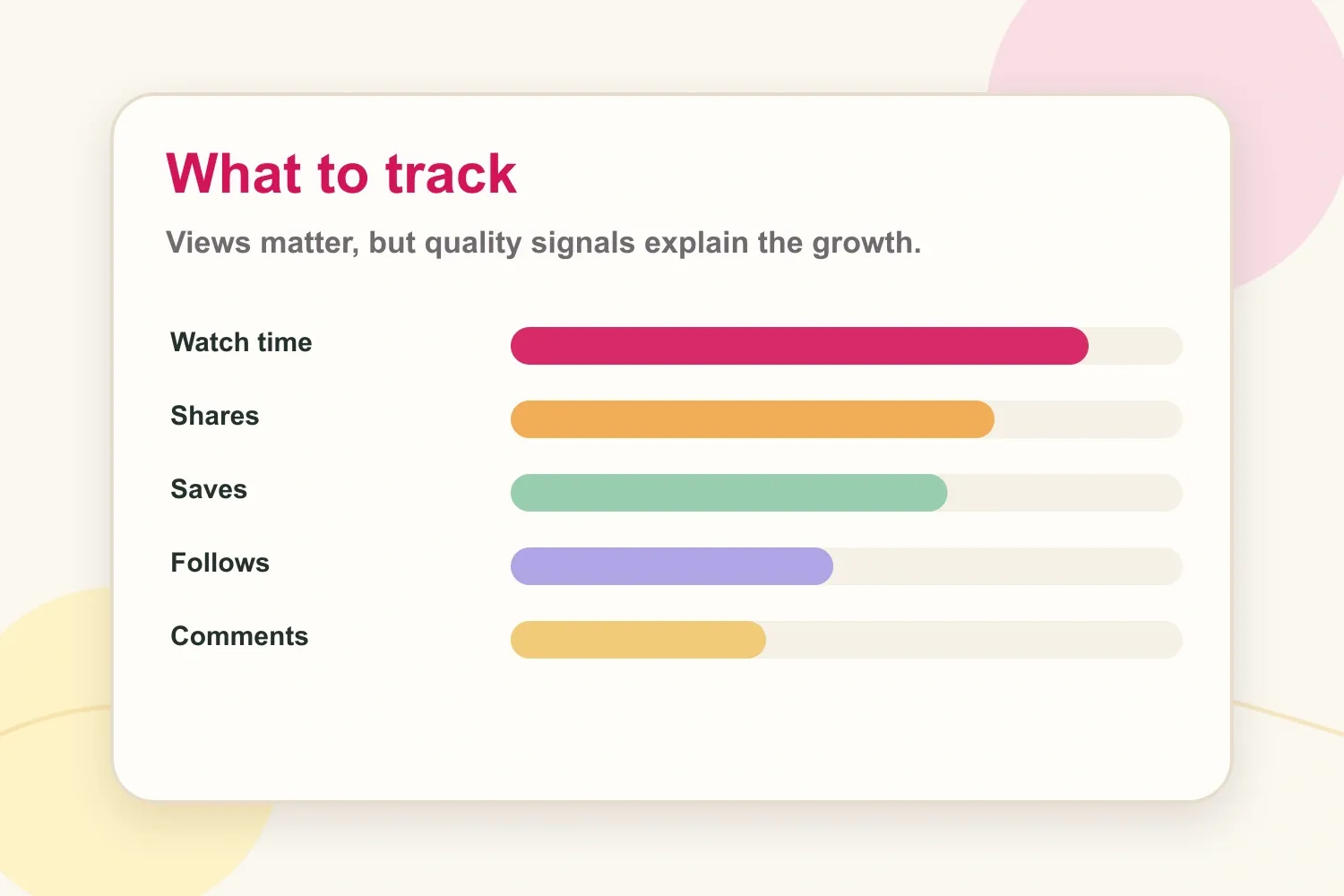
Useful signals to watch:
- Watch time: Are people staying long enough to reach the payoff?
- Shares: Does the idea travel beyond the original audience?
- Saves: Is the content useful enough to revisit?
- Follows: Does the Reel make people want more from the creator?
- Comments: Are people reacting with real questions, opinions, or intent?
- Profile visits: Is the Reel creating curiosity about the creator?
An Instagram engagement rate calculator can help put likes, comments, and reach into context, but the strongest analysis comes from looking at the full behavior around a Reel.
What usually stops Reels from going viral
Most underperforming Reels are not terrible. They are just unclear.
Common problems include:
- The first frame does not say anything.
- The hook is too broad.
- The caption carries the whole idea.
- The payoff arrives too late.
- The video tries to teach five things at once.
- The text overlay is hard to read.
- The trend is copied without a creator-specific angle.
- The Reel gets views, but no reason to follow.
That last point matters. A Reel can go viral and still fail strategically if it attracts the wrong viewers. The goal is not only reach. The goal is reach that introduces the right people to the creator’s point of view.
A simple test plan for the next 10 Reels
Instead of trying to make every post viral, test repeatable formats.
For the next 10 Reels, choose one clear theme and test different packaging:
- One problem-solution Reel.
- One before-and-after Reel.
- One mistake Reel.
- One checklist Reel.
- One opinion Reel.
- One mini tutorial.
- One comment-response Reel.
- One trend adapted to the niche.
- One behind-the-scenes Reel.
- One “what changed” Reel.
Keep the topic close enough that the results mean something. If one Reel is about skincare, another is about travel, and another is about pricing, it becomes harder to learn what actually worked.
After posting, compare:
- Which opening got the best early retention.
- Which Reel got the most saves.
- Which Reel got shared the most.
- Which Reel brought the most profile visits.
- Which Reel led to the most follows.
The winner is not always the one with the most views. Sometimes the best Reel is the one that brings the right audience closer.
Final thoughts
Viral Reels are not random, but they are not fully controllable either. The creator can control the clarity of the idea, the first frame, the hook, the pacing, the payoff, and the reason someone might save or share.
That is the practical version of virality: make one idea easy to understand, make the watch feel worth it, and give the viewer a reason to do something after watching. Trends can help. Audio can help. Editing can help. But the Reel still needs a clear reason to exist.
If a creator can repeat that across multiple posts, virality becomes less like luck and more like a system for learning what the audience actually responds to.