

TikTok and Instagram Reels can both produce ROI for creators, but they usually produce different kinds of ROI. TikTok is often better for fast reach, product discovery, trend testing, and finding new audiences. Instagram Reels is often better for converting an audience that already knows the creator, especially when brand deals, affiliate clicks, saves, DMs, and profile actions matter.
The practical answer is simple: use TikTok when the goal is attention at scale, use Reels when the goal is trust and conversion, and use both when the creator can track the full path from views to income.
The real ROI question is not TikTok or Reels
The wrong question is, "Which platform gets more views?" Views matter, but views are only the first step. A video with 500,000 views and no clicks, saves, sales, or brand interest can be less valuable than a Reel with 40,000 views that brings qualified DMs and a paid collaboration.
For creators, ROI is the return from the time, production effort, posting cadence, and audience attention invested into a platform. That return can show up as audience growth, affiliate revenue, product sales, paid usage rights, brand inbound, newsletter subscribers, or proof for a media kit.
TikTok ROI: best for discovery and fast testing
TikTok is strongest when the creator needs new people to discover the content quickly. The feed is built around interest signals, so a useful or entertaining video can travel beyond the creator's follower base.
That makes TikTok useful for:
- Testing hooks, topics, and product angles quickly.
- Reaching people outside the creator's existing community.
- Finding demand before building a larger campaign.
- Driving product discovery for commerce or affiliate content.
- Building proof that a creator can make short-form ideas travel.
TikTok also has business infrastructure around creator collaboration. TikTok One for creators is positioned as a place to find business opportunities, collaborate with advertisers, and get paid for creative work. That matters because ROI is not only organic reach; it is also whether brands can find, brief, and evaluate the creator.
The important 2026 nuance is that TikTok income is not one single bucket. Creator Rewards, TikTok One opportunities, TikTok Shop affiliate content, LIVE gifts, direct sponsorships, and usage rights can all behave differently. Creator Rewards also depends on eligibility and qualifying content, so it should be treated as upside, not the whole ROI plan. A creator comparing TikTok with Reels should separate platform payout, brand-deal value, affiliate or product revenue, and audience growth instead of blending them into one vague number.
The tradeoff is conversion consistency. TikTok reach can be powerful, but the audience may be less familiar with the creator. A viral post can bring attention without much loyalty. For a creator selling high-consideration products, pitching premium brand deals, or building a long-term community, TikTok views need to be paired with clear next steps.
Instagram Reels ROI: best for trust and conversion
Instagram Reels usually has a different ROI profile. Reels can still reach new viewers, but the platform is also connected to profiles, Stories, DMs, Highlights, tagged posts, comments, saved posts, and a creator's existing social proof.
That makes Reels useful for:
- Turning existing followers into buyers, subscribers, or leads.
- Giving brands visible proof of community and engagement quality.
- Driving DMs, profile visits, saves, and story follow-up.
- Supporting lifestyle, fashion, beauty, fitness, travel, food, and service niches where trust matters.
- Making paid partnerships feel connected to the creator's broader presence.
Instagram also has a more mature paid-collaboration workflow for creators and brands. Its partnership ads product lets brands run creator content as ads, which can turn a creator post into a broader campaign asset. For ROI, that can be important because a brand may value the creator not only for organic reach, but for content that can be reused and amplified.
Instagram payouts also need context. Bonuses, gifts, subscriptions, and other monetization features can depend on country, account eligibility, invitation, and product availability. For most creators, the more dependable Reels ROI signals are still saves, shares, profile visits, link clicks, DMs, brand inquiries, affiliate conversion, and whether a post can become a paid partnership asset.
The tradeoff is discovery speed. Reels may not give every creator the same sudden reach that TikTok can. If the goal is fast audience testing or broad awareness, Instagram can feel slower unless the creator already has a relevant audience or the brand adds paid distribution.
Which platform wins by creator goal?
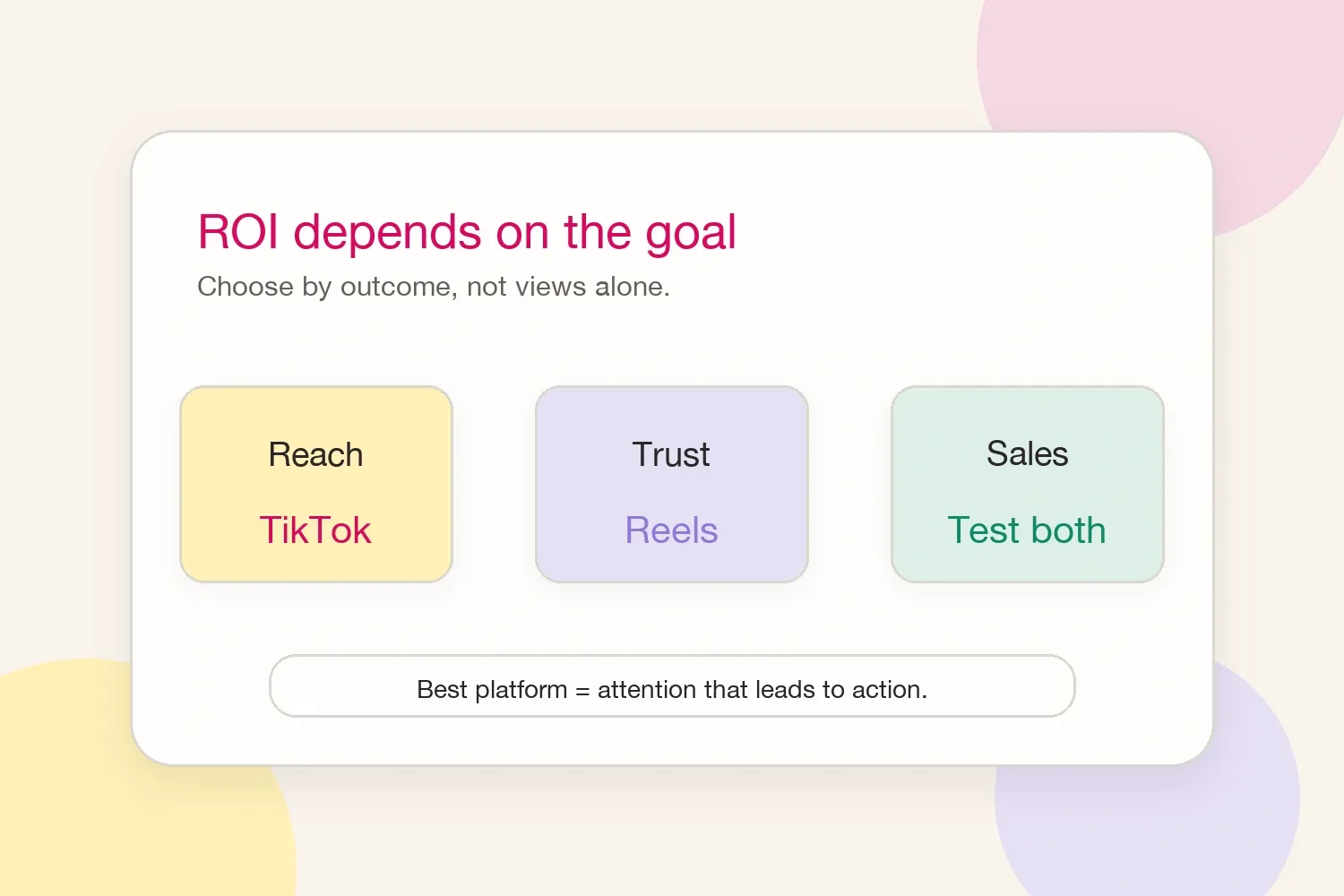
TikTok tends to win when the goal is reach, trend testing, early discovery, or product awareness. Instagram Reels tends to win when the goal is brand credibility, audience relationship, conversion, and deal quality. The fastest way to decide is to start with the outcome, then choose the platform that makes that outcome easiest to prove.
For a creator trying to choose where to spend time, the goal matters more than the platform name:
- Fast growth: TikTok usually has the edge because content can reach non-followers quickly.
- Brand trust: Instagram usually has the edge because brands can evaluate profile quality, comments, Stories, previous collaborations, and audience fit in one place.
- Low-cost product discovery: TikTok usually has the edge when the product is visual, easy to explain, and impulse-friendly.
- Affiliate and product sales: test both. TikTok can create demand quickly, while Instagram can convert warmer followers.
- Premium sponsorships: Reels often helps because brand managers can see a fuller creator presence and campaign history.
- Content testing: TikTok is useful for finding which hooks and product angles deserve more investment.
- Retargeting and paid usage: Reels and partnership ads can be valuable when a brand wants polished creator content it can amplify.
How creators should measure ROI
Creators should not compare platforms only by views or likes. A more reliable comparison tracks the whole path from attention to income.
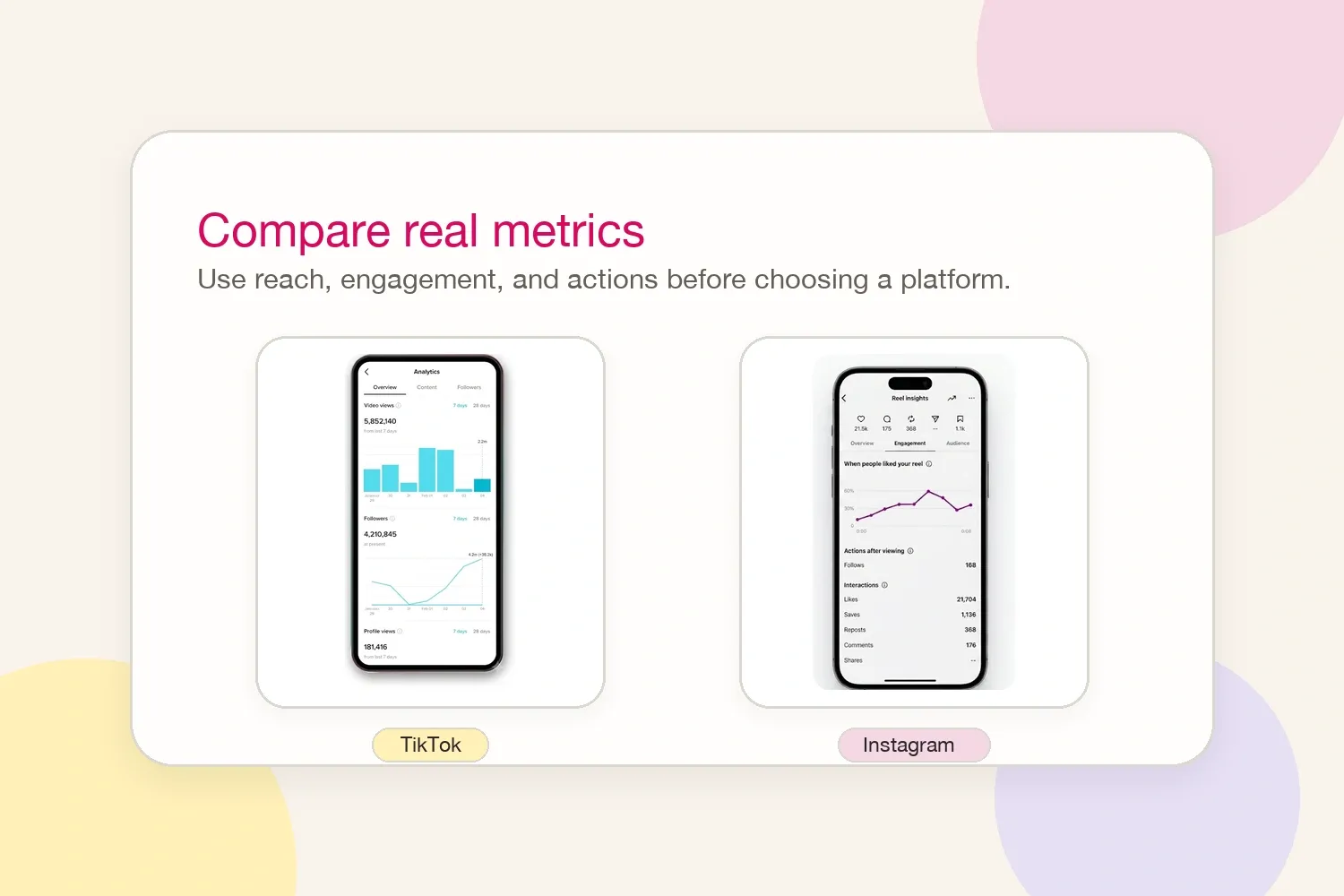
A practical ROI stack looks like this:
- Views: how many people saw the content.
- Engagement: how many people cared enough to like, comment, save, share, or follow.
- Clicks and DMs: how many people moved closer to a purchase, inquiry, or relationship.
- Revenue: how many sales, affiliate commissions, paid deals, usage fees, or leads came from the content.
- Repeat value: whether the post helped the creator earn future deals, prove a category fit, or improve rates.
Creators can estimate earning potential with tools such as the TikTok money calculator and Instagram money calculator, but the most useful data still comes from tracking real campaigns. A creator should compare the same offer, posting period, and content angle across both platforms whenever possible.
The cleanest test is a two-week comparison: publish the same core concept on both platforms, adapt the hook and caption to each platform, use separate tracked links, and record saves, shares, profile visits, DMs, clicks, sales, and brand inquiries. If TikTok wins views but Instagram wins clicks or DMs, the creator has not found a contradiction; they have found two different jobs for the same content idea.
What brands usually care about
Brands rarely buy views alone. They buy useful attention. A creator with a smaller Reels audience can be more valuable than a bigger TikTok account if the Reels audience comments with intent, saves product recommendations, clicks links, replies to Stories, or sends purchase-related DMs.
At the same time, TikTok can be a better fit for brands that need reach, cultural relevance, low-friction product demos, or a large volume of creator-led content. A TikTok post that makes a product feel discoverable can be valuable even when the creator's owned community is smaller.
For brand deals, creators should show platform-specific proof. An influencer media kit should separate TikTok and Instagram performance instead of blending everything into one average. Brands need to know whether the creator is better at reach, trust, clicks, sales, or content that can be reused in ads.
When TikTok is the better ROI bet
TikTok is usually the better bet when:
- The creator's niche benefits from discovery, entertainment, demos, reactions, education, or trend participation.
- The product or topic can be understood quickly.
- The creator can post often enough to test several hooks.
- The goal is reach, follower growth, or product awareness.
- The brand wants native short-form content that feels less polished and more immediate.
This does not mean TikTok is automatically better for income. It means TikTok is often better at creating the first layer of attention. The creator still needs a link strategy, pinned content, profile clarity, and a way to capture value after the view.
When Instagram Reels is the better ROI bet
Instagram Reels is usually the better bet when:
- The creator already has a relevant audience on Instagram.
- The niche depends on trust, taste, identity, or personal recommendation.
- The creator sells services, digital products, affiliate recommendations, or higher-consideration offers.
- The brand wants content that can sit inside a broader Instagram presence.
- DMs, saves, profile visits, and story follow-up are part of the conversion path.
Reels can also support long-term creator positioning. A brand manager can watch Reels, check comments, view Highlights, scan previous partnerships, and understand the creator's audience context without leaving Instagram.
The best answer is often a split workflow
Many creators should not choose only one platform. A better workflow is to use TikTok for idea testing and reach, then use Instagram for proof, relationship-building, and conversion.
For example, a creator can test five hooks on TikTok, identify the angle with the strongest watch time and comments, then adapt the best idea for Reels with a clearer caption, profile link, Story follow-up, and brand-friendly proof. The same concept can serve two different jobs: TikTok validates interest, Reels supports trust.
This split only works if the creator tracks results separately. Posting the same video everywhere and judging success by total views makes the data hard to use. The creator should track platform, format, hook, topic, post date, views, saves, shares, comments, clicks, DMs, and revenue.
Common mistakes that reduce ROI
The biggest mistake is chasing whichever platform had one viral post last month. Viral reach is useful, but it is not a strategy unless the creator can turn attention into repeatable value.
Other common mistakes include:
- Comparing TikTok views to Reels sales without tracking clicks or audience intent.
- Using the same caption, callout, and profile setup on both platforms.
- Ignoring saves, shares, DMs, and profile visits because they are less visible than views.
- Accepting brand deals without knowing which platform actually performs for that niche.
- Blending all platform data into one average before pitching brands.
Final takeaway
TikTok often delivers better ROI for discovery, reach, product testing, and fast audience growth. Instagram Reels often delivers better ROI for trust, conversions, brand-deal proof, and higher-consideration creator businesses.
The best platform is the one that moves a specific audience toward a specific outcome. Creators should choose based on the job: TikTok for attention, Reels for relationship and conversion, and both when the content system can track ROI from view to revenue.