

TikTok monetization is no longer just about waiting for views to turn into small payouts. The practical version is building a mix of income streams: platform rewards, brand deals, affiliate revenue, products, LIVE gifts, and services that make sense for the audience.
The important shift is this: views can create leverage, but proof creates income. A creator with a clear niche, useful audience data, and clean campaign examples is usually easier for a brand to pay than a creator who only has a viral video.
How TikTok monetization works now
TikTok monetization means earning money from the attention, trust, and content assets built on TikTok. Some income comes directly through TikTok features. Some comes indirectly because TikTok helps a creator sell something, drive affiliate clicks, or win a sponsorship.
The main paths are:
- Creator Rewards: TikTok's view-based rewards program for eligible creators and eligible videos.
- Brand partnerships: sponsored videos, Spark Ads permissions, product integrations, event coverage, UGC-style content, or longer campaign packages.
- Affiliate and TikTok Shop commissions: earning a percentage when viewers buy through a tracked link or shop placement.
- LIVE gifts and subscriptions: income from real-time audience support where the feature is available.
- Owned products and services: digital products, merch, coaching, consulting, templates, communities, or paid content.
Creator Rewards replaced the old Creator Fund
The old TikTok Creator Fund is not the main program to plan around anymore. TikTok now points creators toward the Creator Rewards Program in eligible markets, and its Creator Fund support page directs creators to that newer rewards model.
That matters because many older TikTok monetization guides still repeat Creator Fund-era payout estimates. Those numbers are not a reliable planning model for a 2026 creator.
Creator Rewards can still be useful, but it should be treated as one income layer, not the whole business. TikTok's own support material explains that rewards depend on eligible content, qualified views, account standing, and program availability. For estimating view-based payouts, a tool like the TikTok money calculator can help model scenarios, but the creator's own dashboard is the source that matters most.
TikTok Creator Rewards eligibility
Requirements can change by country and account type, so creators should always check TikTok Studio before making business decisions. As a practical baseline, Creator Rewards usually depends on:
- Being old enough for the program in the creator's region.
- Having an eligible personal account in good standing.
- Meeting follower and recent-view requirements.
- Posting original, high-quality videos that meet the program rules.
- Creating videos that are long enough and receive qualified views.
TikTok also notes that eligible videos start collecting rewards after they reach a threshold of qualified For You feed views. Not every raw view is paid, and sponsored or promoted content may be excluded depending on the program rules.
How much does TikTok pay?
There is no fixed TikTok pay rate that applies to every creator. RPM can vary by audience location, topic, search value, originality, viewer behavior, and the share of views that qualify.
A simple planning formula is:
Estimated Creator Rewards = qualified views / 1,000 x RPM
So if a video gets 1,000,000 views but only 600,000 qualify, the payout should be modeled from 600,000 qualified views, not the full million. That is why view count screenshots can be misleading when creators estimate income.
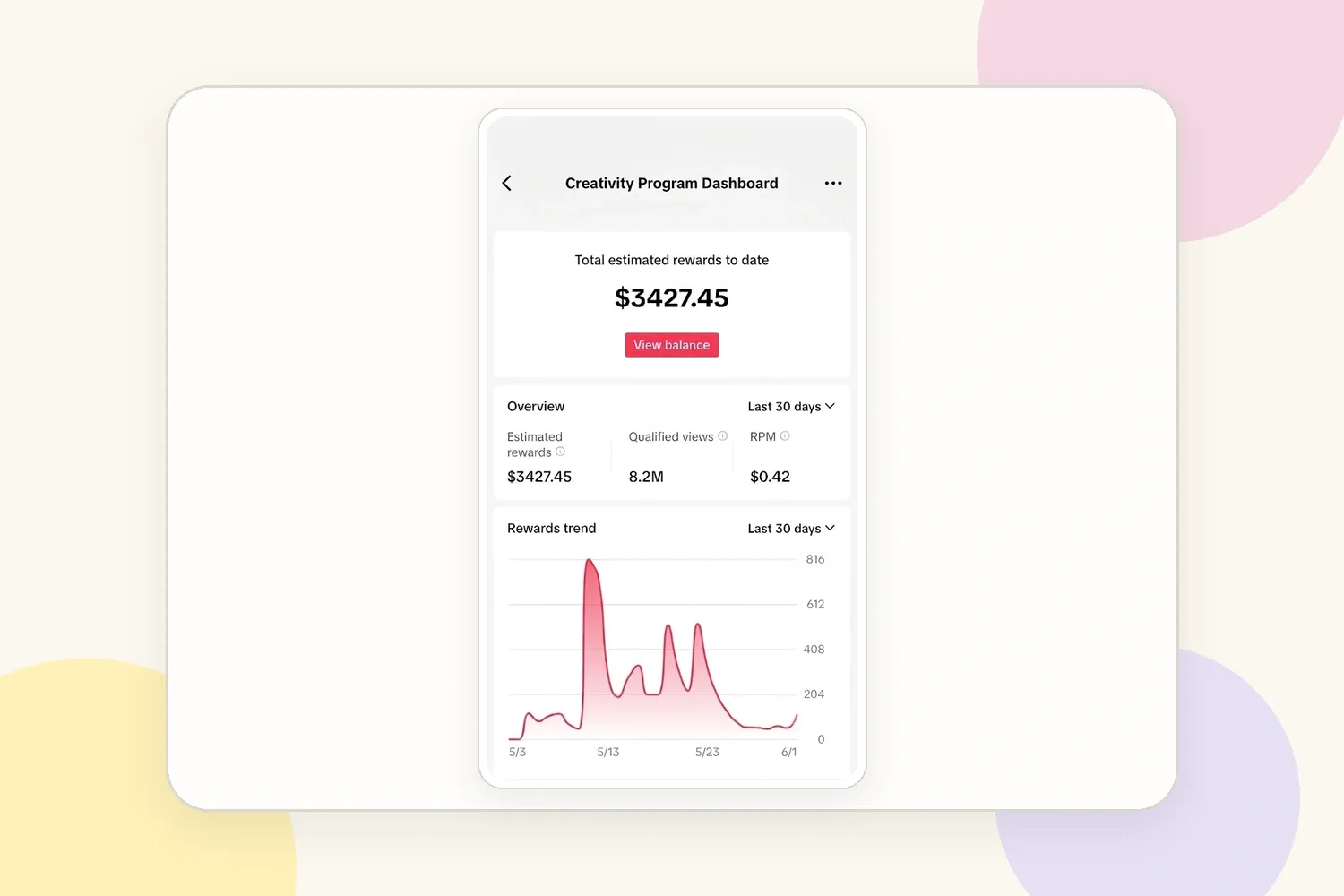
A real rewards dashboard screenshot makes the point clearer: the useful numbers are estimated rewards, qualified views, RPM, and the trend over time. The screenshot may show a different program label depending on account or market, but the planning logic is the same.
For many creators, the better question is not “how much does TikTok pay per view?” It is “what else can this attention help sell or prove?”
Brand deals are usually the bigger monetization lever
Brand partnerships are often more predictable than view payouts because the value is tied to a campaign outcome, not only platform RPM. A skincare creator might earn from a sponsored routine video, a Spark Ads usage window, a whitelisted affiliate link, and a follow-up report using the same content package.
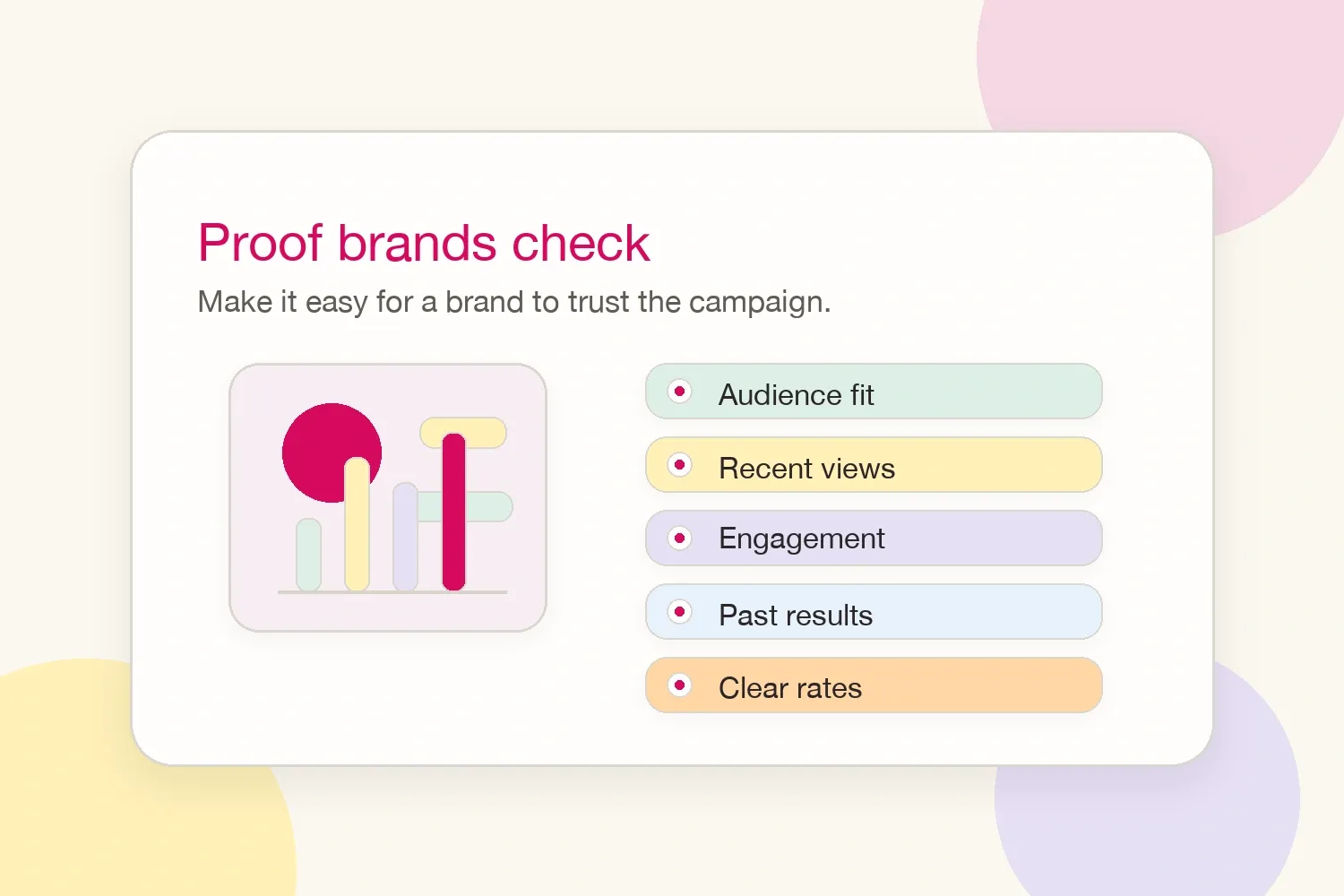
Brands usually care about:
- Audience fit with the campaign.
- Recent average views, not only one viral post.
- Engagement quality, comments, saves, shares, and watch behavior.
- Content style and whether it matches the brand.
- Past campaign examples or proof of sales, clicks, or awareness.
- Clear deliverables, timelines, usage rights, and rates.
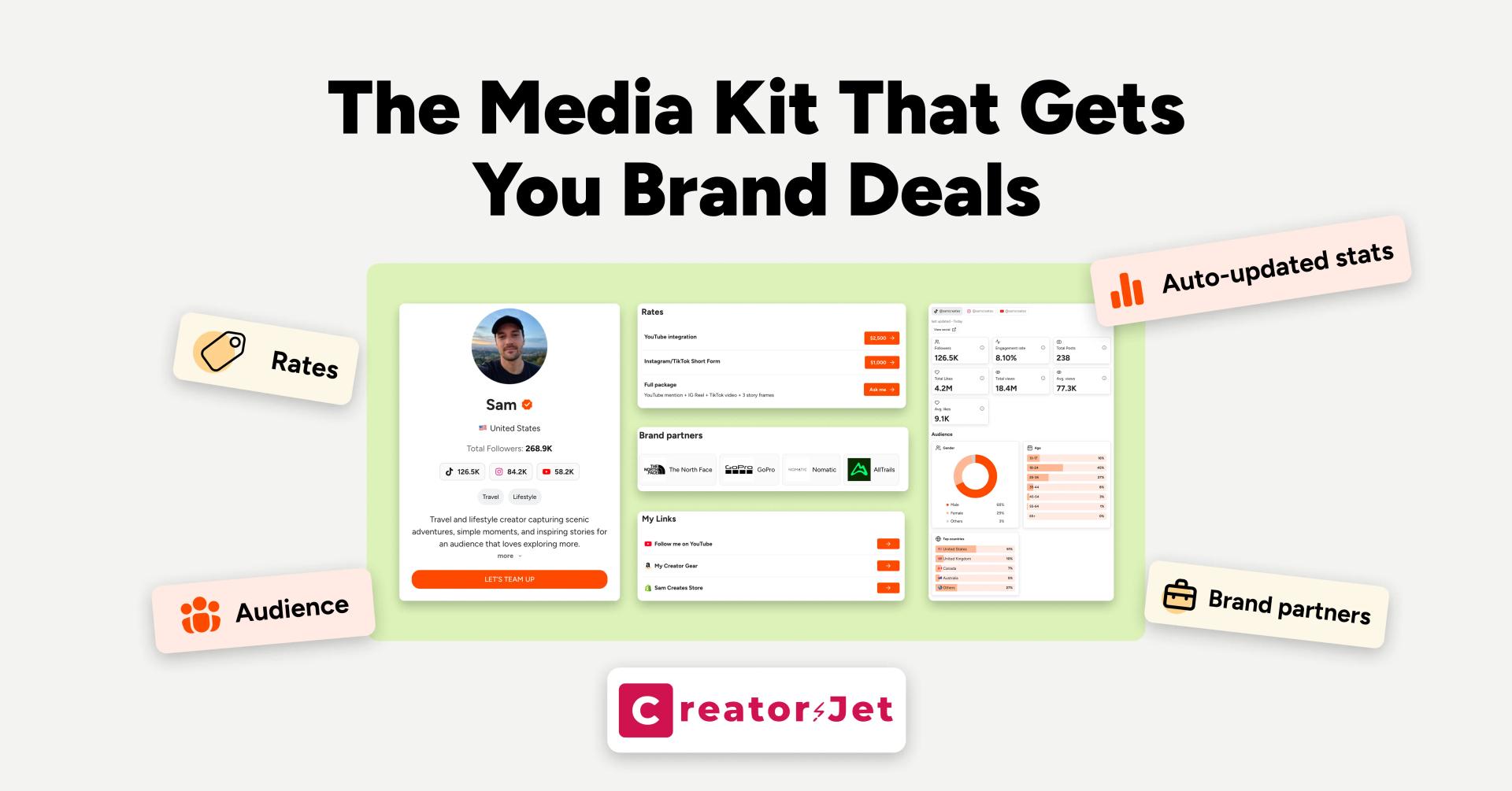
That is why creators should keep a simple media kit or live profile with TikTok stats, audience details, past collaborations, and example packages. It makes the brand's decision easier.
Affiliate, TikTok Shop, and product income
Affiliate monetization works best when the creator has trust in a specific niche. A broad entertainment account may get views, but a beauty, fitness, food, tech, parenting, or home creator can often recommend products with clearer buyer intent.
Useful affiliate habits:
- Promote products that fit the audience and content style.
- Show the product in context instead of only naming it.
- Track which videos drive clicks, comments, saves, and sales.
- Avoid turning every post into a sales post.
- Disclose paid, gifted, sponsored, and affiliate relationships clearly.
This is where TikTok business marketing matters: the content still needs to feel native to the creator’s feed, while giving viewers a clear reason to trust the product recommendation.
TikTok also requires creators to use the content disclosure setting when posting content that promotes a brand, product, or service in exchange for payment or another incentive. The practical rule is simple: if there is a commercial relationship, disclose it.
LIVE gifts, subscriptions, and community income
LIVE monetization works when the creator already has a reason for viewers to show up in real time. It is usually better for creators who can teach, entertain, sell, answer questions, host drops, or create a recurring community habit.
TikTok says LIVE and gift features are not available everywhere, and creators need to meet age, account, and local follower requirements. That makes LIVE income useful, but not something every creator should build their whole plan around.
Good LIVE formats include product demos, Q&A sessions, behind-the-scenes streams, tutorial sessions, music or performance streams, and launch events. The income is less about going live randomly and more about giving the audience a reason to stay.
Build a TikTok monetization stack
The cleanest creator income plan usually stacks several methods instead of depending on one feature.
For example:
- A food creator might use Creator Rewards for qualified long videos, affiliate links for kitchen tools, and paid recipe integrations with grocery brands.
- A fitness creator might sell coaching, use TikTok Shop for equipment, and package sponsored workout videos for brands.
- A beauty creator might combine affiliate commissions, product launches, and paid creator partnerships.
- A business creator might use TikTok for consulting leads, digital products, and sponsored education content.
For a broader breakdown of revenue options beyond TikTok, see how to monetise social media.
What to prepare before monetizing TikTok
Before pitching brands or relying on TikTok income, creators should have the basics organized:
- A clear niche and audience promise.
- Recent TikTok analytics, including average views and engagement.
- A few content examples that show what the creator does well.
- Simple rates or package ranges for sponsored work.
- Disclosure habits for paid, gifted, affiliate, and sponsored content.
- A way to report campaign results after posting.
Monetization becomes easier when a creator can explain what they create, who they reach, what a brand can buy, and how results will be measured.
Final takeaway
TikTok can create income, but the most reliable creators do not depend on one payout program. Creator Rewards can help when content qualifies, but brand deals, affiliate income, products, services, and LIVE formats usually create a more resilient monetization plan.
The goal is not just to get paid by TikTok. The goal is to turn TikTok attention into a creator business that has proof, options, and repeatable revenue.