


The most in-demand influencer niches for brand deals are not always the loudest niches on social media. They are the niches where a brand can clearly see who the buyer is, why the audience trusts the creator, and how the content can help sell or explain a product.
That is why beauty, fitness, food, tech, personal finance, parenting, travel, gaming, and B2B creator niches keep showing up in brand conversations. They are different categories, but they share one thing: the content can connect a product to a specific audience moment.
This guide is not a universal ranking. A niche can be valuable in one market and crowded in another. The practical question is: can the creator prove audience fit, content quality, and commercial relevance?
What makes a niche attractive to brands
Brands usually care less about the label of the niche and more about what the niche lets them do. A skincare creator, a running creator, and a home-cooking creator may look very different, but each can help a brand demonstrate a product in a believable context.
The most brand-friendly niches tend to have:
- Clear buyer intent: the audience already thinks about purchases, routines, tools, upgrades, or problems.
- Repeat content formats: creators can make tutorials, reviews, routines, comparisons, and updates without forcing the product.
- Trust requirements: the audience needs guidance before buying, which makes creator credibility valuable.
- Product demonstration: the creator can show the product in use, not just mention it.
- Reusable creative value: the brand may be able to use the content for organic posts, ads, email, product pages, or retail assets.
This is why niche fit matters more than a generic follower count. The CreatorsJet article on what brands look for before offering a deal goes deeper into those evaluation signals.
Industry reporting points in the same direction. Sprout Social’s 2026 influencer marketing trends emphasize creator-led content, paid amplification, and platform-specific strategy. Influencer Marketing Hub’s 2026 benchmark report frames influencer marketing as a more measured channel where brands are looking at ROI, process, and performance.
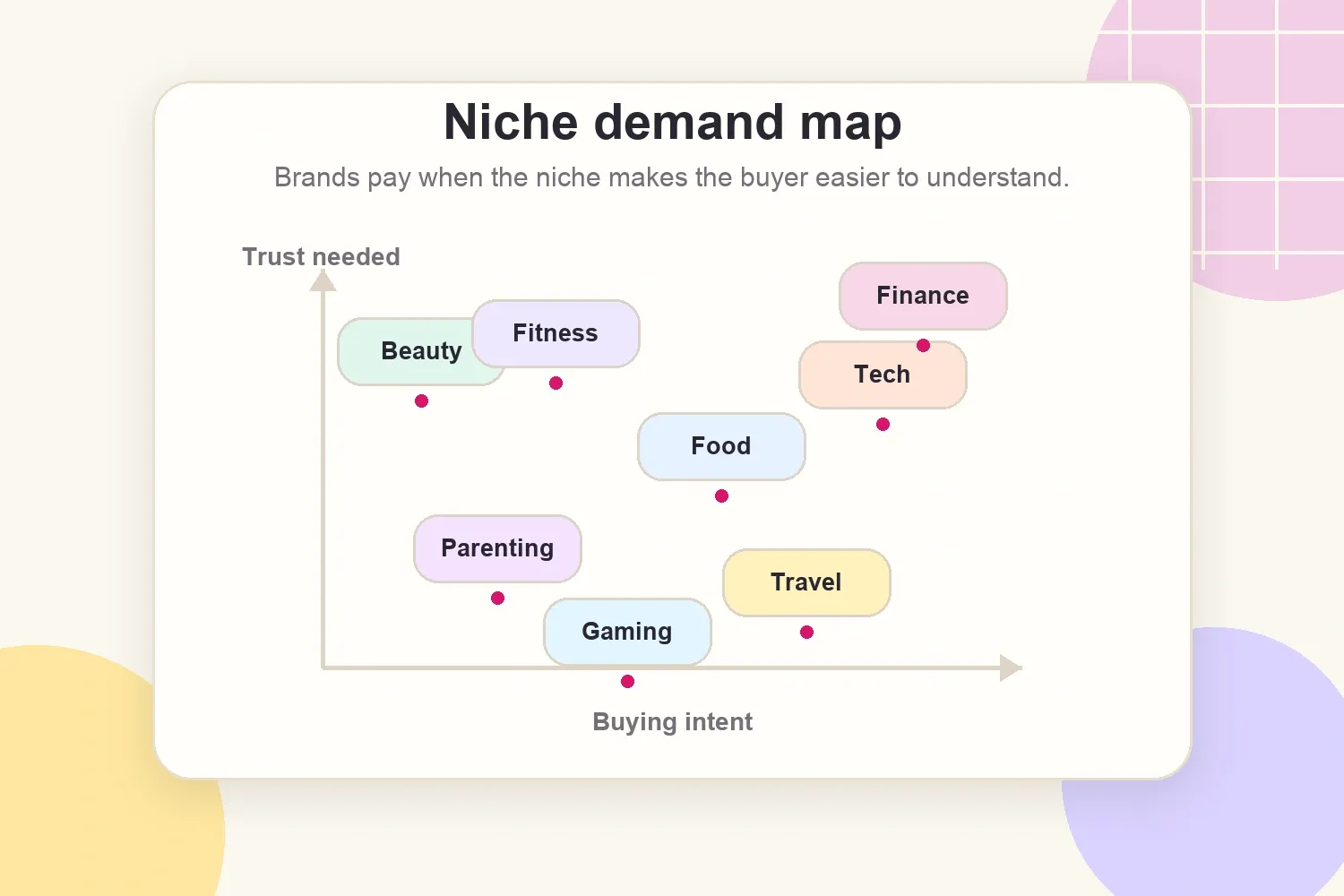
A useful way to think about niche demand is to separate “popular category” from “brand-budget category.” This creator and marketer’s ranking is opinionated, but the useful point matches the framework here: niches with higher buyer intent, expensive products, software budgets, or financial value often have more room for paid brand deals than broad entertainment or generic lifestyle content.
Beauty and skincare
Beauty is one of the most obvious brand-deal niches because products are easy to show, compare, apply, review, and repurchase. It also has many sub-niches: acne-safe routines, textured hair, fragrance, makeup for work, sensitive skin, mature skin, nail care, and budget beauty.
Brands like beauty creators because the content can answer buying questions visually:
- What does the product look like on real skin?
- How does it fit into a routine?
- What texture, shade, finish, or result should someone expect?
- What objections might a buyer have before purchasing?
The proof that matters is not just “pretty content.” Beauty creators need to show audience trust, saves, comments with product questions, routine consistency, and content that does not make exaggerated claims.
Fitness, wellness, and active lifestyle
Fitness is attractive because people buy products around goals: strength, recovery, running, yoga, sportswear, meal prep, hydration, sleep, mobility, and habit-building. The audience is often looking for recommendations that fit a specific lifestyle.
But fitness also needs credibility. A creator does not need to be a celebrity athlete, but they should avoid unsafe claims and show why their audience trusts their advice.
Good brand-fit angles include:
- Running gear tested during training.
- Home workout equipment used in a realistic routine.
- Recovery tools explained after a workout.
- Activewear styled for training and normal life.
- Wellness products framed around habits, not miracle promises.
Fitness creators should be careful with health claims. Brands may love bold before-and-after content, but creators need to protect trust and avoid promises they cannot support.
Food, cooking, and beverage
Food creators are valuable because content can create appetite quickly. A recipe, grocery haul, taste test, lunchbox idea, or drink routine can make a product feel useful without a hard sell.
This niche works especially well for:
- Packaged food and beverage brands.
- Grocery and kitchen tools.
- Meal prep products.
- Restaurants and local food businesses.
- Family, budget, and quick-meal content.
The best food brand deals usually feel native to the creator’s normal content. A creator known for five-minute breakfasts should not suddenly post a luxury dinner party unless the angle makes sense. Brands want the audience to think, “this fits the creator,” not “this was dropped in for a check.”
Tech, AI, apps, and creator tools
Tech and software brands often need creators because products can be hard to understand from a landing page alone. A creator can show what the tool does, who it helps, and what problem it solves.
This niche is not only for huge tech reviewers. Smaller creators can win deals if they own a specific workflow: productivity, AI tools, video editing, creator tools, Notion setups, student tech, small business apps, or gear for YouTube and TikTok.
Brands usually want proof such as:
- Clear demos.
- Screen recordings or workflow examples.
- Audience questions about tools.
- Past tutorials or explainers.
- Credibility in a specific use case.
Tech creators should also be clear about whether they are selling awareness, signups, tutorials, reviews, or content assets. Those are different campaign jobs.
Personal finance and career
Finance, career, and money content can be valuable because the audience has high intent. People follow these creators for decisions around budgeting, saving, investing, income, taxes, jobs, freelancing, and business tools.
The upside is buyer intent. The risk is trust. Bad advice in this niche can hurt the audience, so brands tend to care about credibility, clarity, and compliance.
Creators in this space should avoid pretending every finance brand is a fit. A budgeting creator, a real estate creator, and a freelancer-tax creator may all sit under “finance,” but the audience needs are very different.
Useful proof includes:
- Clear audience demographics.
- Topics that consistently drive saves and comments.
- Simple explanations of complex products.
- Conservative claims and visible disclaimers where needed.
- Past content that shows judgment, not just attention.
Parenting, family, and home
Parenting and family content can be highly valuable because buying decisions are practical and repeatable. Parents buy for routines: sleep, school, meals, travel, safety, learning, cleaning, home organization, and gifts.
The audience also tends to care about honesty. A forced product mention can feel especially out of place in parenting content because trust is personal.
Good brand-fit angles include:
- Realistic morning or bedtime routines.
- Product comparisons after actual use.
- Family travel packing.
- Organization systems.
- Kids’ products shown with clear boundaries and safety awareness.
Creators in this niche should be careful about privacy, child safety, and overexposure. A brand deal should not require a creator to share more family detail than they normally would.
Travel, local lifestyle, and hospitality
Travel creators are useful when brands need location context. Hotels, tourism boards, luggage brands, restaurants, experiences, transportation companies, and local businesses often need creators who can make a place feel specific.
The most useful travel content does not only show pretty views. It answers practical questions:
- Who is this trip for?
- What does it cost?
- What should someone book, pack, skip, or plan around?
- Is the experience family-friendly, solo-friendly, luxury, budget, local, or niche?
Local lifestyle creators can be especially useful here. A creator with a smaller audience in one city can be more relevant to a local business than a large general travel account.
Gaming, entertainment, and fandom
Gaming and entertainment niches are valuable because audiences gather around identity, taste, and community. Brands may care about launches, events, hardware, snacks, streaming gear, collectibles, entertainment releases, and community activations.
The challenge is fit. Gaming audiences can reject content that feels forced. A brand that does not understand the game, platform, creator style, or community language can look out of place quickly.
Useful proof includes:
- Stream or video engagement.
- Community interaction quality.
- Consistent format or series.
- Audience overlap with the product.
- Past integrations that did not break the content.
The best deals usually respect the creator’s format instead of forcing a generic ad read.
B2B, professional, and creator-business niches
B2B creators are increasingly relevant because professionals use social platforms to learn, compare tools, and make buying decisions. This includes creators in marketing, sales, HR, finance operations, design, software, entrepreneurship, creator business, and small business operations.
These audiences may be smaller, but the commercial value can be high. A creator with 20,000 relevant followers in a professional niche may influence more qualified buyers than a broad lifestyle account with a much larger audience.
B2B brand deals often need different proof:
- Audience job titles or business type.
- Newsletter, LinkedIn, YouTube, podcast, or webinar reach.
- Lead quality, not just likes.
- Case studies, tool comparisons, or educational content.
- Clear expertise in the workflow the product supports.
For creators, this is where a clean portfolio or media kit matters. Brands need to understand the audience quickly before they can justify a higher-value partnership.
What proof each niche should show
The same media kit does not work equally well for every niche. A beauty creator should show routine content and product questions. A finance creator should show trust and clarity. A tech creator should show demos and problem-solving.
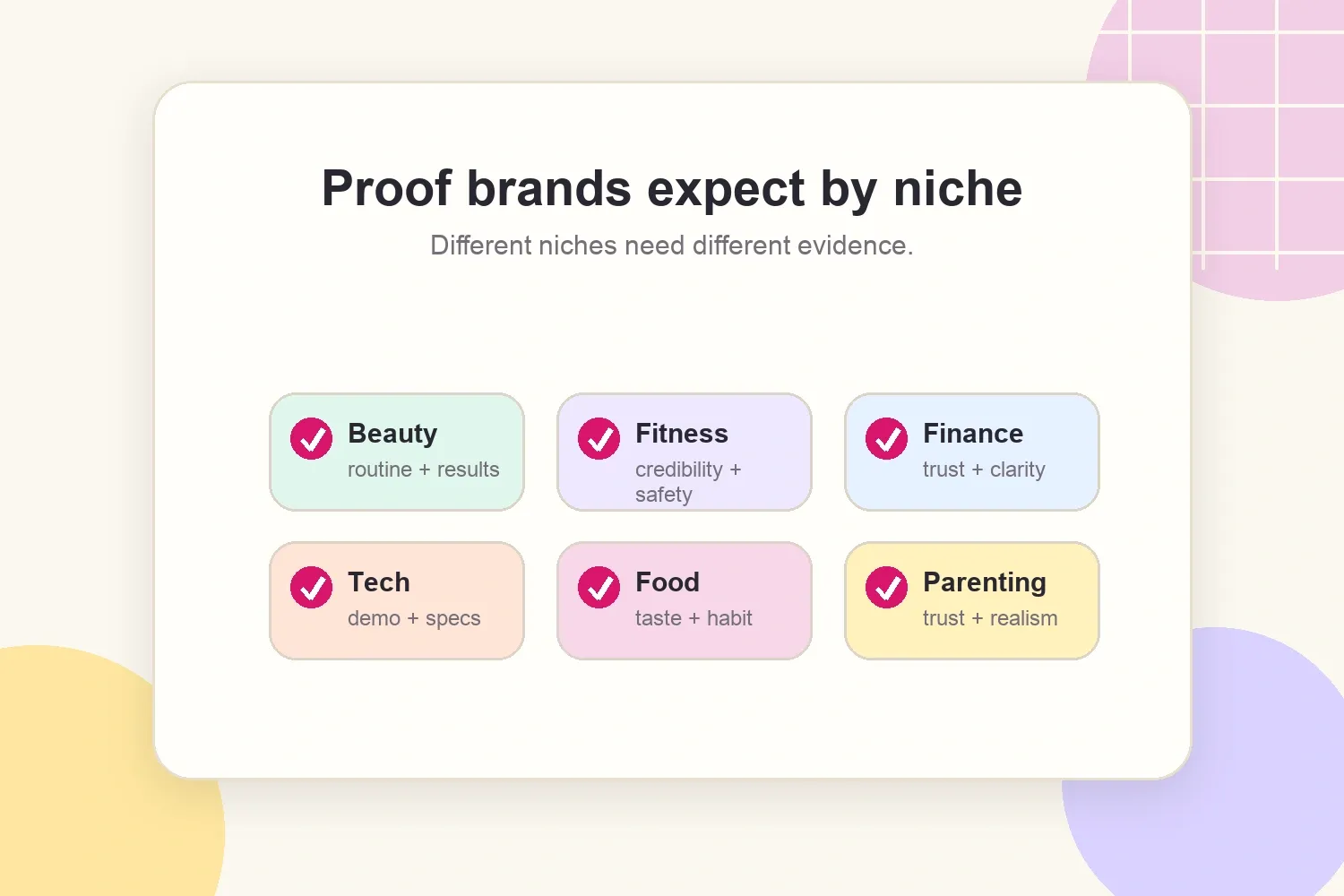
Use this as a quick rule:
| Niche | What brands usually buy | Proof to show |
|---|---|---|
| Beauty and skincare | Product demos, routine trust, launches | Saves, comments, routine content, shade or texture examples |
| Fitness and wellness | Lifestyle fit, habit-building, credibility | Training context, audience questions, safe claims |
| Food and beverage | Appetite, trial, repeat purchase | Recipe performance, local audience, taste-test content |
| Tech and apps | Explanation, signups, demos | Tutorials, screen recordings, problem-specific content |
| Finance and career | Trust, education, qualified intent | Saves, clear audience, conservative claims |
| Parenting and home | Practical routines, trust, household needs | Realistic use cases, audience comments, privacy boundaries |
Mini example: same budget, different niche logic
Imagine a brand has a $5,000 creator budget for a new product launch. The right creator mix depends less on which niche sounds popular and more on what the brand needs the content to prove.
| Scenario | Better creator fit | Budget logic |
|---|---|---|
| Skincare serum launch | Beauty creators with routine content and product-question comments | Pay for demos, texture shots, routine trust, and usage rights for high-performing clips |
| Budgeting app launch | Personal finance creators with saved educational posts and clear audience demographics | Pay for trust, simple explanation, compliance-safe claims, and qualified clicks |
| Local fitness product launch | Fitness or local lifestyle creators with habit-based content and nearby audience overlap | Pay for realistic use, local relevance, and repeatable content rather than broad reach |
The useful lesson is simple: the same budget should buy different proof in different niches. A beauty creator may need to show product texture and routine fit. A finance creator may need to show clarity and trust. A local fitness creator may need to show audience overlap and believable daily use.
In the skincare example, the brand should not spend the whole budget on one creator just because beauty is a high-demand niche. A better split might be two or three creators who can show the serum in different routines: oily skin, sensitive skin, and a simple morning routine. The proof is not just views. The brand should look for comments asking about texture, saves on routine videos, and clips that can be reused as paid social creative.
In the budgeting app example, reach matters less than trust. A creator who explains money topics clearly, avoids exaggerated claims, and has an audience that saves educational posts may be worth more than a larger lifestyle account. The brand is buying confidence and qualified attention, not just impressions, so the brief should focus on simple use cases, clear disclaimers, and trackable clicks.
For a local fitness product, the niche logic changes again. A national fitness creator may bring more views, but a smaller creator with the right city, gym community, or running-club audience may create more useful demand. The brand should pay for believable daily use, local relevance, and repeatable content formats that can support more than one launch week.
How creators can make a niche more brand-ready
Creators do not need to change niche every time a new category looks hot. It is usually better to make the existing niche easier for brands to understand.
To do that:
- Name the audience clearly. “Women in their 20s who like skincare” is less useful than “budget-conscious skincare buyers looking for acne-safe routines.”
- Show repeatable content formats. Brands like creators who can produce a campaign without reinventing the whole style.
- Collect proof. Save metrics, screenshots, comments, audience questions, and examples that show buyer intent.
- Separate organic content from paid usage. If a brand wants ads, whitelisting, or long-term usage, price that separately.
- Pitch from the brand’s goal. A niche is more valuable when the creator explains how the content supports awareness, trust, education, content volume, or sales.
This is also where smaller creators can compete. The article on micro vs mega influencers explains why niche communities can outperform broad reach when the campaign needs trust and relevance.
Final takeaway
The most in-demand influencer niches are not valuable because they are trendy. They are valuable because they make a brand’s buyer easier to reach, understand, and convince.
Beauty, fitness, food, tech, finance, parenting, travel, gaming, and B2B can all attract brand deals. The creator’s job is to prove why their version of the niche is commercially useful: the audience is specific, the content is credible, and the brand can see exactly how the partnership would work.