

Brand deals can look random from the outside. One creator posts a sponsored Reel, another gets sent a gifted product, and someone with a smaller audience somehow lands a paid campaign before a larger account does.
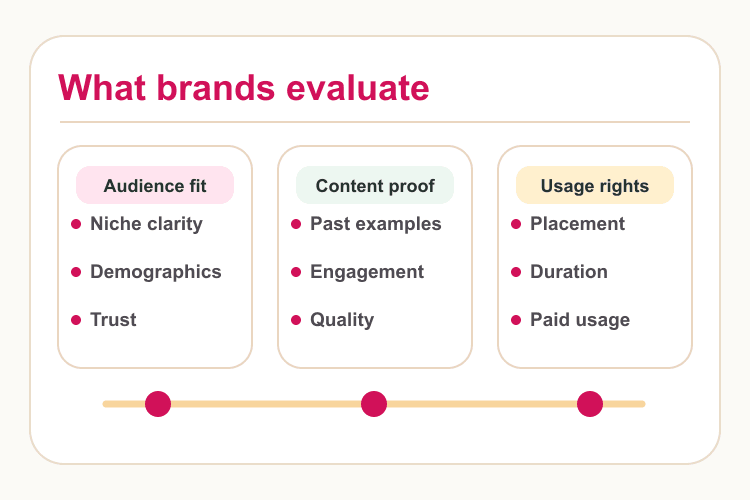
The real pattern is usually less mysterious. Brands do not only pay for follower count. They pay for audience fit, content quality, trust, clarity, and the feeling that working with the creator will not become messy halfway through the campaign.
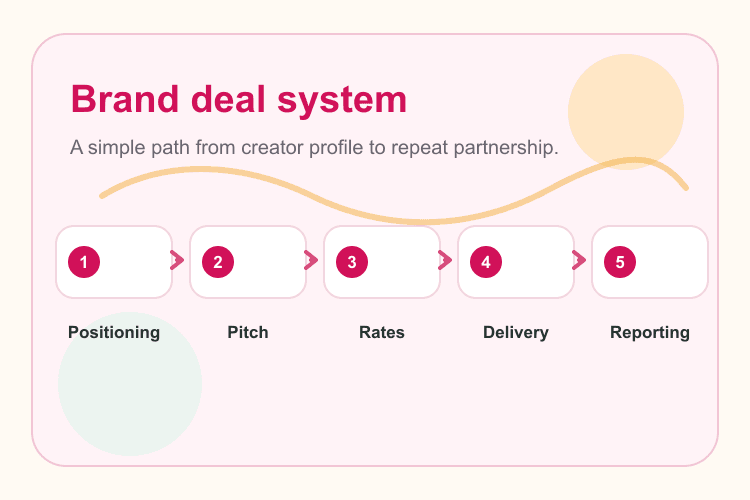
That is why a brand deal playbook matters. It gives a creator a repeatable way to look professional, pitch brands, price the work, deliver what was promised, and prove what happened after the content goes live.
What a brand deal actually includes
A brand deal is an agreement where a creator produces content, distribution, or creative assets for a brand in exchange for payment, product, affiliate commission, long-term partnership value, or a mix of those things.
The deal can be simple, like one sponsored Instagram Story. It can also be more involved, like a monthly package with Reels, TikToks, usage rights, whitelisting, reporting, exclusivity, and revisions.
The mistake many creators make is treating every brand deal like “one post for one price.” That is rarely the full picture. A brand is usually buying a combination of things:
- Access to a specific audience
- The creator’s trust and taste
- Content production skill
- Distribution on a social platform
- A specific campaign outcome
- Rights to use the content beyond the original post
- A smoother path to reach people who already care about the niche
A creator who understands that can negotiate much better than a creator who only sends a follower count and waits for the brand to decide.
Build a brand-ready creator profile first
Before pitching, the creator profile needs to answer one simple question quickly: why would this creator make sense for a brand?
That does not mean the profile has to look overly polished. It means the basics should be clear. A brand manager should be able to open the profile and understand the niche, audience, content style, and collaboration potential within a few seconds.
A brand-ready profile usually has:
- A bio that explains the creator’s niche or point of view
- Pinned content that shows the best work
- Recent posts that match the audience the creator claims to reach
- Clear contact information
- A consistent visual and editorial style
- Examples of content that could naturally include a product, app, service, or destination
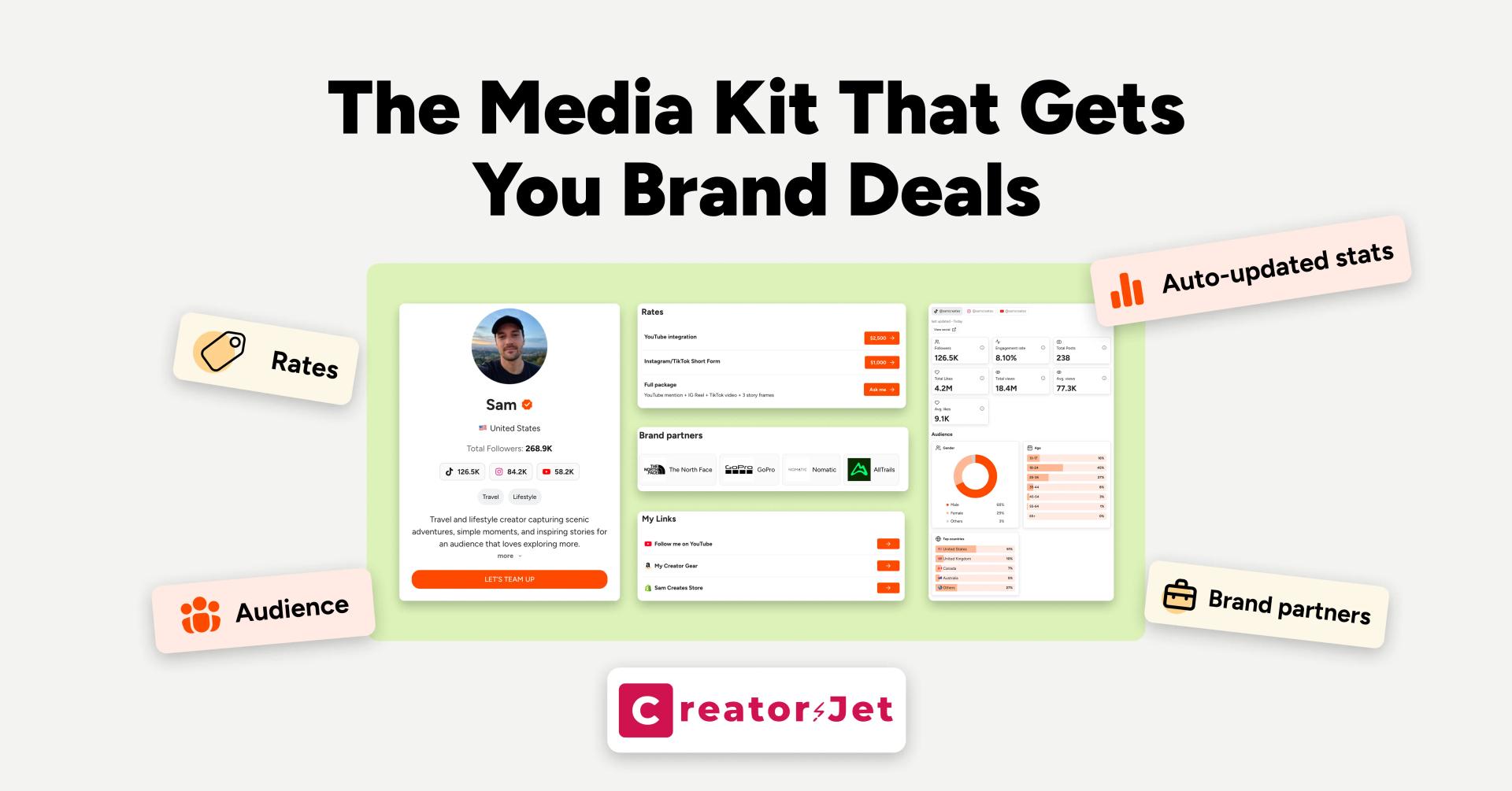
A good media kit turns that profile into something a brand can review quickly. The example below shows the pieces that matter most in a brand-deal conversation: rates, audience data, brand partners, links, and auto-updated stats.
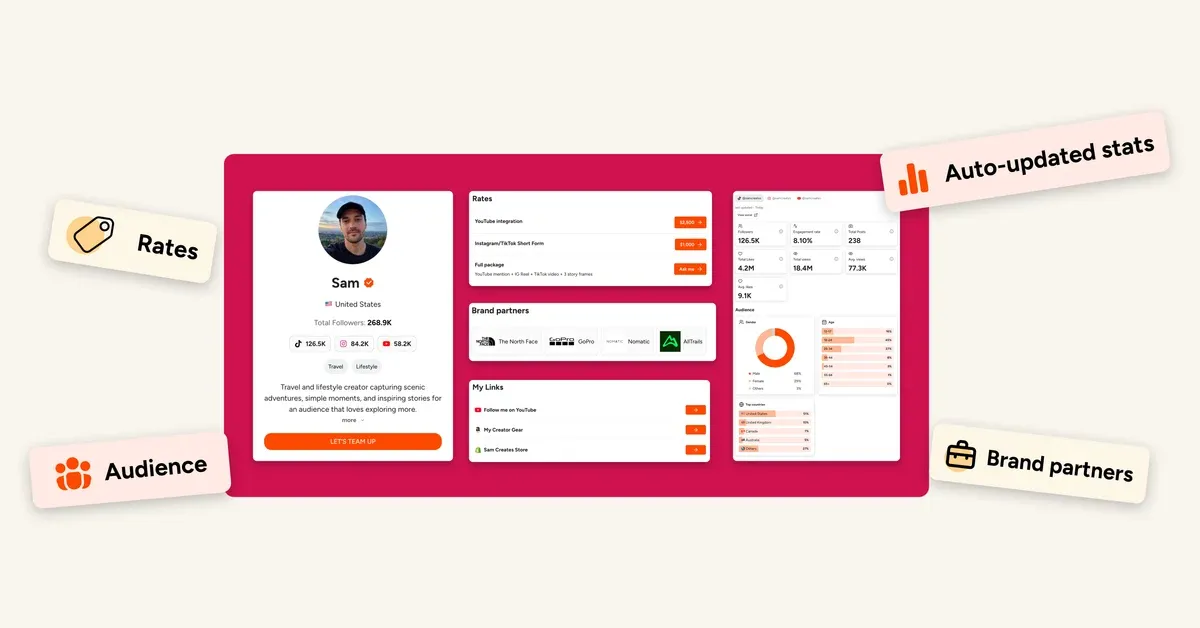
This is where many smaller creators can compete. A creator with 8,000 followers but clear positioning, good comments, and strong content examples can feel safer to a brand than a creator with 80,000 followers and no obvious niche.
For creators still tightening up their presence, this guide on how to look professional as a small creator is a useful companion piece.
Decide which brands are actually a fit
The easiest brand to pitch is not always the biggest brand. It is the brand that already sells to the type of person in the creator’s audience.
A skincare creator should not only think about skincare brands. Relevant partners might also include beauty tools, wellness apps, dermatology clinics, SPF brands, travel toiletry brands, or retailers with skincare lines.
A student creator might fit study apps, desk setup brands, productivity tools, laptop accessories, online learning platforms, meal prep services, or budget-friendly fashion brands.
Good brand fit usually comes from three overlaps:
| Fit area | What to check | Why it matters |
|---|---|---|
| Audience | Who follows the creator? | The brand wants to reach the right buyer. |
| Content | What does the creator naturally post? | The sponsored content needs to feel normal. |
| Offer | What does the brand sell? | The product should solve a real audience problem. |
If the overlap is weak, the pitch usually feels forced. If the overlap is obvious, the brand can understand the opportunity faster.
Create a pitch that feels specific
A good pitch does not need to be long. It needs to show that the creator understands the brand, the audience, and the kind of campaign that could work.
The strongest pitches usually include:
- A short personal opening that proves the creator knows the brand
- A clear reason the audience is relevant
- One or two campaign ideas
- A few credibility points, such as engagement, audience location, past examples, or content performance
- A simple next step, without sounding pushy
The pitch should not read like a mass email. Brands can spot those quickly. A better pitch feels like the creator has done a small amount of thinking before asking for the collaboration.
For a full structure, use the free brand pitch email generator as the next layer. This playbook explains the system, while that article focuses on the message itself.
The video below is a useful example of how smaller creators can think about earning from content without waiting for a huge audience. Notice the practical angle: the opportunity comes from positioning, offer clarity, and showing value, not from acting like follower count is the only proof.
Know what the brand is buying
Before sending a rate, define the actual scope. A sponsored post, a UGC video, a content bundle, and paid usage rights are not the same thing.
This is where creators often undercharge. The brand asks for “one Reel,” but the campaign may quietly include extra work: concepting, filming, editing, revisions, product integration, usage in paid ads, exclusivity, or a fast turnaround.
A simple scope checklist looks like this:
- Platform: Instagram, TikTok, YouTube, LinkedIn, blog, newsletter, or another channel
- Format: Reel, Story, Short, carousel, long-form video, static post, UGC video, or bundle
- Quantity: number of posts, frames, cuts, hooks, or deliverables
- Usage rights: whether the brand can reuse the content organically or in paid ads
- Duration: how long the content can be used
- Exclusivity: whether the creator cannot work with competing brands
- Timeline: draft date, revision window, post date, and reporting date
- Reporting: screenshots, links, metrics, or a campaign recap
If the scope is not clear, the rate cannot be clear either.
Price the deal around value, not only followers
Follower count is part of pricing, but it should not be the whole pricing system. A creator’s rate can depend on platform, format, engagement, niche, content quality, production time, usage rights, exclusivity, and how much the brand wants to control the creative.
A quick way to think about pricing is to separate the deal into layers:
| Pricing layer | What it covers |
|---|---|
| Creative work | Planning, filming, editing, writing, and revisions |
| Distribution | Posting to the creator’s audience |
| Rights | Brand reuse, paid ads, whitelisting, or licensing |
| Restrictions | Exclusivity, tight deadlines, or category limits |
| Reporting | Campaign recap, screenshots, links, and metrics |
This helps avoid the classic problem where a creator charges for a post but accidentally gives away ad usage, exclusivity, and extra edits for free.
If a brand asks for rates before sharing the full brief, ask for the missing context first. The guide on how to respond when a brand asks for your rates breaks down that conversation in more detail.
Example: how a small creator could scope one sponsored post
Here is the practical version of a brand deal, using a hypothetical beauty and skincare UGC creator. The numbers below are not a universal rate card. They show how a creator can think through scope before sending a price.
Imagine a beauty and skincare UGC creator with around 6,000 Instagram followers, a clear portfolio around short-form content, and experience making organic and paid ad-style videos for brands. A skincare brand wants a product-led Reel that feels like a real routine, with the option to reuse the content in paid ads if the rights are negotiated separately.
A clean campaign scope could look like this:
- 1 Instagram Reel showing the product in a real routine
- 3 Instagram Story frames with one link sticker
- 30 days of organic usage rights for the brand
- No paid ad usage unless negotiated separately
- 1 revision round before posting
- A results recap 7 days after publication
A reasonable quote might separate the work like this: creative production, audience distribution, Story package, usage rights, and reporting. That structure matters because it stops the creator from accidentally including paid ad rights, exclusivity, or extra revisions inside one vague “sponsored post” price.
This type of sponsored Reel is useful to study because the product is integrated into a normal creator-style routine instead of feeling like a disconnected ad. The lesson is not to copy the post. It is to notice how the brand, product, creator niche, and content format all fit together.
After the post goes live, the recap could include reach, views, saves, comments, Story link clicks, audience screenshots, and a short note explaining what performed best. If the Reel drove saves but Stories drove clicks, that gives the brand a clear reason to test both formats again in the next campaign.
Make disclosure part of the workflow
Disclosure should not be treated as an awkward final detail. Sponsored content needs to be clear to the audience, and most platforms also expect creators to label paid partnerships properly.
Rules vary by country, but the practical principle is simple: if compensation, free product, affiliate commission, or a business relationship could influence the content, the audience should be able to understand that. The FTC endorsement disclosure guide is a useful reference for creators working with brands in or targeting the United States.
A brand deal playbook should include disclosure language early so it does not become a last-minute negotiation. It protects the creator, the brand, and the trust that makes the collaboration valuable in the first place.
Deliver like a professional
Getting the deal is only the first half. The second half is making the brand feel confident enough to work with the creator again.
Professional delivery does not require a huge team. It usually means the creator communicates clearly, meets deadlines, sends drafts in the agreed format, follows the brief without losing their own style, and flags issues before they become problems.
A clean delivery flow can look like this:
- Confirm the final brief, deliverables, deadlines, usage rights, and payment terms.
- Share the content concept or script if approval is required.
- Send draft content before the review deadline.
- Apply agreed revisions without reopening the whole creative direction.
- Publish on the agreed date and send live links.
- Share results after enough time has passed for the content to perform.
Brands remember creators who make the process easy. That matters because repeat collaborations are often more valuable than one-off posts.
Report results in a way brands can use
A campaign recap does not need to be complicated. It needs to help the brand understand what happened and what could happen next.
Useful reporting can include:
- Reach or views
- Engagement rate
- Saves, shares, comments, and clicks
- Story taps, sticker taps, link clicks, or replies
- Audience demographics when relevant
- Screenshots from platform analytics
- Live links to content
- A short explanation of what performed best
The goal is not to overwhelm the brand with screenshots. The goal is to give them proof they can bring back to a team, manager, or client.
This is where creators can stand out. Many campaigns end with the post going live and no recap. A creator who sends a useful report looks more serious and makes it easier for the brand to justify another campaign.
Turn one campaign into a longer partnership
A strong brand deal playbook does not stop at the first post. The best creators look for ways to turn a successful campaign into a longer relationship.
That does not mean sending a pushy follow-up the next day. It means using the results to suggest a logical next step.
For example:
- If a Story drove clicks, suggest a second Story sequence around a different product angle.
- If a Reel earned saves, suggest a tutorial or comparison format.
- If the brand liked the content quality, suggest paid usage rights or a UGC bundle.
- If the audience asked questions, suggest a follow-up post answering them.
- If the campaign aligned with a season, suggest planning the next seasonal push earlier.
The follow-up should connect to the campaign result. That makes it feel useful instead of random.
Common mistakes that weaken brand deals
Most brand deal problems come from unclear expectations. The creator and brand may both be excited, but if the scope is vague, the campaign can become frustrating fast.
Common mistakes include:
- Accepting a vague brief without clarifying deliverables
- Quoting a rate before understanding usage rights
- Forgetting to ask about exclusivity
- Treating gifted collaborations like paid campaigns without boundaries
- Sending a generic pitch to every brand
- Letting the brand rewrite the content until it no longer fits the creator’s style
- Publishing without agreed disclosure language
- Skipping campaign reporting after the post goes live
None of these mistakes mean a creator is unprofessional. They usually mean the creator does not yet have a system. Once the system exists, the work becomes easier to repeat.
Final thoughts
Brand deals are easier to land when creators stop treating them like lucky breaks and start treating them like a repeatable business process.
The practical version is straightforward: build a profile that explains the value, pitch brands that fit the audience, define the scope before pricing, protect usage rights, deliver clearly, and report results after the campaign. That system will not guarantee every brand says yes, but it does make each opportunity easier to understand, price, and turn into something longer term.