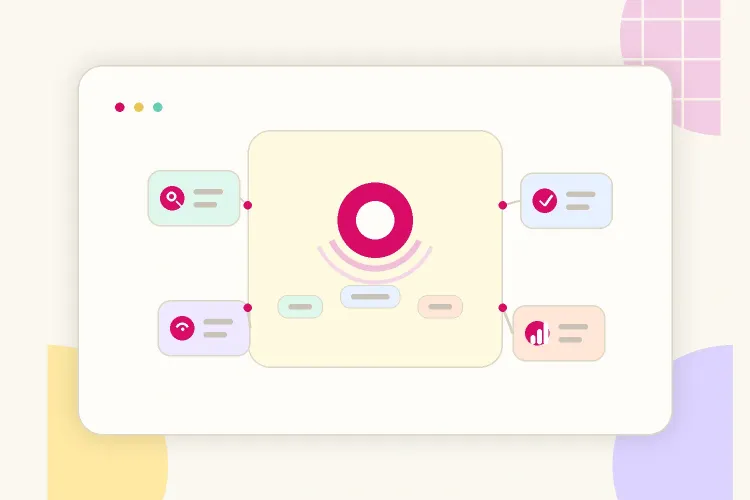


Brand awareness in influencer marketing is not measured by impressions alone. The practical question is whether creator exposure makes people notice the brand, remember the brand, search for it, mention it, and associate it with the right idea.
That means an awareness report should not look like a pile of reach screenshots. It should show how visibility became memory. Reach, views, and impressions can prove distribution, but branded search, direct traffic, social mentions, share of voice, and recall surveys show whether the campaign changed how people think.
What brand awareness means in creator campaigns
Brand awareness is the ability of an audience to recognize and recall a brand. In influencer marketing, it usually has three layers:
- Recognition: someone sees the product, logo, packaging, name, or creator mention and knows which brand it is.
- Recall: someone thinks about the category and the brand comes to mind without being prompted.
- Association: someone connects the brand with the right idea, such as affordable skincare, premium travel, sustainable fashion, or simple creator analytics.
The third layer is easy to miss. A creator can generate a lot of visibility while creating the wrong association. If the campaign is meant to position a product as premium but the comments are mostly about discounts, the awareness is not doing the full job.
Start with the campaign goal
Before choosing metrics, define what kind of awareness the campaign is supposed to create. A launch campaign, a repositioning campaign, and an always-on creator program should not be judged the same way.
Use this simple goal filter:
| Campaign goal | Useful awareness question | Better signal |
|---|---|---|
| New brand launch | Do people know the brand exists? | Reach quality, mentions, branded search |
| New product launch | Do people remember the product name? | Saves, comments, search queries, polls |
| Category positioning | Do people understand what the brand stands for? | Comment language, survey answers, creator message consistency |
| Market expansion | Is the brand becoming visible in a new audience? | Geo search trends, local mentions, new direct traffic |
If the goal is not clear, the report becomes vague. The best awareness measurement setup starts by asking: what should people remember after seeing this creator content?
Measure reach, but do not stop there
Reach tells you how many unique people had the opportunity to see the content. Impressions tell you how many total exposures happened. Views can be useful for video campaigns, especially when paired with retention or watch time.
These metrics matter because awareness cannot grow without distribution. But they are not proof of memory on their own. A post can reach a large audience and still leave no brand trace if the product appears late, the brand name is unclear, or the creator story is not connected to the reason people should care.
When reporting reach, add context:
- Was the audience aligned with the buyer or category?
- Was the brand shown early enough to be noticed?
- Did the creator explain the product, or only include it as a quick mention?
- Did the content produce saves, shares, comments, or profile visits that suggest people paid attention?
This is where the difference between engagement rate and reach matters. Reach shows exposure. Engagement quality shows whether that exposure had weight.
Track branded search lift
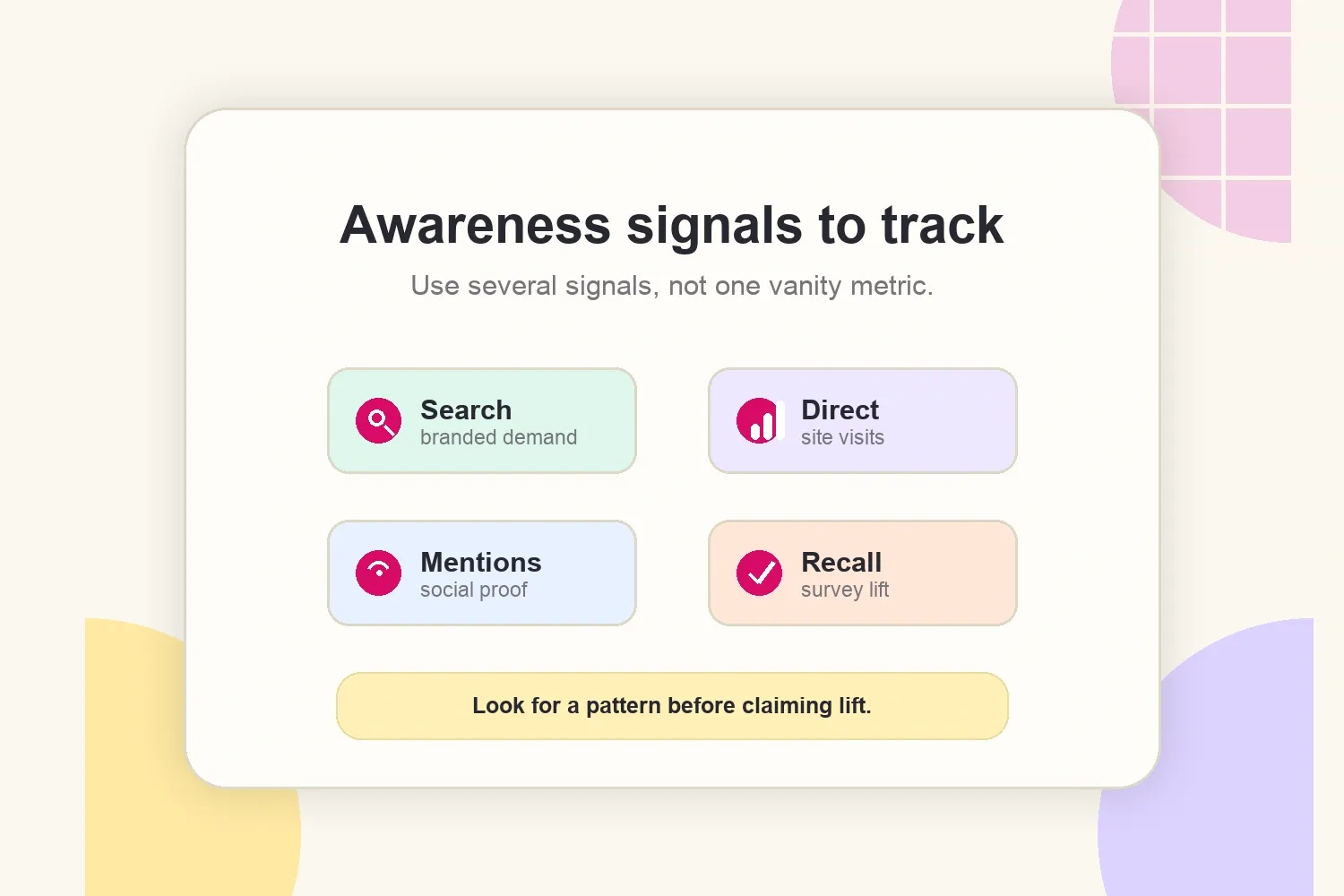
Branded search is one of the clearest awareness signals because it shows active curiosity. If more people search for the brand name, product name, founder name, or campaign phrase during and after creator posts, the campaign may be creating memory.
Use Google Trends, Google Search Console, SEO tools, or site analytics to compare:
- The campaign period against the previous period.
- Creator posting days against normal days.
- Brand name searches against product category searches.
- New market or country searches if the campaign targeted a specific region.
Do not overclaim from one spike. Search can be affected by PR, paid ads, seasonality, email, retail activity, or a viral post outside the influencer campaign. The useful approach is to look for a pattern: branded search rising around creator exposure, then staying higher than the previous baseline.
Watch direct traffic and profile actions
Direct traffic is not perfect, but it can reveal awareness that attribution misses. People often see a creator post, remember the brand, and later type the website directly, search the brand, or visit the brand profile without clicking the original link.
Useful signals include:
- Direct website sessions during the campaign window.
- Instagram, TikTok, or YouTube profile visits after creator posts.
- Link-in-bio clicks from the brand profile.
- New followers from the target audience or target region.
- Returning visitors who first appeared during creator campaign dates.
These signals are especially useful when combined with creator posting times. If direct traffic and profile visits rise after multiple creator posts, the pattern is more persuasive than one isolated number.
Analyze mentions and share of voice
Awareness is also visible in how people talk. Track brand mentions across social platforms, comments, tagged posts, creator comments, community posts, Reddit, YouTube comments, and review spaces when relevant.
The goal is not only counting mentions. It is understanding the language around the brand:
- Are people repeating the intended message?
- Are they comparing the brand to the right competitors?
- Are they asking where to buy, how it works, or whether it fits their situation?
- Are creators using consistent language without sounding scripted?
Share of voice helps when the category is competitive. It compares how much conversation your brand earns against competitors. For smaller brands, even a modest increase in category conversation can be useful if the mentions are specific and high-intent.
Use recall surveys when the budget allows
Surveys are the cleanest way to measure whether people remember the brand, especially for larger campaigns. A simple survey can ask whether the audience remembers seeing the brand, what they associate it with, and whether they would consider it.
For paid campaigns, platform brand lift tools can be useful. Meta describes brand lift tests as a way to use polling and awareness measurement to understand campaign value, and its Brand Lift documentation is a useful reference for how this type of measurement works.
For creator campaigns without a large research budget, use lighter options:
- Pre-campaign and post-campaign polls in the brand community.
- Creator story polls about product recall or category association.
- Short post-purchase surveys asking how people first heard about the brand.
- Email or website surveys after a launch window.
Survey results should be treated carefully. A small poll is not the same as a controlled brand lift study. Still, it can add useful directional evidence when paired with search, traffic, and mention data.
Build a simple awareness decision view
The most useful report does not list every metric. It shows how each signal moves the campaign from exposure to a clearer decision.
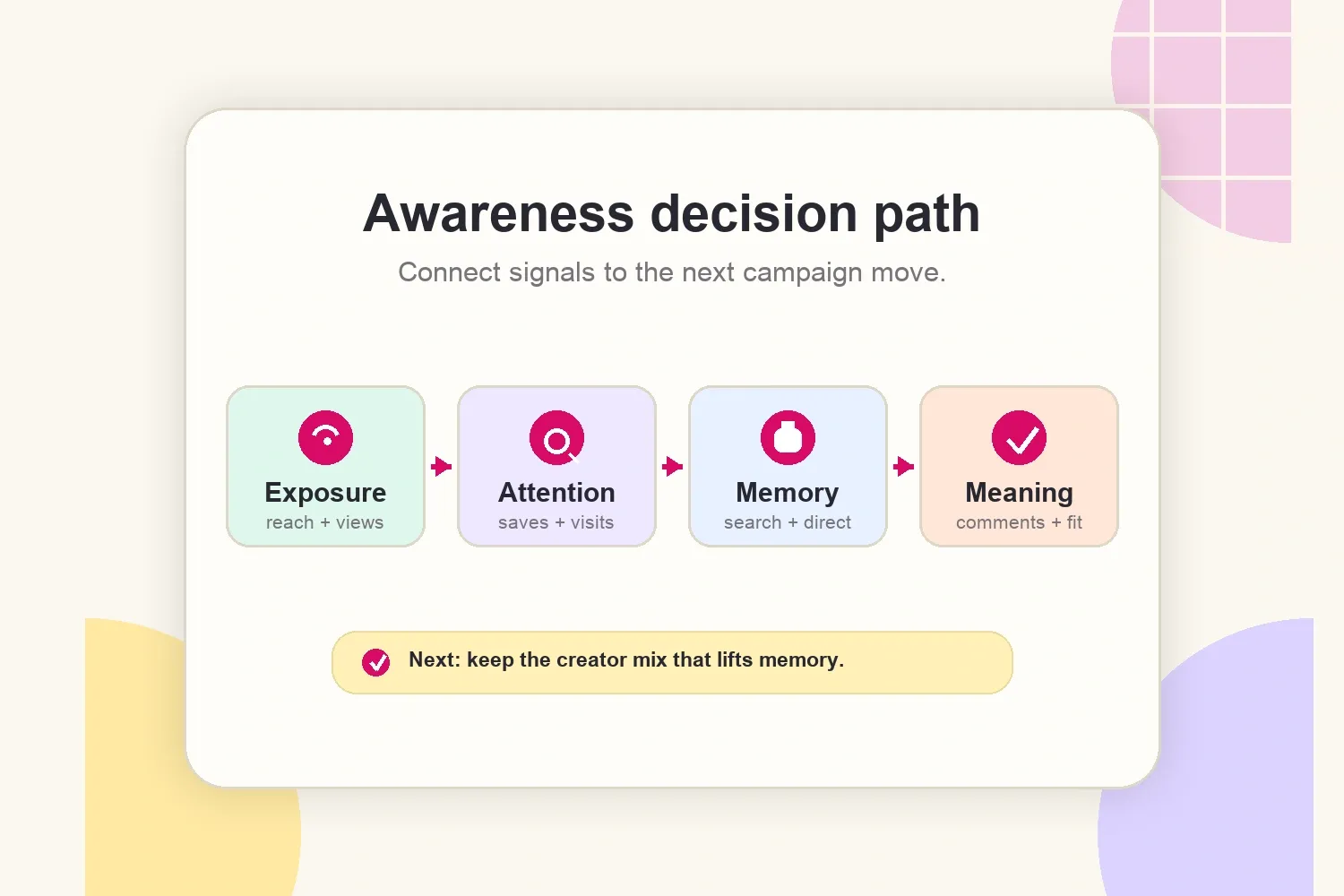
Use a four-part decision view:
- Exposure: reach, impressions, views, frequency, audience fit.
- Attention: saves, shares, watch time, comments, profile visits.
- Memory: branded search, direct traffic, recall polls, brand-name comments.
- Meaning: comment language, sentiment, creator message consistency, competitor comparisons.
Then add one decision line. For example: keep the creator mix, rebook creators who drove search lift, change the hook, simplify the product message, or move budget from broad reach to creators with better audience fit.
This connects naturally to broader influencer marketing KPIs. Awareness is not separate from performance. It is the upper-funnel proof that explains why later clicks, searches, and conversions become easier.
Example: a skincare launch
Imagine a skincare brand launches a new serum with eight creators over three weeks. The mistake would be reporting only total impressions and engagement rate. A more useful setup would track the campaign in layers.
Before the campaign, the brand records baseline branded search volume, direct traffic, Instagram profile visits, average weekly mentions, and the language people already use in comments. During the campaign, the team tags creator posting dates and notes which creators explain the product benefit clearly.
After the campaign, the report compares the baseline with campaign weeks. If reach rose, branded search increased, direct traffic lifted on creator posting days, and comments started repeating the intended benefit, the campaign created measurable awareness. If reach rose but search, direct traffic, and message recall stayed flat, the creative probably reached people without making the brand easier to remember.
That distinction matters. It tells the brand whether to buy more reach, improve the creator brief, repeat the clearest product message, or rebook only the creators whose content created memory.
Common mistakes to avoid
The first mistake is treating impressions as the whole answer. Impressions are distribution, not awareness. They need supporting signals.
The second mistake is reporting campaign averages without separating creators. One creator may drive low reach but high search interest, while another drives broad exposure and weak recall. Averaging both hides the decision.
The third mistake is ignoring baseline data. Without a pre-campaign baseline, it is hard to know whether campaign-week movement is meaningful.
The fourth mistake is using too many metrics. A long report can make the campaign look more measured while making the decision less clear. A better report uses a few signals and explains what each one means.
How to know if awareness is improving
Awareness is improving when multiple signals move together. The cleanest pattern is not one viral post. It is repeated creator exposure followed by more branded search, more direct visits, more mentions, clearer comment language, and better recall.
For agencies and brands, the reporting goal is simple: show whether creator content made the brand easier to notice, easier to remember, and easier to explain. That is also what makes the campaign easier to defend when budget decisions come up. For deeper campaign reporting, the same logic applies to ROI tracking for agencies: every metric should support a business decision, not just decorate the report.