


Instagram Collab posts are worth it when the collaboration gives the post access to a genuinely relevant second audience. They are not magic reach buttons, but they can concentrate likes, comments, saves, and social proof on one shared post instead of splitting attention across two separate uploads.
The practical question is not “Do Collab posts work?” It is “Did this Collab create reach, engagement, followers, clicks, or sales that a solo post probably would not have created?” That is the difference between a useful collaboration and a post that only looks bigger because two accounts are attached to it.
What Instagram Collab posts actually change
An Instagram Collab post is one Feed post or Reel that appears on more than one profile after the invited collaborator accepts. The post shares one like count, one comment section, and one visible piece of social proof across the participating accounts.
That matters because brands and creators usually lose momentum when they split the same idea into separate posts. One creator posts, the other reposts to Stories, comments get scattered, and each audience sees a weaker signal. A Collab keeps the attention in one place.
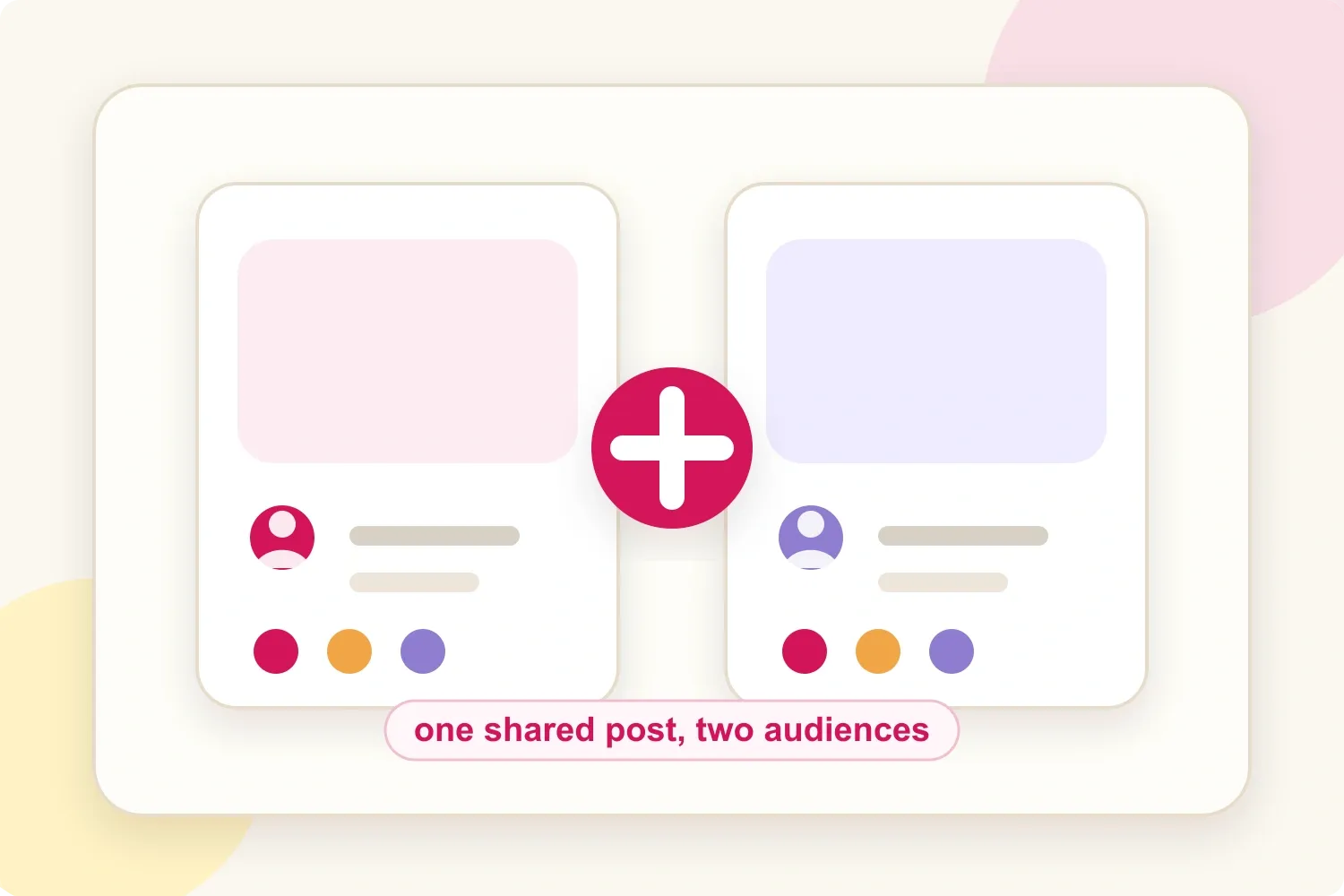
Mechanically, Instagram Collabs start with an invitation and an acceptance. Strategically, the format works best when both audiences have a real reason to care about the same post.
A Collab is not just a normal tag. The invitation flow matters because the second account has to accept the request before the post can live on both profiles and share comments, views, and social proof. That approval step is why Collabs should be planned before publishing, not treated like a last-minute add-on.
When Instagram Collab posts are worth it
A Collab post is usually worth testing when the partner adds relevant incremental reach. That means the second audience is not just bigger, but different enough and interested enough to create new discovery.
Good Collab fits often look like this:
- A skincare creator and a skincare brand showing a realistic routine.
- A fitness creator and a nutrition creator explaining one transformation from two angles.
- A local creator and a venue promoting an event, launch, or experience.
- A creator and a brand sharing a giveaway where both audiences clearly match the product.
- Two creators with adjacent audiences making one stronger tutorial, comparison, or reaction.
The best signal is not follower count. It is audience overlap, creative fit, and whether the post feels natural on both profiles. A creator with 12,000 followers and a highly relevant audience can outperform a larger collaborator whose audience does not care about the topic.
When Collab posts are not worth it
Collabs disappoint when the partnership is only there for visibility. If the post would feel strange on one of the profiles, the audience usually notices.
Common weak fits include:
- Two accounts with almost the same audience, which creates little new reach.
- A brand partner that does not match the creator’s niche or usual content.
- A giveaway that attracts freebie hunters but no qualified followers.
- A product mention that feels forced into a creator’s feed.
- A Collab where one partner does not share, reply, or support the post after publishing.
Collab posts also do not fix weak creative. If the hook, topic, visual, or offer is not interesting, adding another account rarely saves it. The collaboration can amplify a good post, but it usually cannot rescue a bad one.
What the data says about Instagram Collab posts
There is not one universal public benchmark that proves every Instagram Collab post beats every solo post. The more useful data point is the direction of Instagram itself: attention is harder to earn, and passive reach does not tell the whole story.
In its social media benchmarks report, Socialinsider analyzed 70 million social media posts and reported Instagram engagement around 0.48%, with Instagram video views up 29% year over year and shares up 12%. That matters for Collab posts because a wider audience is only valuable if the post also creates stronger engagement signals: saves, shares, comments, follows, clicks, or conversions.
Hootsuite also treats Instagram Collaborations as a separate reporting layer. Its Instagram Collaboration tracking update lets teams break down “Collab post” versus “Without Collaboration” content, which is exactly how this format should be judged.
So the data-driven question is not whether a Collab got a nice-looking like count. The better question is whether it beat a realistic solo-post baseline.
A simple way to calculate that:
| Question | Formula | What it means |
|---|---|---|
| Incremental reach | Collab reach - expected solo reach | How many extra people the partner likely added |
| Engagement quality | Engagements / reach | Whether the extra reach stayed relevant |
| Follow conversion | New follows / reach | Whether new viewers cared enough to stay |
| Business action | Clicks or conversions / reach | Whether the Collab moved beyond awareness |
For example, if a similar solo Reel usually reaches 12,000 people and a Collab reaches 28,000, the raw incremental reach is 16,000. But if the Collab brings very few saves, follows, comments, or clicks, the extra reach may be shallow. If reach rises and engagement quality stays stable, the Collab is much easier to defend.
The metrics that decide whether a Collab worked
The cleanest way to judge an Instagram Collab post is to compare it with a similar solo post from the same account. Same format, similar topic, similar daypart if possible.
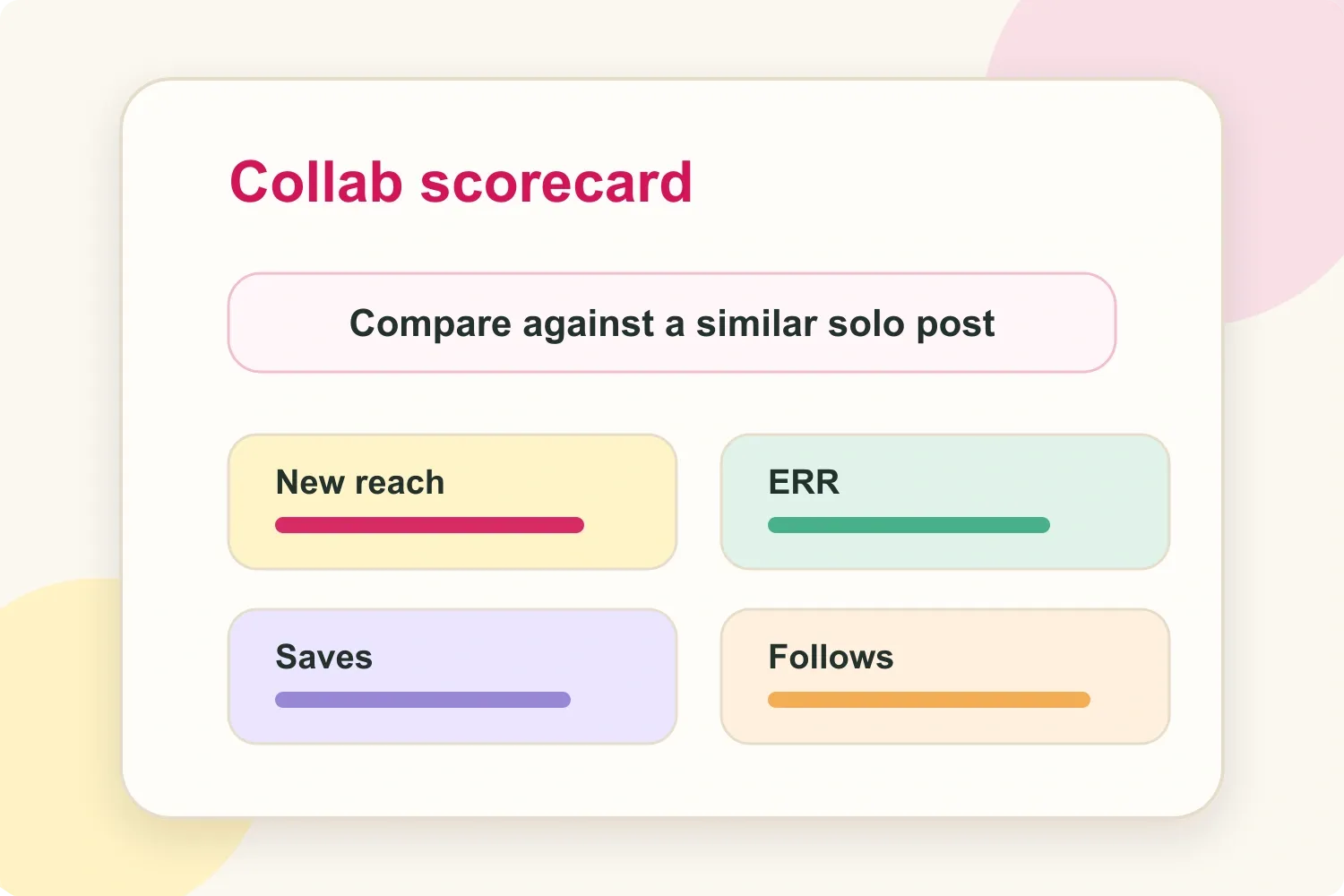
Track these numbers at 24 hours, 72 hours, and 7 days:
| Metric | What it tells you | Good sign |
|---|---|---|
| Reach | How far the post traveled | Higher than similar solo posts |
| ERR | Engagements divided by reach | Equal or better than solo benchmark |
| Saves | Whether the post had lasting value | Higher saves per reach |
| Follows | Whether new viewers cared enough to stay | Positive follower lift |
| Clicks or conversions | Whether the post moved business results | Trackable lift from the post window |
The key metric is incremental lift: what the Collab created beyond a normal solo post. If reach doubles but engagement rate collapses, the post may have reached more people without creating much trust. If reach rises and ERR stays steady, that is a much healthier signal.
For a quick benchmark, an Instagram engagement rate calculator can help compare Collab posts and solo posts with the same formula.
A simple test plan for creators and brands
Treat Instagram Collabs like a test, not a guaranteed win. The goal is to learn which partner types, topics, and formats create repeatable lift.
A simple test plan:
- Pick one clear goal: reach, followers, saves, clicks, sales, or content proof.
- Choose a partner with a relevant audience, not just a larger account.
- Build the post around one idea that belongs on both profiles.
- Publish the Collab and support it from both sides with Stories, comments, and replies.
- Compare results against a similar solo post after 24 hours, 72 hours, and 7 days.
- Repeat only if the Collab created real incremental lift.
This is also where creators should save screenshots and results. A Collab that performs well becomes useful proof for the next pitch, especially when the creator can show reach, engagement, saves, and audience fit clearly in an influencer media kit.
What brands should look for before approving a Collab
Brands should not approve a Collab only because the combined follower count looks good. Combined audience size is useful, but it can hide weak fit.
Before approving the post, check:
- Does the creator’s normal content already match the product category?
- Does the partner audience add new reach or mostly duplicate the same people?
- Is the concept strong enough to live on both profiles?
- Is there a clear disclosure plan if the post is sponsored?
- Will both accounts actively support the post after it goes live?
For paid campaigns, the Collab should also fit the reporting plan. If the brand needs clicks, promo code usage, traffic, or sales, the post should be paired with trackable links, UTM parameters, discount codes, or a clear attribution window.
Disclosure still matters
If a Collab post is sponsored, paid, gifted, or part of a brand relationship, disclosure needs to be clear. The shared format does not remove that responsibility.
That can mean using Instagram’s paid partnership label when available and making the relationship clear in the caption. The basic principle is simple: people should understand when content is an ad, sponsorship, gifted collaboration, affiliate relationship, or paid brand partnership.
Do not hide the disclosure at the end of a long caption or rely on vague language. A clean disclosure protects the creator, the brand, and the audience’s trust.
Are Instagram Collab posts good for brand deals?
Yes, but only when they are used with the right expectations. For creators, Collabs can show that content travels beyond the existing audience. For brands, they can make one campaign asset feel more credible because engagement and comments gather in one place.
They are especially useful for:
- Product launches.
- Giveaways with a strong audience match.
- Creator-brand tutorials.
- Event recaps.
- Co-created Reels.
- Long-term creator partnerships where the brand wants repeated visibility.
But Collabs should not be the only proof in a campaign report. Brands still need reach, clicks, saves, comments, conversions, audience fit, and creative learnings. A Collab post is a distribution format, not a full strategy by itself.
Final thoughts
Instagram Collab posts are worth it when they create reach and trust that a solo post would not have created. The best Collabs feel obvious to the audience: the partner makes sense, the creative idea fits both profiles, and the post gives people a reason to engage.
The safest way to use them is to test, measure, and repeat carefully. If a Collab improves reach while holding engagement quality, it is a strong format to reuse. If it only adds names to the top of the post without changing business results, the partnership probably needs a better fit or a better idea.